Self-organised (no package): budget roughly €200 to 350 for a 2 to 3 day climb. That covers hut accommodation with half board, food and drinks along the route, and transport to and from the trailhead. If you do not own a via ferrata set, add gear rental on top — check current rental prices directly with shops in Bled or Bohinj, as prices change seasonally.
With a local IFMGA guide: considerably more than self-guided; guide fees vary by operator and group size, but expect the total to rise substantially.
With Bookatrekking: our self-guided packages start at €225 per person for the 3-day Mount Triglav Climb Self Guided. That price includes all hut bookings (you do not need to chase reservations yourself), route notes sent in advance, and access to the Bookatrekking app with GPX navigation and weather per hut. Remote support is available throughout your trip if you have questions on the ground. The 5-day version including hotel nights at Lake Bohinj before and after the mountain stages is available from €670.
Can a beginner climb Triglav?
Yes. A beginner without climbing experience can reach the Triglav summit on the normal route (grade A) via Dom Planika or the Krma valley, provided they are physically fit, comfortable on exposed terrain and have no fear of heights. Prior via ferrata experience is not required, but a complete fear of heights makes the exposed sections genuinely dangerous.
How long does it take to climb Triglav?
Most people take two to three days. The two-day version involves a long approach day to a hut below the summit, followed by an early summit push and descent. The three-day loop adds the Triglav Lakes valley. A one-day ascent is possible only from the Krma valley for very fit, experienced climbers and carries a significant afternoon thunderstorm risk.
Can you climb Triglav in one day?
Yes, but it is only realistic for very fit, experienced hikers starting from the Krma valley. Expect at least 12 hours on the mountain, including roughly 6.5 hours on the ascent. Afternoon thunderstorms are a genuine hazard on the exposed summit ridge, so a late or slow party risks being caught in bad weather on the via ferrata.
How difficult is the Triglav via ferrata?
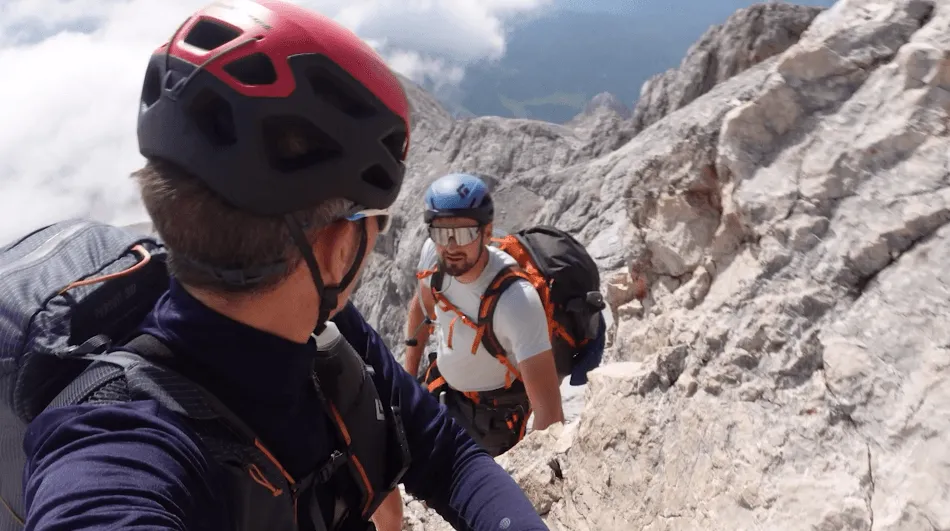
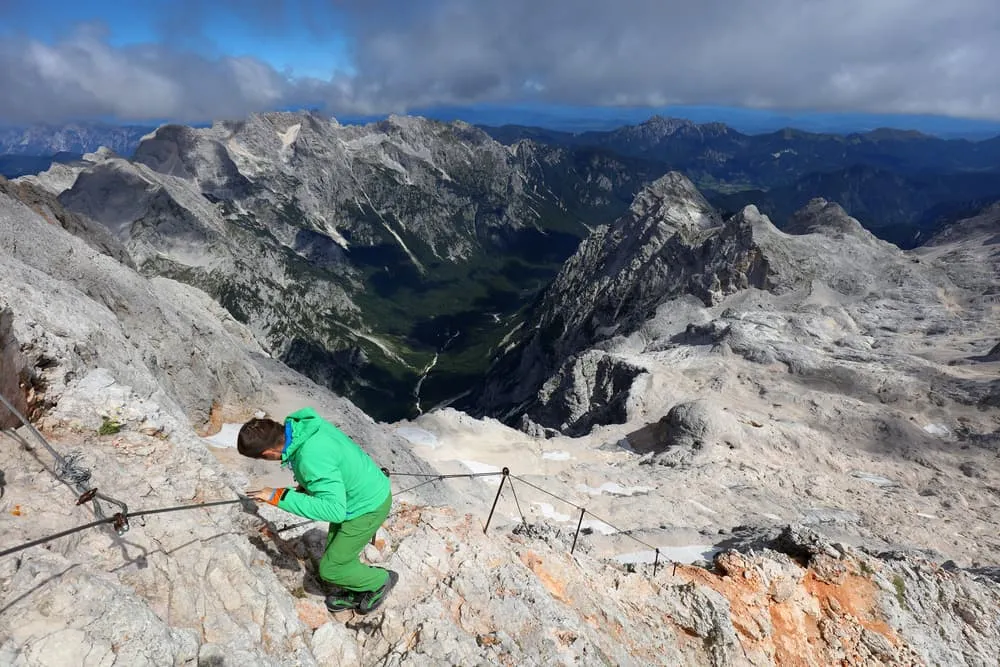
The normal route via ferrata is grade A: well secured with steel cables and iron pegs, demanding a head for heights but no technical climbing skill. The Bamberg route from the Vrata valley reaches grade B to C, with a near-vertical 10 m cable section. The Prag route sits at A to B. A helmet, harness, two carabiners and gloves are mandatory on all of them.
Can you climb Mount Triglav without a guide?
Yes, and the majority of climbers do exactly that. Triglav has well-marked trails and a secured via ferrata on every summit route. Bookatrekking's packages are entirely self-guided, with route notes, a GPX-enabled app and remote support included. Hiring a guide makes sense if you have never used a via ferrata set before and want live instruction on the exposed sections.
How high is Mount Triglav?
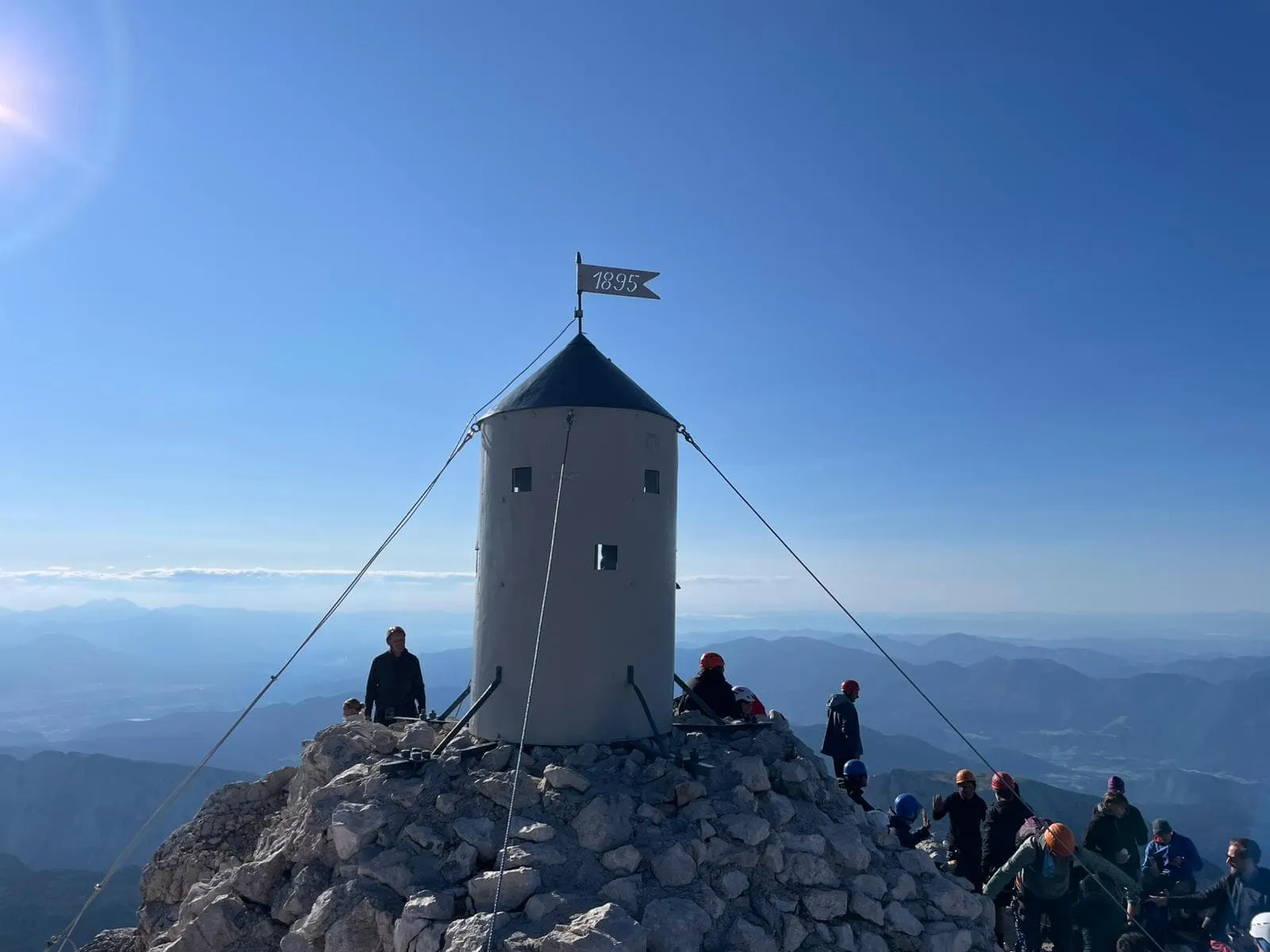
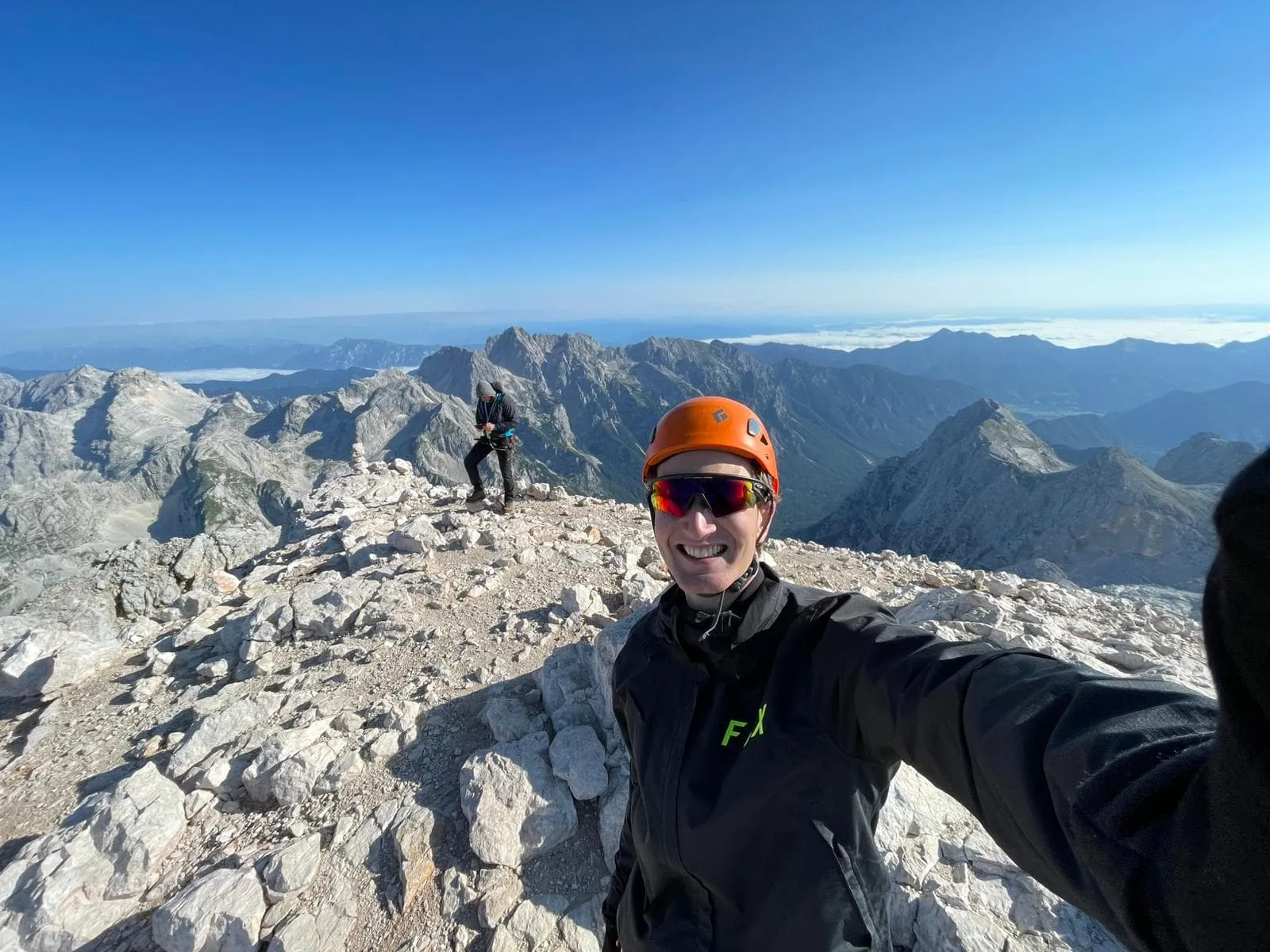
Mount Triglav stands at 2,864 m above sea level. It is the highest peak in Slovenia and the highest point in the entire Julian Alps. The Aljaž Tower, a small iron cylinder erected on the summit in 1895, marks the very top and is the standard photo point for anyone who reaches the summit.
Are there bears in Triglav National Park?
Slovenia has one of the largest brown bear populations in Europe, but the bears live primarily in the Dinaric forests in the south of the country, far from the Julian Alps. Bear encounters in Triglav National Park are very rare, and no special precautions beyond normal trail awareness are required for hikers on standard Triglav routes.
Planning a broader Alpine adventure beyond Slovenia? Our guide to hut-to-hut hiking across the Alps covers the best multi-day routes from the Julian Alps to the Western Alps, with everything you need to find the right trek for your level.