GR20 Northern Half (from North to South)

Duration: 9 days
Trails: T4 trails
Distance: 15 - 20 km / 9 - 12 mi per day
Ascent per day: 500 - 1000 m / 1640 - 3281 ft ascent per day

> Complete the northern half of the GR20
> Spend your nights in mountain huts
> Enjoy majestic views from Monte Cinto

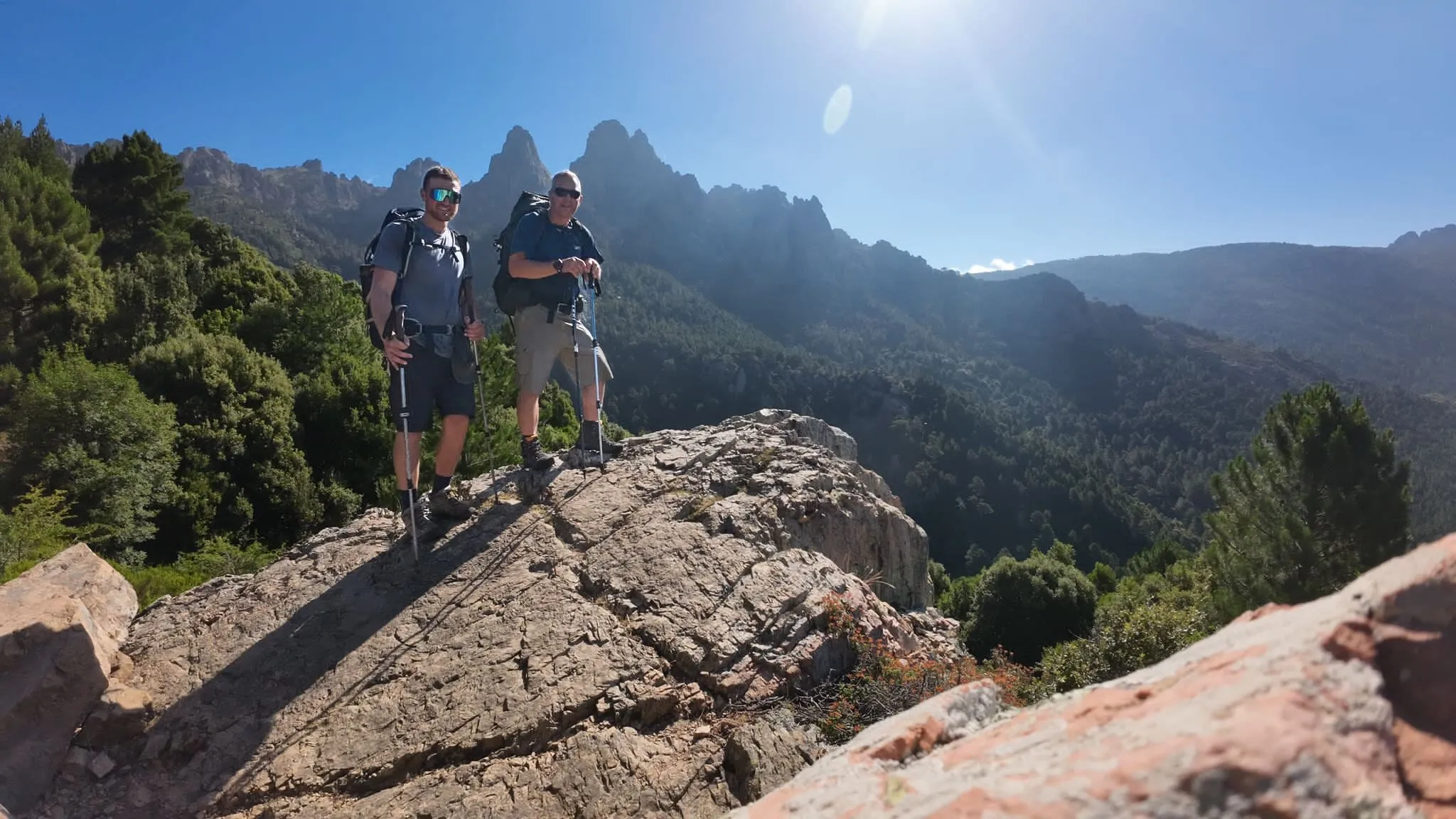
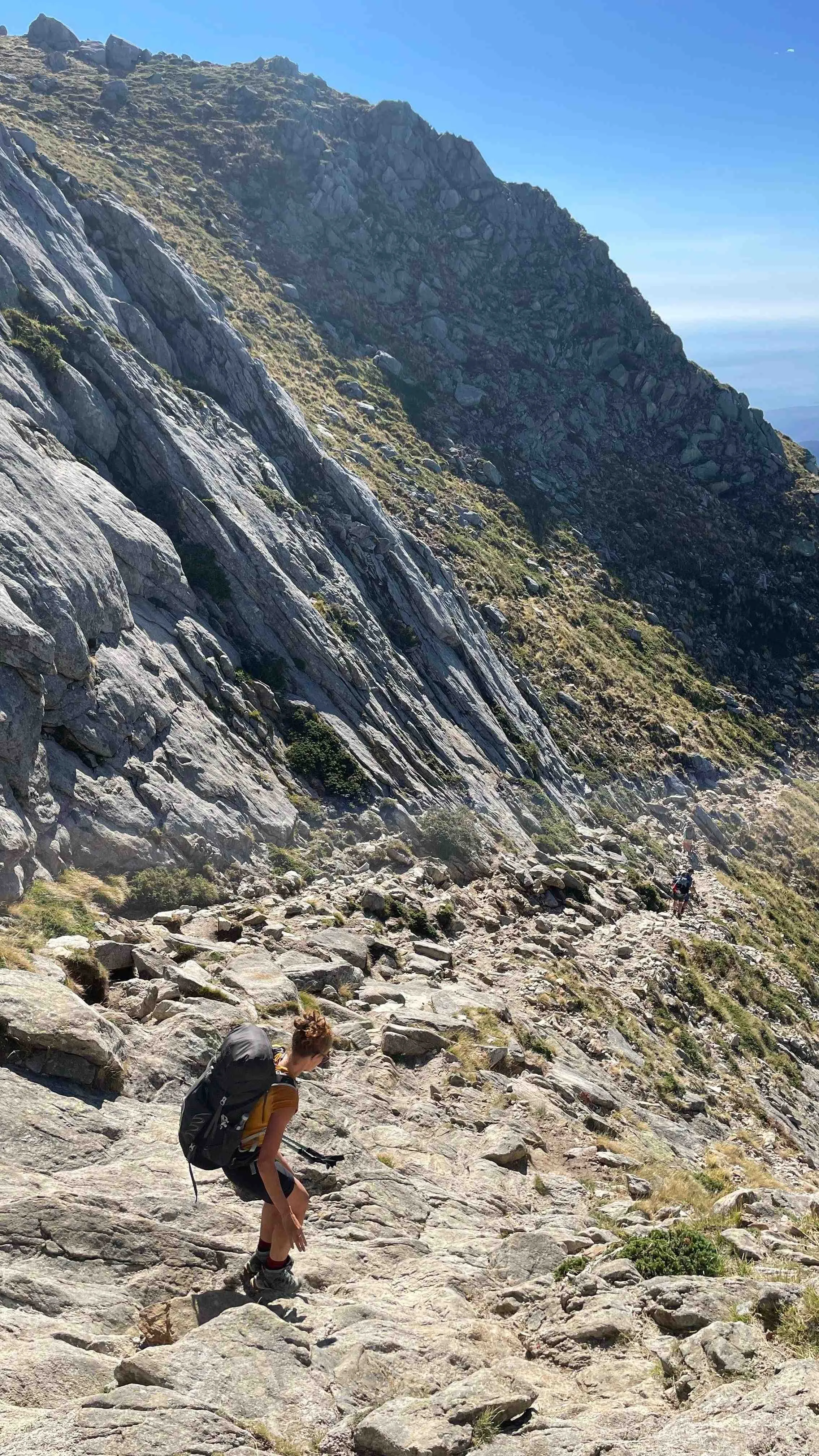
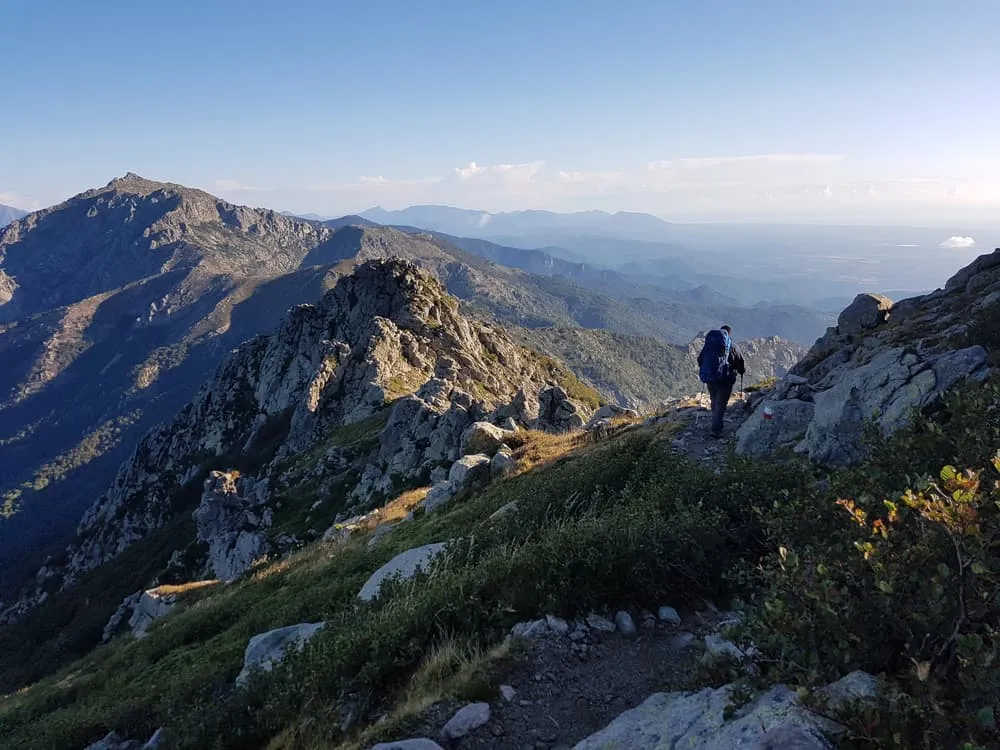
The GR20, also known as fra li Monti, is a GR (Grande Randonnée) hiking trail that crosses the Mediterranean island of Corsica and runs roughly from north to south. The whole route is about 180 km long with an altitude difference of 12,000 m. Widely regarded as one of the toughest GR routes, this trail challenges hikers with its rugged, technical terrain.

Why both ways?
The full trek takes 15 days. However, if you want to do a shorter version of the trek, it is certainly possible. The GR20 can be divided into the northern and southern halves. The northern half is 9 days long and starts in Calenzana. Instead of going all the way to Conca, you finish your adventure in Vizzanova. You can also do it the other way around, starting in Vizzanova and ending in Calenzana. The northern part of the GR20 is the most popular half, but is also considered the most difficult. Are you ready to conquer the toughest trekking route in Europe?


Camping: during this trek, you can also spend the night at camping sites. Contact our trekking experts to find out more about this option!

Itinerary

Day
1

Calenzana - Refuge d'Ortu di u Piobbu

Duration: 05:55 h
Distance: 11.4 km / 7.1 mi
Ascent: 1370 m / 4495 ft
Descent: 90 m / 295 ft

This long initial climb takes you directly from the narrow streets of Calenzana into the mountains. As the path winds its way up above the Balagne hills, olive groves, terraces and the scent of the maquis gradually disappear. Further up, the forest closes in around you, offering glimpses of the bay and the surrounding mountains through the trees. The day ends on a rocky crest, not far from the hills beneath Monte Corona.

From the village, the route continues along paved streets and stairs before joining a stony mule track through dense shrubbery. After a while, the path steepens as it winds through the scented maquis towards Bocca u Corsu, the first vantage point overlooking the Bay of Calvi. The ascent continues through a pine forest to Arghjova's terrace and then along the ridge to Bocca à U Saltu (1,250 m). Beyond the grassy col, the path traverses a challenging section and ascends towards Bocca à U Bazzichellu (1,486 m).

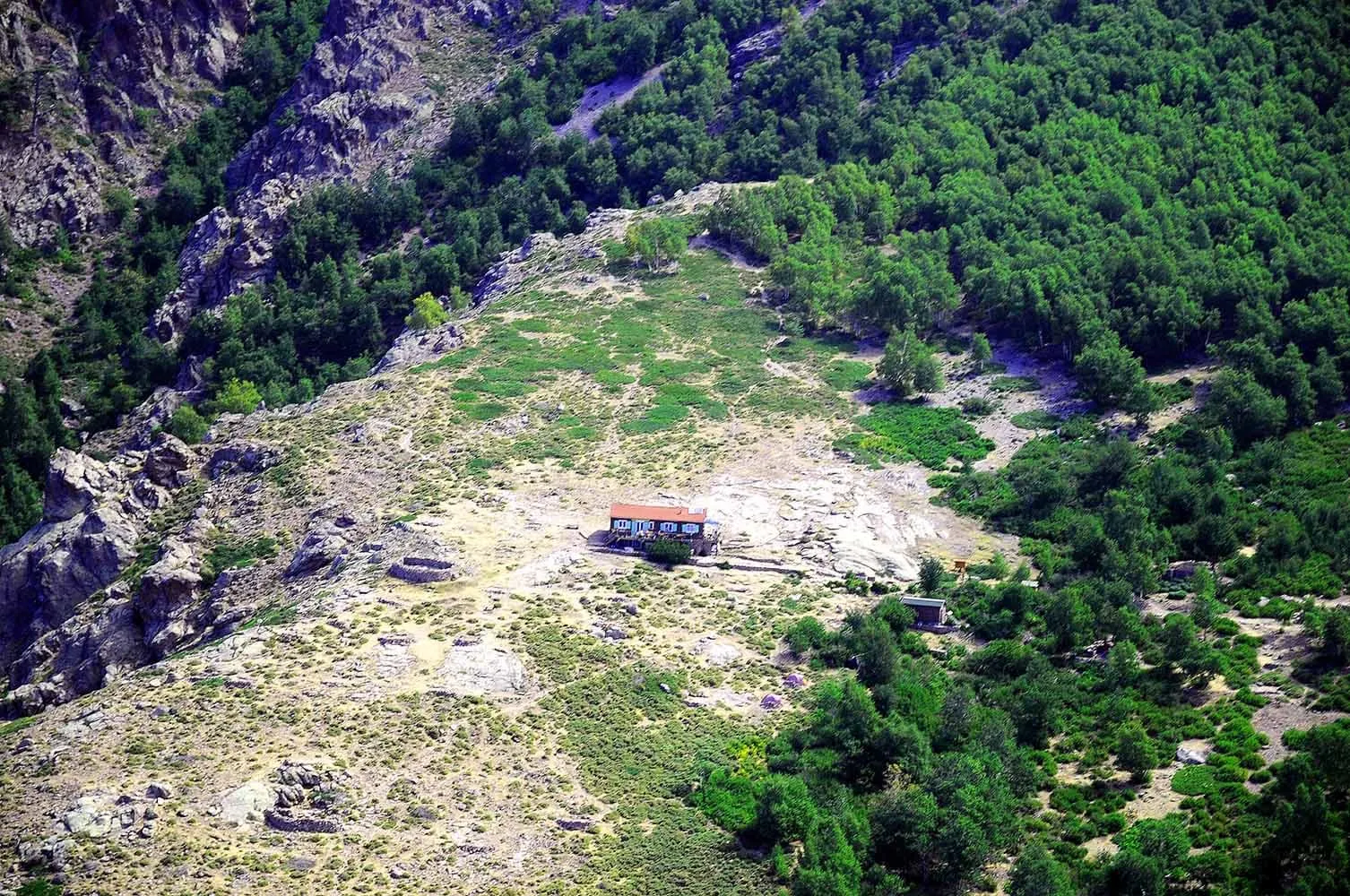
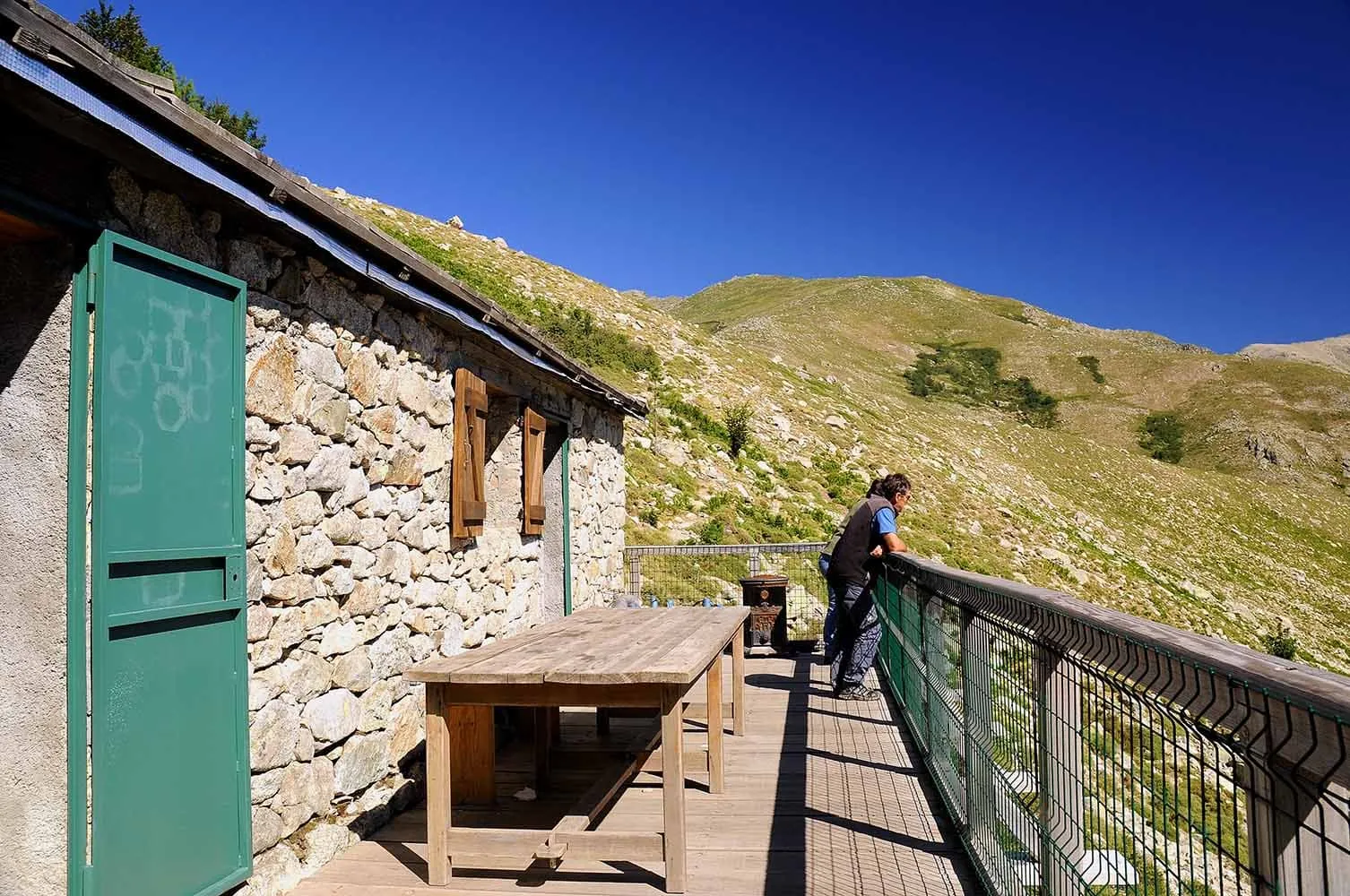
As you near the end, the rocky terrain gives way to scattered pine trees and small grassy terraces. The refuge is located just beyond a bend, perched on a hillside with sweeping views back to the Balagne region. It is the perfect place to rest, enjoy the evening colours and plan your next adventure.

Refuge d'Ortu di u Piobbu

Info
Refuge d'Ortu di u Piobbu
Day
2

Refuge d'Ortu di u Piobbu - Refuge de Carrozzu

Duration: 04:05 h
Distance: 7.5 km / 4.7 mi
Ascent: 600 m / 1969 ft
Descent: 850 m / 2789 ft

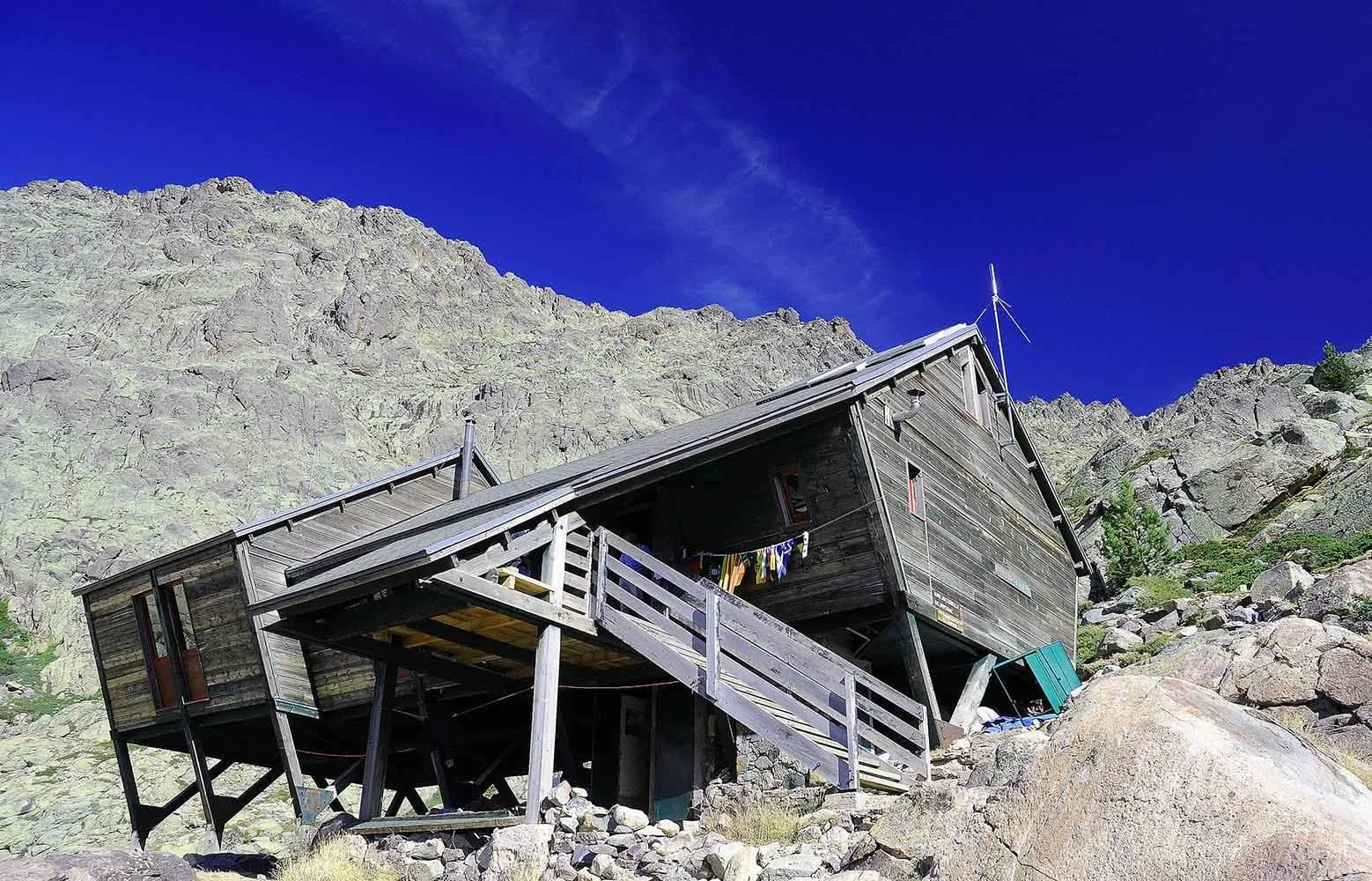
This high route connects two rocky refuges via a winding mountain ridge. From the grassy terrace of the first refuge, the ascent is initially gentle before rising steeply towards a chain of passes. Once you have climbed above the last pines, you will be rewarded with views of Punta Innominata (1,986 m) and the distant bulk of Monte Cinto (2,706 m). After reaching the highest point of the main ridge, the route continues downhill through darker forests to the second refuge.

From there, a cairned path climbs through twisted pines and granite slabs. A clear spring and scattered stone ruins provide an opportunity for a brief rest before the long ascent. The path then tightens into zigzags on the ridge below Bocca di Pisciaghja/Piccaia (2,012 m), offering deep views into the Bonifatu forest, before traversing airy balconies. After a rocky scramble section, you cross Bocca di l'Innominata, located between Punta Innominata (1,986 m) and Punta Ghialla (2,085 m).

The descent begins with rocky steps, which then soften into earthen paths winding through tall pines. Gradually, the sound of running water grows louder as you cross small streams and shaded gullies. A final contouring track leads to a grassy clearing, amongst the trees of which you will see stone buildings and tent platforms. Here, you can cool your feet in the nearby stream and watch the evening mist drift along the valley.

Refuge de Carozzu

Info
Refuge de Carozzu
Refuge de Carozzu
Day
3

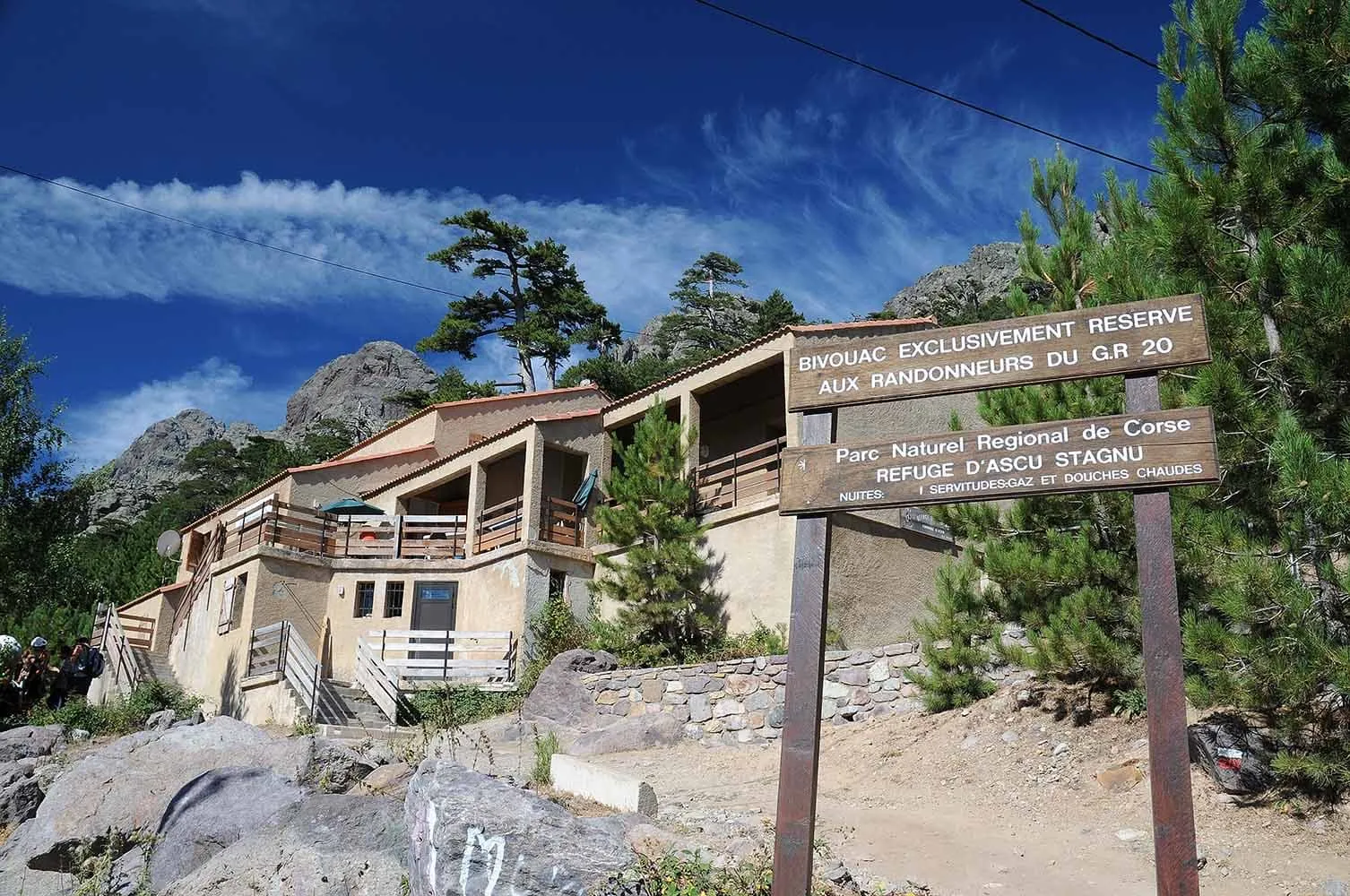
Refuge de Carozzu - Refuge d'Asco Stagnu

Duration: 04:05 h
Distance: 5.3 km / 3.3 mi
Ascent: 710 m / 2329 ft
Descent: 570 m / 1870 ft

From the wooded hollow around the refuge, the route climbs back into the high mountains. The path soon leaves the pines for a jagged ridge below Muvrella (2,148 m), where cliffs and distant summits surround you on all sides. After the main ascent, the character changes as you drop towards a wide cirque above the Asco valley, finishing the day among ski lifts, dark forest and the small settlement of Haut Asco.

From the terraces you first follow a narrow path through pines to the Spasimata stream. Chains help you across polished slabs and ledges, with pools and small waterfalls below. After crossing the famous hanging footbridge the trail steepens, climbing in tight zigzags on rocky steps. Higher up, the trees thin and you reach a rough basin of boulders and slabs, then continue to the pass near Muvrella, the high point of the day.

Beyond the crest the path turns towards the Asco side and begins a long descent. Loose stone gives way to earth paths and then to wider tracks as you approach the ski area. The noise of the river grows louder and chairlifts appear above the trees. A final stroll across open ground leads to the cluster of lodgings and facilities at Haut Asco, where hot showers, cold drinks and wide mountain views wait for you.

Refuge d'Asco Stagnu

Info
Refuge d'Asco Stagnu
Day
4

Refuge d'Asco Stagnu - Refuge de Tighjettu

Duration: 06:30 h
Distance: 8.3 km / 5.2 mi
Ascent: 1160 m / 3806 ft
Descent: 910 m / 2986 ft

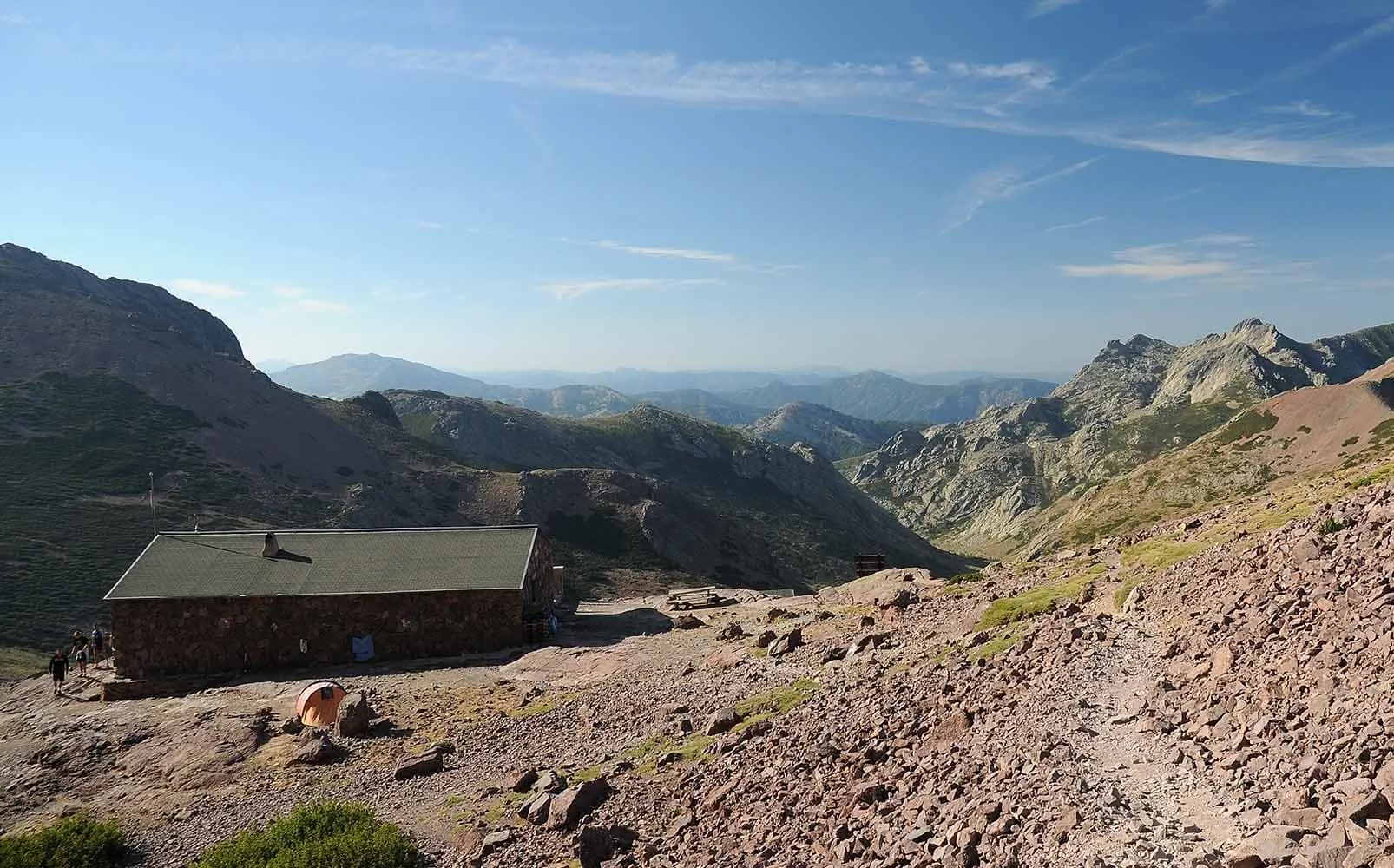
Starting from the small ski station in the Asco valley, this route wastes no time in heading for the high ground below Monte Cinto (2,706 m). A long, steady climb leads from shady pines onto bright granite slabs and scree, with widening views over jagged ridges. After reaching the rocky shoulder near Pointe des Éboulis (2,607 m), the mood shifts as you drop into the wild upper Golo valley towards the hidden bowl of Tighjettu.

From the buildings the path quickly leaves the pistes and follows the Ruisseau du Tighiettu upstream, climbing on granite steps beside clear pools. Soon chains appear to protect short traverses across smooth slabs and ledges, before the trail steepens into stony zigzags. Higher up you pass Lac d’Argentu, then tackle a final tiring haul on loose scree to the col near Pointe des Éboulis, where cliffs fall away on both sides and the skyline of Paglia Orba (2,525 m) comes into view.

The descent into the Golo valley starts steep, weaving down gullies and boulder fields before easing onto gentler paths beside the stream. Small waterfalls, rock slabs and occasional pine patches brighten the way as you lose height. Near the bottom, the route leaves the main valley and climbs briefly into a side basin, where the refuge appears on a grassy shelf hemmed in by granite walls. Here you can drop your pack, soak aching feet in the river and watch the evening colours.

Refuge de Tighjettu

Info
Refuge de Tighjettu
Refuge de Tighjettu
Day
5

Refuge de Tighjettu - Refuge de Ciottulu di i Mori

Duration: 03:30 h
Distance: 6.8 km / 4.2 mi
Ascent: 650 m / 2133 ft
Descent: 330 m / 1083 ft

From the rocky hollow around the refuge, this shorter stage drops gently into the wild valley beneath Paglia Orba (2,525 m) and Capu Tafunatu (2,335 m). The path threads between boulders and pines, with balcony views of cliffs and the white ribbon of the Golo far below. Clear pools and smooth slabs invite a pause before the route turns towards a hanging basin, where the next refuge waits high above the river.

From the buildings you follow a stony track downhill, soon joining the Golo and its side streams. The trail meanders along the water, crossing smooth granite and small wooden bridges, past deep basins that glow turquoise in the sun. After a final series of crossings, the way swings away from the river and begins to climb on dusty zigzags, gaining height steadily towards the saddle above the valley.

Near the crest the terrain opens into rough pasture, scattered with rocks and low grass. A last push over broken slabs brings you to the refuge, perched on a shoulder with sweeping views towards the Niolu plateau and the jagged skyline of Paglia Orba. Once you drop your pack, there is time to watch the light change on the cliffs and to listen to the distant murmur of the river far below.

Refuge de Ciottulu di i Mori

Info
Refuge de Ciottulu di i Mori
Day
6

Refuge de Ciottulu di i Mori - Refuge de Manganu

Duration: 08:50 h
Distance: 23.7 km / 14.7 mi
Ascent: 700 m / 2297 ft
Descent: 1080 m / 3543 ft

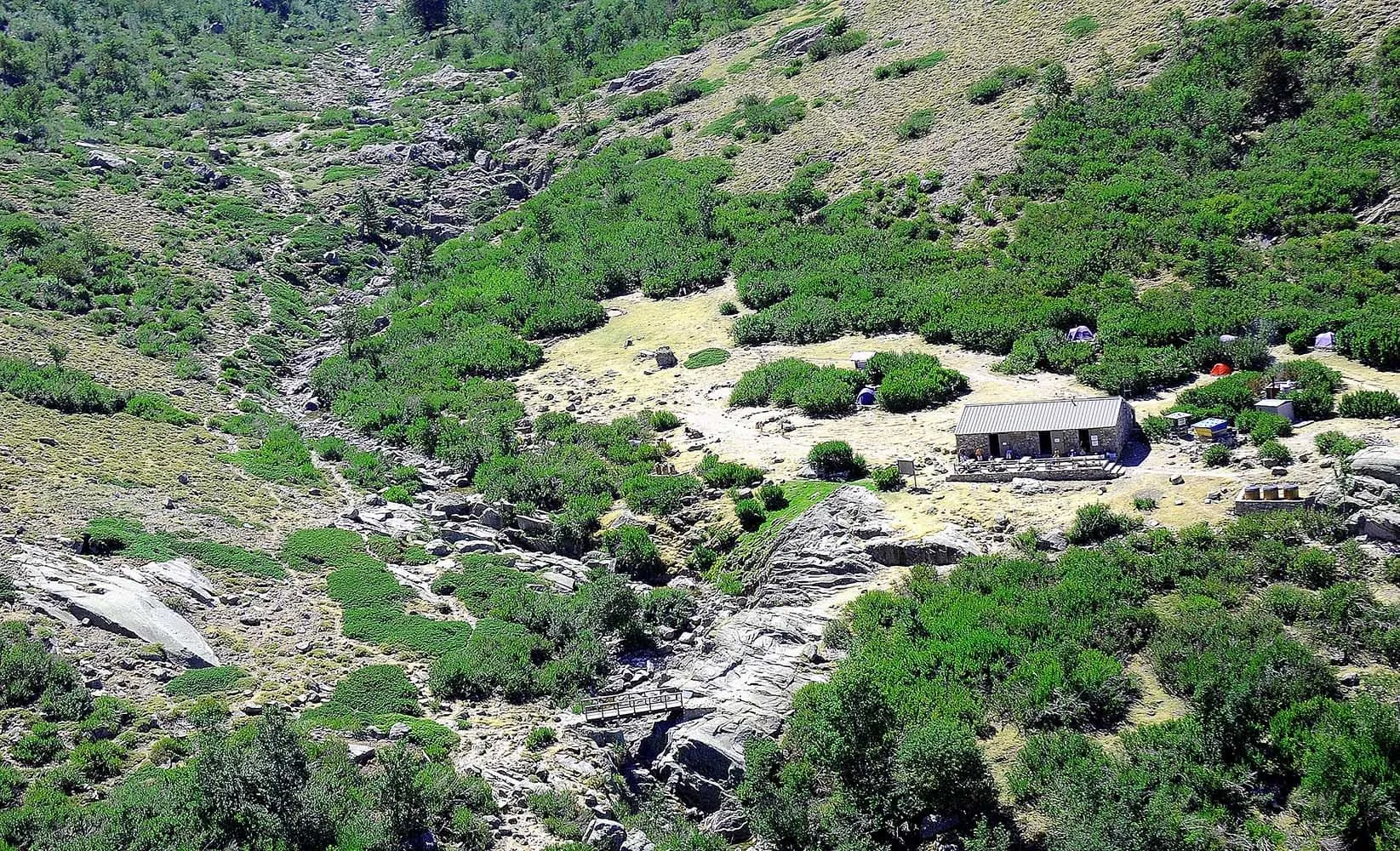
This long traverse links the rocky eyrie of Ciottulu di i Mori with the wide meadows around Manganu. The morning begins among bare ridges and the upper Golo river, then slips into dark pine forests and the open col of Vergio. Later the character changes again as you climb towards the grassy bowl of Lac de Nino, where streams meander through bright pozzines. A final rolling path leads across the plateau to the refuge, tucked above the Tavignanu valley.

From the hut the trail drops beside the young Golo, passing small waterfalls and smooth granite slabs near the bergerie de Radule. Wooden bridges and narrow paths lead you into dense laricio pine forest, before a gentler track brings you out at the buildings and chapel of the Vergio pass. After crossing the road, an old mule path climbs again through scattered pines and pastures, heading towards the rounded ridge of Bocca a Reta.

Beyond the crest, views open over Paglia Orba (2,525 m), Monte Cinto (2,706 m) and the broad basin that hides Lac de Nino. The path drifts down across sponge-like turf and shallow pools where horses and cows often graze. Following the newborn Tavignanu, you cross small streams and weave between granite blocks until the roofs of Manganu appear ahead. The refuge sits on a grassy step above the valley, a laid back place to cool your feet and watch the evening clouds.

Refuge de Manganu

Info
Refuge de Manganu
Refuge de Manganu
Day
7

Refuge de Manganu - Refuge de Petra Piana

Duration: 04:50 h
Distance: 8.7 km / 5.4 mi
Ascent: 800 m / 2625 ft
Descent: 570 m / 1870 ft

From the quiet pastures around Manganu, the route quickly slips back into big mountain ground. A steady climb leads towards a serrated skyline above the Tavignanu valley, with Monte Rotondo (2,622 m) looming across the cirque. As you gain height, the grassy bowl falls away and a rocky ridge takes over, guiding you into a wilder world of shattered granite, hanging basins and hidden lakes that glint far below the passes.

From the refuge the path climbs gently at first, contouring above the Tavignanu before turning sharply into the main ascent. The trail threads between boulders and short rock steps towards Bocca alle Porte (2,255 m), where chains help on steeper slabs and the ground becomes more alpine. Beyond the col you follow an airy ridge past the summit of Punta alle Porte (2,313 m), balconies dropping to Lac de Capitellu and Lac de Melo, both set deep in a dark cirque.

Later the route dips off the crest, descending on loose stones and sandy zigzags into a high basin above the Restonica valley. The rock slowly gives way to patches of grass and scattered pines, and a stream appears beside the path. A final, easier traverse leads straight to the refuge on its grassy knoll, perched above converging valleys. Here you can unclip your pack, top up water and watch the last light fade from the grey walls of Monte Rotondo.

Refuge de Petra Piana

Info
Refuge de Petra Piana
Day
8

Refuge de Petra Piana - Refuge de l'Onda

Duration: 04:20 h
Distance: 10 km / 6.2 mi
Ascent: 420 m / 1378 ft
Descent: 850 m / 2789 ft

Beginning high on the shoulder below Monte d’Oro (2,389 m), this stage drops from open granite into a surprisingly green valley. The path follows the lively Manganello stream, where waterfalls, slides and deep rock pools sparkle between slabs. As the valley widens, chestnut and pine trees take over, before a final climb leads back into the open. The refuge appears on a grassy knoll, looking out over folds of forested ridges and the twisting course of the river below.

From the refuge you first descend on a rocky path, quickly trading alpine grass for heather, juniper and scattered pines. The trail joins the Manganello, crossing a wooden bridge and then following the river upstream. Clear pools and smooth boulders invite a pause, with cascades never far away. Passing shepherds’ huts and old stone walls, you continue along the water until the way finally leaves the stream and turns uphill through denser forest.

A steady climb on soft forest paths brings you back into more open ground, where scattered rocks and low shrubs return. Soon the roofs of the refuge come into view on a rounded shoulder above the valley. Stone buildings, grassy terraces and a nearby stream make it an easy place to linger. Once your boots are off, you can stretch out in the grass and watch the evening light drift over the ridge of Monte d’Oro.

Refuge de l'Onda

Info
Refuge de l'Onda
Refuge de l'Onda
Day
9

Refuge de l'Onda - Vizzavona

Duration: 05:30 h
Distance: 10.4 km / 6.5 mi
Ascent: 650 m / 2133 ft
Descent: 1090 m / 3576 ft

From the grassy knoll beside the refuge you quickly rise into open high country. The path climbs towards the ridge of Punta Muratellu (2,141 m), with growing views of Monte d’Oro (2,389 m) and the deep valley holding Vizzavona. On the crest everything feels big and quiet, granite under your boots and rolling waves of forest far below. From here a long descent begins that slowly trades bare rock for the world of water and pines.

The trail follows the rocky Muratello ridge before dropping more steeply, weaving over boulders and smooth slabs where you occasionally use your hands. With each bend the forest comes closer and the sound of the Agnone stream grows louder. Lower down you wander past the Cascades des Anglais, where clear pools, natural slides and small bridges almost beg for a swim or a lazy lunch break.

Beyond the waterfalls the path widens and softens, following the river through shaded pine forest. Gradually the first houses appear between the trees and you feel everyday life returning. A final stretch past a chapel, the railway and a couple of cafés leads into the centre of the village. Here you can drop your pack, order a drink and look back to the granite ridge hanging high above the roofs.

Included

  • Full travel guide

    You’ll receive access to our trekking app, which serves as your complete digital travel guide for the GR20 . Inside, you’ll find everything you need for your trek: route descriptions, hiking maps, navigation support, payment information, and all the key details specific to your journey.

  • Accommodation on the GR20

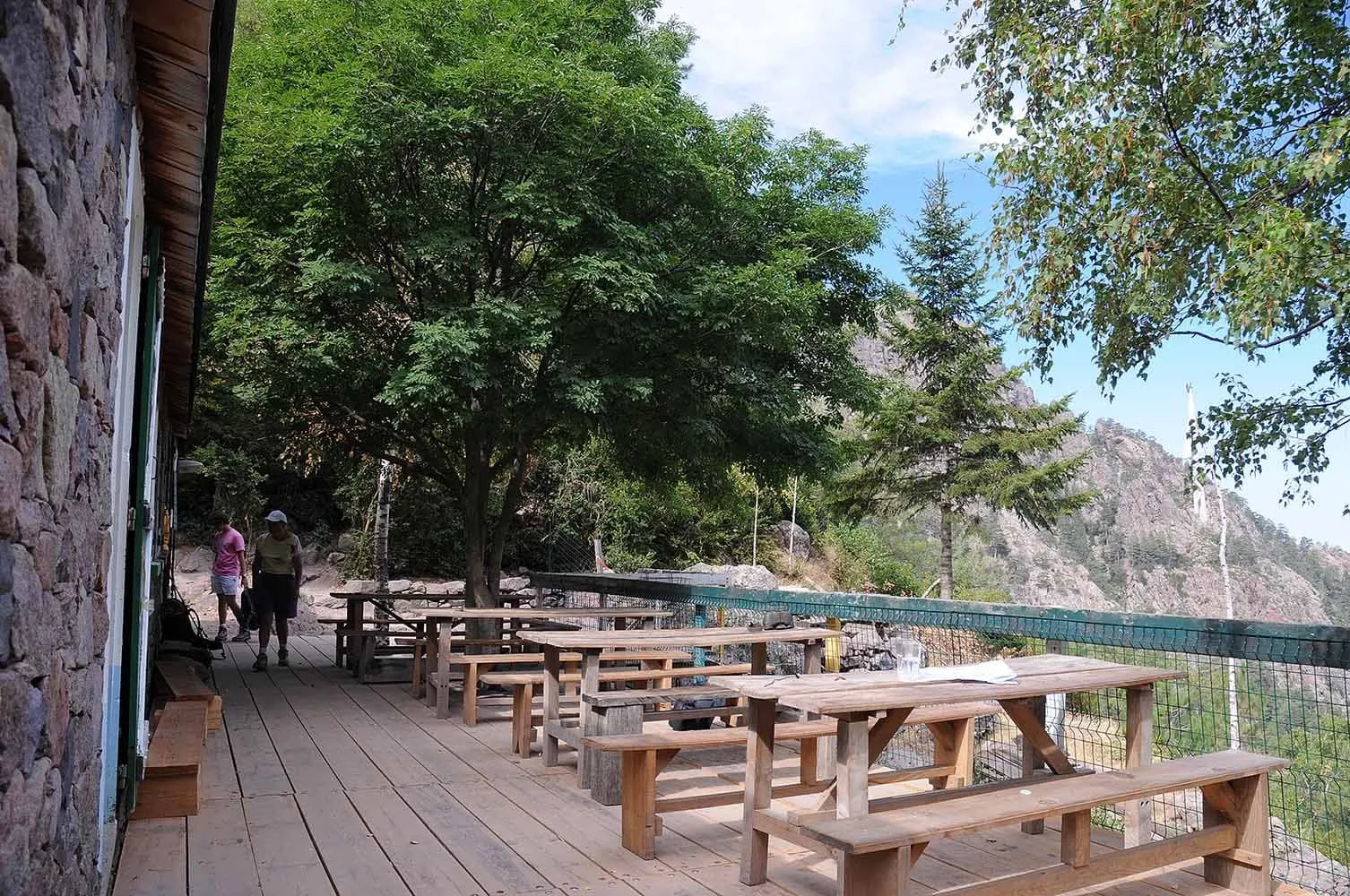
    We will arrange your accommodation on the GR20 in mountain huts. The mountain huts along the GR20 offer basic shared accommodation and food. These refuges come under the regional Corsican natural park’s authority and can host 25-50 people depending on the hut. In case the mountain huts are fully booked, we will automatically book a tent for you. In Refuge d'Ortu di u Piobbu, you will spend the night in a tent in all cases.

  • Navigation support

    Our trekking app also includes built-in navigation support. With GPS-based maps and offline access, you can follow the trail confidently and stay on route even without mobile signal.

Excluded

  • Traveling to and from

    You have to make your own way to the starting point. The total amount does not include personal transport.

  • Transfers

    Should you need any form of (public) transport on location, this is not part of the trekking package. This includes the use of taxi, bus, cable cars, gondolas, ferries, etc.

  • Travel Insurance

    Your international travel insurance is your own responsibility. Discuss your itinerary with the insurance company before your trek.

  • Personal expenses

    Personal expenses on such as souvenirs, drinks, and other similar expenses are for your own account.

  • Meals

    Meals are not included in the price on the GR20 . You can get something to eat at the mountain huts along the way or you can get food from the towns below the trail. If you want to have a warm dinner at the hut, remember to ask for it as soon as you get to the hut.

FAQ

  • What Is the Best Season for the GR20 on Corsica?

  • Travel to and from

  • What if the dates I want are not available?

  • If I book now, can I immediately arrange the rest of my trip?

  • How do I know if this trek is right for me?

How to Book

  • Booking

  • Availability

  • Cancellation policy

Reviews

Reviews