GR20 Northern Half (from South to North)

Duration: 9 days
Trails: T4 trails
Distance: 15 - 20 km per day
Ascent per day: 500 - 1000 m ascent per day

> Tackle the northern half of the GR20
> Stay overnight in rustic mountain refuges
> Hike the trail from south to north

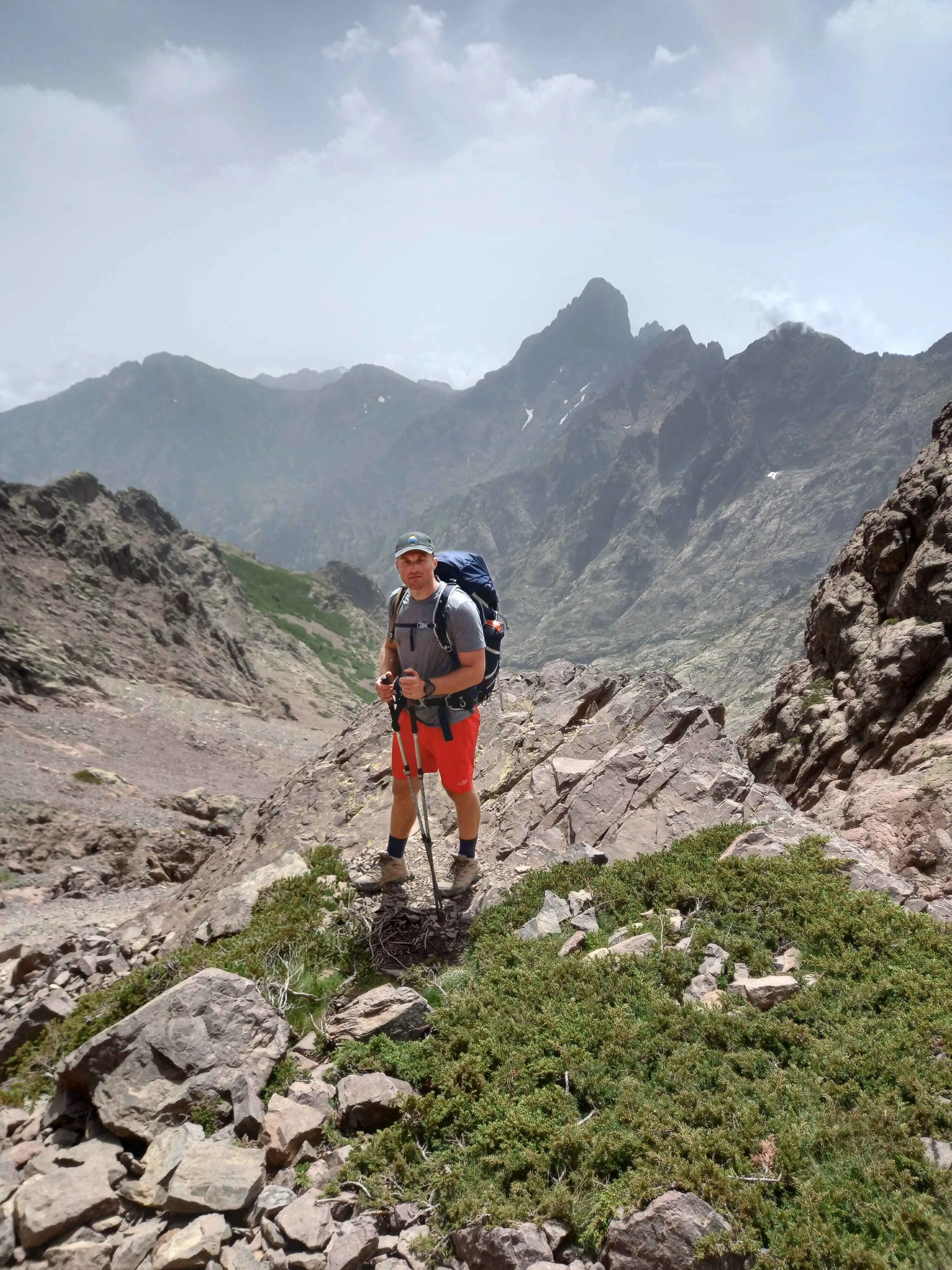
The GR20, known locally as *fra li Monti*, is a legendary long-distance hiking trail that traverses the rugged Mediterranean island of Corsica. Spanning roughly 180 km with a staggering 12,000 meters of elevation gain, it’s often hailed as the toughest GR trail in Europe due to its rugged and technical terrain.

Why Both Directions?
The GR20 can be hiked in either direction—north to south or south to north. While completing the entire trek takes about 15 days, you can opt for a shorter experience by dividing the trail into its northern and southern sections. The northern half, stretching over 9 days, begins in Vizzavona and takes you to Calenzana—or vice versa if you prefer. Known for its dramatic landscapes and steep ascents, this is the most challenging and popular segment of the GR20. Do you have what it takes to tackle this demanding adventure?


Camping: Prefer to camp along the trail? Many campsites are available! Contact our trekking experts to learn more about this option.

Itinerary

Day
1

Vizzavona - Refuge de l’Onda

Duration: 05:50 h
Distance: 10.9 km
Ascent: 1130 m
Descent: 670 m

This section of the GR20, marking the first stage of your journey, starts in Vizzavona (920 m) and climbs toward Refuge de l’Onda (1430 m), the gateway to the northern half of the trail. The route reaches a high point of 2141 m, offering breathtaking mountain views and a challenging but rewarding introduction to the GR20.

Highlights:

- Canaglia
- Tattone
- Lac d’Oro (1970 m)
- Bocca du Porco (2159 m)

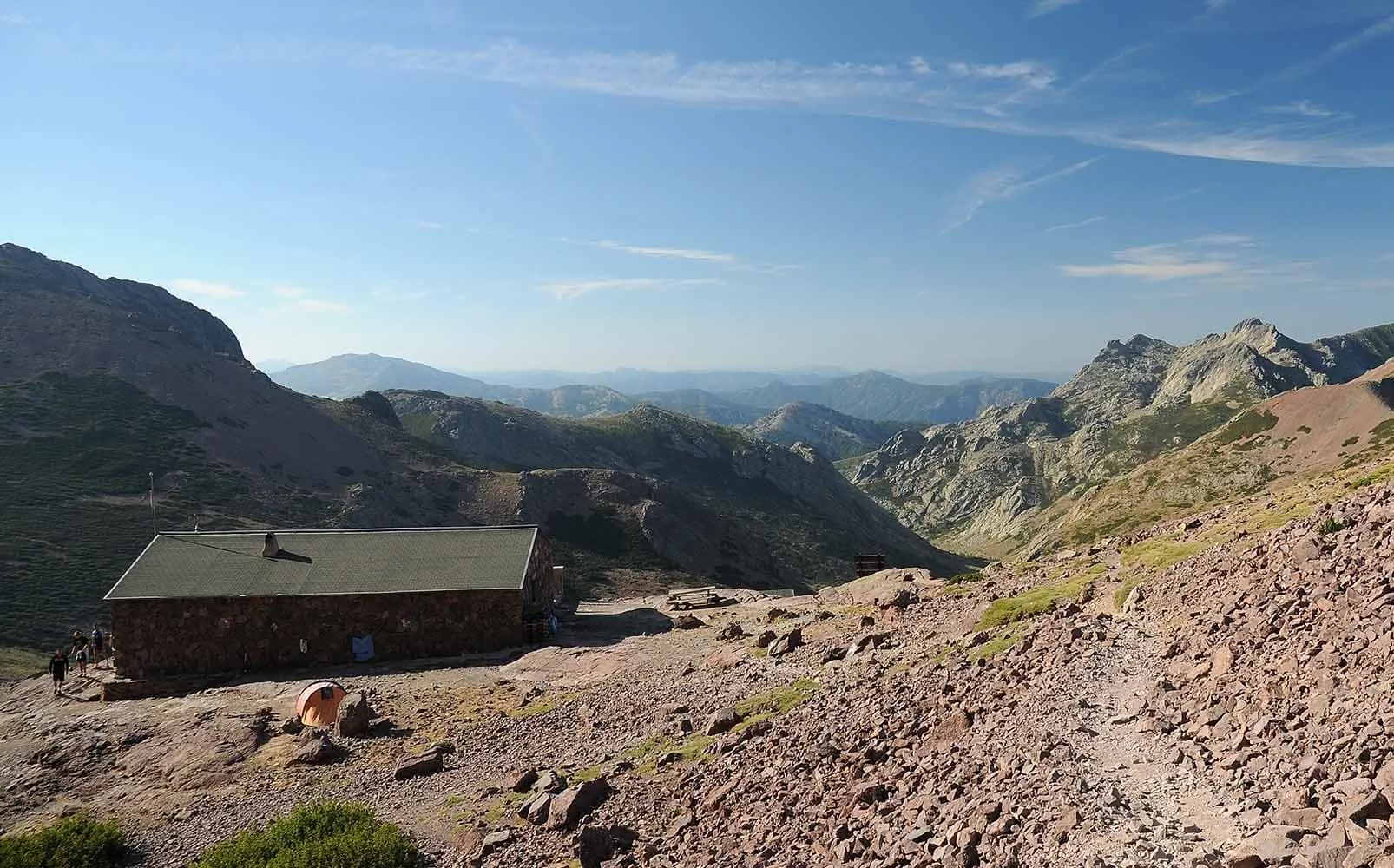
Refuge de l'Onda

Info
Refuge de l'Onda
Refuge de l'Onda
Day
2

Refuge de l’Onda - Refuge de Pietra Piana

Duration: 04:25 h
Distance: 9.95 km
Ascent: 850 m
Descent: 450 m

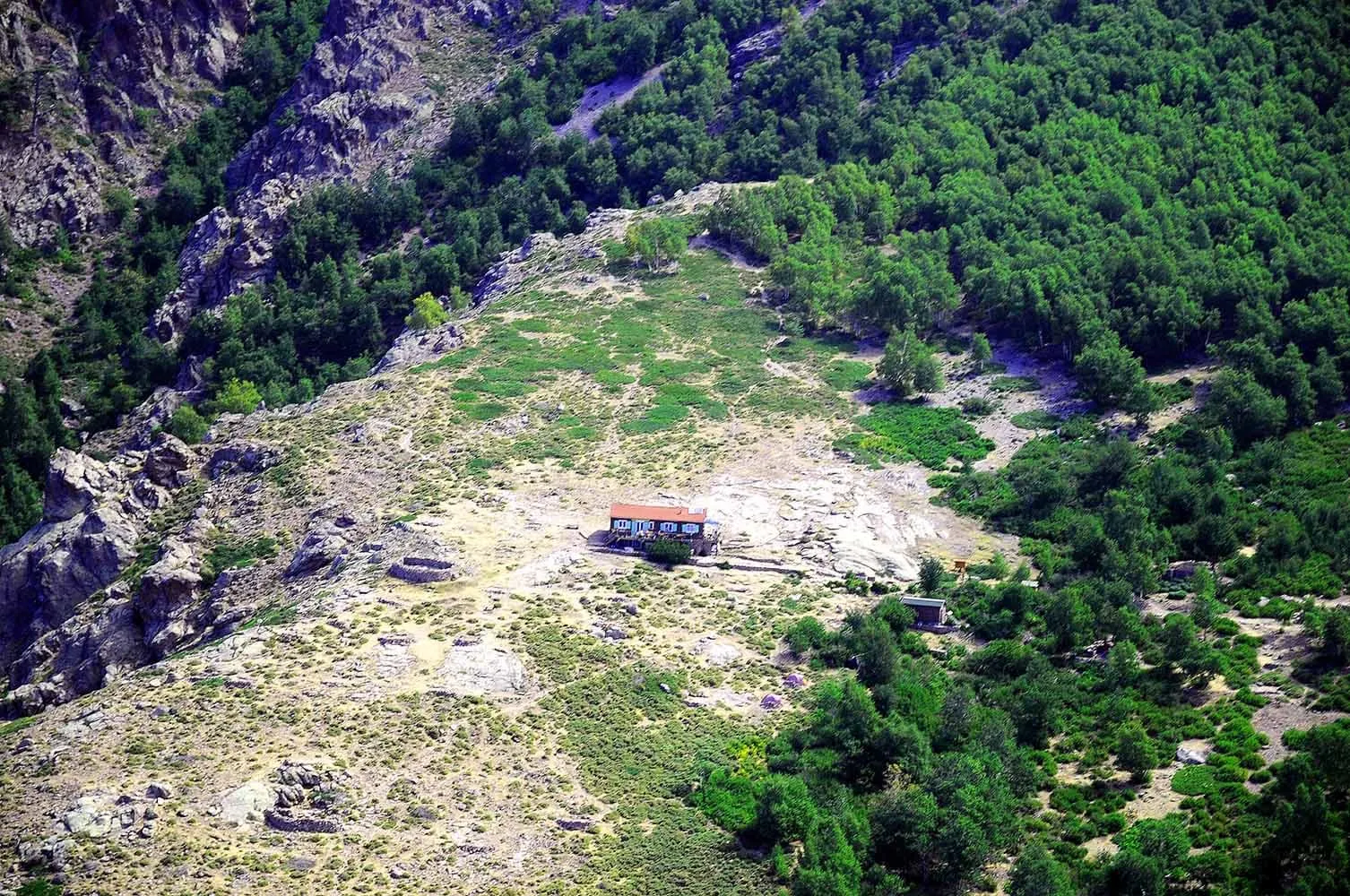
This stage connects the pastoral valley surrounding the Refuge de l’Onda with the high cirque of Petra Piana. Starting with a descent through pine trees and granite slabs, it leads to the secluded Manganellu Valley, where the river has carved out clear pools and waterfalls. This is followed by a long climb alongside the river upstream into increasingly alpine terrain, ending at a small stone refuge nestled beneath imposing peaks such as Monte Rotondo (2,622 m).

From the refuge, the path drops down a stony trail, passing terraces and sheepfolds, and quickly enters a forest where it meets the Manganellu River. After crossing the bridge near the Bergerie de Tolla, the route turns upstream and alternates between shaded woodland and open slabs beside the river. Waterfalls and natural pools provide the perfect opportunity for a short break!

Further up, the trees become sparser and the climb becomes steeper, zigzagging through boulder fields and low pines. The views open up as you climb higher, revealing the surrounding ridges and the turquoise pools far below. A final push over rough granite steps leads to a hanging basin, where the Refuge de Petra Piana sits on a grassy shelf. Enjoy your stay in this dramatic mountain setting.

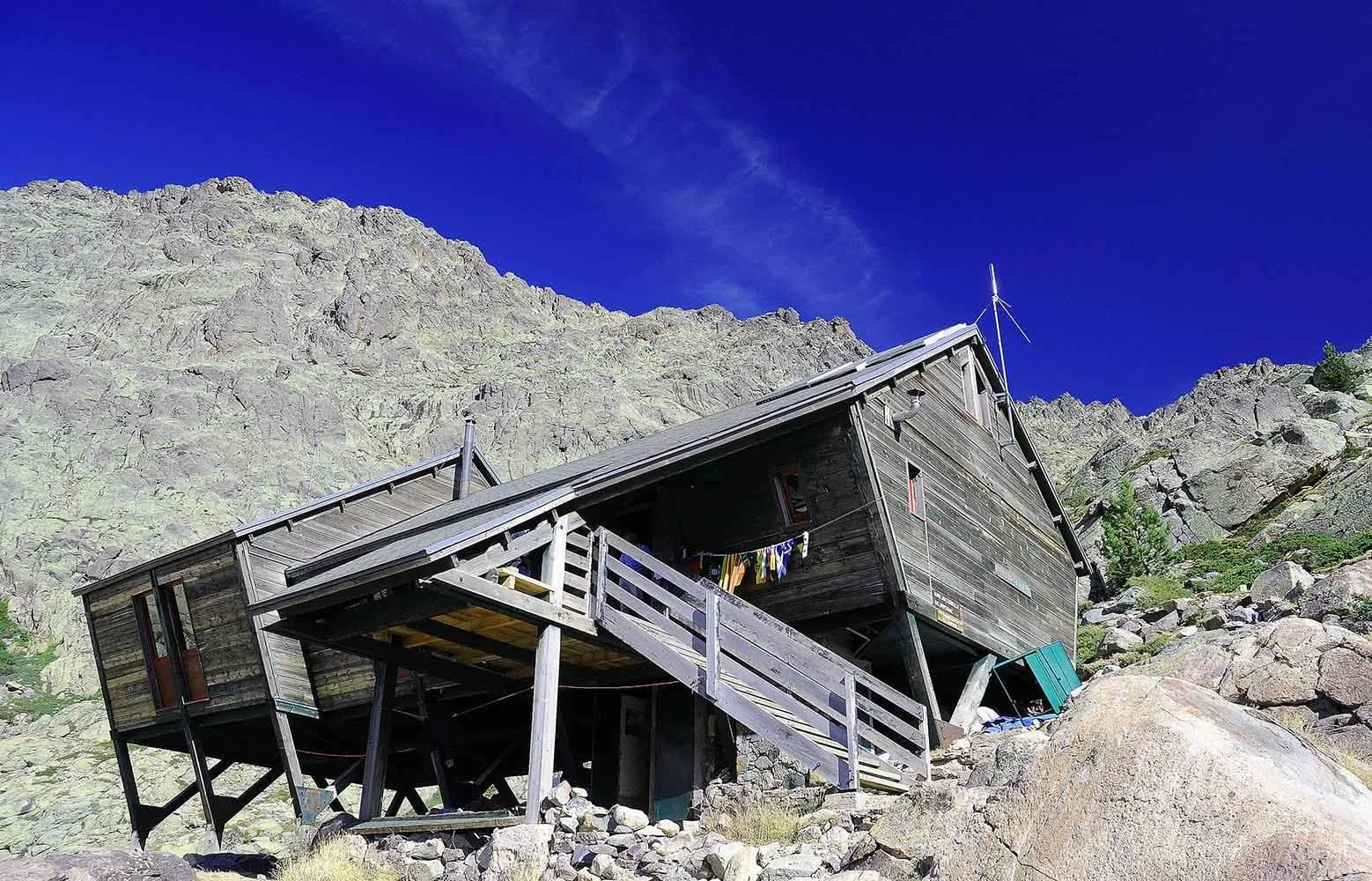
Refuge de Petra Piana

Info
Refuge de Petra Piana
Day
3

Refuge de Pietra Piana - Refuge de Manganu

Duration: 04:25 h
Distance: 8.44 km
Ascent: 540 m
Descent: 760 m

This is one of the most spectacular days out in the high mountains, taking you from the rocky cirque of Petra Piana to the open basin of Manganu. After a steady climb to a panoramic ridge, the path runs above the Restonica Valley, offering sweeping views of Monte Rotondo on your right and the glacial lakes below. A long descent across boulder fields and gentle wetlands then leads to the grassy plateau where the next refuge is located.

From there, a challenging trail ascends over broken granite to Bocca Muzzella (2,210 m), the day's main ascent, which offers superb views. The route then follows an airy ridge towards the Brèche de Capitello, undulating between passes such as the Col de Rinoso (2,170 m) and rocky knolls above the Lacs de Rinoso, Capitello and Melo. This is one of the most impressive passages of the GR 20! Short, sometimes steep sections over slabs and scree alternate with easier traverses across patches of turf and small tarns as you head west towards the Manganu basin.

Eventually, the path descends more decisively, leaving the ridge and dropping into a wide hollow filled with grass, streams and peat bogs. Faint tracks then lead you across the wet ground to drier pastures dotted with granite boulders. Refuge de Manganu is located on a small hill above the plateau. Surrounded by grazing animals and distant peaks, it is the perfect place for those seeking a quiet night in the heart of the mountains.

Refuge de Manganu

Info
Refuge de Manganu
Refuge de Manganu
Day
4

Refuge de Manganu - Refuge de Ciottulu di i Mori

Duration: 09:15 h
Distance: 24 km
Ascent: 1090 m
Descent: 720 m

This long mountain crossing links Manganu to the dramatic cirque located beneath the peaks of Paglia Orba (2,525 metres) and Capu Tafunatu (2,335 metres). Gentle slopes, vast plateaus and river valleys alternate with steeper ascents, ensuring a constant variety of terrain. Highlights include the wetlands around the Lac de Nino lake and the sculpted pools of the upper Golo River. The day concludes at a spectacularly located refuge on a rocky outcrop above the valley.

From here, the path gradually climbs across open ground to reach Bocca a Reta (1,883 m), passing through Pianu di Campotile, which is filled with old bergeries, bathing and resting areas, and the broad hollow of Lac de Nino, where horses and cows graze amongst peat bogs and clear streams. A descending traverse then leads across pozzines and into a scattered forest. Eventually, the path joins a clearer trail that drops through pine trees via the Saint-Pierre Pass (1,450 m) towards the road at Castelo di Vergio.

After this, the route passes through a wooded area before ascending the valley on a rocky path alongside the Golu River, passing waterfalls and polished rock pools. Look up from time to time to catch a glimpse of the blue sea on the horizon!Higher up the valley narrows and the climb steepens on zigzags over boulders and short rocky steps, with ever wider views back towards the central spine of Corsica.

The final section traverses a stony slope to reach Refuge de Ciottulu di i Mori, perched high above the river with cliffs and ridges all around. Here you find a simple dining room, water and dormitories, plus unforgettable sunset views over the surrounding peaks.

Refuge de Ciottulu di i Mori

Info
Refuge de Ciottulu di i Mori
Day
5

Refuge Ciottulu di i Mori - Refuge de Tighiettu

Duration: 03:00 h
Distance: 6.42 km
Ascent: 300 m
Descent: 640 m

This shorter stage descends from the high perch of the previous refuge towards the wild valley below Paglia Orba (2,525 m) and Capu Tafunatu (2,335 m). The route begins with superb balcony views of cliffs and ridges, then drops into a narrow river valley where clear pools among smooth granite slabs invite a pause. A final ascent leads into a quiet side basin where the next refuge stands surrounded by steep granite walls.

From the refuge the path heads down towards the Foggiale Pass (1,962 m), which boasts one of the most iconic panoramas of the GR20. Then, a steep, zigzagging descent takes you to the Golo Valley, crossing stony slopes with constant views of the Paglia Orba massif. As you descend, the terrain becomes softer and the trail follows the riverbed. Here you'll cross rapids along smooth rock slabs, distant waterfalls and natural swimming spots set among pines and boulders. In warm weather, you may be tempted to pause and dip your feet in the clear water.

The route then continues through sparse woodland and grassy areas, passing small meadows where horses and cows can often graze. Along the way, you will also come across the Bergerie de Ballone, a convenient shepherd's hut. The route then turns into a tributary valley where you will encounter a steeper, rockier path for the final short climb alongside a stream. The refuge suddenly appears on a grassy terrace backed by cliffs and scattered pines. Once you arrive, you can enjoy the sound of the water below and the views of the steep surrounding valley walls as the evening light fades.

Refuge de Tighjettu

Info
Refuge de Tighjettu
Refuge de Tighjettu
Day
6

Refuge de Tighjettu - Refuge d'Asco Stagnu

Duration: 06:18 h
Distance: 8.45 km
Ascent: 930 m
Descent: 1150 m

From the rocky bowl surrounding Tighjettu, you go straight into a long climb towards the skyline beneath Monte Cinto (2,706 m). Here you'll cross slabs and broken ridges while enjoying views of the Corsican interior. After reaching the Pointe des Éboulis (2,607 m), the highest col on the entire GR20 route, the landscape changes as you descend steeply on scree past secluded alpine lakes towards the wooded basin of Haut Asco.

From the refuge, the path follows the Crucetta stream, climbing steadily via granite steps and short scrambling sections towards Monte Cinto. To one side, views open up to Capu Rossu (2,498 m) and Capu Larghia (2,475 m), while the wild Crucetta valley lies below. Further up, the trail turns towards Bocca Crucetta (2,452 m), a lofty viewpoint overlooking the dark cirque of Lac du Cinto, a ridge near Capu Falu (2,540 m). You will then continue over unstable scree to Pointe des Éboulis, where you can enjoy sea views.

The descent begins steeply, winding down gullies and ledges to Lac d'Argento. Later, the path eases off, zigzagging down to Lac de Capitellu. Here, you will cross a wooden bridge over the Tighiettu stream, which leads to the Asco Valley floor, where water runs over pale slabs and small cascades. The final section passes through an open pine forest and ski pistes before reaching the hut.

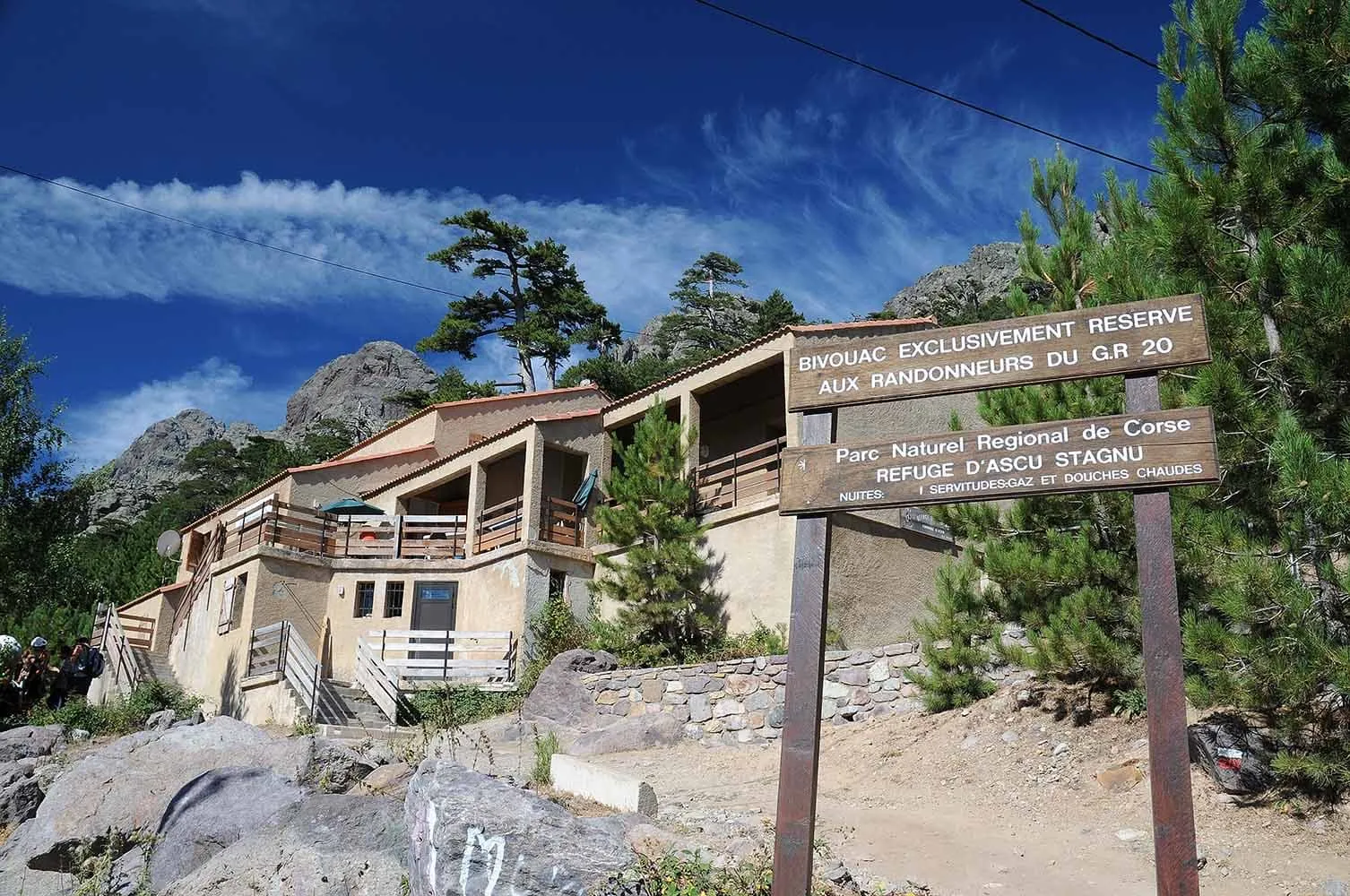
Refuge d'Asco Stagnu

Info
Refuge d'Asco Stagnu
Day
7

Refuge d'Asco Stangu - Refuge de Carrozzu

Duration: 03:50 h
Distance: 5.02 km
Ascent: 560 m
Descent: 740 m

Starting from the Asco ski station, this route may seem short, but it is intense. You climb out of the pine forest and into a rocky, high valley beneath Muvrella Peak (2,148 m). Soon, you will find a secluded mountain lake before crossing a broad pass. From here, the route descends for a long time, following slabs and ledges alongside a clear stream until you reach the Spassimata stream. The Refuge de Carozzu is tucked away among the pines on a balcony above the valley.

From the hut, follow the stony path and soon leave the trees behind to enter a challenging area of rough granite towards the Bocca di Stagnu pass (2,010 m), which overlooks the Asco Valley. The trail takes you via stepped boulders and, at times, easy slabs towards the Muvrella Pass (1,990 m), which is located beneath the Muvrella Peak. The path then leads you to the secluded Lac de la Muvrella, nestled in a cirque below the summit.

Further from the lake, the route descends to a windy saddle where you catch your first glimpse of the Lamitu Valley and the deep valleys to the north.The descent continues with a traverse of polished slabs, protected by chains, which lead into Spasimata. Here, you will hop over pools, follow ledges above the river and cross the famous swing footbridge, which is located just above a small waterfall. The perfect spot for a photo!

Beyond the bridge, the path winds through pine trees and boulders, with the sound of water never far away. A final section through the forest leads to the Carozzu clearing, where the terraces of the refuge overlook the cliffs and the winding valley below.

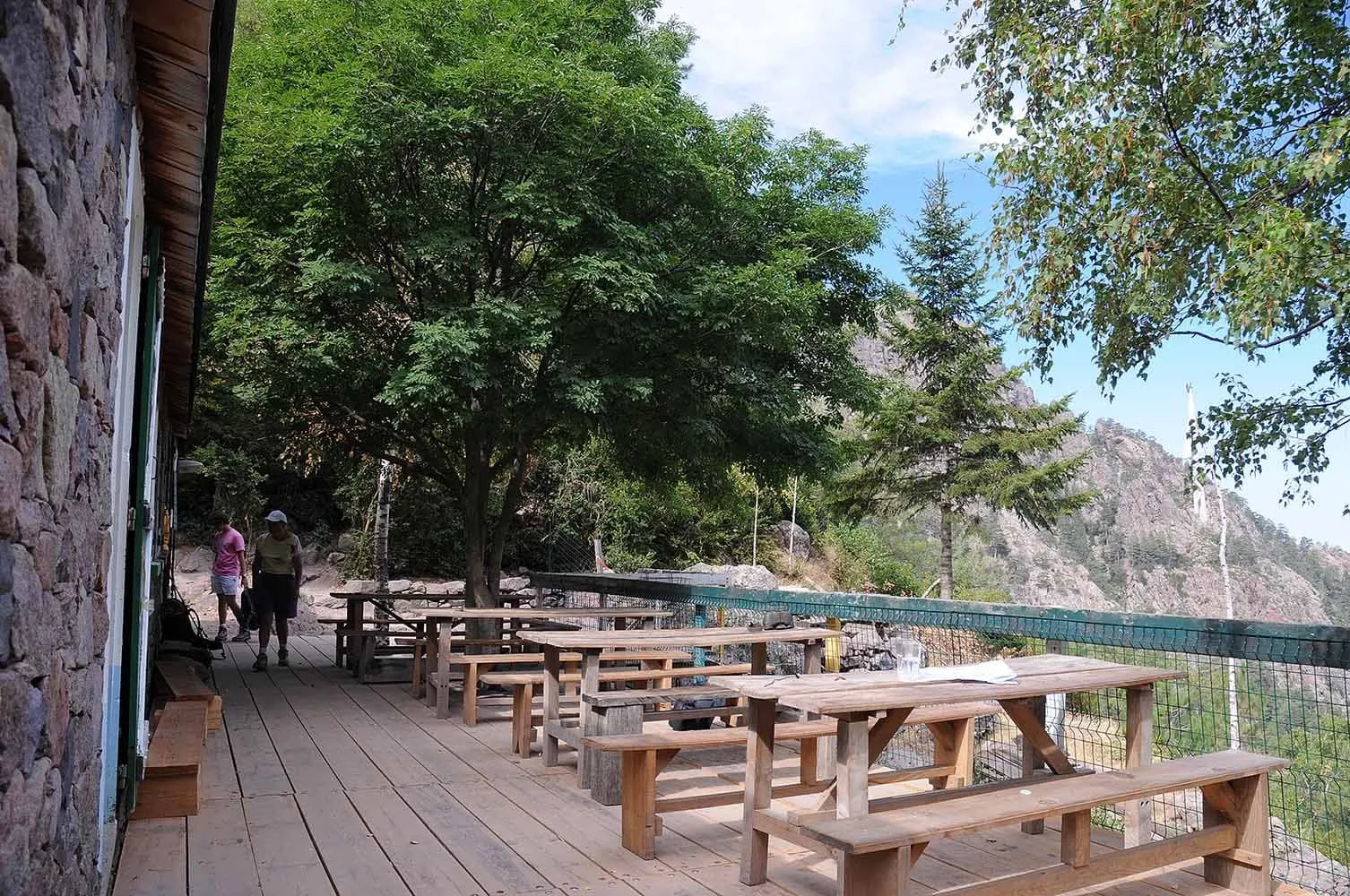
Refuge de Carozzu

Info
Refuge de Carozzu
Refuge de Carozzu
Day
8

Refuge de Carrozzu - Refuge d'Ortu di u Piobbu

Duration: 04:30 h
Distance: 7.53 km
Ascent: 910 m
Descent: 650 m

Leaving the pine-covered area around the refuge, the route heads straight towards higher ground. A steady climb will take you to a rocky balcony above the valley, where you can enjoy early views of the distant ridges and, on clear days, the sea. At Bocca Avartoli, the landscape opens up to reveal a wild mix of bare summits, deep gullies and slabs of grey granite. Beyond the main crest, the terrain gradually becomes softer as you descend and the path angles towards the next hut.

From there, you follow a stony path alongside a mountain stream, weaving between pines and boulders. The trail then steepens, forming tight zigzags as it quickly ascends rough granite steps to Bocca di L'Innominata (1,865 m). Later, you will reach Bocca Avartoli (1,898 m), where there are multiple climbing passages until the Col d'Avartoli pass (1,898 m). From there, you traverse towards Bocca Piccaia (1,920 m), enjoying a grandstand view of the Parc Naturel Régional de Corse. Springs and old stone ruins provide an opportunity to pause before the route descends for a long time, with the horizon widening towards the western coast.

The descent alternates between rocky ledges and softer forest paths, with short scrambly sections where it is useful to use your hands. As you descend, the pines and maquis return. A final undulating traverse across a grassy shoulder will lead you straight to the refuge, nestled among twisted pines. Time for a well-deserved rest!

Refuge d'Ortu di u Piobbu

Info
Refuge d'Ortu di u Piobbu
Day
9

Refuge d'Ortu di u Piobbu - Calenzana

Duration: 04:55 h
Distance: 11.5 km
Ascent: 100 m
Descent: 1380 m

This stage takes you from the high granite perches down into the warm foothills of the Balagne region. Gradually, forested ridges and rocky outcrops give way to maquis and ancient terraces, and the Mediterranean comes into view on the horizon. As the day progresses, the views widen to encompass Monte Grosso and the gulf near Calvi, before the path finally descends into the tiled roofs and bell towers of Calenzana.

From the refuge, the trail crosses challenging, pine-dotted rocky slopes before beginning a long descent along a stony crest. Passing the passes of Bocca à U Bassiguellu (1,486 m) and Bocca à U Saltu (1,220 m), it continues along balconies and gullies, offering expansive vistas of deep valleys and the distant coastline. Further down, the path winds through shrubs, old stone walls and abandoned fields. It crosses small streams and passes wayside crosses as the landscape becomes more cultivated and gentle.

As you approach the valley floor, the route joins wider tracks and enters the outskirts of Calenzana. Narrow lanes lead past chapels and shaded squares to the village centre, where you will find fountains and cafés under plane trees. Here, you can put down your backpack and celebrate with a drink on a terrace overlooking the Balagne hills.

Included

  • Full travel guide

    You’ll receive access to our trekking app, which serves as your complete digital travel guide for the GR20 . Inside, you’ll find everything you need for your trek: route descriptions, hiking maps, navigation support, payment information, and all the key details specific to your journey.

  • Accommodation on the GR20

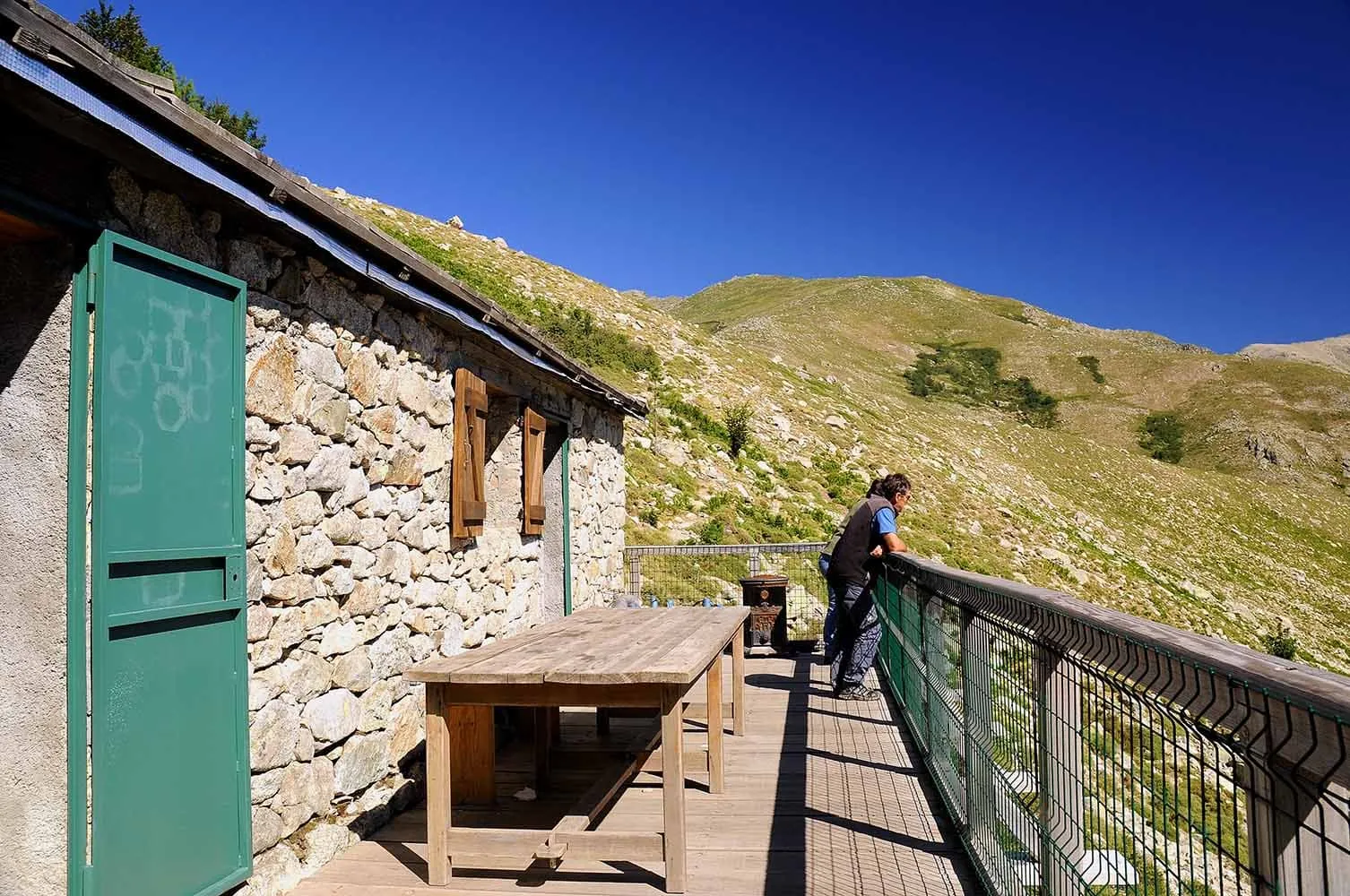
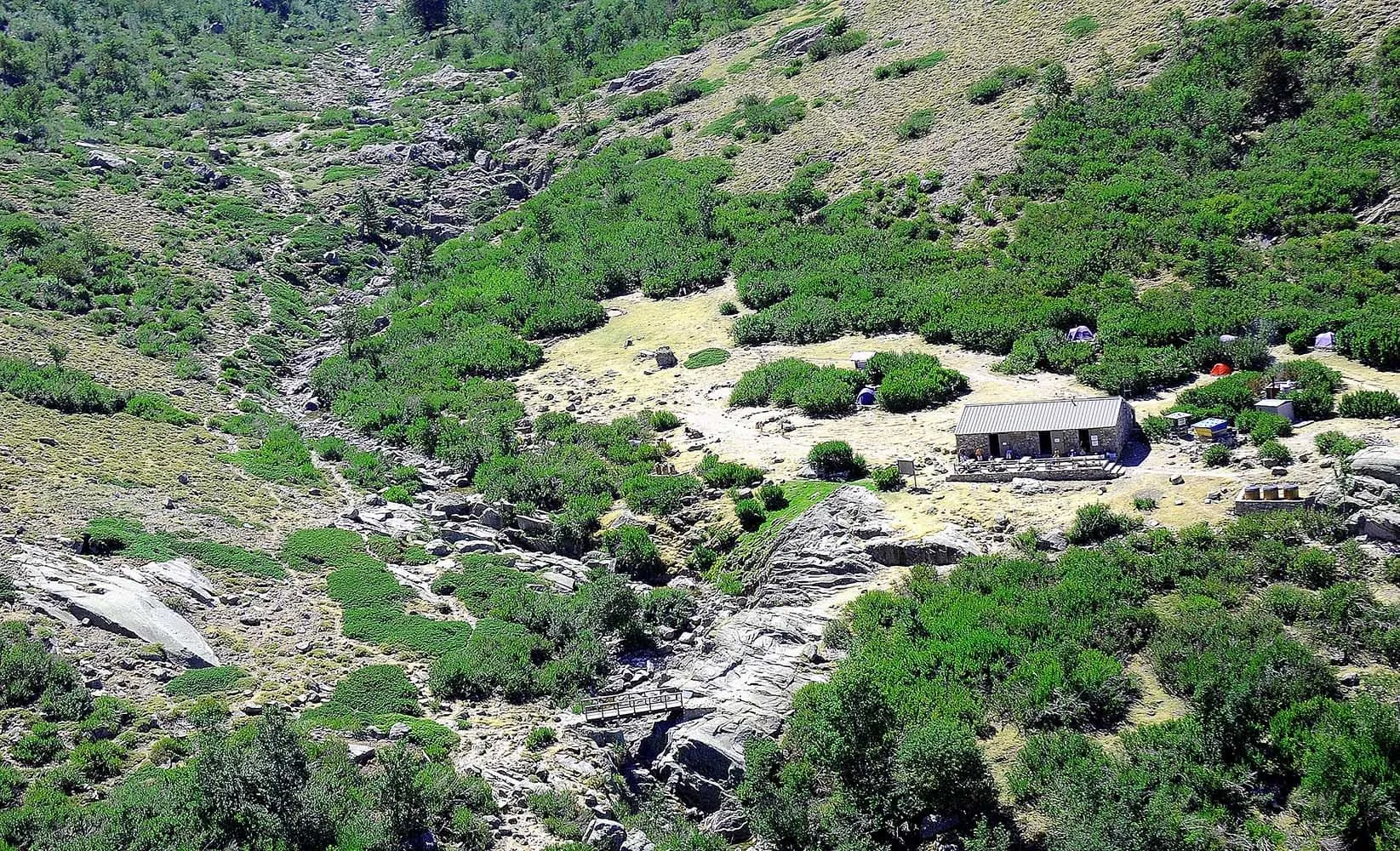
    We will arrange your accommodation on the GR20 in mountain huts. The mountain huts along the GR20 offer basic shared accommodation and food. These refuges come under the regional Corsican natural park’s authority and can host 25-50 people depending on the hut. In case the mountain huts are fully booked, we will automatically book a tent for you. In Refuge d'Ortu di u Piobbu, you will spend the night in a tent in all cases.

  • Navigation support

    Our trekking app also includes built-in navigation support. With GPS-based maps and offline access, you can follow the trail confidently and stay on route even without mobile signal.

Excluded

  • Traveling to and from

    You have to make your own way to the starting point. The total amount does not include personal transport.

  • Transfers

    Should you need any form of (public) transport on location, this is not part of the trekking package. This includes the use of taxi, bus, cable cars, gondolas, ferries, etc.

  • Travel Insurance

    Your international travel insurance is your own responsibility. Discuss your itinerary with the insurance company before your trek.

  • Personal expenses

    Personal expenses on such as souvenirs, drinks, and other similar expenses are for your own account.

  • Meals

    Meals are not included in the price on the GR20 . You can get something to eat at the mountain huts along the way or you can get food from the towns below the trail. If you want to have a warm dinner at the hut, remember to ask for it as soon as you get to the hut.

FAQ

  • What Is the Best Season for the GR20 on Corsica?

  • How to Get To the Starting Point of the Trek

  • How to Come Back at the End of the Trek

  • What if the dates I want are not available?

  • If I book now, can I immediately arrange the rest of my trip?

  • How do I know if this trek is right for me?

How to Book

  • Booking

  • Availability

  • Cancellation policy

Reviews

Reviews