Flora and Fauna in Switzerland: Wildlife and Nature on the Trail

Flora and Fauna in Switzerland: Wildlife and Nature on the Trail
Trekking experts per destination
Free cancellation up to eight weeks in advance
Quick personal advice

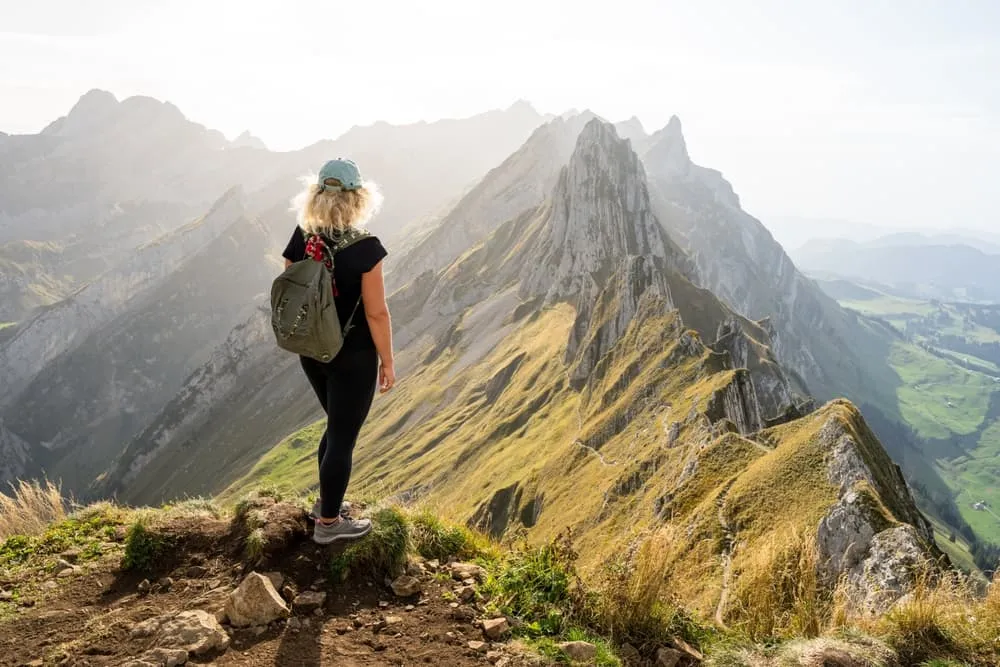
Above the forests of Switzerland, the landscape changes. Trees disappear, the air cools, and the terrain opens into rock, grass, and sky. At first glance, the high Alps can seem stark and exposed a place shaped more by wind and snow than by life. But the longer you look, the more movement you begin to notice.

The Swiss Alps host one of Europe’s most finely balanced mountain ecosystems, where every species is shaped by altitude, short summers, and long winters. From animals navigating sheer cliffs to flowers blooming in narrow seasonal windows, survival here depends on adaptation. If you want to experience this transition from valley forests to life above the treeline firsthand, Hut-to-Hut Hiking in Switzerland allows you to move through these high-altitude worlds step by step.
Tour du Mont Blanc 12880

Wildlife of the Swiss Alps: Life Above the Treeline

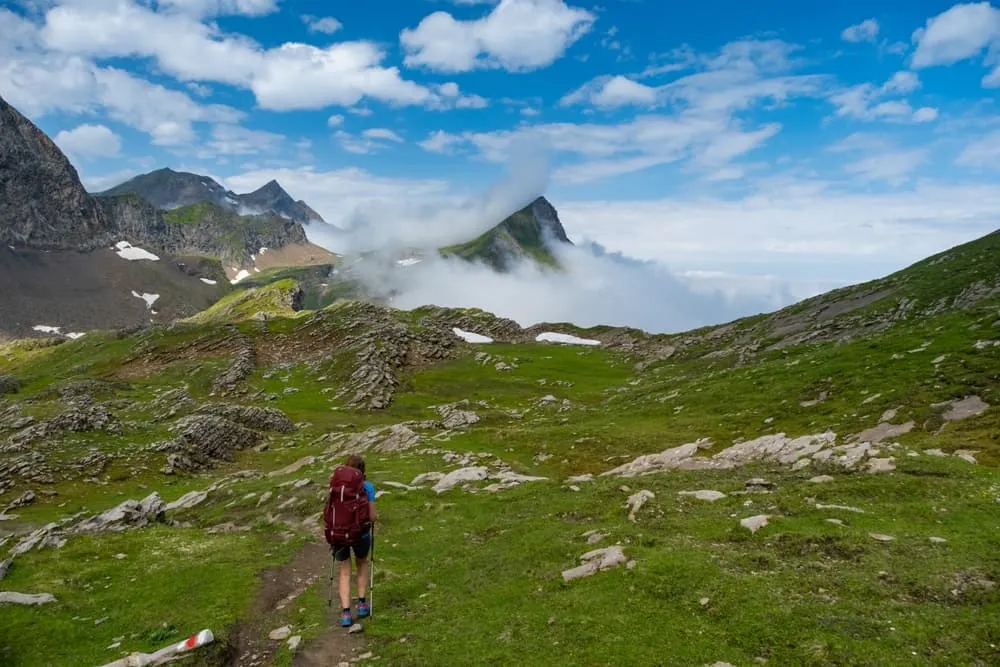
At first glance, the high Alps can feel almost empty. Above the treeline there are no forests, no sheltering canopies, just rock, grass, wind, and sky. The weather changes quickly, nights are cold even in summer, and winter can stretch across most of the year. It doesn’t immediately look like a place where much could survive. And yet, life here is everywhere once you start paying attention. The Swiss Alps are home to a surprisingly rich ecosystem, shaped by altitude, snow, and short summers. Every plant and animal you encounter up here has had to adapt, sometimes in remarkable ways. Hiking in this environment isn’t just about moving through dramatic scenery; it’s about stepping into a world where survival depends on timing, efficiency, and resilience.
Wildlife of the Swiss Alps: Life Above the Treeline

Masters of the Cliffs: Ibex and Chamois

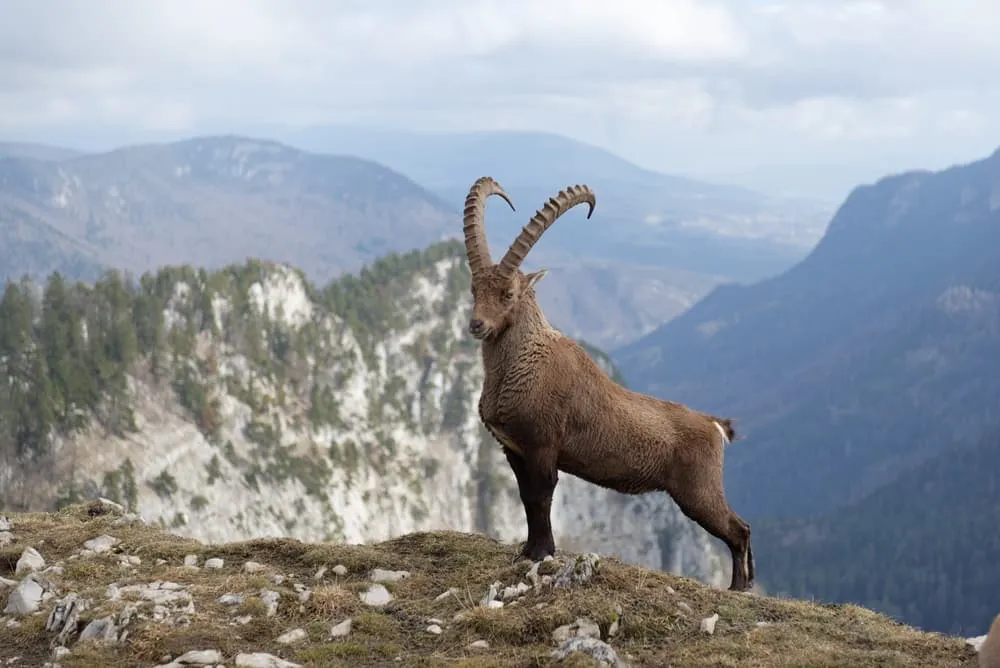
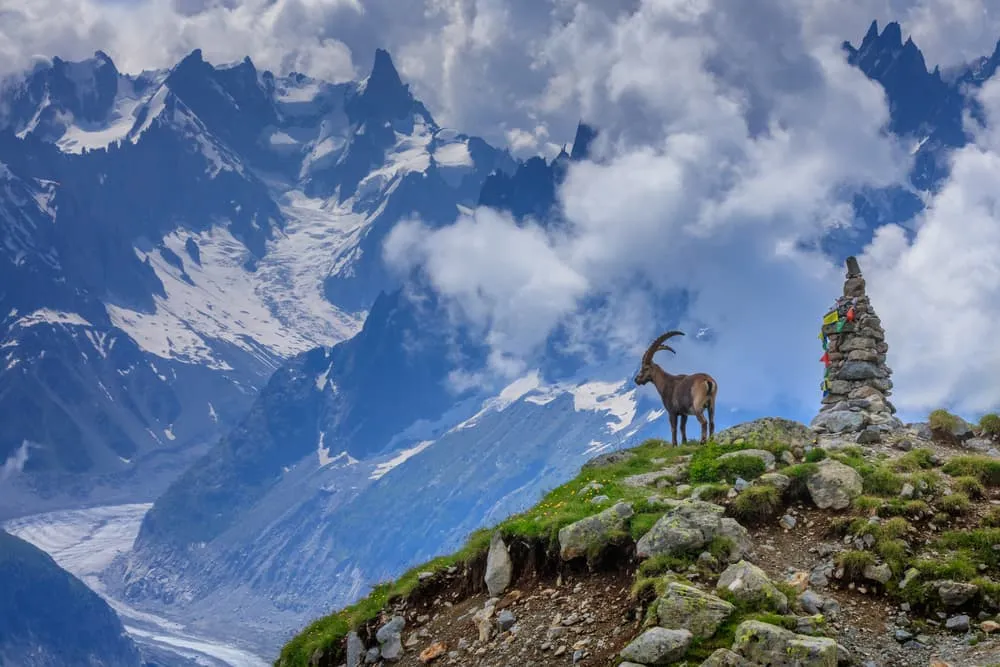
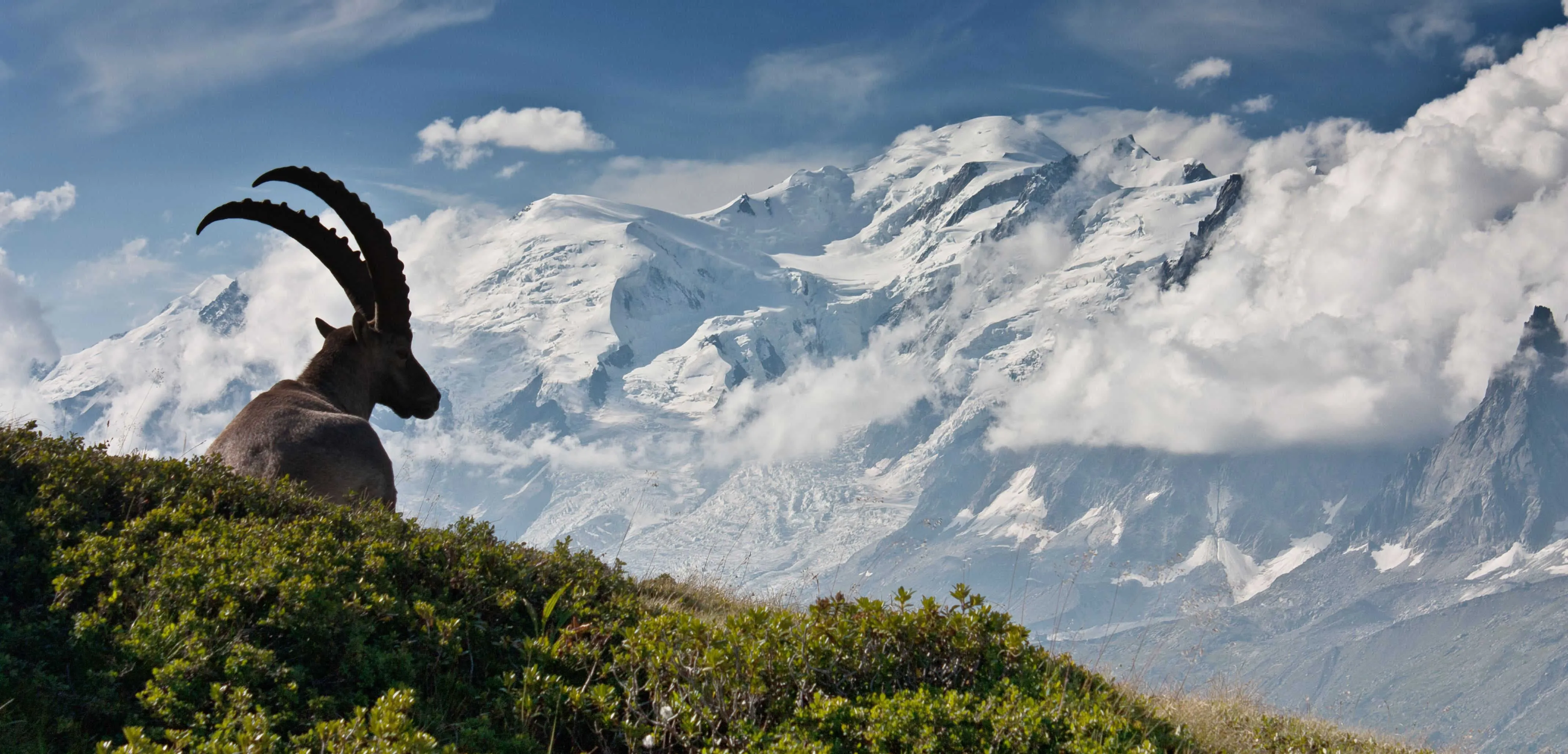
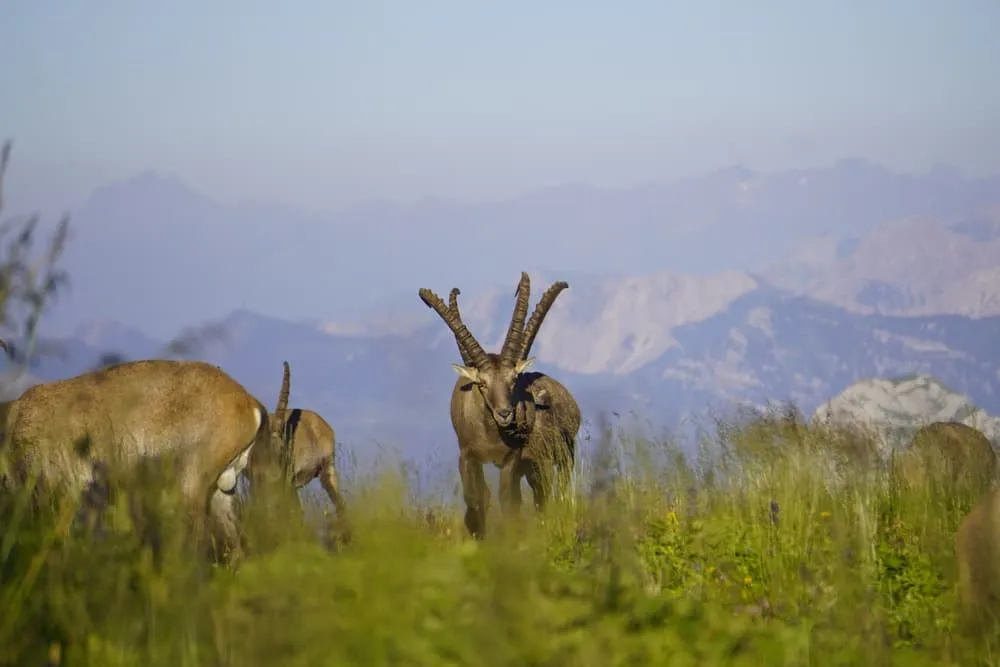
Few animals feel as perfectly at home in the Alps as the Alpine ibex. With their heavy, backward-curving horns and stocky build, they look like part of the mountain itself. Adult males can weigh more than 100 kilograms, yet they move across steep rock faces with an ease that seems almost impossible. What many hikers don’t realize is that ibex were once nearly gone from Switzerland. By the early 1800s, hunting had wiped them out across most of the Alpine range. It wasn’t until the early 20th century that reintroduction efforts began, bringing animals back from protected populations in Italy. Today, seeing ibex on a ridgeline is not just a wildlife sighting, but the result of decades of conservation work. Their secret lies in their hooves. A hard outer edge grips small rock ledges, while a softer inner pad creates friction against smooth stone. It allows them to climb terrain that would make even experienced mountaineers hesitate. The chamois, often spotted on grassy slopes near rocky outcrops, is slimmer and more agile. Smaller and darker than the ibex, it moves quickly and confidently between forest and alpine terrain. While ibex tend to dominate the cliffs, chamois are more adaptable, shifting their elevation with the seasons in search of food and safety. For hikers, catching sight of either usually requires slowing down, scanning the slopes, and being patient.
Masters of the Cliffs: Ibex and Chamois

The Whistle of the Marmot

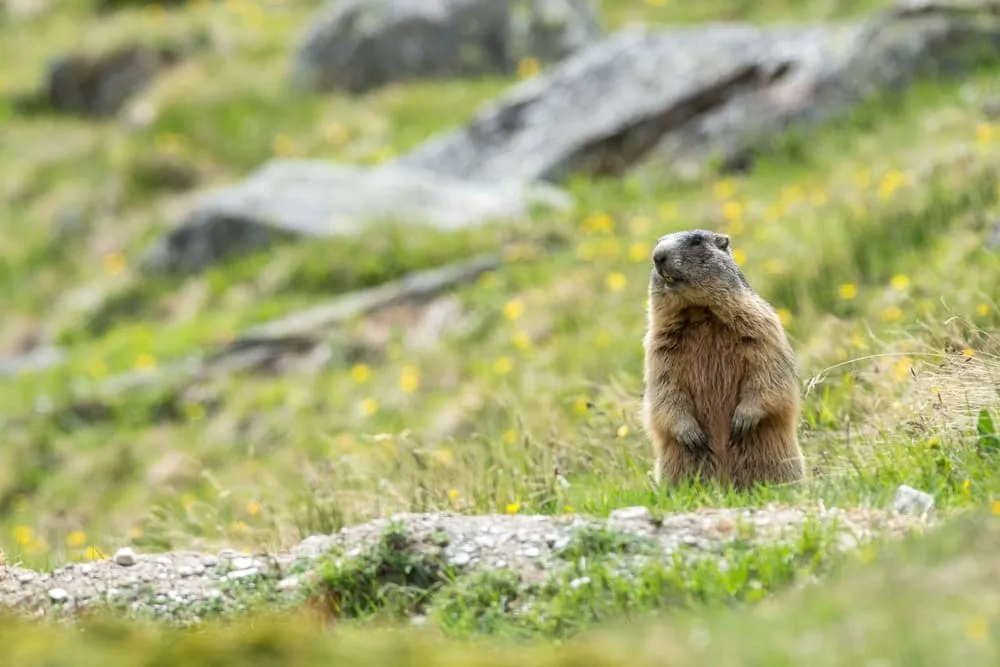
Sometimes you hear them before you see them. A sharp, piercing whistle cuts through the mountain air, and suddenly you realize you’re being watched. Alpine marmots live in burrow systems beneath high meadows, often near hiking trails. They are social animals, living in family groups and sharing complex underground tunnels. The whistle is a warning call, alerting others to potential danger. If you stand still long enough after hearing it, you might see one perched upright near its burrow, scanning the landscape. Marmots have mastered the art of preparation. During the short Alpine summer, they feed constantly on grasses and herbs, building up the fat reserves they need to survive winter. When the snow returns, they hibernate for up to eight months. Their body temperature drops, their heart rate slows dramatically, and they conserve every bit of energy possible. Up here, survival depends on making the most of the few warm months available.
The Whistle of the Marmot

Raptors of the High Skies: Golden Eagles and Bearded Vultures

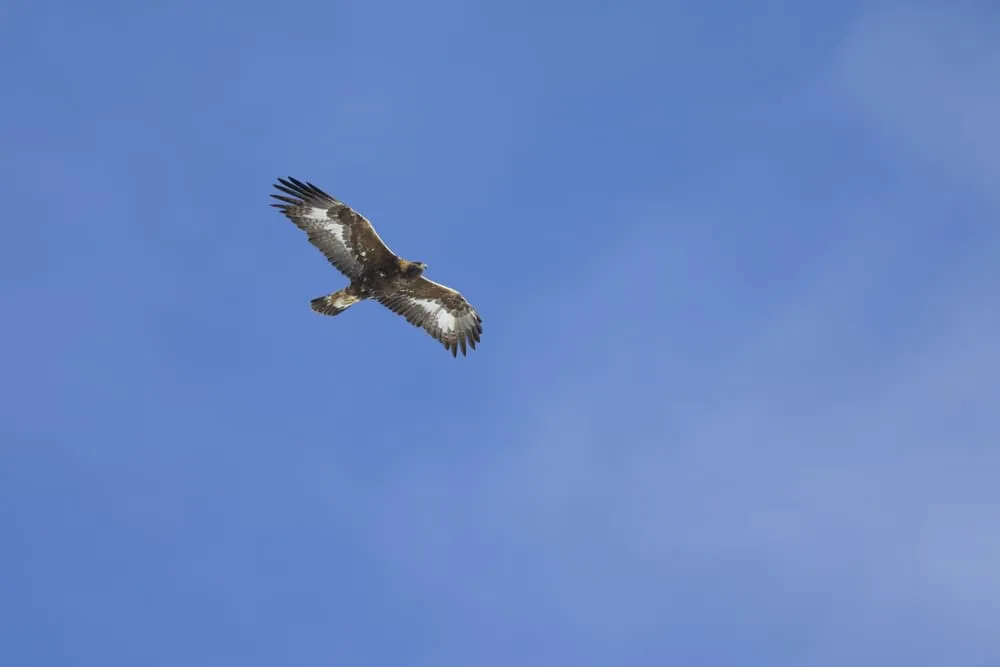
Look up while walking along an exposed ridge and you may see large birds circling high above. Golden eagles use rising warm air currents to glide effortlessly across valleys. With wingspans of more than two meters, they are powerful hunters, preying on marmots, hares, and occasionally young chamois. Their nests are usually built on inaccessible cliff ledges, and they defend wide territories. You might not notice them at first, but once you do, their presence changes the way you see the landscape. The mountains are not just scenery; they are hunting grounds. Even larger is the bearded vulture, or lammergeier. With a wingspan approaching three meters, it is one of Europe’s largest birds. Once hunted to extinction in the Alps due to myths and fear, it has been slowly reintroduced since the 1980s. Seeing one glide silently overhead is rare, but unforgettable. Unlike eagles, bearded vultures feed mainly on bones. They carry them high into the air and drop them onto rocks to break them open. It is a strange and fascinating survival strategy, perfectly suited to an environment where little goes to waste.
Raptors of the High Skies: Golden Eagles and Bearded Vultures

The Visible Presence: Cows, Sheep and Alpine Farming

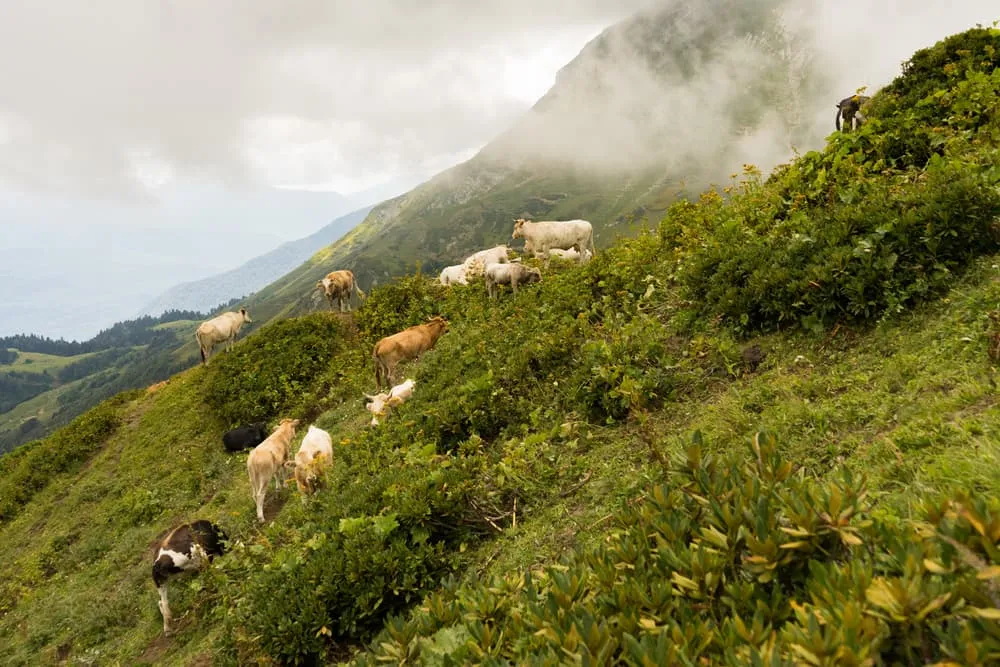
While wild animals capture the imagination, the most visible creatures in the Swiss Alps are often cattle. The sound of cowbells echoing across a valley is part of the mountain experience. Each summer, livestock are moved from valley farms to high pastures in a tradition that has shaped these landscapes for centuries. These alpine meadows are rich in grasses and herbs that thrive during the short growing season. Grazing keeps the slopes open and prevents shrubs and trees from slowly reclaiming the land. In this way, cows, sheep, and goats help maintain the very scenery that hikers love. Goats, especially, are well suited to steeper and rougher terrain. Their browsing limits shrub growth, supporting open habitats that benefit certain plant species. At the same time, grazing must be carefully managed. Alpine soils are thin and recover slowly from damage. In Switzerland, farming and conservation often work side by side, maintaining a balance between food production and biodiversity. The Alps are not purely wild, nor purely agricultural. They are a shared landscape shaped by both wildlife and human tradition.
The Visible Presence: Cows, Sheep and Alpine Farming

Life Above the Treeline: Alpine Flora

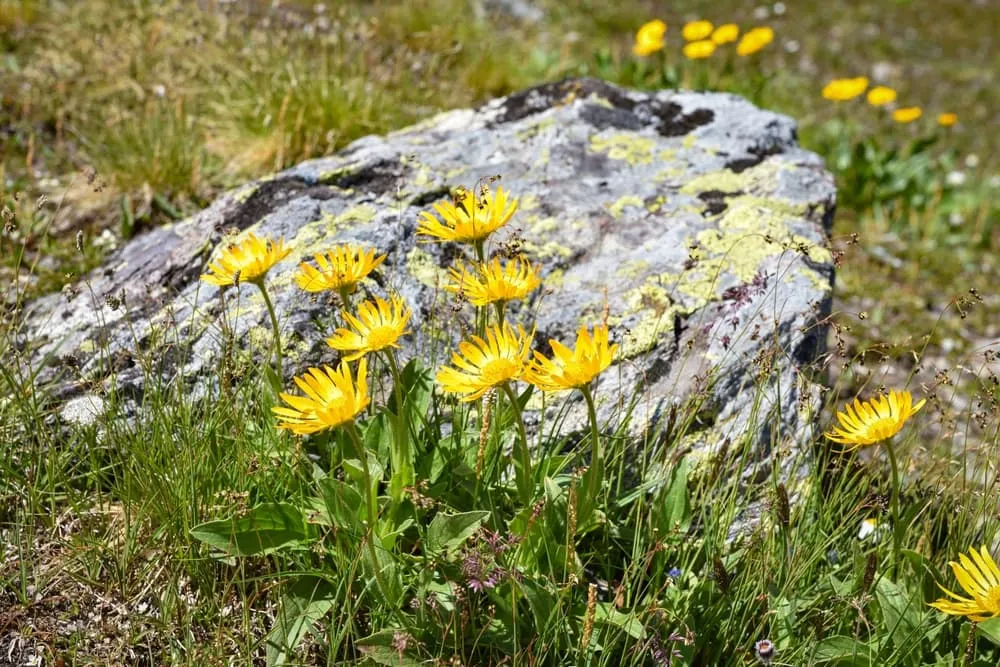
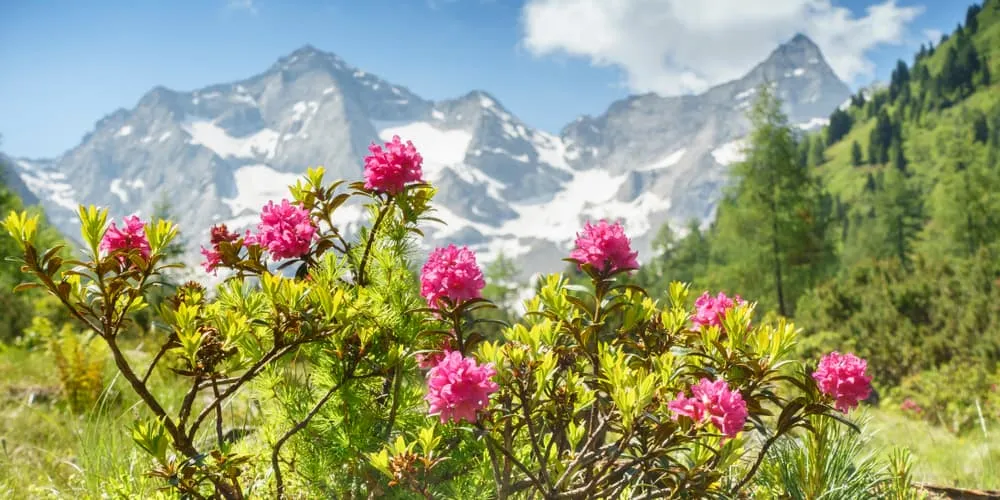
The treeline in Switzerland usually lies somewhere between 1,800 and 2,200 meters, though it varies depending on region and sun exposure. Above this point, trees struggle against wind, cold, and a short growing season. But the absence of forests does not mean an absence of life. Instead, plants become smaller, tougher, and more efficient. Many alpine flowers grow low to the ground, avoiding wind and conserving heat close to the soil. Some, like edelweiss, have woolly hairs that protect against cold and intense sunlight. Others bloom quickly during the narrow window when pollinators are active.

While trekking in the Swiss Alps, you might come across:

    Edelweiss (Leontopodium alpinum)
  • Alpine Gentian (Gentiana acaulis)
  • Alpine Saxifrage (Saxifraga oppositifolia)
  • Glacier Buttercup (Ranunculus glacialis)
  • Alpine Aster (Aster alpinus)
  • Mountain Avens (Dryas octopetala)

In peak summer, alpine meadows can feel surprisingly vibrant. Within a small patch of ground, dozens of species may coexist, each adapted to subtle differences in moisture, soil, and sunlight. Many of these meadows are maintained through seasonal grazing, which prevents shrubs from taking over. The result is a landscape shaped by both natural processes and long-standing farming traditions.

Life Above the Treeline: Alpine Flora

Adaptation to Altitude

Altitude changes everything. As you climb higher, oxygen levels drop, temperatures fall, and weather becomes less predictable. Animals that live year-round in these conditions have developed specific adaptations. Some, like ibex, have powerful lungs and strong cardiovascular systems. Others migrate vertically with the seasons. Red deer, for example, spend summer at higher elevations and descend into forests once winter arrives. Birds time their breeding to match insect abundance, and insects themselves must complete their life cycles within a few short months. Winter is the ultimate test. Snow can blanket the ground for half the year, limiting access to food. Some species hibernate, others reduce activity, and some move to lower terrain. Life in the Alps is not constant; it shifts with the seasons in a vertical rhythm.
Adaptation to Altitude

Conservation and Coexistence

The Swiss Alps may look untouched, but they are shaped by centuries of human presence. Pastoral farming, forestry, and settlement have all influenced the landscape. Modern conservation efforts aim to protect wildlife while preserving these traditions. Strict hunting regulations, protected areas, and wildlife corridors support stable populations. Species such as the ibex and bearded vulture have returned thanks to coordinated reintroduction programs. In recent years, wolves have also made their way back into parts of Switzerland, crossing borders naturally. Their return has reopened discussions about how to balance predator protection with livestock farming. Finding that balance is not always simple, but Switzerland is often seen as a model for Alpine conservation.
Conservation and Coexistence

Observing Wildlife Responsibly

Encountering wildlife in the Alps is never guaranteed, which makes each sighting special. Keeping a respectful distance and staying on marked trails helps reduce stress on animals. Feeding wildlife is not only harmful but illegal in many areas, as it disrupts natural behavior. Often, the best approach is simply to slow down. Early mornings and late afternoons increase your chances of spotting movement on a slope or hearing marmots in the grass. Binoculars can reveal far more than a zoom lens alone. A little patience goes a long way in the mountains.
Observing Wildlife Responsibly

A Living High-Altitude World

The Swiss Alps are often described as dramatic and rugged, and they are. But they are also quietly alive. Beneath the cliffs and glaciers lies a network of animals and plants that have learned to survive in a demanding environment. From ibex on sheer rock faces to marmots preparing for months beneath the snow, from delicate alpine flowers blooming against the odds to vultures reclaiming lost skies, life here persists through adaptation and balance. The peaks may draw your eye, but it is the wildlife that gives the Alps their movement, their rhythm, and their sense of presence.
A Living High-Altitude World

About Us

At Bookatrekking.com, you will find the trek that will make your life unforgettable. Whether you want to explore the Inca Trail or climb Kilimanjaro. Bookatrekking.com has a wide and varied range of first-class treks. No false promises are made here. Transparent prices and bookings are fixed instantly. Find, compare, book and trek!
Read more about us
About Us
About Us

Also Interesting