The Power of the Alps: How Glaciers and Geology Shaped Switzerland

The Power of the Alps: How Glaciers and Geology Shaped Switzerland
Trekking experts per destination
Free cancellation up to eight weeks in advance
Quick personal advice

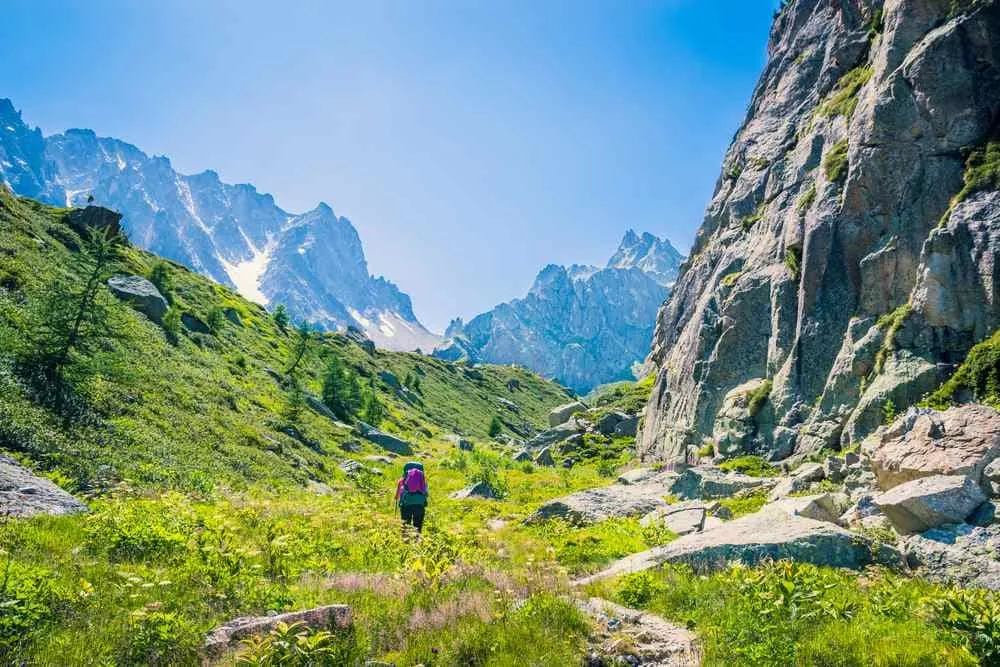
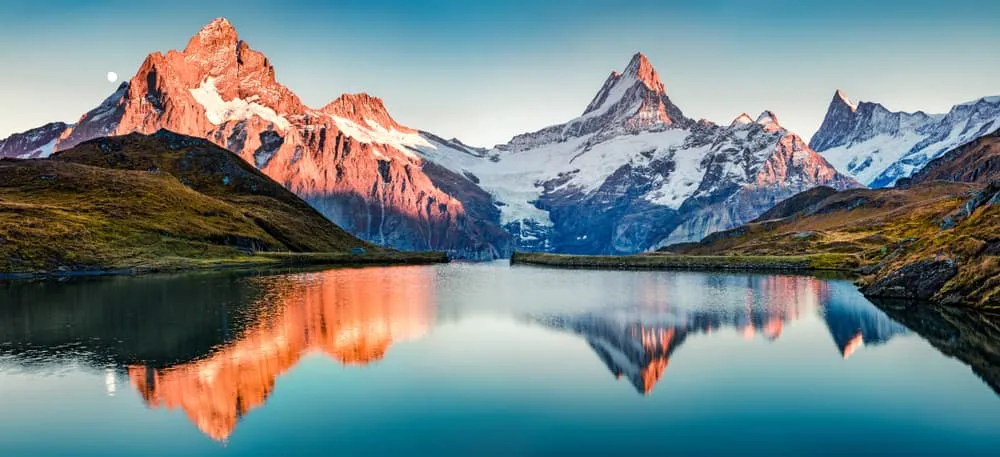
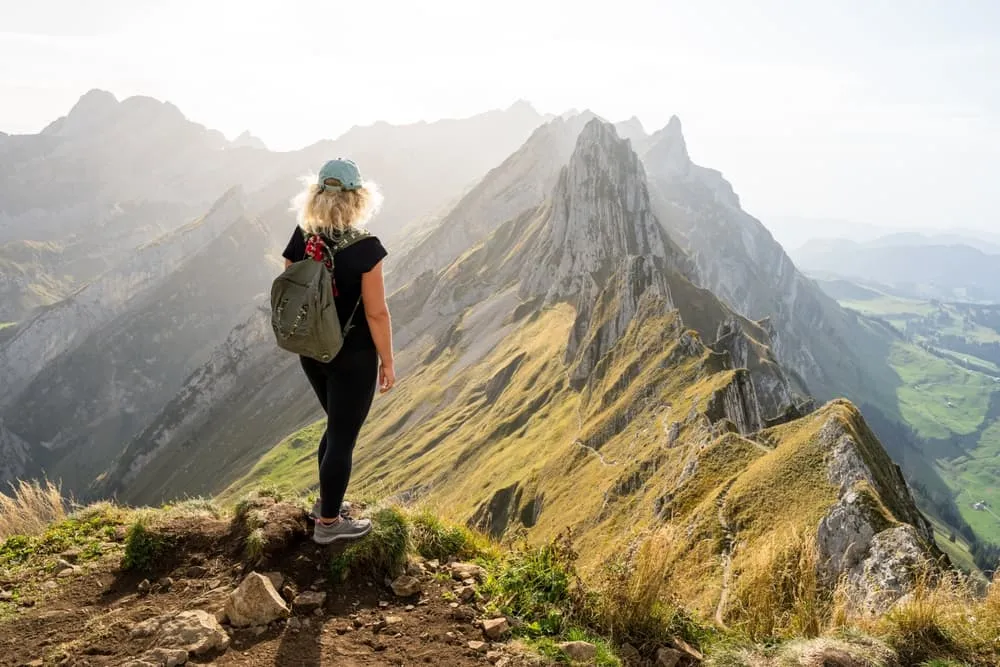
Switzerland’s landscape feels dramatic in a way that almost defies proportion. Peaks rise abruptly from valley floors, rock faces plunge vertically for hundreds of meters, and lakes shimmer in bright blues beneath fields of ice. The scale is immense, yet everything appears sharply defined, as if carved with precision. It is precisely this raw, sculpted beauty that makes hiking in Switzerland such a powerful experience, as every trail winds through terrain shaped by forces far greater than ourselves.

This landscape is not accidental. It is the result of colossal tectonic forces, repeated glaciations, erosion, uplift, and climate shifts acting over tens of millions of years. What makes the Swiss Alps particularly fascinating is that they are both ancient and young at the same time. The rocks themselves can be hundreds of millions of years old, yet the mountains are geologically youthful, still rising and still being reshaped.
Tour du Mont Blanc 12846

The Collision That Built the Alps

The formation of the Alps began with the slow movement of tectonic plates. Around 100 million years ago, the African plate began drifting northward toward the Eurasian plate. Between them lay the Tethys Ocean, a vast body of water whose seabed accumulated layers of sediment over millions of years. These sediments included limestone, clay, sand, and the remains of marine organisms.

As Africa pushed closer, the oceanic crust between the continents was gradually subducted beneath the Eurasian plate. By roughly 35 to 30 million years ago, the continental masses themselves began colliding. Because continental crust is relatively buoyant, it does not easily sink. Instead, it compresses, folds, fractures, and thickens.

The Alps were born from this immense compression. Rock layers that had once formed flat seabeds were thrust upward, stacked, and folded into enormous sheets known as nappes. In some areas, older rock was pushed on top of younger rock, reversing the normal geological order. The complexity of Alpine geology today reflects this violent rearrangement.

Even now, the Alps are still rising at a rate of roughly 1 millimeter per year, though erosion simultaneously wears them down. The mountains we see today represent a dynamic equilibrium between uplift and destruction.

The Collision That Built the Alps

The Ice Ages: Sculptors of the Modern Landscape

If tectonic forces built the height of the Alps, glaciers shaped their form. During the Pleistocene Ice Ages, especially over the past 2.6 million years, Switzerland experienced repeated glaciations. The last major glacial maximum occurred around 20,000 years ago, when ice sheets covered much of the country and extended far into what are now lower valleys and plains.

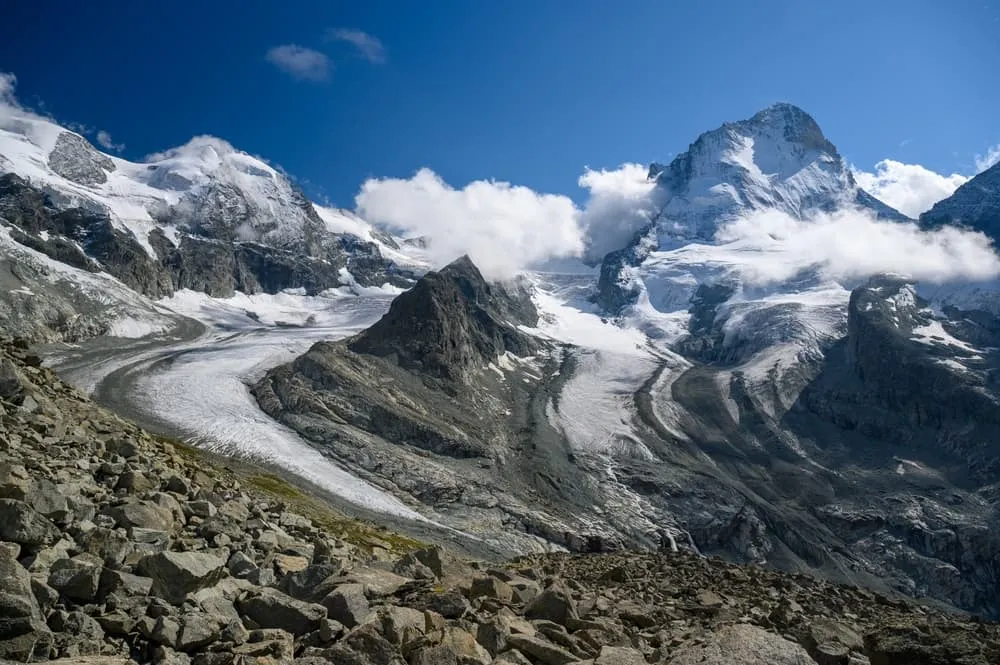
Glaciers are not static blocks of ice. They are slow-moving rivers of compacted snow and ice that flow downhill under their own weight. As they move, they erode the landscape through abrasion and plucking. Rock fragments frozen into the base of a glacier grind against the bedrock beneath, smoothing and deepening valleys. At the same time, chunks of rock are torn away and carried along.

The Ice Ages: Sculptors of the Modern Landscape

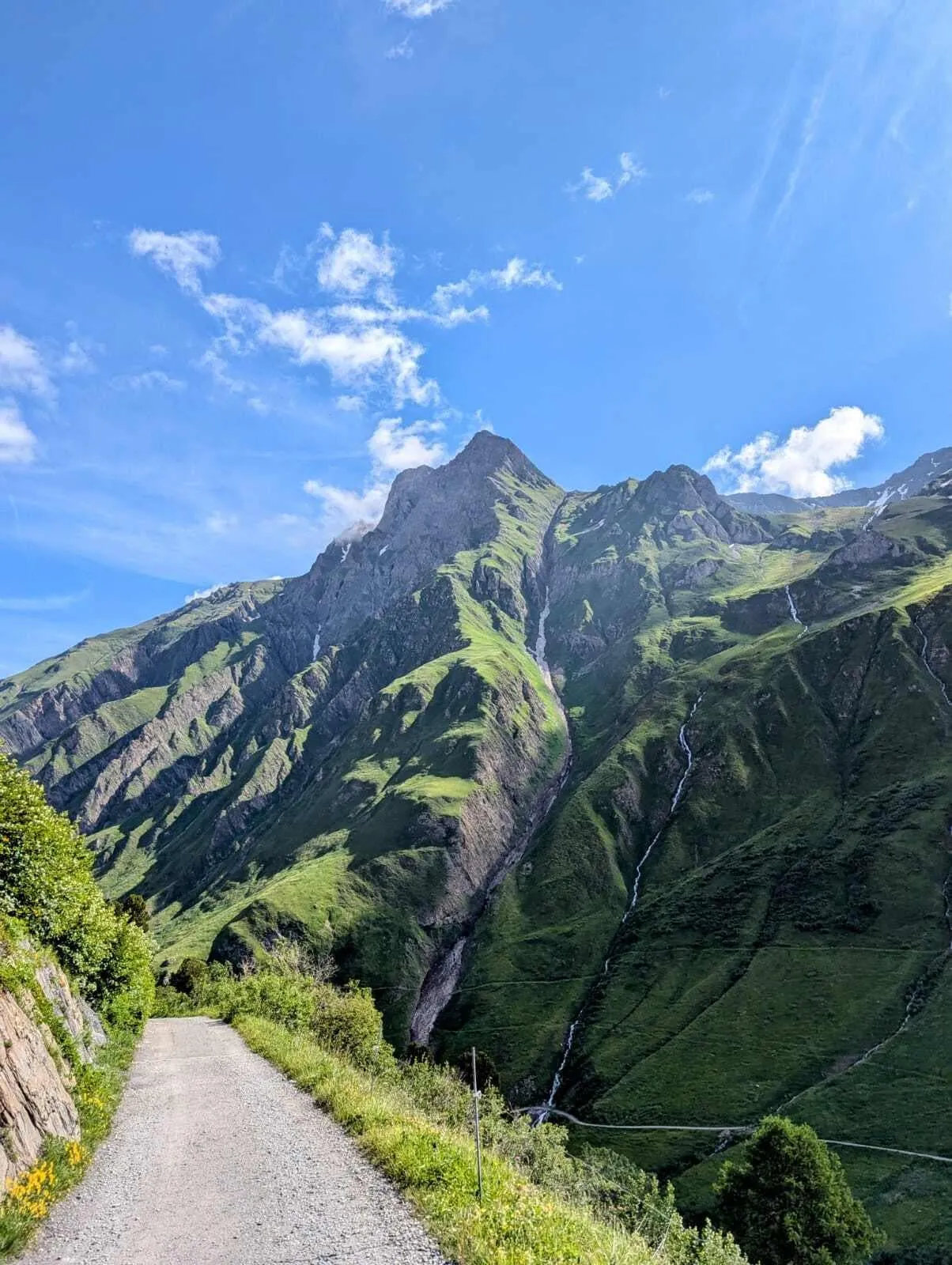
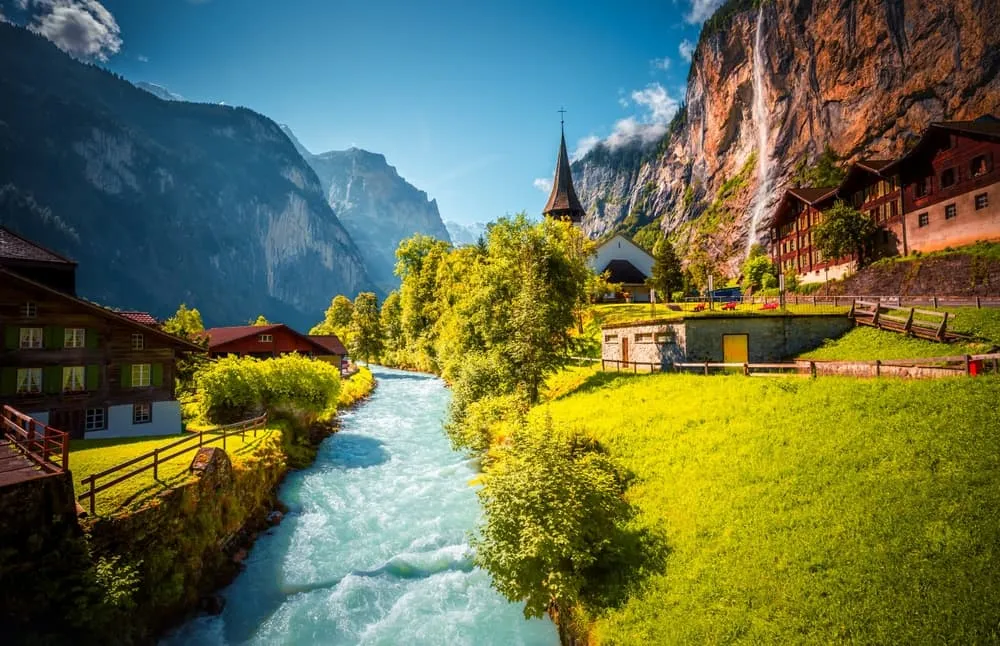
This process created the classic U-shaped valleys that define much of Switzerland. Unlike rivers, which cut narrow V-shaped valleys, glaciers carve wide, flat-bottomed troughs with steep sides. The Lauterbrunnen Valley is a striking example. Its vertical cliffs and hanging tributary valleys, from which waterfalls plunge, are hallmarks of glacial erosion.

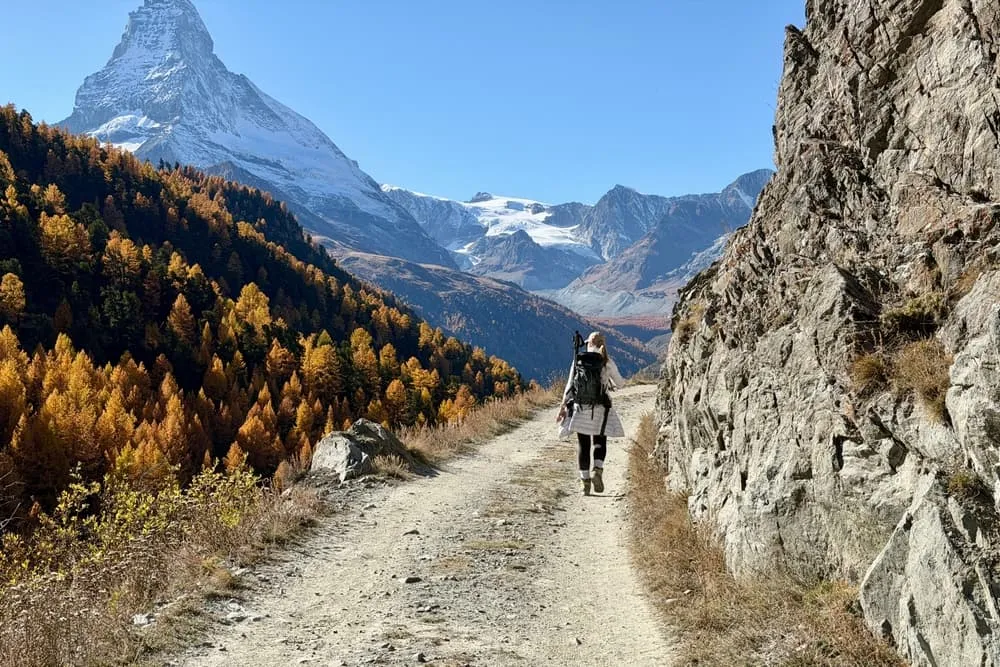
Glaciers also formed cirques, which are amphitheater-like basins at the head of valleys. When ice erodes multiple sides of a mountain, sharp ridges called arêtes and pointed peaks known as horns emerge. The Matterhorn’s iconic pyramidal shape is a product of such multi-directional glacial carving. The modern Alpine scenery owes as much to ice as it does to tectonic uplift.

The Turquoise Lakes and Glacial Flour

Many of Switzerland’s lakes possess an almost surreal coloration, ranging from milky turquoise to deep emerald. This phenomenon is closely tied to glacial processes.

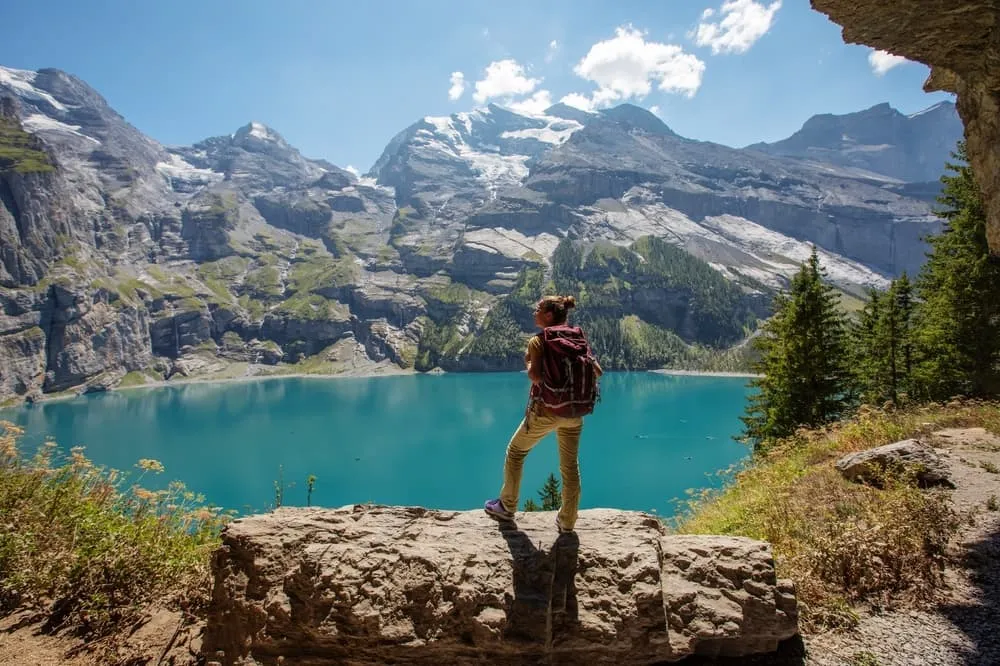
As glaciers grind bedrock into fine particles, they produce what is known as glacial flour. This extremely fine sediment remains suspended in meltwater streams that flow into downstream lakes. When sunlight enters the water, these particles scatter shorter wavelengths of light, particularly blues and greens, giving lakes like Brienz and Oeschinensee their luminous appearance.

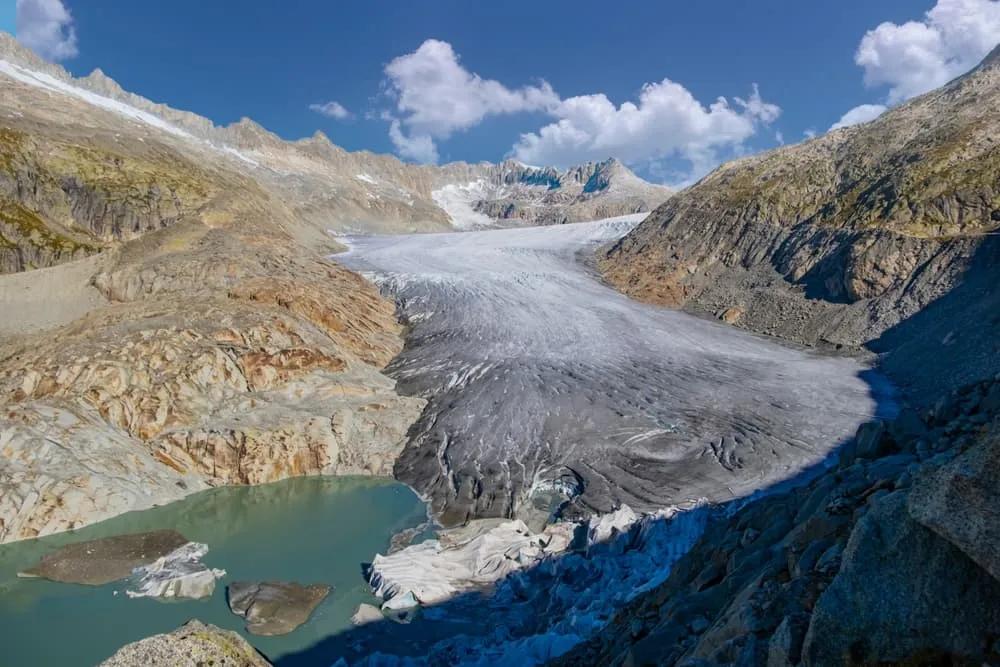
The presence and intensity of this coloration depend on the amount of glacial melt feeding the lake. As glaciers retreat, some lakes may gradually lose this distinctive hue, subtly altering the visual identity of entire regions.

The Turquoise Lakes and Glacial Flour

Rock Types and Regional Differences

The Alps are geologically diverse, and this diversity influences not only appearance but also stability, soil composition, and vegetation patterns. In parts of the Bernese Alps, sedimentary rocks such as limestone dominate. These rocks were formed from marine deposits and are often lighter in color, contributing to the dramatic pale cliffs seen in certain regions.

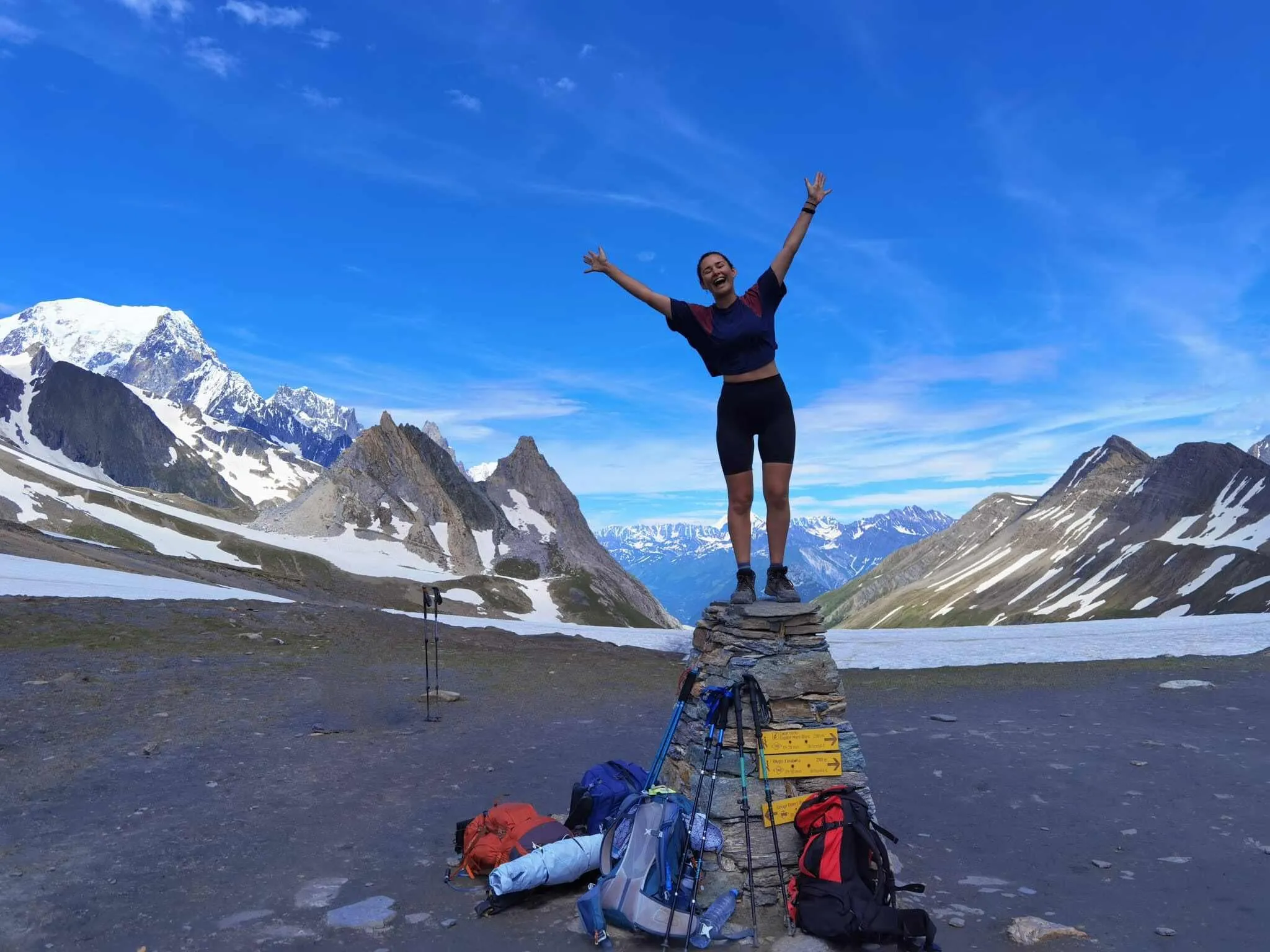
In contrast, the central Alps contain significant areas of crystalline rock, including granite and gneiss. These rocks are generally harder and more resistant to erosion, resulting in rugged, jagged peaks. For example, the Mont Blanc massif, famous for the Tour du Mont Blanc, is primarily granite and rises to 4,808 meters, making it the highest peak in the Alps.

The Eiger’s north face reveals layers of sedimentary rock that once formed ocean floors, while other regions display metamorphic rock transformed under extreme heat and pressure during the Alpine orogeny. This geological patchwork explains why landscapes can change noticeably within relatively short distances.

Rock Types and Regional Differences

Glaciers in Retreat and a Changing Landscape

Switzerland’s glaciers have been retreating rapidly over the past century, particularly since the mid-20th century. Rising temperatures have accelerated ice loss, exposing rock that has not seen daylight for thousands of years. In some areas, entirely new proglacial lakes have formed where solid ice once lay.

This retreat has multiple consequences. Permafrost, which acts as a natural cement stabilizing high-altitude rock, is thawing. As a result, rockfalls and slope instability have increased in certain regions. Trails, mountaineering routes, and even infrastructure require adaptation as terrain changes.

At the same time, newly exposed landscapes become natural laboratories. Pioneer species, including mosses and hardy alpine plants, begin colonizing the bare ground. Over decades, ecological succession gradually transforms these raw surfaces into functioning ecosystems. The Alps are therefore not relics of the past; they are active and evolving.

Glaciers in Retreat and a Changing Landscape

Altitude and Vertical Zonation

Switzerland’s dramatic elevation gradients create distinct ecological zones stacked vertically. Within a relatively short horizontal distance, hikers can pass through environments that would otherwise be separated by hundreds of kilometers of latitude.

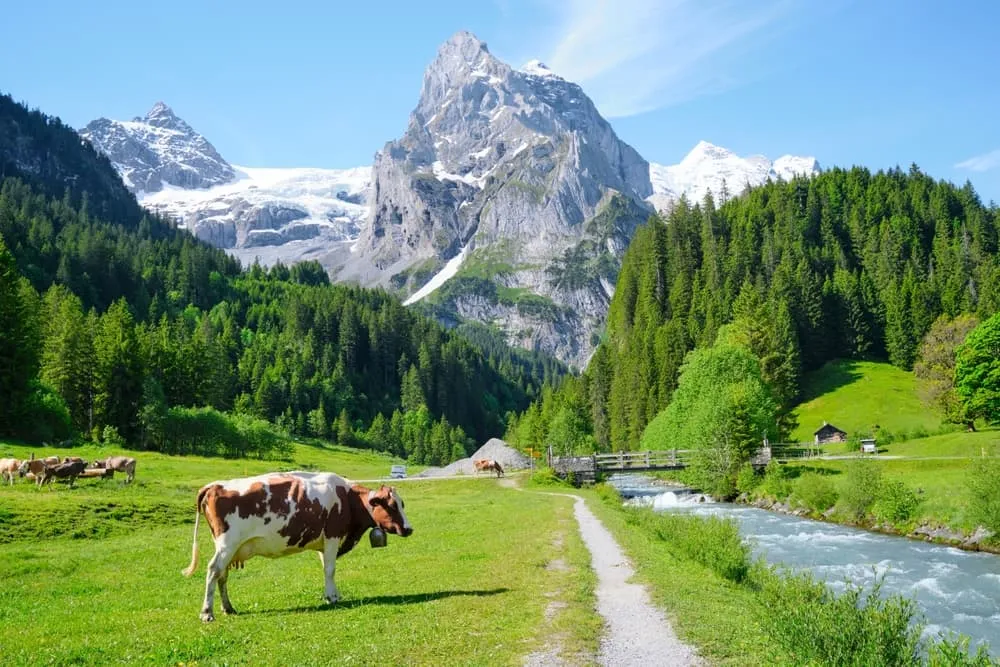
At lower elevations, the colline zone features agriculture and deciduous forests. As altitude increases, the montane zone introduces dense conifer forests dominated by spruce and fir. Higher still, the subalpine zone transitions into open pastures and sparse tree growth.

Altitude and Vertical Zonation

Above the treeline lies the alpine zone, where only grasses, flowers, and low shrubs can survive. Conditions are harsher, with stronger winds and shorter growing seasons. Finally, the nival zone consists of permanent snowfields and glaciers.

Temperature generally decreases by approximately 6 degrees Celsius for every 1,000 meters of elevation gained. This gradient influences vegetation, wildlife distribution, and human activity. Alpine farming and seasonal grazing are closely tied to these ecological belts.

The Alps as Europe’s Water Tower

The Swiss Alps play a crucial hydrological role in Europe. Major rivers such as the Rhine, Rhône, Inn, and Ticino originate here. Snowpack and glacial melt act as natural reservoirs, gradually releasing water throughout the year.

This water sustains agriculture, industry, and drinking supplies far beyond Switzerland’s borders. Hydropower infrastructure harnesses the energy of descending water, providing a substantial portion of the country’s renewable electricity. In this sense, the Alps are not only geological structures but also vital components of Europe’s environmental system.

The Alps as Europe’s Water Tower

A Landscape Defined by Force and Balance

The Swiss Alps represent a balance between construction and destruction. Tectonic uplift pushes the mountains skyward, while erosion, weathering, and glaciation carve them down. Climate change introduces new variables into this equilibrium, altering ice cover and water cycles.

What appears serene and timeless is, in reality, the product of immense pressure and continuous transformation. The sharp ridgelines, the deep valleys, the luminous lakes, and the towering faces are the visible results of forces that operate on scales far beyond human perception.

Walking through the Swiss Alps is not simply a journey through beautiful scenery. It is a passage across geological time, shaped by continental collision, sculpted by ice, and sustained by water.

About Us

At Bookatrekking.com, you will find the trek that will make your life unforgettable. Whether you want to explore the Inca Trail or climb Kilimanjaro. Bookatrekking.com has a wide and varied range of first-class treks. No false promises are made here. Transparent prices and bookings are fixed instantly. Find, compare, book and trek!
Read more about us
About Us
About Us

Also Interesting