The Culture of the Swiss Alps: Languages, Traditions & Alpine Food

The Culture of the Swiss Alps: Languages, Traditions & Alpine Food
Trekking experts per destination
Free cancellation up to eight weeks in advance
Quick personal advice

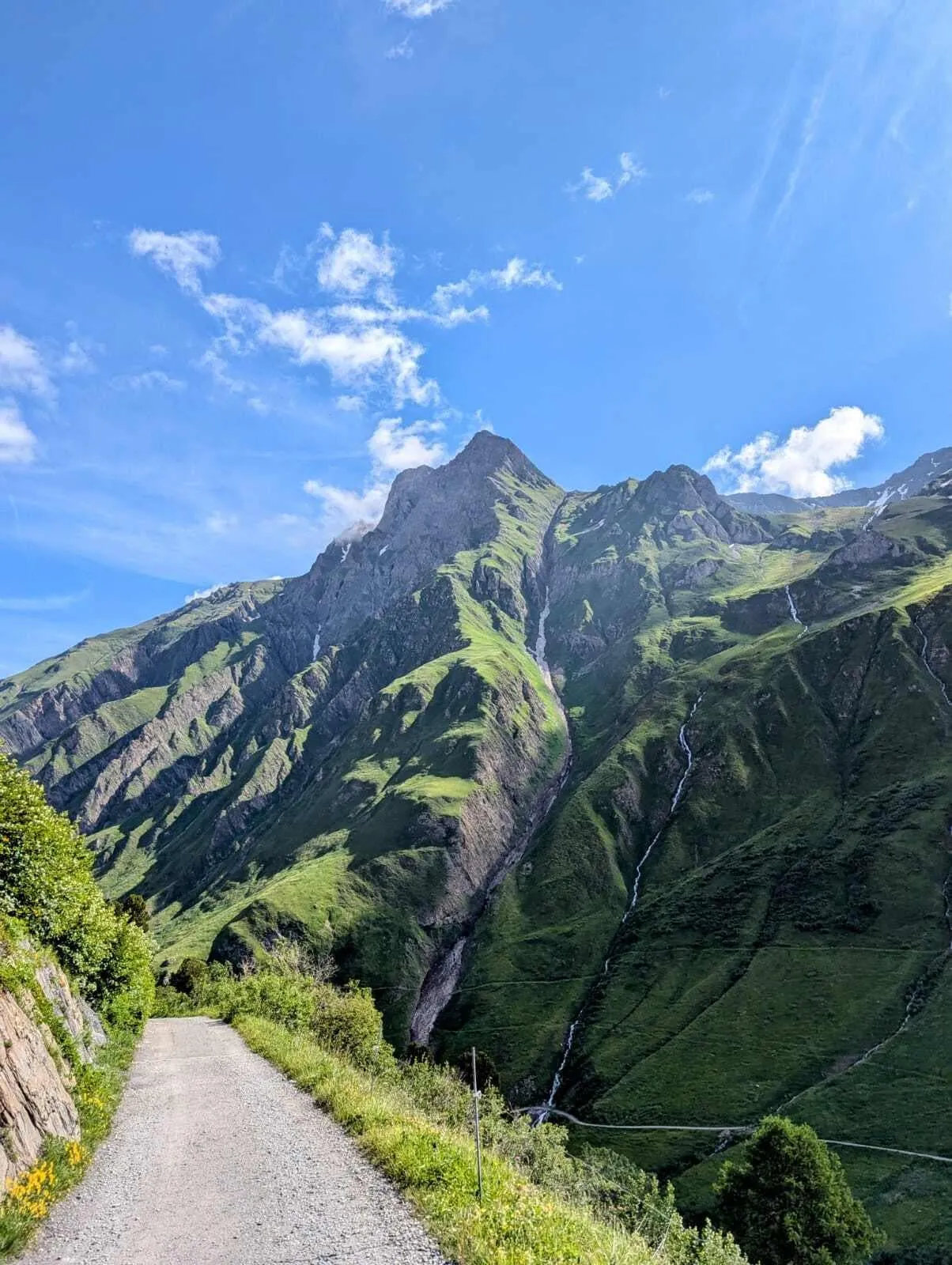
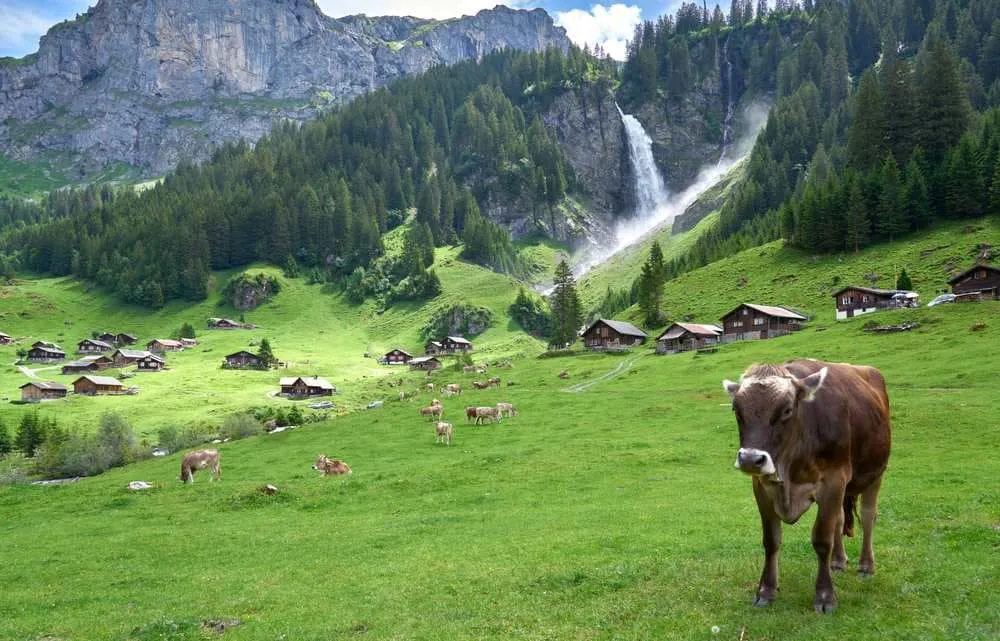
When most people think of Switzerland, they picture sharp peaks, wooden chalets, green meadows, and cows with bells grazing beneath snow-capped summits. It feels timeless, almost staged in its perfection.

But the Swiss Alps are not a postcard. They are a living cultural landscape shaped by geography, language, tradition, and centuries of human adaptation to mountain life. The trails you walk while hiking in Switzerland follow trade routes, livestock paths, and alpine passages that have connected communities for generations. To truly understand this country, you have to look beyond the peaks and into the rhythm of life that unfolds among them.
Tour du Mont Blanc 12841

A Small Country with Four Voices

One of the most fascinating aspects of Switzerland is that it has four official languages. For such a compact country, this linguistic diversity is remarkable, and it deeply influences regional identity.

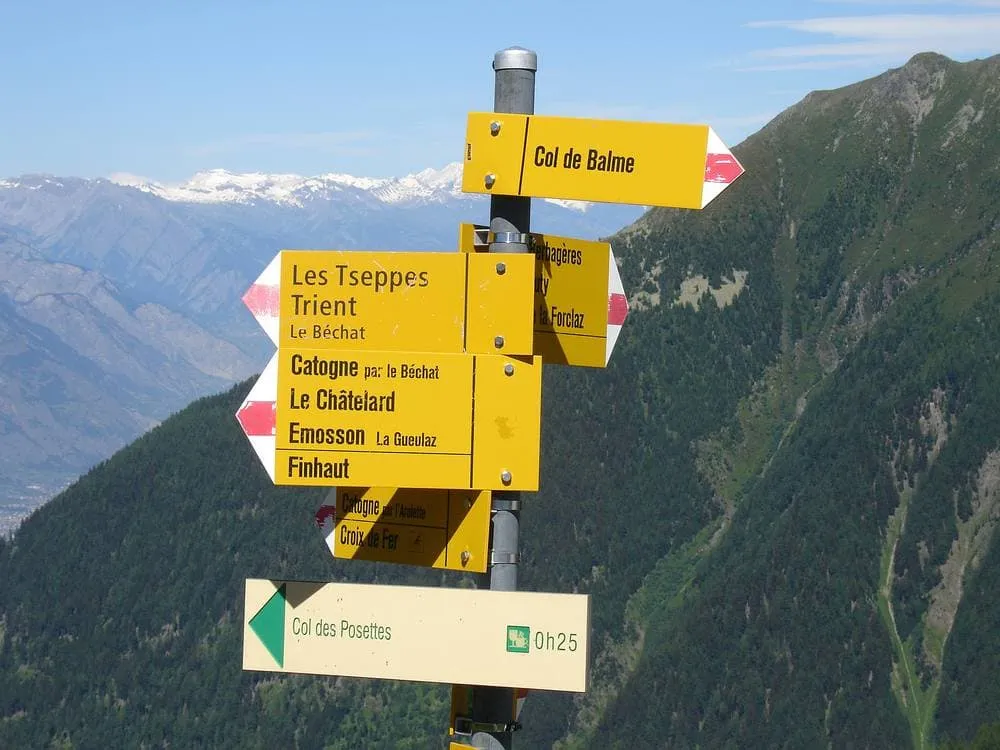
German is spoken by around 60% of the population, primarily in central and eastern Switzerland. However, what you will hear in mountain villages is not standard German, but Swiss German, a collection of Alemannic dialects that vary from canton to canton. Even native German speakers from Germany often struggle to understand it at first. In regions like the Bernese Oberland or around Lucerne, this dialect is part of local pride and identity.

To the west, French dominates. Around 20% of the population speaks French, particularly in cantons such as Vaud, Geneva, and parts of Valais. Here, the architecture, cuisine, and even the pace of life feel subtly different. The alpine world remains dramatic, but there is a noticeable French influence in gastronomy and culture.

In the south lies Ticino, where Italian is spoken. Representing about 8% of the population, this region feels almost Mediterranean. Palm trees appear near lakes, piazzas replace village squares, and espresso culture thrives beneath alpine peaks. The Alps do not divide Switzerland from Italy; they blend into it.

Finally, there is Romansh, spoken by less than 1% of the population, primarily in the canton of Graubünden. Romansh is a Romance language with Latin roots, preserved through centuries of isolation in mountain valleys. Road signs and village names in Romansh are quiet reminders of Switzerland’s deep historical layers. Though small in number, Romansh speakers embody the resilience of alpine culture.

This linguistic diversity is not just administrative. It shapes food, festivals, building styles, and the overall character of each region. Crossing a mountain pass in Switzerland can feel like crossing into another country.

Tour du Mont Blanc 12832

Transhumance: The Seasonal Pulse of the Alps

Long before tourism, skiing, and panoramic trains, the Alps were sustained by agriculture. Mountain farming remains at the heart of Swiss alpine culture, and one of its oldest traditions is transhumance: the seasonal movement of livestock.

Every late spring, as snow retreats from the high pastures, farmers guide their cattle upward to alpine meadows known as “Alps.” These high-altitude grasslands are rich in biodiversity. Wild thyme, alpine clover, gentian, and dozens of grasses thrive in the short summer season, nourished by glacial meltwater and mineral-rich soil.

The cows remain in these high pastures for several months. Farmers or herdsmen live in simple alpine huts, milking the cows daily and often producing cheese directly on-site. Life is demanding and dictated by weather and terrain, but this system has sustained mountain communities for centuries.

Transhumance: The Seasonal Pulse of the Alps

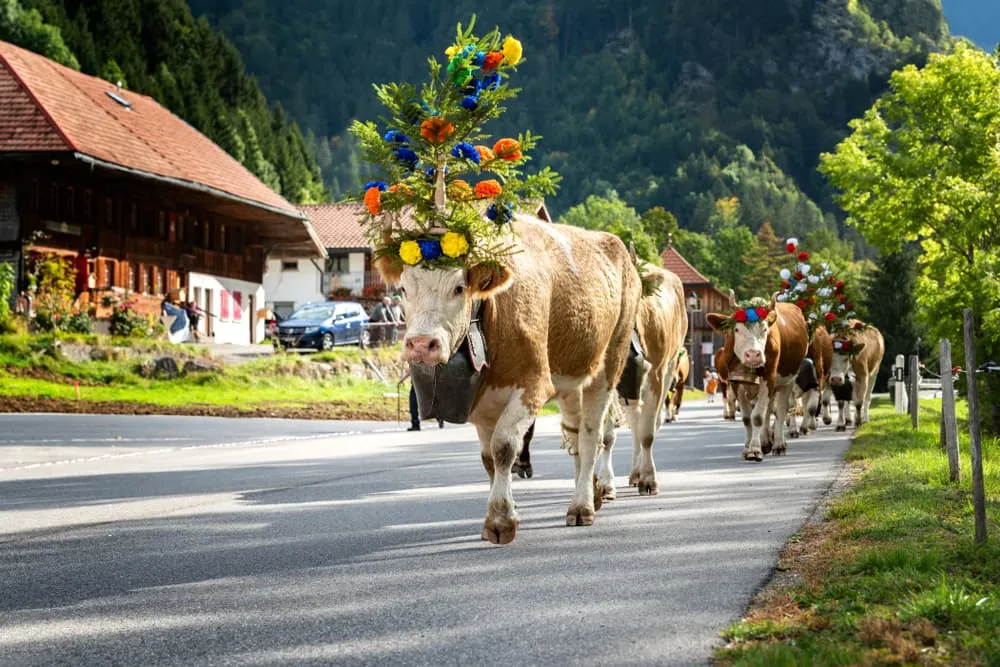
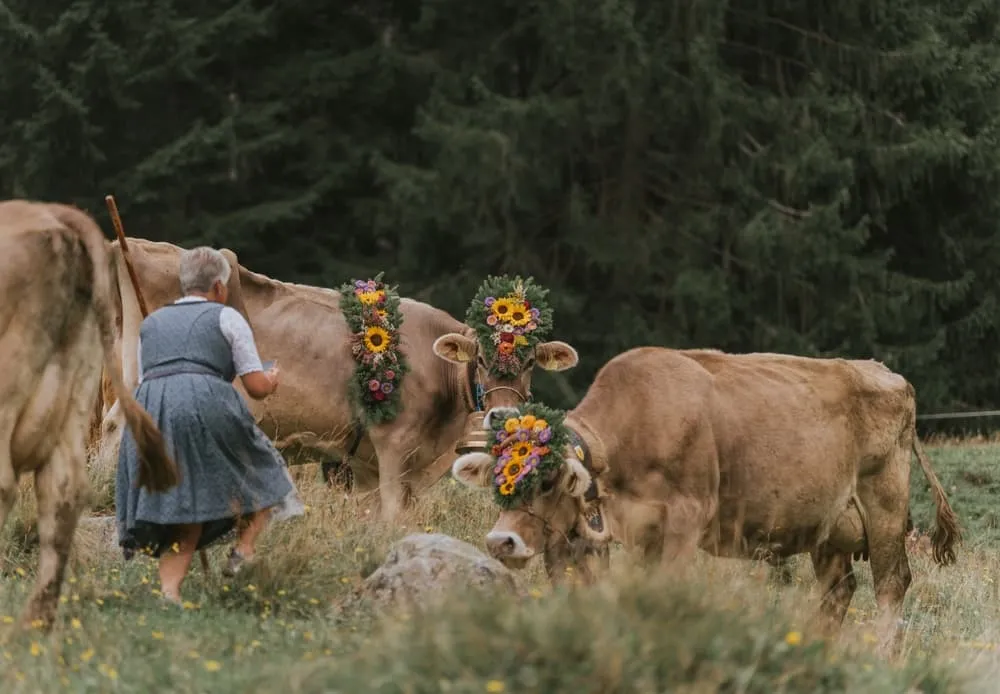
In early autumn, the animals descend back into the valleys in a festive procession known as the Alpabzug or Désalpe. Cows are adorned with elaborate floral headdresses and large ceremonial bells. Entire villages gather to celebrate the safe return from the mountains. It is not merely a spectacle for visitors; it is a celebration of survival, continuity, and community.

When you hike through alpine pastures, you are witnessing a working system that balances ecology and tradition. These landscapes are maintained by human hands, and without this seasonal migration, many of the iconic meadows would slowly revert to forest.

The Sound of the Alps: Why Cows Wear Bells

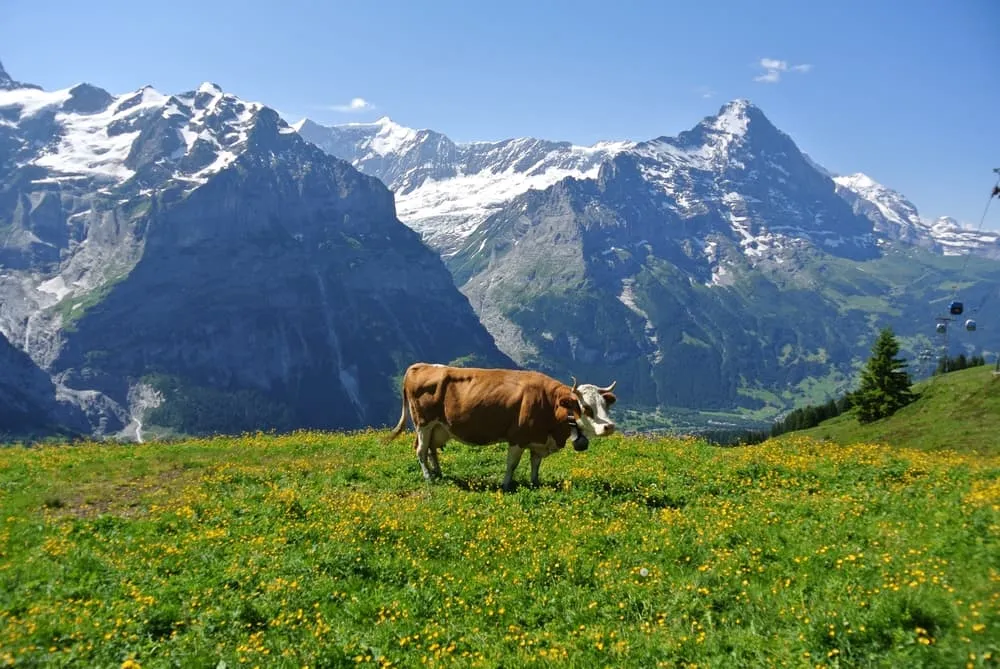
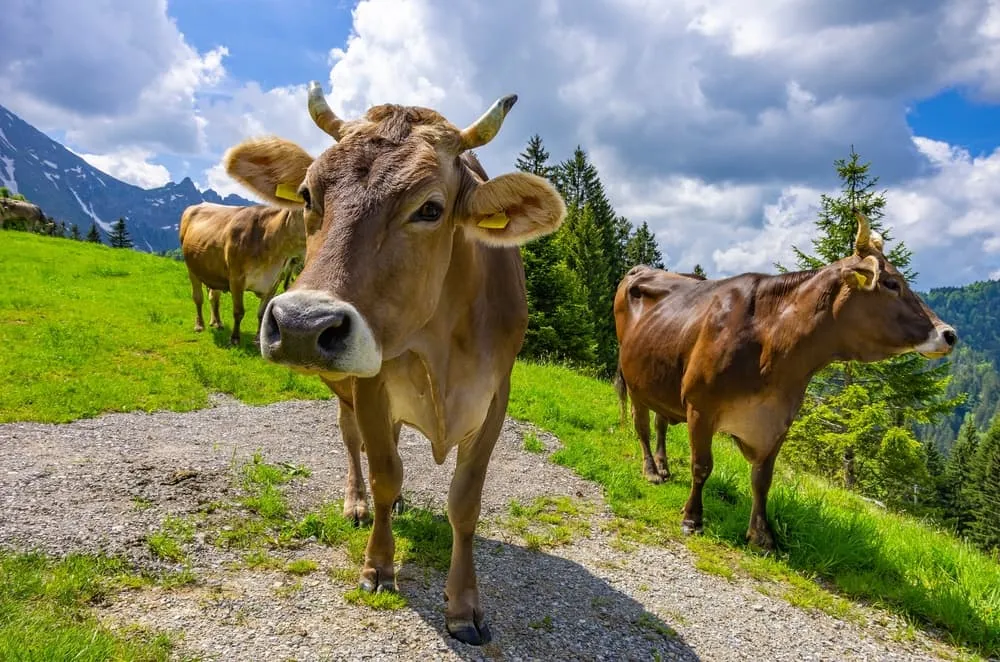
The gentle echo of cowbells drifting across a valley is one of the defining sounds of Switzerland. While it may seem romantic, the origin is practical.

In steep, fog-prone alpine terrain, visibility can change within minutes. Bells allow farmers to locate their cattle when they disappear behind ridgelines or wander into rocky gullies. Each bell has a distinct tone, helping farmers distinguish between groups.

Daily grazing bells are relatively small and lightweight. The massive, ornate bells seen during festivals are symbolic, representing status, pride, and tradition.

Over time, these bells have become cultural icons. Their sound is woven into Swiss identity, reflecting the harmony between agriculture and landscape. It is a reminder that the Alps are not wilderness alone; they are shaped by coexistence.

The Sound of the Alps: Why Cows Wear Bells

Why Swiss Cheese Tastes Different

Swiss cheese is not simply a product of technique. It is a product of altitude, biodiversity, and seasonal rhythm.

The richness of alpine pastures gives milk a complexity that cannot be replicated in industrial feed systems. Cows grazing at elevation consume a wide variety of herbs and flowers, which subtly influence the flavor profile of the milk. This is particularly evident in traditional alpine cheeses produced during the summer months.

In many regions, cheese is still made in copper kettles over open flames in alpine huts. The process follows centuries-old methods, emphasizing raw milk and natural fermentation.

Each region has its signature varieties:

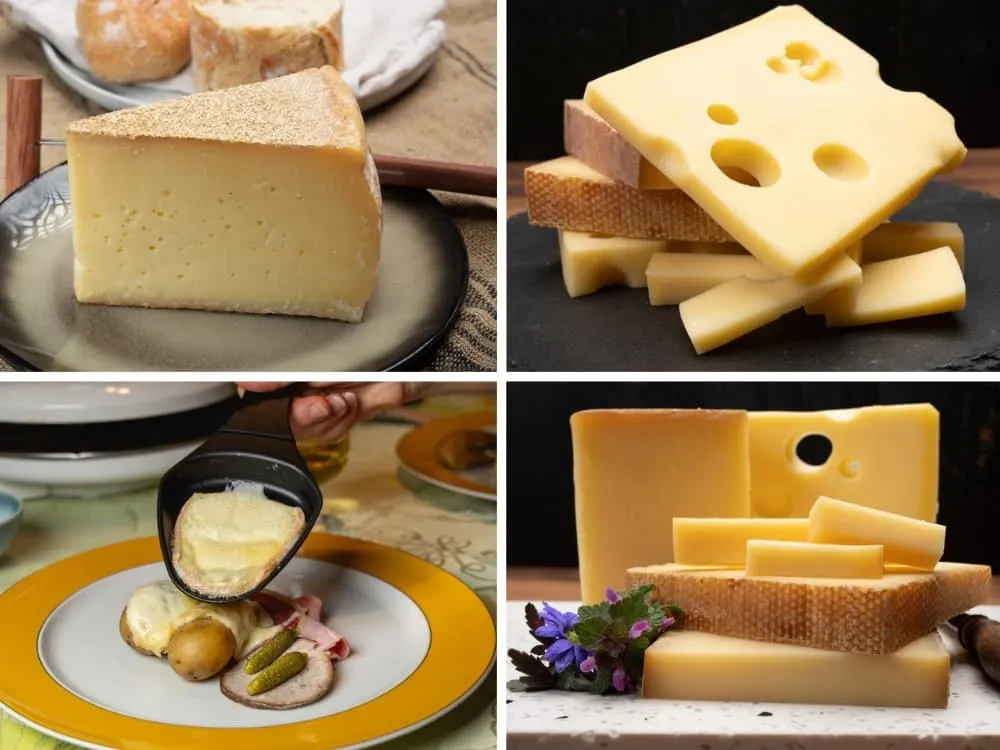
  • Gruyère, from western Switzerland, known for its nutty depth.
  • Emmentaler, famous for its large holes and mild sweetness.
  • Raclette, traditionally melted and scraped over potatoes in Valais.
  • Appenzeller, robust and herbal, reflecting eastern alpine pastures.
Why Swiss Cheese Tastes Different

Cheese production in the Alps is not just culinary; it is economic survival. High-altitude milk spoils quickly. Turning it into cheese allowed mountain communities to store and trade calories through harsh winters. When you taste Swiss alpine cheese, you are tasting preserved summer.

The Craft Behind Swiss Chocolate

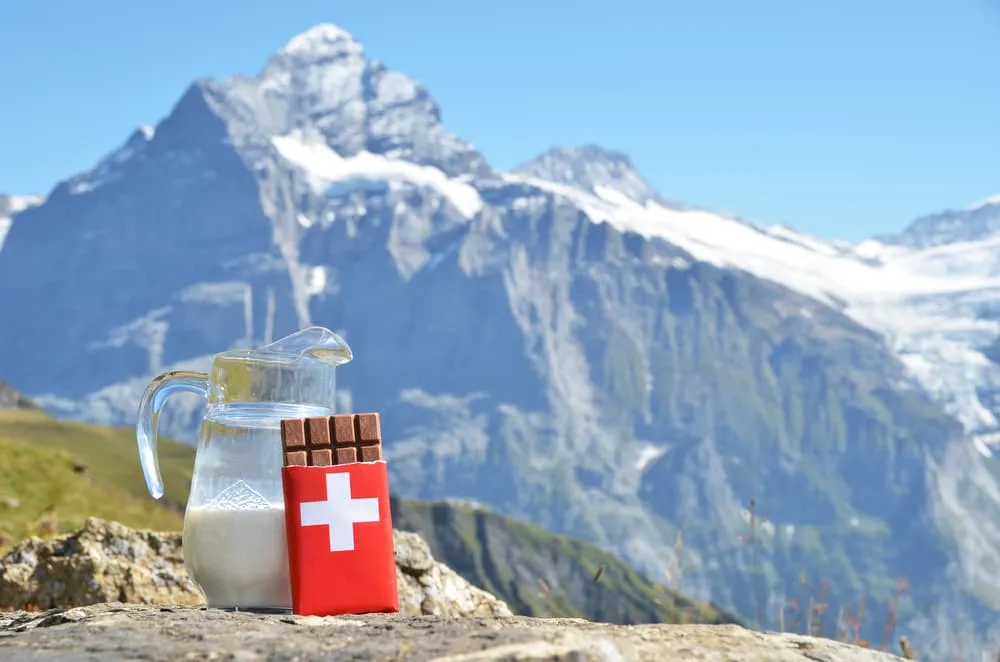
Switzerland’s chocolate reputation is global, but its roots are closely tied to dairy culture. In the 19th century, Swiss innovators refined the process of chocolate-making. Techniques such as conching, developed by Rodolphe Lindt, created the smooth texture that distinguishes Swiss chocolate. But technique alone is not enough.

The availability of high-quality alpine milk transformed chocolate production. The creaminess and consistency of Swiss dairy elevated milk chocolate to a new standard.

While cocoa beans arrive from distant continents, the milk that defines Swiss chocolate often originates from the same alpine system that produces its cheese. There is a quiet continuity between the meadow, the dairy, and the chocolatier.

Chocolate in Switzerland is not merely confectionery. It reflects precision, patience, and pride in craftsmanship, values deeply embedded in the national psyche.

The Craft Behind Swiss Chocolate

Mountain Huts and the Culture of Respect

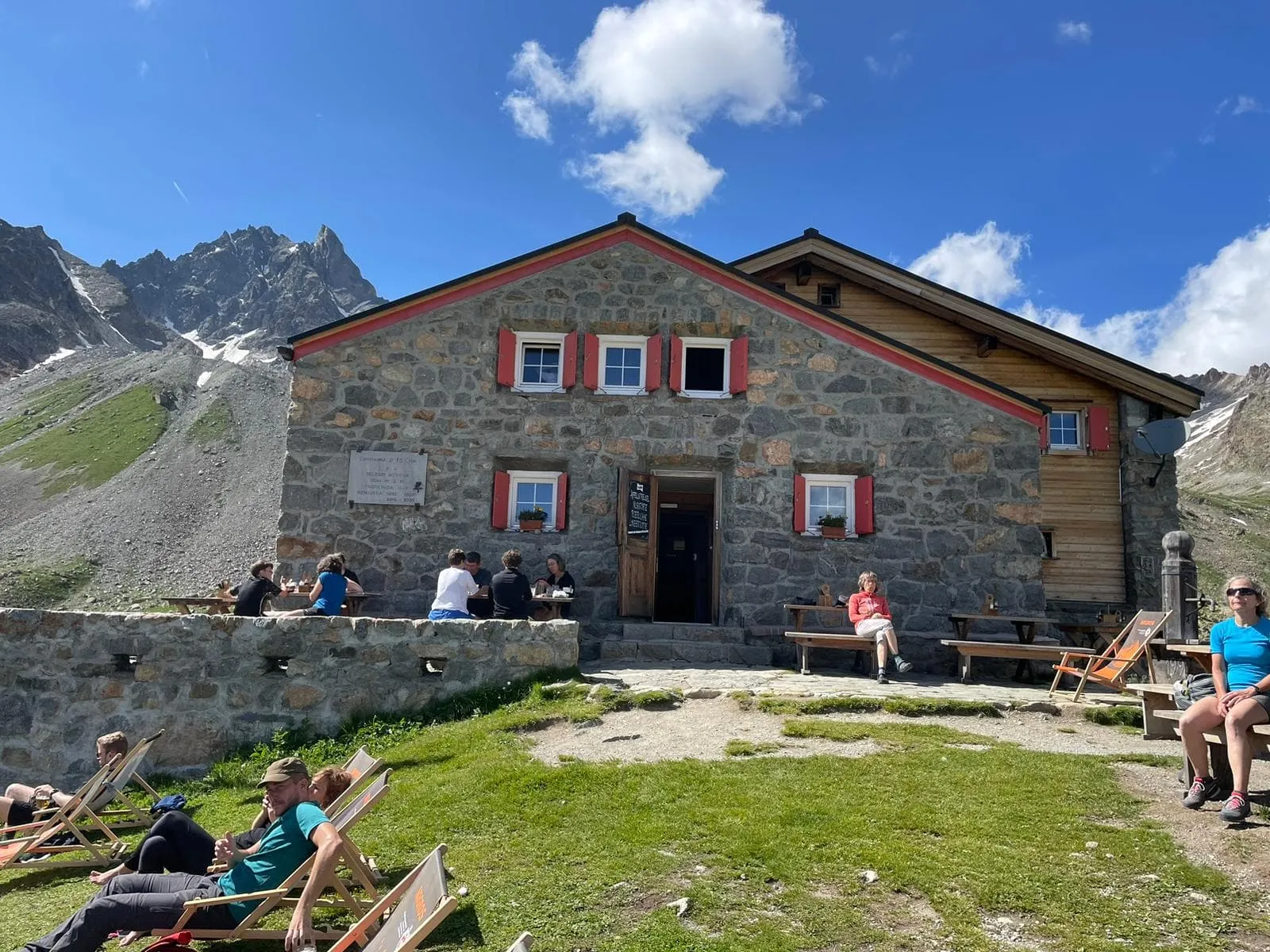
High in the Alps, mountain huts serve as refuges from weather and fatigue. Managed largely by the Swiss Alpine Club (SAC), these huts were originally established for climbers and alpinists exploring glaciated terrain.

Today, they host hikers from across the world, yet they remain rooted in mountaineering tradition. Meals are simple but hearty. Dormitories encourage camaraderie. Early mornings are common, dictated by weather windows and long routes.

Hut culture emphasizes preparation, punctuality, and respect for shared space. Waste is minimized. Supplies are often transported by helicopter or on foot. Water and energy are precious. These huts represent the cooperative spirit of alpine life, where survival historically depended on mutual support and discipline.

Mountain Huts and the Culture of Respect

A Landscape Shaped by Balance

The Swiss Alps are often described as pristine, but they are carefully maintained. Trail systems stretch over 65,000 kilometers and are meticulously marked. Avalanche protection structures, pasture management, and strict environmental regulations protect both residents and visitors.

This balance between access and preservation defines modern Switzerland. The country invests heavily in infrastructure while safeguarding its natural heritage. The result is a rare harmony: dramatic wilderness coexisting with deep-rooted human presence.

A Landscape Shaped by Balance

Walking Through History

Every step in the Swiss Alps follows layers of history. Roman traders once crossed these passes. Medieval farmers carved terraces into steep hillsides. Generations of families moved cattle along the same narrow paths that hikers now traverse. The mountains may appear eternal, but the culture within them is dynamic, resilient, and deeply human.

Switzerland is not just a land of peaks. It is a land of languages, of seasonal rhythms, of milk transformed into cheese and chocolate, of bells echoing across valleys shaped by ice and time. To walk here is to move through more than scenery. It is to walk through a living alpine civilization.

About Us

At Bookatrekking.com, you will find the trek that will make your life unforgettable. Whether you want to explore the Inca Trail or climb Kilimanjaro. Bookatrekking.com has a wide and varied range of first-class treks. No false promises are made here. Transparent prices and bookings are fixed instantly. Find, compare, book and trek!
Read more about us
About Us
About Us

Also Interesting