Now for the real decision: which area suits you?
Karawanken: the border ridge with Slovenia
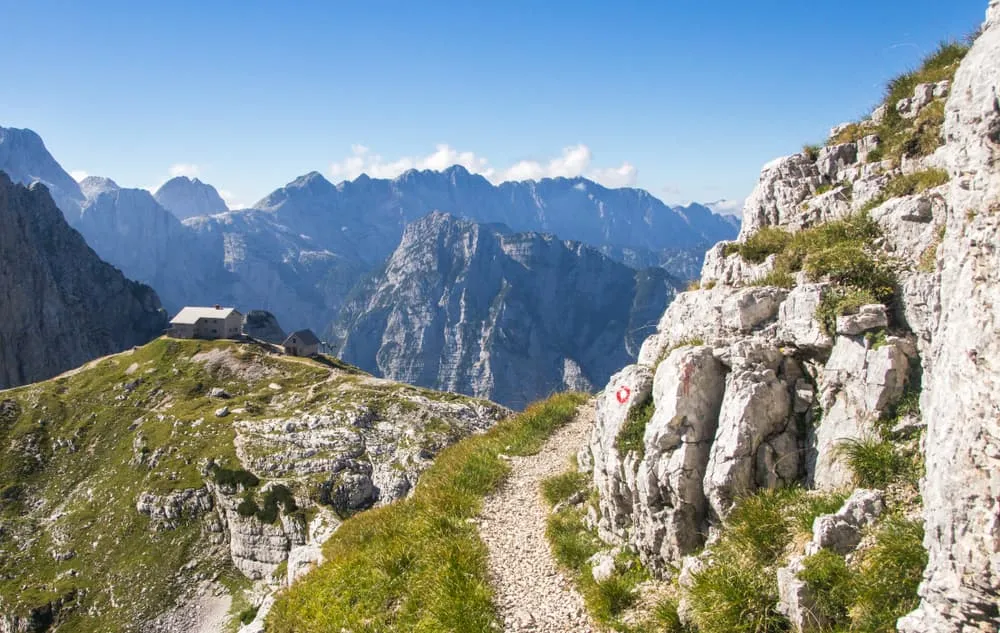
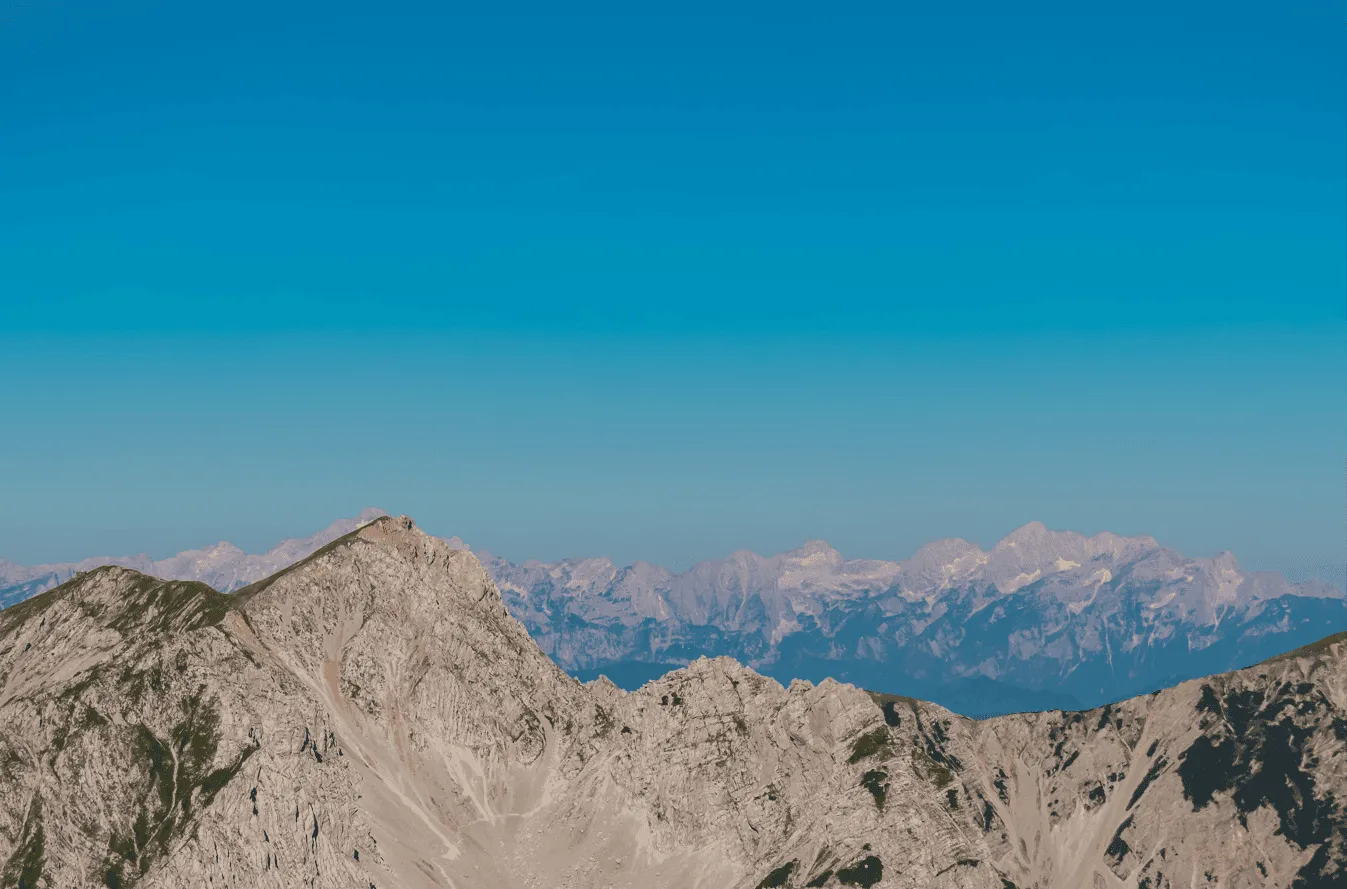
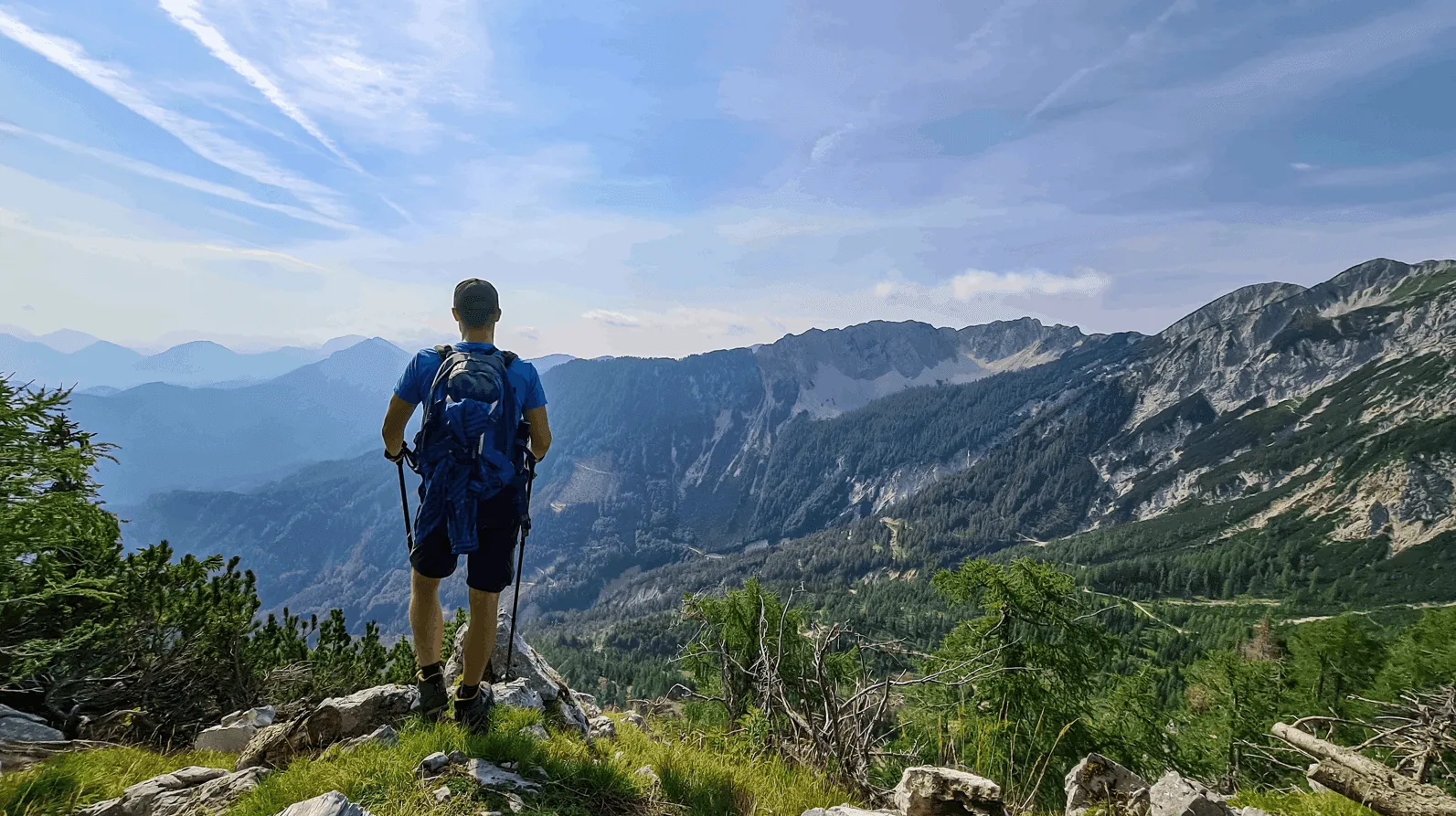
The Karawanken stretch as a striking limestone ridge between the Carinthian Drau valley and Slovenia. Hochstuhl, Mittagskogel and Petzen are the best-known viewpoint summits on the Austrian side; the Bodental near Ferlach and the Rosental near Villach are the finest approaches. Walking the Karawanken means steep paths and narrow ridges, where sure-footedness and a head for heights aren't optional extras. In return you get a solitude and a view over two countries that you won't find in the Nockberge or by the lakes. Place names and hut signs switch between German and Slovenian, and the border itself is often no longer visible along the ridge. This area is home to our hut tour — a proper taste of true mountain character.
Who it's for: experienced, fit mountain hikers; set against the Nockberge, this is noticeably rougher and more remote.
Nockberge: gentle summits in the biosphere park
The Nockberge are one of the few high mountain regions in Austria where you barely see any rock at all. Rounded grassy peaks, open alpine pastures, heathland and a path network built around cable cars and alpine roads — walking the Nockberge is the right starting point for anyone heading into the high mountains for the first time. The Nockalmstraße opens up the region, and Bad Kleinkirchheim and the Turracher Höhe are the best-known starting points. The Falkert, the Mirnock and many unnamed summits offer all-round views without any exposed sections. As the UNESCO Nockberge Biosphere Park, the region also enjoys special ecological protection.
Who it's for: beginners, families, and anyone who values open space and alpine pasture culture over rocky adventure; set against the Karawanken, this is noticeably easier and more accessible.
Hohe Tauern on the Carinthian side: Mölltal and Großglockner
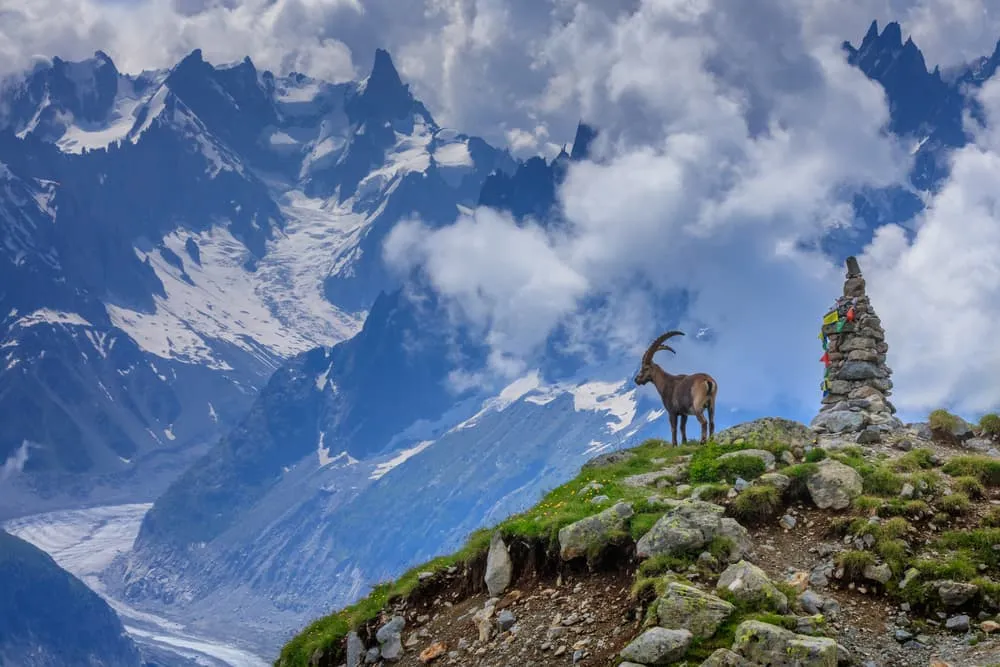
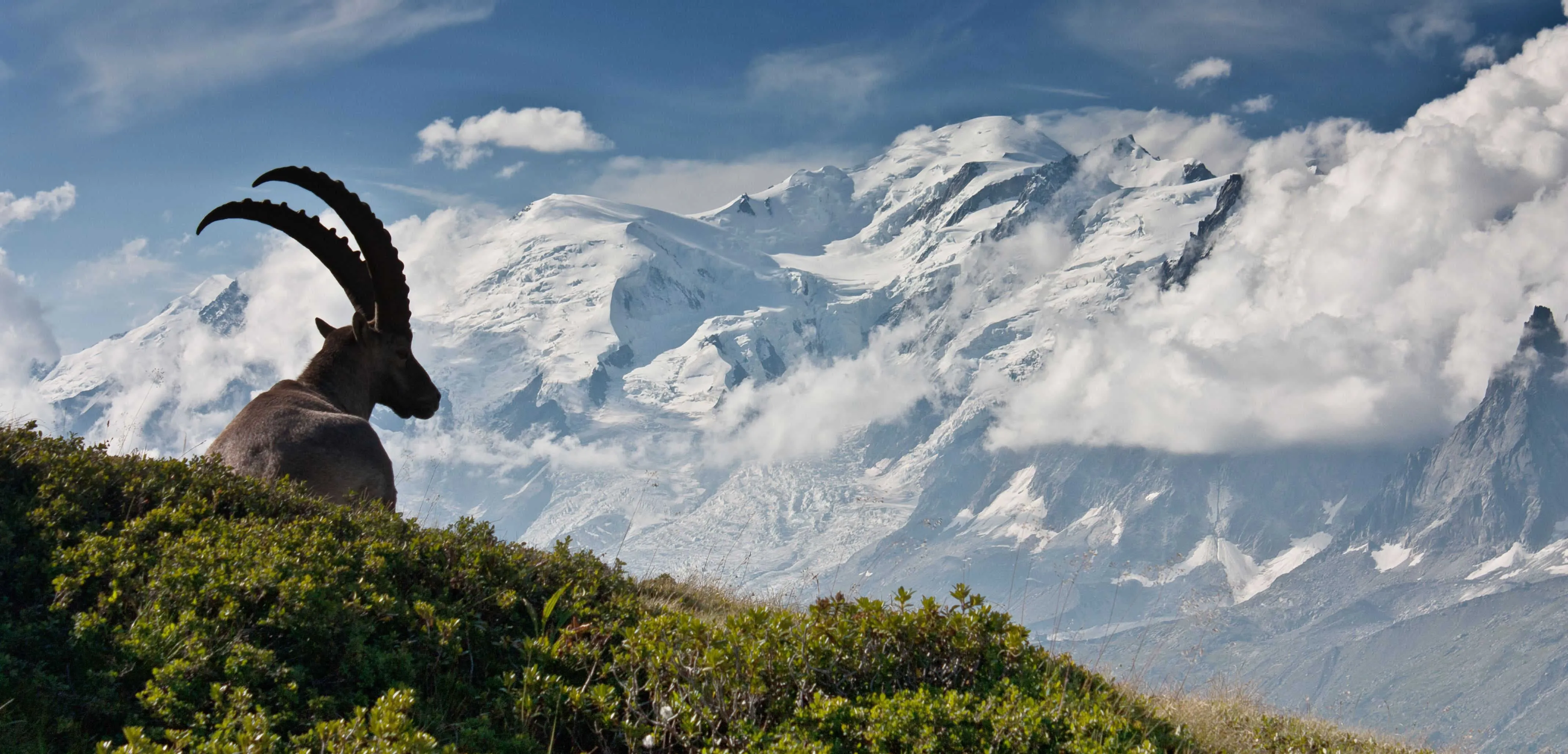
The Carinthian side of the Hohe Tauern is the highest and most demanding chapter: the Mölltal with Heiligenblut and the approach to the Pasterze, the Gößnitztal, Mallnitz and the Tauerntal lead into a glacier world quite different from the Karawanken and the Nockberge. Walks at this level are reserved for mountain hikers with alpine experience; glaciers and snowfields can persist well into summer. The Großglockner, Austria's highest peak, is the landmark of this region, even though climbing it goes far beyond normal hiking.
Who it's for: experienced mountain hikers; set against the other areas, this is higher, colder and more alpine than the Karawanken and Nockberge.
Carinthian lakes: Wörthersee, Millstätter See, Weissensee
The lakes are for everyone. Lakeside paths at the Wörthersee and Millstätter See, the Weissensee Nature Park with its turquoise water, and the Faaker See with views of the Karawanken's Mittagskogel all offer walks with no height demands — while at the same time, high-level routes leading straight into the mountains start from every lakeshore. The Weissensee is Austria's highest-lying swimming lake and a peaceful walking paradise in autumn, once the lakes down in the valleys are already crowded.
Who it's for: leisure walkers, families, anyone wanting to combine a walk with a swim; set against the mountain regions, this is the most accessible, but also the most varied when combined with other areas.