


Hiking Safely in Uganda: Tips for the Rwenzori Mountains

Hiking Safely in Uganda: Tips for the Rwenzori Mountains
Trekking experts per destination
Free cancellation up to eight weeks in advance
Quick personal advice

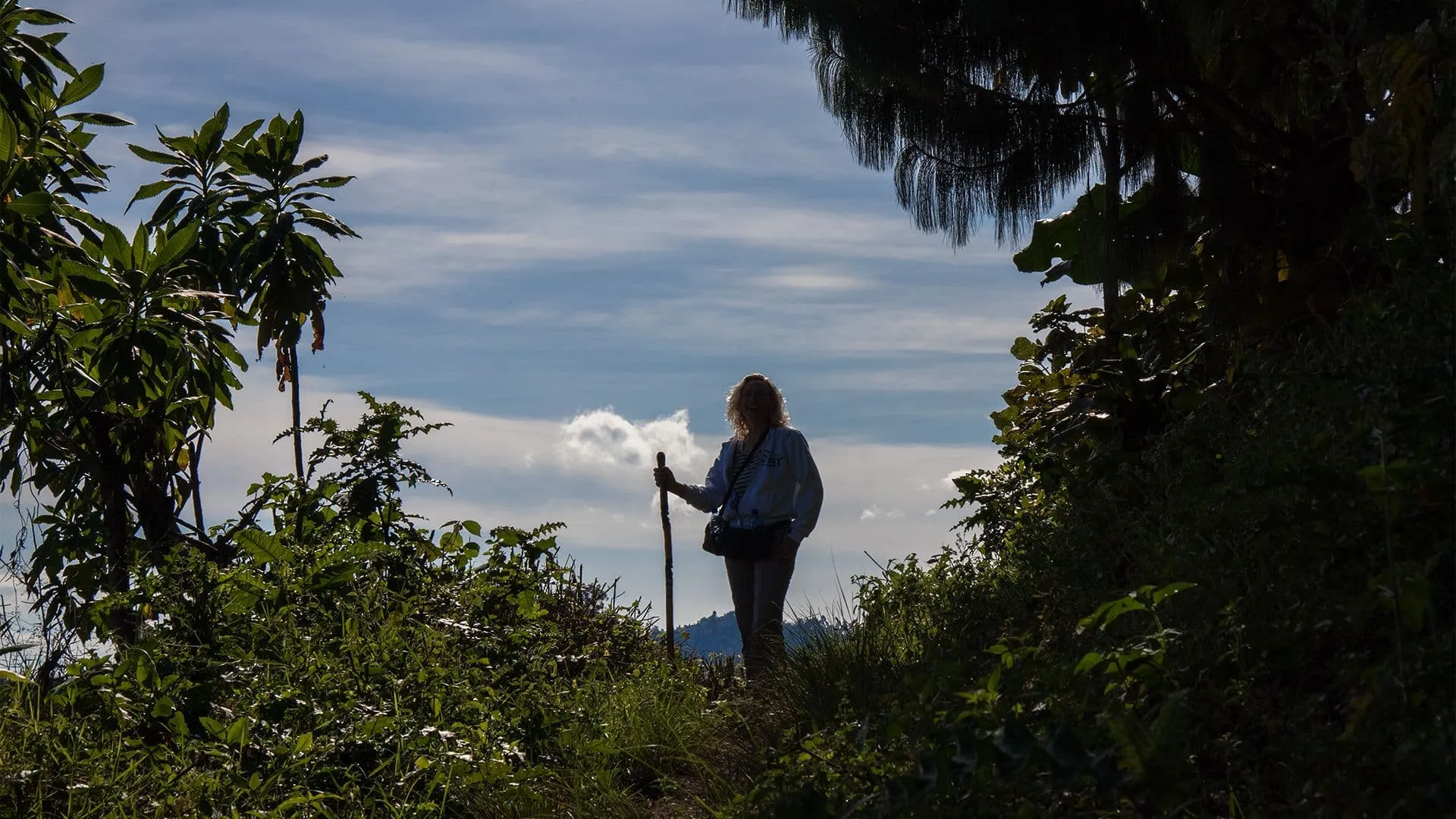
Uganda is not your average hiking destination. There are no polished alpine huts, no cappuccino stops, no perfectly marked switchbacks. Uganda is wilder. Wetter. More remote. And that is exactly why trekkers fall in love with it.

From the ancient jungles of Bwindi to the glacier-crowned peaks of the Rwenzori Mountains, known as the Mountains of the Moon, hiking in Uganda is a step into another world entirely. The landscapes are surreal, the silence is immense, and the sense of achievement at the end is hard to put into words.

But there is something that makes the Rwenzori trek unlike almost any other mountain expedition in Africa: the mountains straddle the border with the Democratic Republic of Congo. That proximity shapes the experience in ways that are worth understanding before you go and it is one of the reasons why going with the right operator matters more here than almost anywhere else.

The short version? Yes, hiking in Uganda is safe. But only if you come prepared, respect the mountains, and go with people who genuinely know what they are doing.

Rwenzori Mountains trekking 13411

Is Hiking in Uganda Safe?

Absolutely. Thousands of trekkers visit Uganda every year for gorilla trekking, volcano hikes, and multi-day expeditions in the Rwenzori Mountains. Uganda's trekking regions are well established, guides are highly experienced, and national park regulations are strict.

That said, this is Africa at its most raw. Trails are muddy, weather changes fast, and mountain conditions can turn serious without warning. Uganda rewards prepared trekkers and humbles careless ones.

The most common safety considerations are:

  • Challenging terrain: Slippery jungle trails, steep ascents, river crossings, and uneven mountain paths make trekking physically demanding even for experienced hikers. This is a T3-rated expedition: rocky terrain, exposed sections, and longer stages are the norm.
  • Altitude: The route reaches 5,109 metres at Margherita Peak. Altitude sickness is a real concern and must be taken seriously.
  • Heavy rainfall: The Rwenzoris are among the wettest ranges in Africa. Weather changes quickly, trails become saturated, and visibility can drop fast.
  • Remote mountain conditions: Once you are deep in the mountains, rescue services and medical facilities are genuinely limited. Self-sufficiency and preparation matter.
  • Wildlife encounters: Blue monkeys, colobus, the rare L'Hoest monkey, and forest elephants share this landscape. Guided and regulated encounters are the norm but wildlife is still wild.
  • Long travel days: The drive from Entebbe to Kasese takes a full day. Factor this in and arrive rested.

None of this should put you off. But it should sharpen your preparation.

Is Hiking in Uganda Safe?

Trekking on the Edge of Congo

Here is the one safety consideration that is unique to the Rwenzori Mountains and unlike anything you will encounter on Kilimanjaro, Mount Kenya, or most other African trekking destinations: the mountains straddle the border between Uganda and the Democratic Republic of Congo.

The DRC side of the range has experienced periods of instability over the years, and while the Uganda side is tightly controlled within Rwenzori Mountains National Park, the proximity to an occasionally volatile border is taken seriously by everyone who operates here responsibly.

What this means in practice:

  • Your guides will carry firearms: This surprises some trekkers the first time they see it. It is not a sign of danger it is standard protocol for expeditions in this border region and a precaution that has been in place for many years. It is one of the reasons why going with a properly organized, licensed operator matters so much on this particular trek.
  • Routes stay on the Uganda side: The expedition does not cross into the DRC. Routes are carefully planned within the national park boundaries, and guides are fully briefed on current conditions.
  • The national park is well managed and monitored: Uganda Wildlife Authority rangers patrol the area regularly. The infrastructure for safe, organized trekking is well established on the Ugandan side.
  • Your operator's local knowledge is your greatest asset: Guides who have worked these mountains for years understand the terrain, the protocols, and when conditions require adjustment. This is not a mountain where improvised or self-guided trekking is appropriate.

None of this should deter you. Thousands of trekkers complete the Rwenzori expedition safely every year. But it is the honest, specific reason why the Rwenzoris require a different level of preparation and operator expertise than most other African mountain treks and why we think it is important to be upfront about it.

The Rwenzori Mountains: Beautiful, Wild, and Demanding

If there is one range in Uganda that demands your full respect, it is the Rwenzori Mountains.

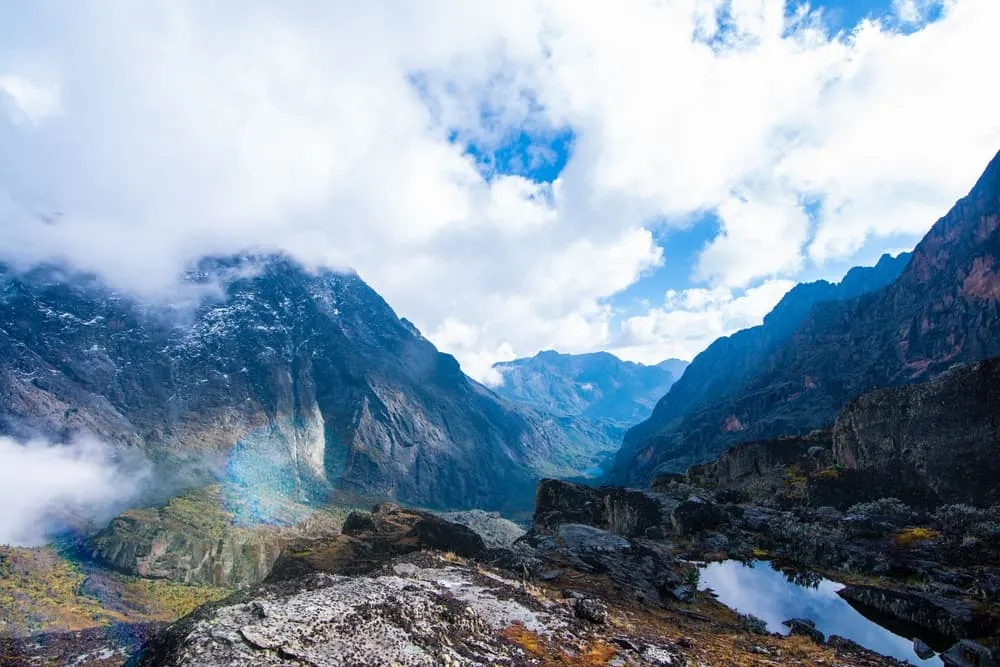
The Rwenzoris are unlike anywhere else on the continent. Giant lobelias tower over misty valleys. Boardwalks disappear into swamp forest. Glaciers cling to equatorial peaks above the clouds. It is one of Africa's most dramatic and least-visited mountain environments and one of its most demanding treks.

What makes the Rwenzoris particularly challenging is not any single thing but the combination of everything at once: deep persistent mud from the first day to the last, technical glacier sections near the summit, cold nights at high camps, and a remoteness that means there is no easy way out if things go wrong. This is not Kilimanjaro with a tourist highway to the summit. Progress is slow, conditions are raw, and the mountain tests you in ways that are hard to anticipate until you are in it.

At Bookatrekking, our Ancient Mountains of the Moon Full Rwenzori Mountains Experience is a fully organized 10-day expedition from Entebbe to the summit of Margherita Peak at 5,109 metres. Everything technical is included crampons, harness, plastic boots, ice axe, windproof jacket and trousers, gloves, gaiters, helmet, and balaclava. Guides, porters, permits, all meals, transfers, and accommodation are covered. You bring your sleeping bag (rental available in Kasese), your travel insurance, and your determination.

The Rwenzori Mountains: Beautiful, Wild, and Demanding

Altitude Is No Joke

One thing that genuinely surprises many trekkers is the altitude in Uganda. The equator and glaciers feel like they should not go together, but the Rwenzoris rise above 5,000 metres and what makes altitude here particularly deceptive is how gradually it creeps up on you.

Unlike Kilimanjaro where altitude hits fast on the upper slopes, the Rwenzori itinerary builds steadily. Kalalama Camp on Day 3 already sits at 3,147 metres. By the time you reach the glacier sections, your body has been working hard for days and cumulative fatigue makes altitude symptoms harder to distinguish from ordinary tiredness. That is when it catches people out.

Altitude sickness does not discriminate. Fitness helps, but it does not protect you. The guiding principle on the Rwenzoris is "pole pole" slowly slowly. Trust the pacing, hydrate consistently, and listen to your guide. Experienced local guides recognize altitude symptoms early, often before trekkers do themselves. If symptoms worsen persistent headache, vomiting, confusion descend immediately. No summit is worth the risk.

The mountain decides. Always.

Altitude Is No Joke
Altitude Is No Joke

Uganda Is Wet: Bring Proper Gear

The Rwenzoris are one of the wettest mountain ranges in Africa and this is not a disclaimer, it is a defining feature of the experience. Rain is not a risk, it is a certainty. The mud is not occasional, it is the baseline. Sections of trail can be knee-deep, boardwalks are permanently slippery, and wet conditions persist from the forest zones all the way to the glacier.

And honestly? It is part of the magic. Clouds rolling through valleys of giant groundsels, mist drifting over lobelias the size of trees, rainforest dripping after a late afternoon downpour it is wonderfully, irreplaceably wild.

But it does mean that kit selection matters more here than on most African treks. A waterproof jacket and trousers, dry bags for your sleeping bag and electronics, warm insulation layers for high camps, and waterproof boots with ankle support are non-negotiable for the lower mountain. Above the snowline, plastic mountain boots and crampons are included in the trek equipment as are gaiters, windproof jacket and trousers, and gloves. Cotton and trail runners will not survive the Rwenzoris. Come equipped for a real mountain expedition.

Uganda Is Wet: Bring Proper Gear

What About Wildlife?

Wildlife on the Rwenzori trek is a genuine highlight rather than a safety concern and that is worth saying clearly. Serious wildlife incidents on organized treks in Uganda are extremely rare. The national park is tightly regulated and professionally managed.

What you will encounter is wonderful rather than threatening. Blue monkeys and black-and-white colobus move through the canopy on the lower slopes. The rare L'Hoest monkey may appear if luck is on your side. Higher up, watch for the striking Rwenzori Turaco one of the range's most distinctive birds. In the wider park, buffalo and forest elephants are present, but guides monitor terrain and animal activity constantly.

The rules are simple: follow your guide's instructions, move calmly, keep your distance, and never feed animals. This is their habitat. Respect it and the wildlife becomes one of the most memorable parts of the journey.

What About Wildlife?

Health and Hygiene on the Trail

A few practical things to sort before you travel none of them complicated, but all of them important.

Yellow fever vaccination is required for entry into Uganda check all current recommendations with a travel health clinic well in advance. Some nationalities must apply for a Uganda visa before arrival; visas cost around USD 50 and your guide can assist if needed. Do not book flights until your trek is confirmed, as Bookatrekking uses a manual confirmation process with local partners.

On the health side: carry ibuprofen, rehydration salts, blister treatment, and any prescription medication you take regularly. There are no pharmacies on the mountain. Malaria risk is higher at lower elevations near forests and lakes discuss antimalarials with your doctor before departure. Make sure your travel insurance specifically covers high-altitude trekking and mountaineering.

All meals are included throughout the expedition breakfast, packed lunch, and dinner every day. Safe drinking water is provided on the mountain. Submit any dietary requirements after booking via my.bookatrekking.com.

And yes, expect to get muddy. Deeply, thoroughly, magnificently muddy.

The Real Challenge? Getting There

Ironically, the road to the Rwenzoris is often more exhausting than people expect sometimes more tiring than the first day on the mountain itself.

Day 2 of the expedition is the long drive from Entebbe to Kasese. Getting there means:

  • Long overland transfers: The drive from Entebbe to Kasese takes a full day, with landscapes changing from city sprawl to tea fields to mountain foothills.
  • Rough, unpaved roads: Many mountain access routes become deeply rutted after heavy rain. Patience is part of the journey.
  • Winding highland routes: Mountain approaches wind through valleys and ridges, requiring slow, careful driving regardless of distance on a map.
  • A full gear check in Kasese: Before the trek begins, your guide will check all your equipment carefully. Any missing or substandard kit can be rented in Kasese let the team know in advance if you think you will need anything.

Once the mountains appear on the horizon, you will understand why every kilometre of rough road was worth it.

Why You Should Never Trek the Rwenzoris Alone

The Rwenzori Mountains are not the place for solo navigation experiments or improvised expeditions. These are serious mountains with serious consequences for those who underestimate them and the proximity to the DRC border makes professional guidance not just helpful, but essential.

Going with an experienced, properly organized team is not just a convenience it is how the Rwenzoris should be done:

  • Deep local knowledge: Trails branch and conditions shift constantly. Local guides know which routes are passable after rain, where reliable water is found, and when to adjust pace.
  • Border region expertise: Guides operating in the Rwenzoris are fully briefed on protocols for trekking in a national park that borders an unstable region. They carry firearms as a standard precaution and are trained to manage the specific conditions of this environment. This is knowledge and infrastructure that no independent trekker can replicate.
  • Full logistics management: Permits, hut bookings at camps Bugata, Hunwick's, and Margherita, food supplies, porter coordination all of it is organized for you.
  • Technical mountain support: The upper mountain requires glacier travel with crampons and ice axe. Guides are trained in mountain safety and lead groups through technical sections.
  • Emergency preparedness: A well-run expedition carries first aid equipment, has communication protocols, and knows evacuation procedures. That infrastructure does not exist without professional organization.
  • Porter welfare and ethics: Responsible trekking means locally employed porters working under fair, properly managed conditions. A reputable operator takes this seriously.

When you are knee-deep in mud at 4,000 metres, surrounded by mist and giant heather forest, you will be profoundly grateful for the team beside you.

Should Safety Concerns Stop You From Hiking in Uganda?

Uganda is adventurous, unpredictable, and occasionally demanding. It is also one of the most rewarding trekking destinations anywhere on earth.

The Rwenzori Mountains are wild in the truest sense. The forests are ancient. The peaks are dramatic. The landscapes are surreal. And when you stand on Margherita Peak at 5,109 metres one of Africa's most remote summits looking out over a range that most of the world has never heard of, it feels like a secret you have earned.

Yes, the mountains border the DRC. Yes, your guides will carry firearms. Yes, the terrain is demanding and the weather is relentless. But none of that is a reason to stay home. It is a reason to come fully prepared, choose your operator carefully, and trust the people who know these mountains best.

Come prepared. Choose experienced guides. Respect what the mountains ask of you. Do that, and hiking in Uganda is not just safe it is genuinely unforgettable.

Ready to take on the Mountains of the Moon? Get in touch and let us help you book your trek. You just need to show up ready to climb.

About Us

At Bookatrekking.com, you will find the trek that will make your life unforgettable. Whether you want to explore the Inca Trail or climb Kilimanjaro. Bookatrekking.com has a wide and varied range of first-class treks. No false promises are made here. Transparent prices and bookings are fixed instantly. Find, compare, book and trek!
Read more about us
About Us
About Us