

Safety First: costs for rescue services are covered.

Mount Kenya Burguret to Chogoria Traverse

  • Duration
    Total 6 days
    Average 5 h

> Climb from the bamboo forest to Point Lenana at 4,985 metres
> Walk the Burguret route, reopened in the early 1990s and still more elephant than hiker
> Your guide leads the way, porters carry the load and a cook keeps you fed

It's just before sunrise and you're standing on Point Lenana, 4,985 metres up and close to the equator. You left Shipton Camp in the dark behind your guide's headlamp, with the crunch of scree for company. Now the first light hits Batian and Nelion, and 340 kilometres to the south, Kilimanjaro sits above the clouds. Breakfast is waiting at Hall Tarns.

The Burguret route was pioneered in colonial days, abandoned for years and reopened in the early 1990s. From Gathiuru forest station you climb through giant bamboo, podocarpus and cedar to the moorland and the lava cliffs of Highland Castle. The trail then circles below the peaks to Shipton Camp, your base for the summit. After Point Lenana you descend the Chogoria side via Hall Tarns and the Gorges Valley to the Meru Mount Kenya Bandas. They have log fires, hot showers and a cold Tusker if the supply truck made it up.

This is the toughest of our Mount Kenya routes. The lower track is rough, overgrown and muddy when wet, the camps are simple, and on day two you climb 1,100 metres. Summit morning starts in the dark and takes you to nearly 5,000 metres, so you need good fitness and a body that handles altitude. No technical climbing. We arrange the guide, porters, cook, camps and transfers. You walk. Deal?

This trek is operated by
Go To Mount Kenya
Go To Mount Kenya

Itinerary

Day
1

Nairobi to Giant Bamboo Camp

Duration: 04:00 h

Your guide picks you up in Nairobi and the trek starts with a drive north to Nanyuki for lunch. From there it's on to Gathiuru forest station on the north-western side of the mountain, where the Burguret route begins. This route is far quieter than the main routes up Mount Kenya, and you feel it from the first step.

The track climbs straight into dense stands of giant bamboo, some of it towering high above the path. It is narrow, often overgrown and muddy after rain. Elephant and buffalo use this forest too, so your guide sets the pace and the group stays together.

Giant Bamboo Camp lies at 2,600 metres in the middle of the forest. Dinner is waiting and you fall asleep to the sounds of the forest. Count on about 4 hours of walking.

Giant Bamboo Camp

Info
Giant Bamboo Camp
Giant Bamboo Camp
Day
2

Giant Bamboo Camp to Highland Castle

Duration: 06:00 h

A tough climb of about 1,100 metres takes you out of the forest and onto the open moorland. Your guide keeps the pace slow and steady: today is as much about getting used to the altitude as about gaining height. Count on 5 to 6 hours.

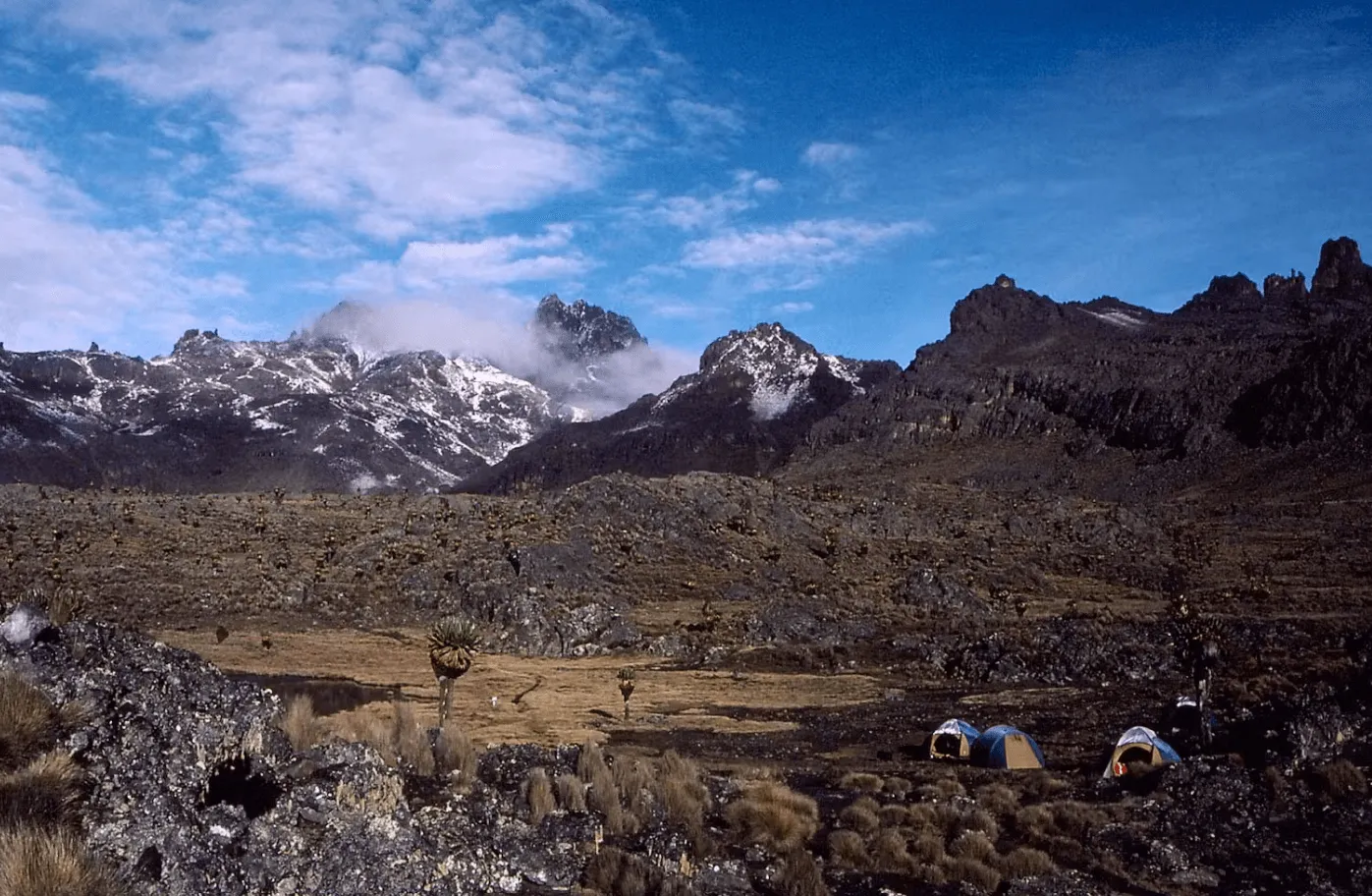
The bamboo gives way to tall podocarpus and pencil cedar, then to the hagenia and rosewood zone at the edge of the moorland, where you stop for lunch. Above the tree line the scenery changes completely. Giant lobelias and groundsels, the signature plants of Mount Kenya, line the trail and make the landscape look like another planet.

Camp is below the sheer lava cliffs of Highland Castle at 3,700 metres. Drink plenty, eat well and get your rest, the high mountain starts tomorrow.

Highlands Castle

Info
Highlands Castle
Highlands Castle
Day
3

Highland Castle to Shipton Camp

Duration: 06:00 h

Today you swap the wilderness for the big views. The trail circles below the summit peaks, and for the first time you may meet other trekkers. Count on 5 to 6 hours.

Jagged volcanic peaks and glaciers rise above the path, turquoise tarns lie in the valleys, and eagles and buzzards circle overhead. Hard to believe you're this close to the equator. In the last stretch you come into the Mackinder Valley, full of giant lobelias and groundsels. Just before camp, look out for Shipton's Cave in the rock wall to the left of the path.

Shipton Camp lies at around 4,200 metres, right below the peaks. Rock hyraxes scurry between the boulders. After an early dinner your guide briefs you on summit night, and then it's bed: the alarm goes off in the middle of the night.

Shipton Camp

Info
Shipton Camp
Shipton Camp
Day
4

Shipton Camp to Hall Tarns via Point Lenana

Duration: 06:00 h

Summit day. You leave in the dark, headlamps on and your guide in front, to reach Point Lenana at 4,985 metres in time for sunrise. It's the highest point on Mount Kenya you can reach without climbing gear.

Steep scree and a bare rocky track lead to the top in about 3 hours. Go slow, breathe, keep moving. On top, the sun comes up behind you and lights up Batian and Nelion, and on a clear morning you see Kilimanjaro, 340 kilometres to the south. From the summit you cross to the Chogoria side and descend for 2 to 3 hours to Hall Tarns.

The camp at Hall Tarns, at around 4,300 metres, sits on a rock ledge above the Temple, the wall of cliffs that drops straight down to Lake Michaelson. Walk a few minutes to the edge for the view. A hefty breakfast is waiting and the rest of the day is for resting. You've earned it.

Hall Tarns

Info
Hall Tarns
Hall Tarns
Day
5

Hall Tarns to Meru Mount Kenya Bandas

A long descent down a broad ridge above the Gorges Valley, with the peaks behind you. Your knees will notice, your lungs will be grateful.

Look back for views of the summit peaks, and down into the Gorges Valley with its waterfalls, tarns and old lava flows. Across the valley rise Delamere and Macmillan Peaks. Lower down, the heather and moorland slowly turn back into forest, and the air gets warmer with every hour.

The Meru Mount Kenya Bandas are wooden cabins with log fires, hot showers and real beds. If the supply vehicles made it up through the forest, there's cold Tusker. In the evening, elephant and buffalo often graze outside the cabins, so keep an eye on the clearing.

Meru Mount Kenya Bandas

Info
Meru Mount Kenya Bandas
Day
6

Meru Mount Kenya Bandas to Nairobi

Duration: 03:00 h

A last walk of about 3 hours down through the bamboo forest. Keep your eyes open: monkeys and buffalo are regulars on this stretch, and your guide knows where to look.

At the forest edge the vehicle is waiting for the drive back to Nairobi, where you arrive in the late afternoon. Time to say goodbye to your guide, with Mount Kenya in your legs and the summit sunrise on your phone.

Contact our Trekking Expert
Sierd van der Bij
Sierd van der Bij
Sierd van der Bij

Included

  • Meals

    This trek includes breakfast, lunch, and dinner.
  • Transfers

    All necessary transfers (bus, taxi, private transport, etc.) as described in the itinerary are included.
  • Accommodation in tents

    During your trek, you will stay in tents. The crew will take care of setting up all camping equipment.
  • Professional guide

    During your trek, you will at all times be accompanied by an English speaking guide.
  • Permits

    The cost of permits to enter the national park during your trek is included in the price.
  • Porters

    Porters will be there to assist with carrying all camping and other necessary equipment during your trek.
  • Water

    Enough drinking water will be provided during the trip.

Excluded

  • Traveling to and from

    This trip does not include costs for transportation (flights, bus travel, etc.) to your destination.
  • Personal expenses

    Personal expenses such as souvenirs, drinks at the bar and other similar expenses are your own responsibility.
  • Sleeping bag

    You must bring your own sleeping bag with you. You can rent a sleeping bag from your trekking company.
  • Tipping

    Gratuities for the guide are not covered by the trek's price. The amount to tip is at your discretion, yet if you've received excellent service from your guide, considering a generous tip is appreciated.
  • Travel Insurance

    Your international travel insurance is your own responsibility. It is important that your travel insurance also covers adventures at a high altitude. Discuss your itinerary with the insurance company before your trek.
  • Accommodation before and after the trek

    Before and after the trek you have to take care of your own accommodation.

FAQ

  • What is the Best Season for a Mount Kenya Trek?

  • What if the dates I want are not available?

  • If I book now, can I immediately arrange the rest of my trip?

  • How do I know if this trek is right for me?

  • Can meals be adapted to my dietary requirements?

How to Book

  • Booking

  • Availability

  • Cancellation policy