By Rintsje Bosch
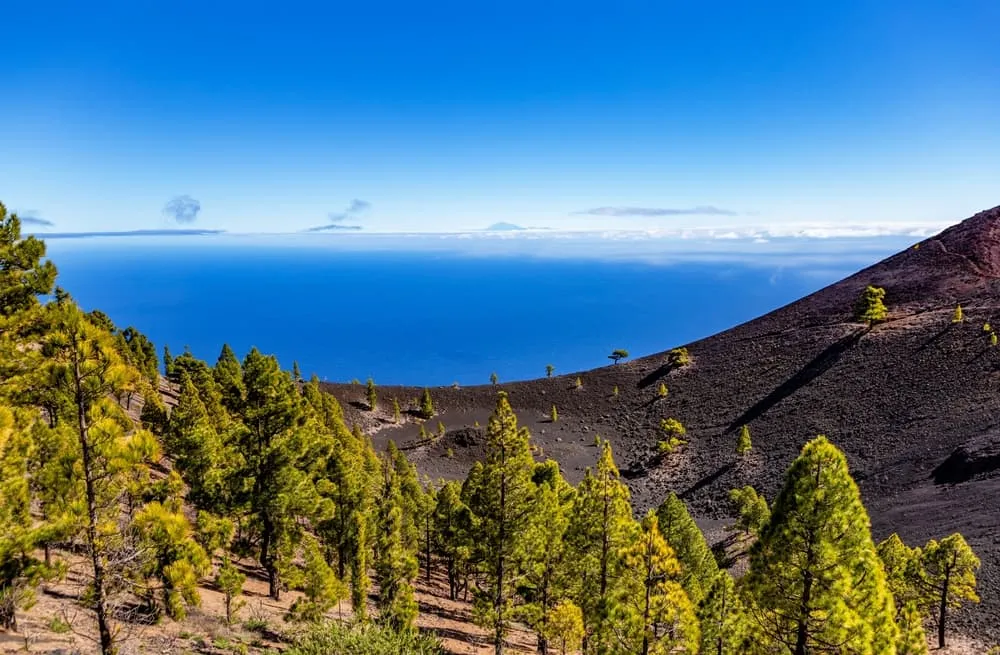
La Palma isn't an island that reveals itself easily. It's really two entirely different walking worlds in one, and how good your trip turns out depends almost entirely on how you combine them. At its centre lies the Caldera de Taburiente, one of the largest erosion craters on Earth. Above it towers the Roque de los Muchachos, with its observatories perched over a sea of clouds. In the south, the Ruta de los Volcanes runs through ash cones and black lava fields on the Cumbre Vieja ridge, while the damp north-east holds the laurel forest of Los Tilos and the water tunnels of Marcos y Cordero. Walking on La Palma means a dense, well-marked path network, hardly any crowds, and proper walking weather in winter, just when snow is falling back home. The 2021 volcanic eruption changed the south-west, paths were closed, but the island is once again a fully-fledged walking destination. Travel with us and you get pre-booked accommodation, luggage transfers, offline navigation, a GPX track and up-to-date weather for each stage location, all in the Bookatrekking app. This guide walks you through the island's five distinct areas, the multi-day route, the best day walks by difficulty, the right time to travel, and how to choose the trip format that suits you.