Caldera de Taburiente: the crater bowl at the island's heart
Walking the Caldera de Taburiente means moving through one of Spain's oldest national parks, a vast erosion bowl formed not by an explosion but by millions of years of water and tectonic movement. The bowl is ringed by steep crater walls, densely covered inside with Canarian pine, and crossed by a permanent watercourse, the Río de Taburiente.
The classic approach runs through the Barranco de las Angustias, the narrow gorge at the entrance to the Caldera, reachable from the valley floor near Los Llanos. Alternatively, you can come in from the ridge via the La Cumbrecita visitor centre, with its short viewpoint walk to the miradores. The Pico Bejenado, on the southern rim of the bowl, makes for a rewarding summit day. The colourful Cascada de Colores waterfall inside the Caldera is a highlight, and on hot days good for a swim. Best for: anyone who prefers national park atmosphere, pine forest and dramatic crater walls to an open volcanic ridge.
Roque de los Muchachos and the ridge above the clouds
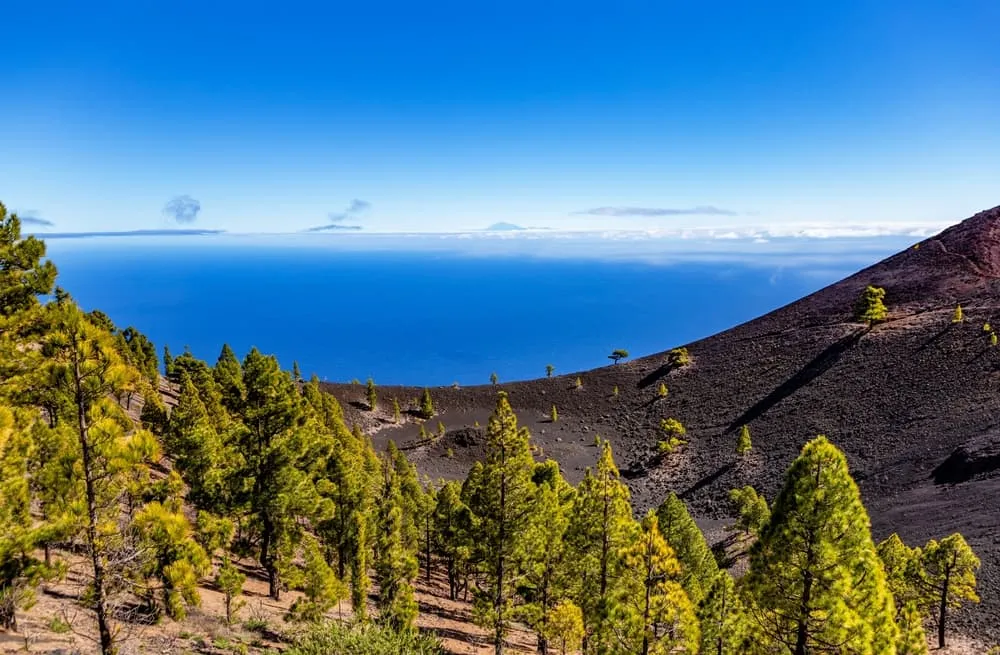
The Caldera's crater rim, at around 2,400 metres, is one of the most impressive viewpoints in the entire Canary Islands. From the Roque de los Muchachos you look down into the crater on one side, and across a sea of clouds towards the neighbouring islands of Tenerife, La Gomera and El Hierro on the other. International observatories are sited here because the sky above the Roque is among the clearest in the world.
The ridge is exposed to wind and cold, often rising above the trade-wind clouds and therefore sunny even when the northern slopes are wet. Conditions can change quickly. The crater-rim walk demands sure-footedness on a few exposed sections, though no technical climbing is needed. Best for: anyone who wants to see the sea of clouds from above and doesn't mind a fair bit of wind.
Cumbre Vieja and the Ruta de los Volcanes
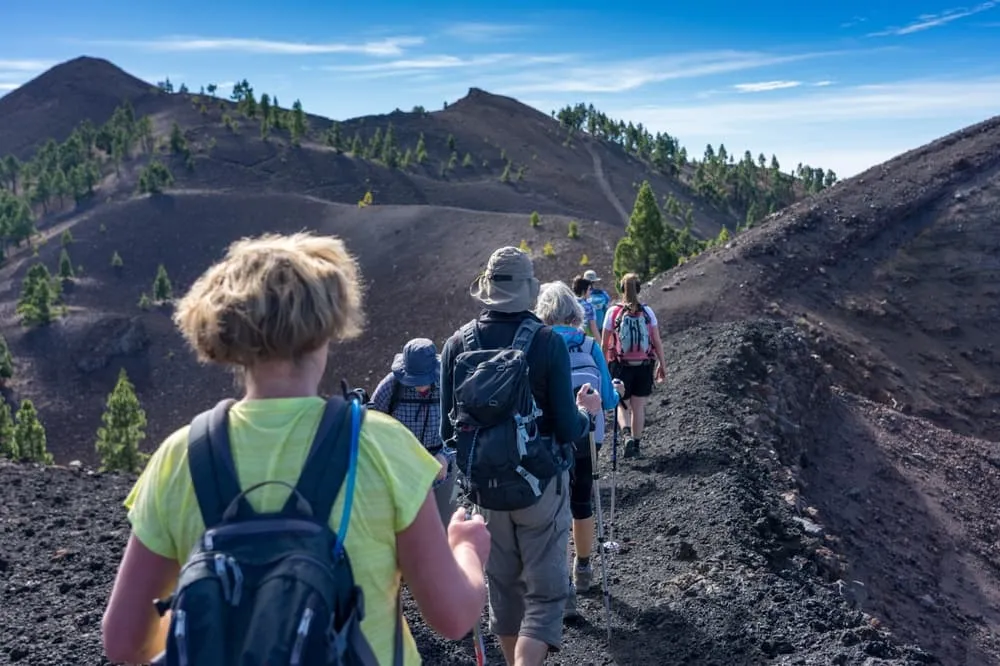
The south of La Palma is pure volcanic landscape. The Ruta de los Volcanes runs along the ridge of the Cumbre Vieja, past ash cones, cooled lava flows and open pine woods, with views of both coasts at once. This is La Palma's volcano trail walking at its purest.
In 2021 the Tajogaite volcano erupted here, permanently changing the south-west of the island: new lava fields reaching to the sea, altered path routes. Paths in the immediate vicinity of the eruption were closed and are being reopened gradually, depending on safety conditions. There's no need to overstate this: by far the greater part of the Ruta de los Volcanes and the Cumbre Vieja remains walkable. Check what's currently open with the island authorities or on the trip page before you go. Best for: fit walkers looking for open landscape, far-reaching views and volcanic geology.
The green north-east: Los Tilos and Marcos y Cordero
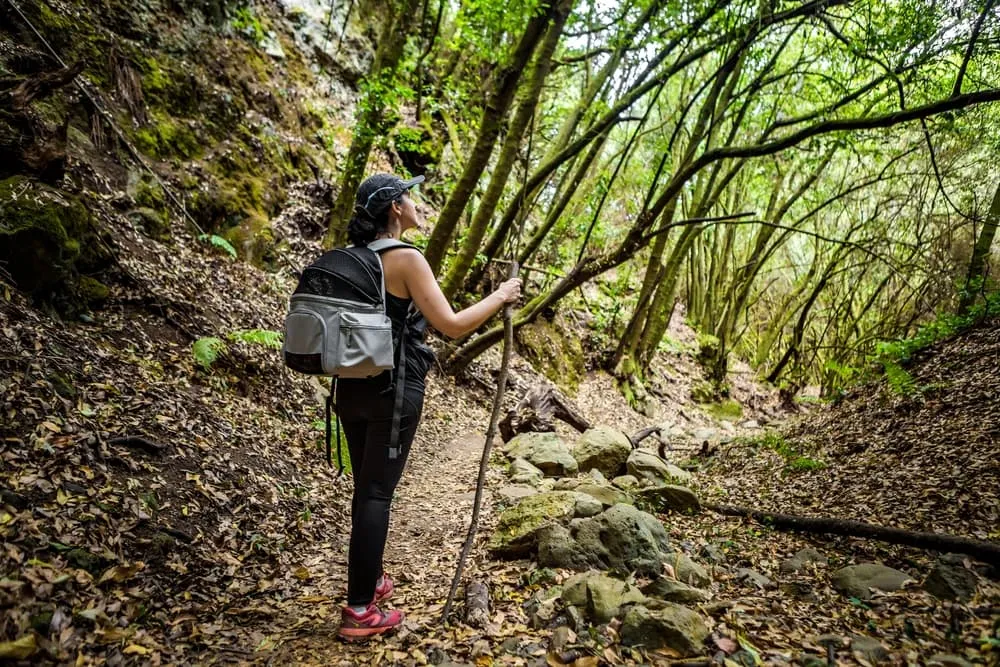
The north-east is the island's trade-wind side: damp, cool, green. Los Tilos is a UNESCO biosphere area with one of the last untouched laurel forests in Europe, laced with ferns, thick moss and old irrigation channels. The Cubo de la Galga in Puntallana is another laurel-forest gem, once used as a filming location for international productions.
Marcos y Cordero is a different world entirely: you walk into the tunnels of the old water supply system, headtorch and rain jacket are essential, and an off-road taxi takes you to the starting point. This is the side of La Palma that most guidebooks forget. The contrast with the south couldn't be greater: no lava, no dust, but darkness, water and ancient forest instead. Best for: anyone who prefers botany, quiet and a touch of underground adventure to a volcanic ridge.
Coast, barrancos and fishing villages
La Palma has no classic bathing bays, but it does have a coastline that's easy to explore on foot. Coastal paths run between banana terraces and small fishing villages, often along old trading routes. Fuencaliente in the south is the finest example: a lighthouse, salt pans with flamingos during migration season, the Teneguía volcano, which can be climbed on a short loop, and, to finish, a black lava pool for a swim in the sea. The barrancos, the deep gorges that cut across every region, offer short, intense walks into surprising depths. Walking and swimming on La Palma is entirely possible, but don't expect the Caribbean: dark sand, sea-water pools and the Atlantic are what's on offer, and that's plenty.