Culture and Traditions in Austria

Culture and Traditions in Austria
Trekking experts per destination
Free cancellation up to eight weeks in advance
Quick personal advice

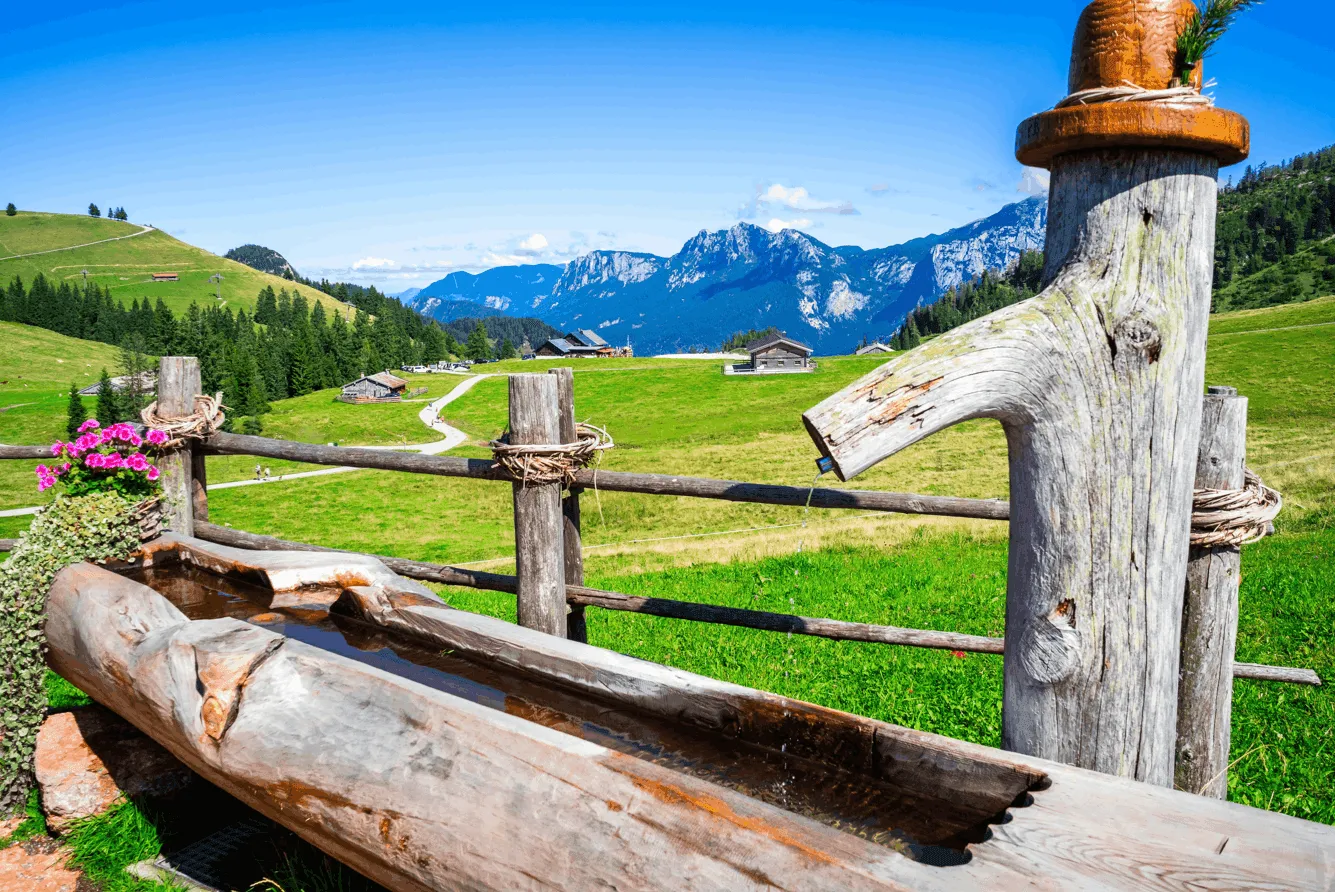
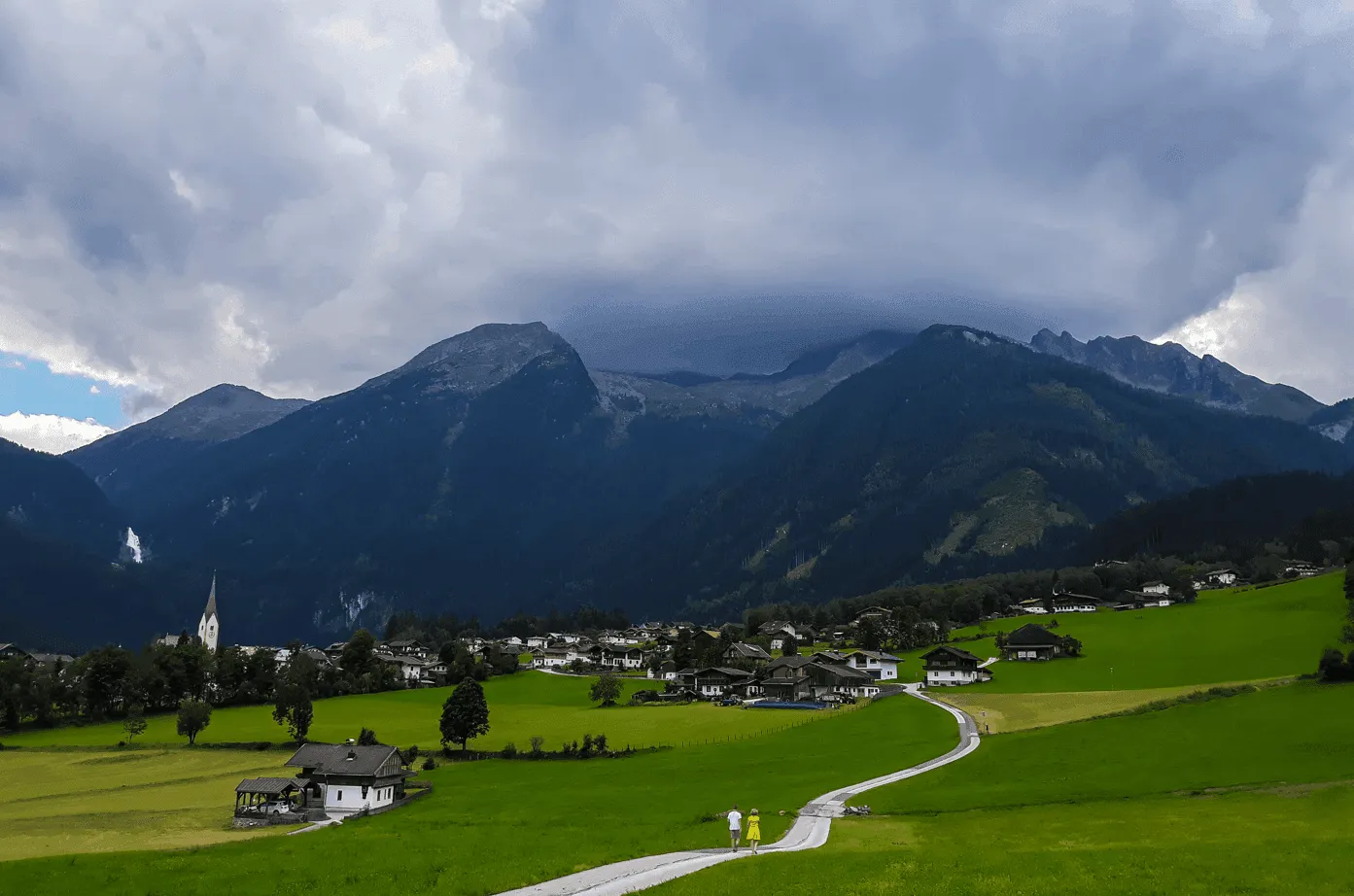
In Austria, the mountains are never far away. Villages sit in quiet valleys, church bells echo across the slopes, and narrow roads wind past farms that have been here for generations. Life in the Alps has always followed the rhythm of the landscape.

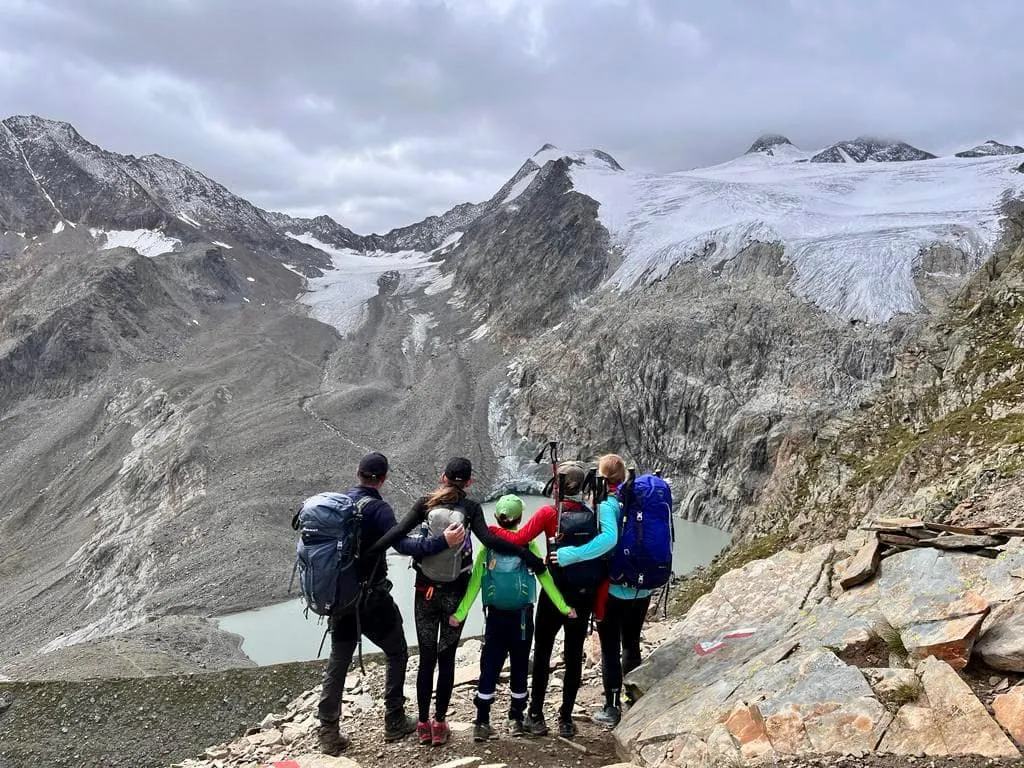
But the Austrian Alps are not just scenery for travelers. They are places where communities have built traditions over centuries of living in a mountain environment. The routes you follow while hiking in Austria often pass through valleys and villages where daily life, local customs, and seasonal rhythms are still closely connected to the landscape around them.
 12912
12912

A Country Shaped by the Alps

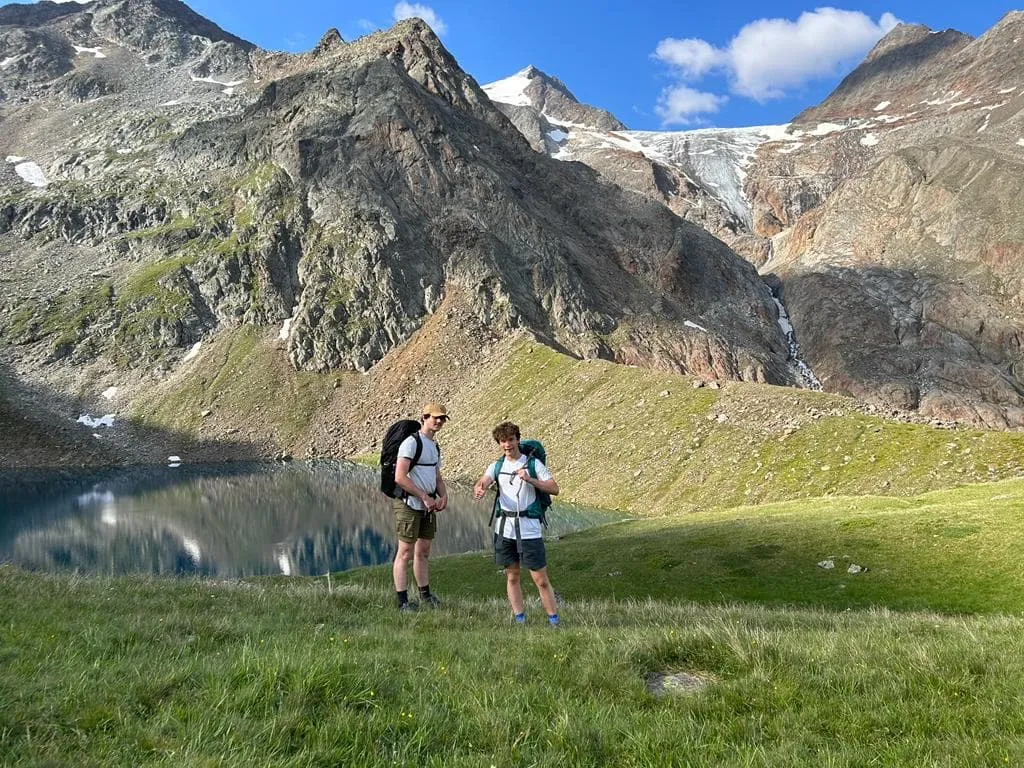
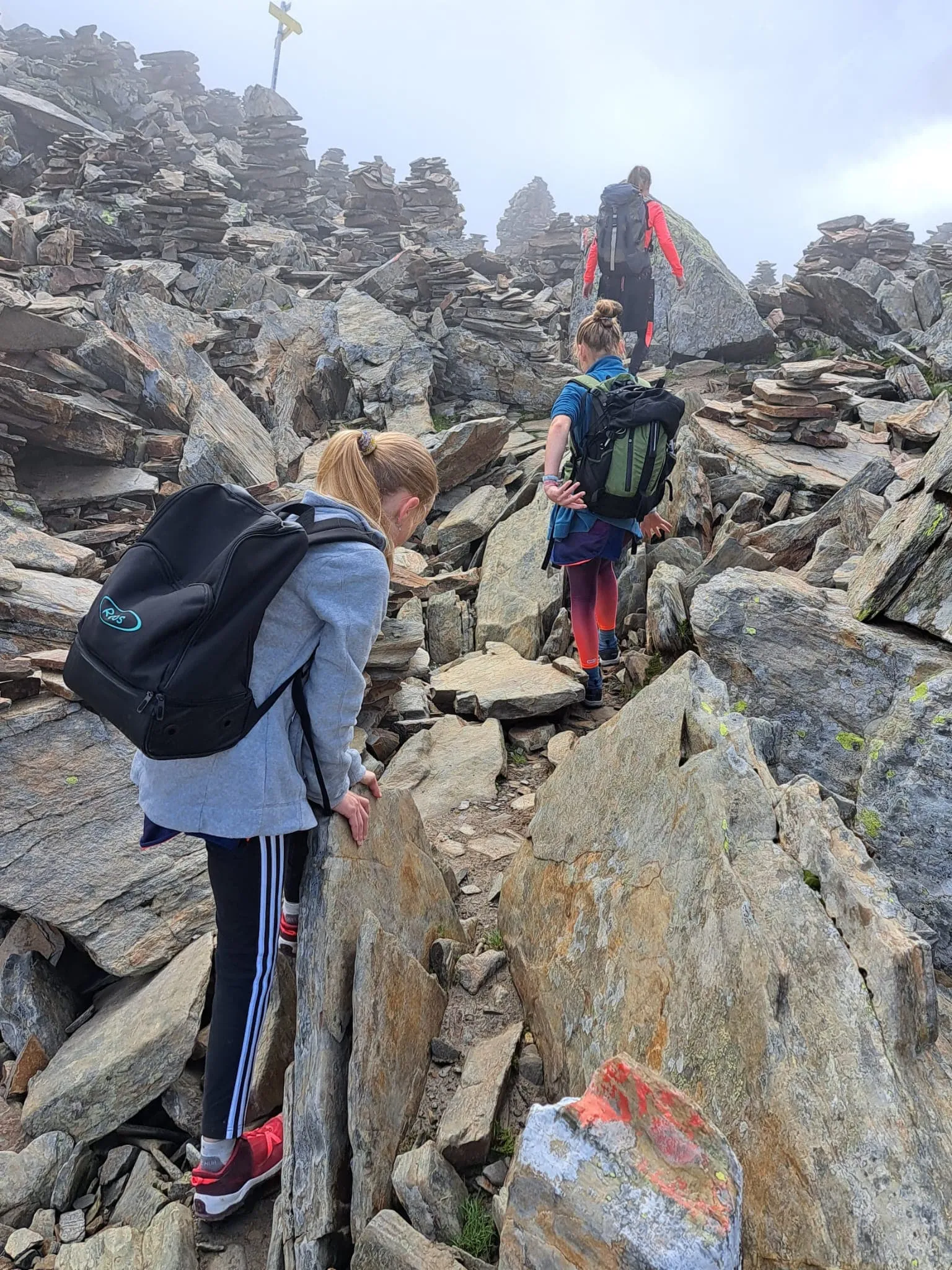
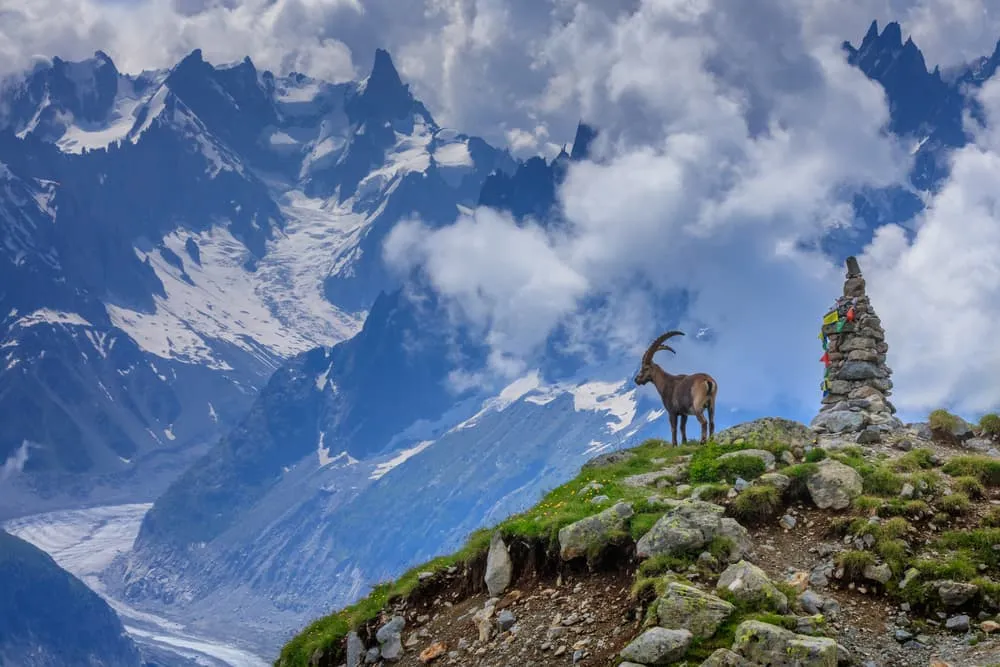
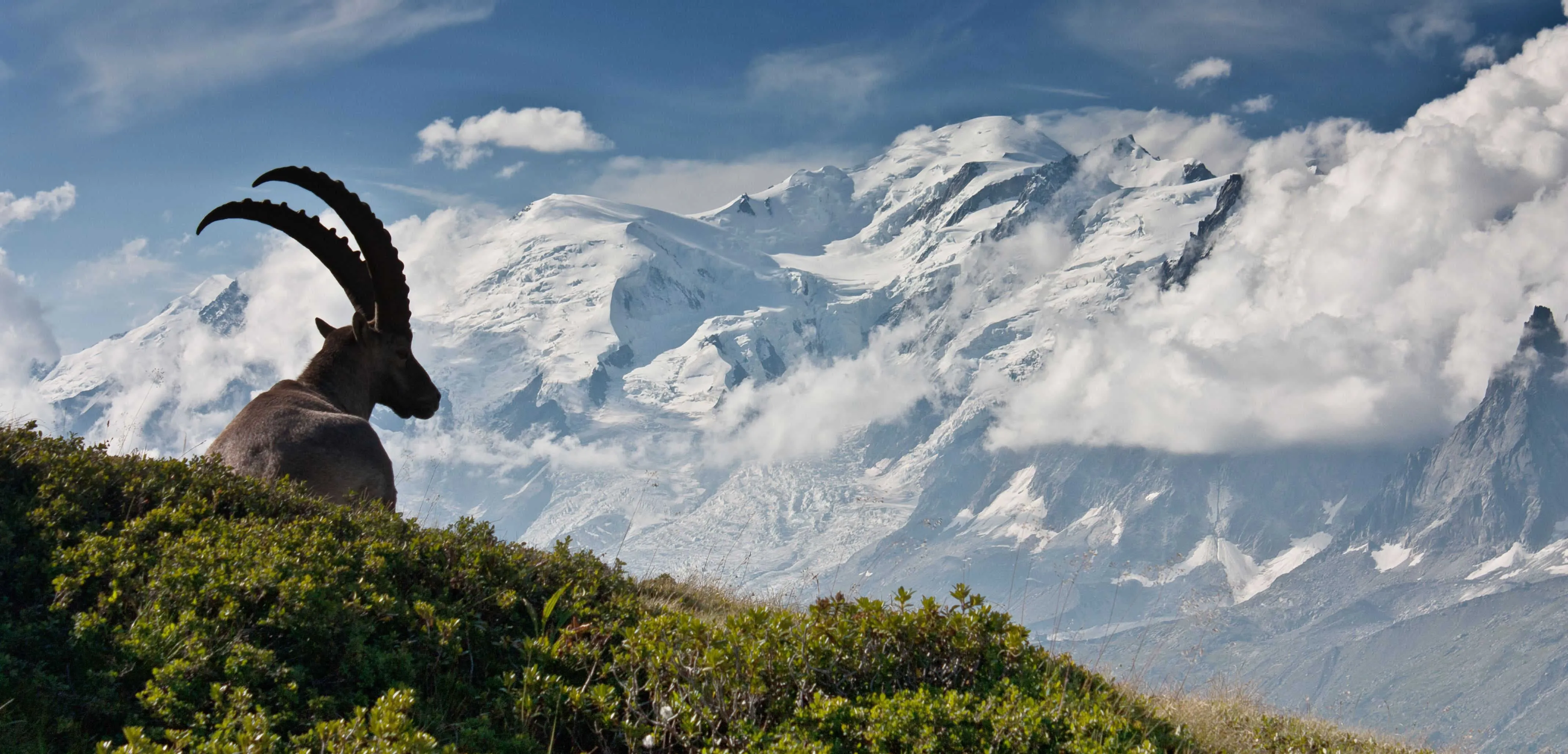
Austria is a country where the mountains play a big role in everyday life. Around two-thirds of the country is covered by the Alps, and for centuries these landscapes influenced how people built their villages and organized their communities. Because valleys were often separated by high mountain passes, many regions developed their own traditions and local identity. Even today, traveling from one valley to another can feel surprisingly different. For hikers, this becomes clear along the trails. Routes often pass through small villages, farms, and mountain pastures that have been part of alpine life for generations.
A Country Shaped by the Alps

Alpine Villages and Regional Identity

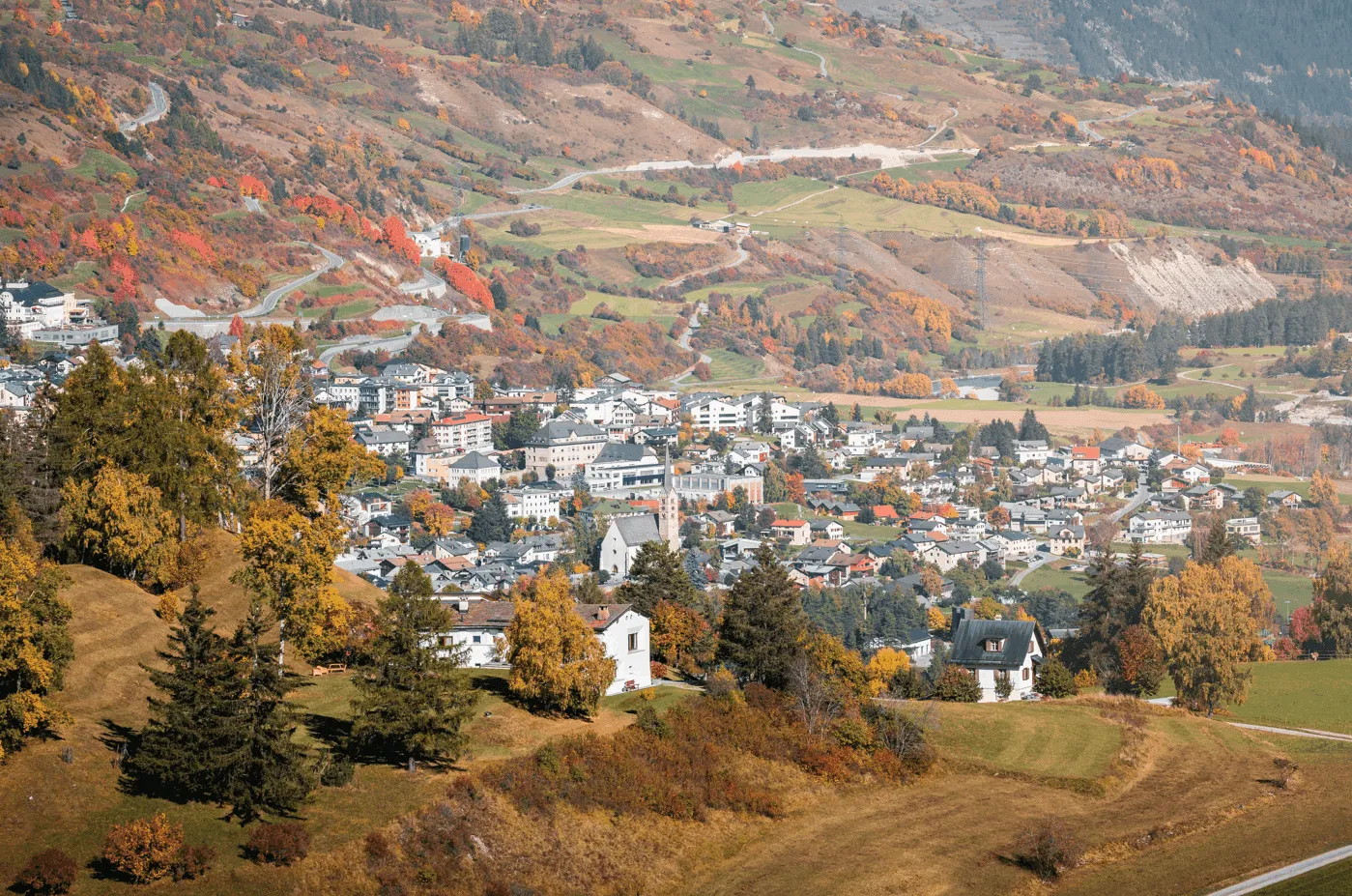
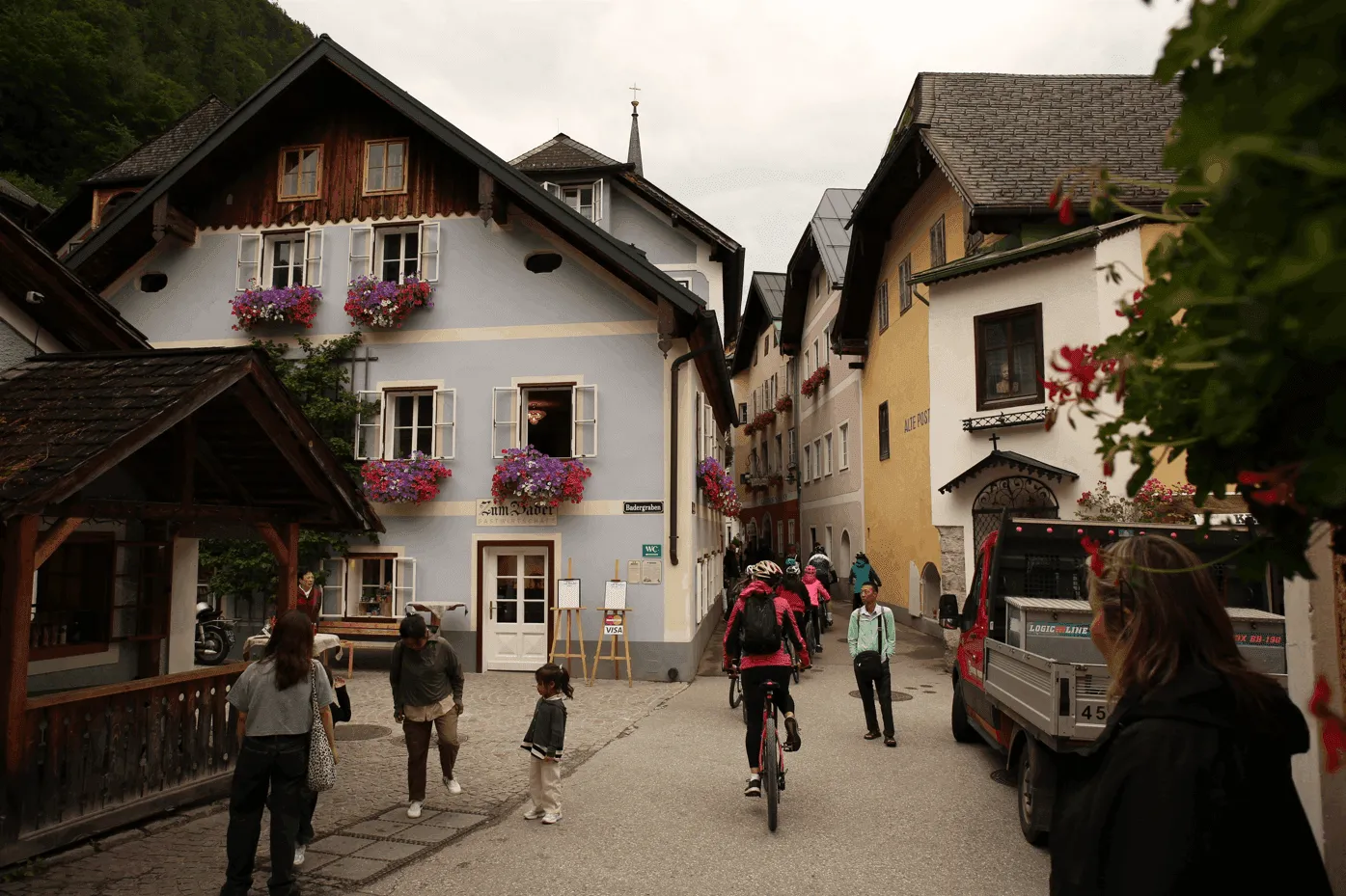
Across Austria, mountain villages often have their own character. Houses are built in traditional styles, village squares act as meeting places, and local customs are still part of everyday life. Because many valleys were historically quite isolated, communities developed their own ways of celebrating festivals, decorating homes, and maintaining traditions. These small differences give each region its own identity. When hiking through Austria, it’s common to pass through villages where these traditions are still visible, from local events in the village center to the architecture that has been part of the landscape for generations.
Alpine Villages and Regional Identity

Almabtrieb: The Festival of Returning Cattle

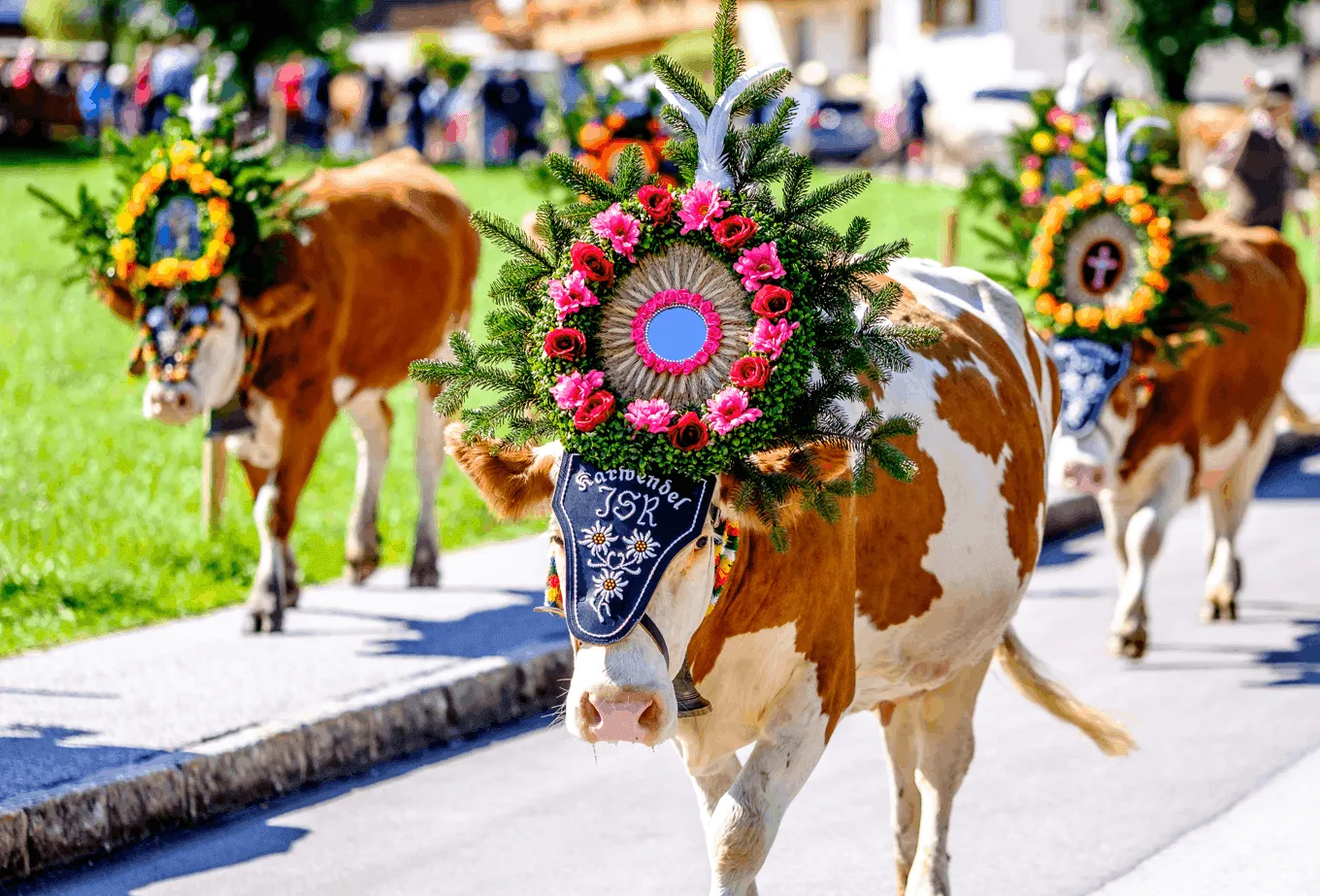
At the end of summer, many alpine regions in Austria celebrate Almabtrieb, the tradition of bringing cattle down from the high mountain pastures back to the valleys. This moment marks the end of the grazing season. Farmers decorate the cows with flowers, ribbons, and large bells before guiding them through the villages. In many places, the arrival turns into a local celebration with music, traditional clothing, and market stalls. For visitors and hikers, seeing an Almabtrieb can feel like stepping into a long-standing alpine tradition that still plays an important role in mountain life today.
Almabtrieb: The Festival of Returning Cattle

Traditional Clothing: Dirndl and Lederhosen

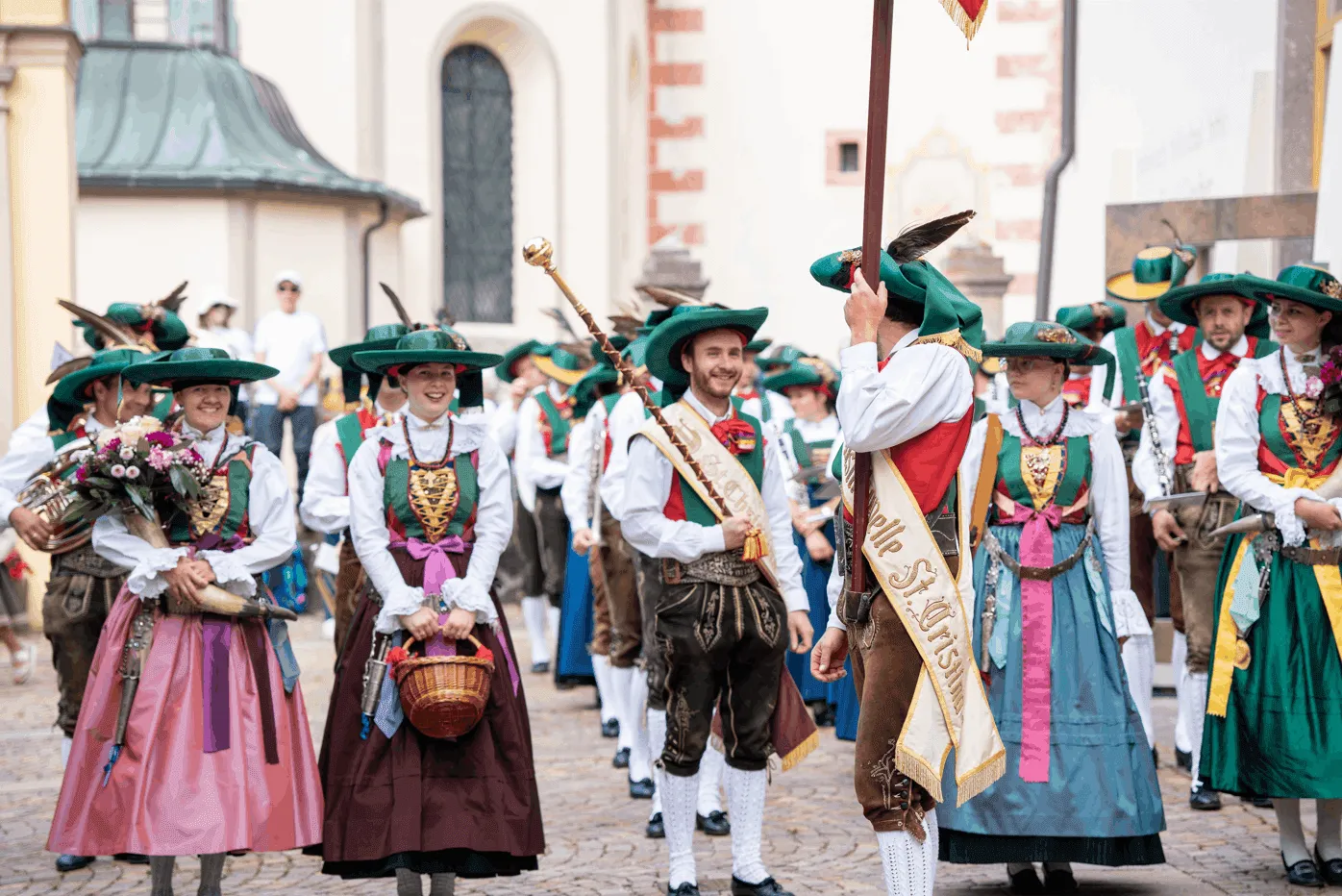
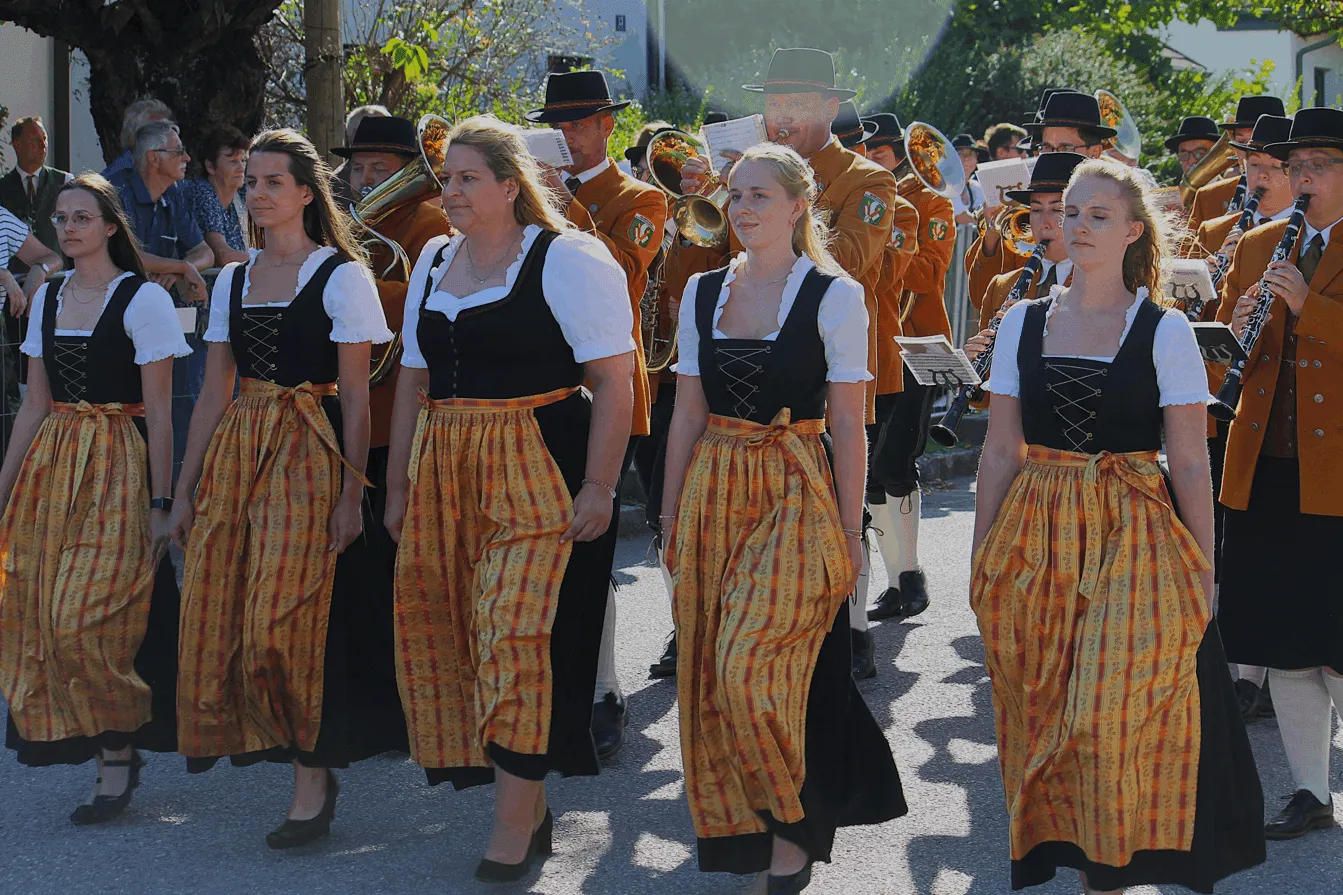
Traditional clothing is still an important part of Austrian culture. In many regions, people wear Dirndls and Lederhosen during festivals, local celebrations, and village events. The Dirndl, usually worn by women, includes a dress, blouse, and apron, while Lederhosen are leather shorts traditionally worn by men. These outfits were once everyday clothing in alpine communities, designed to be practical for life in the mountains. Today they are most commonly seen during cultural events and festivals, but they remain a strong symbol of regional identity across many parts of Austria.
Traditional Clothing: Dirndl and Lederhosen

Music, Dance, and Village Celebrations

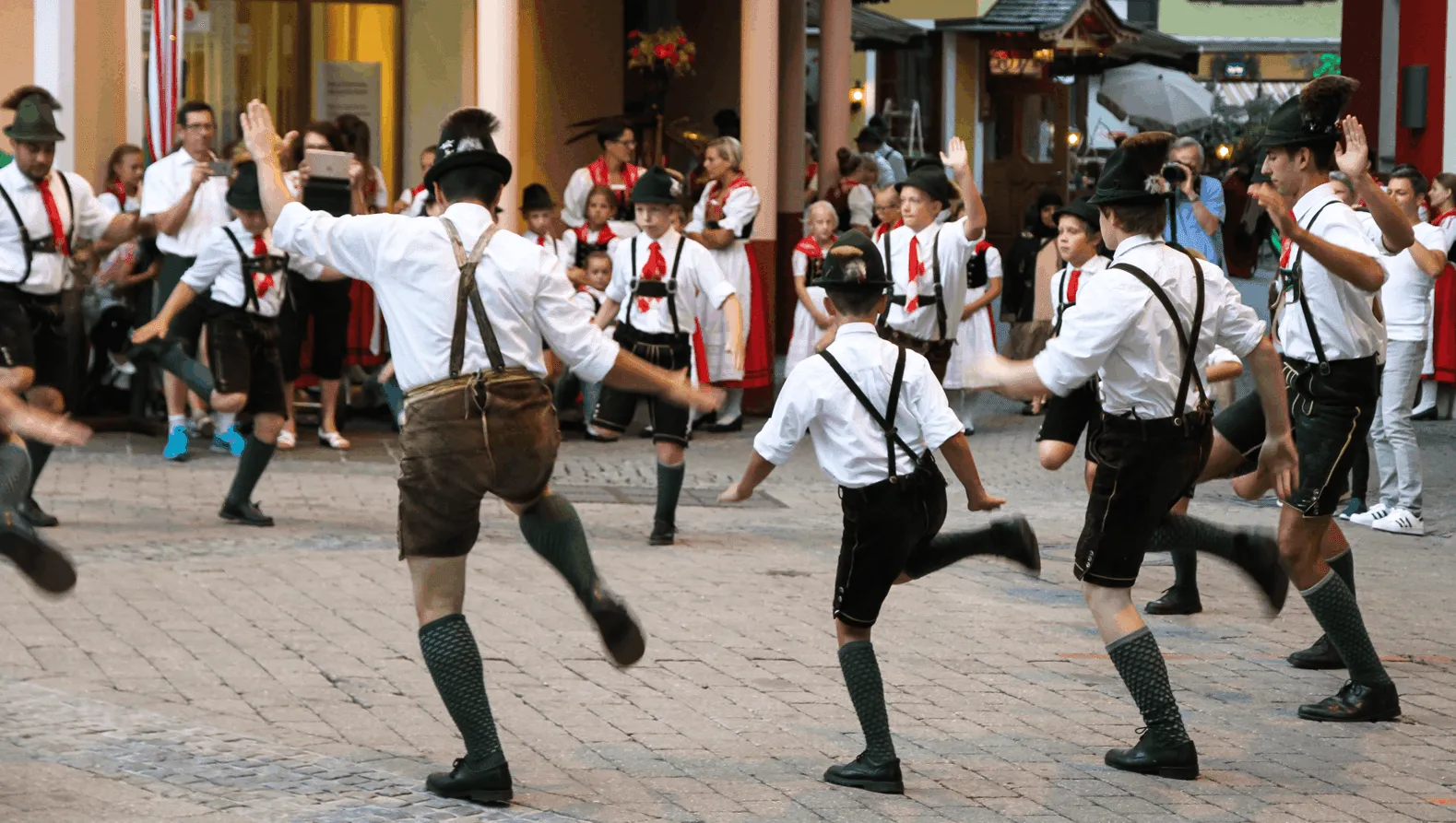
Music has long been part of everyday life in many Austrian mountain communities. Traditional folk music, often played with instruments like the accordion or zither, is still heard during local events and festivals. In many villages, celebrations bring people together with music, dancing, and community gatherings. These events are not just for special occasions but are part of the social life that keeps traditions alive. For hikers passing through small towns or villages, it’s not unusual to come across a local festival or hear music coming from a village square during the summer months.
Music, Dance, and Village Celebrations

Dialects and Language in Austria

German is the official language in Austria, but the way it is spoken can change quite a bit from one region to another. Many people speak local dialects that developed in different alpine valleys over time. These dialects are part of regional identity and are often used in everyday conversations, especially in smaller towns and mountain communities. Even native German speakers from other countries sometimes notice how different Austrian dialects can sound. While traveling or hiking through Austria, you may hear these variations in village cafés, mountain huts, or local markets, adding another layer to the cultural experience of the region.

Mountain Huts and Alpine Hospitality

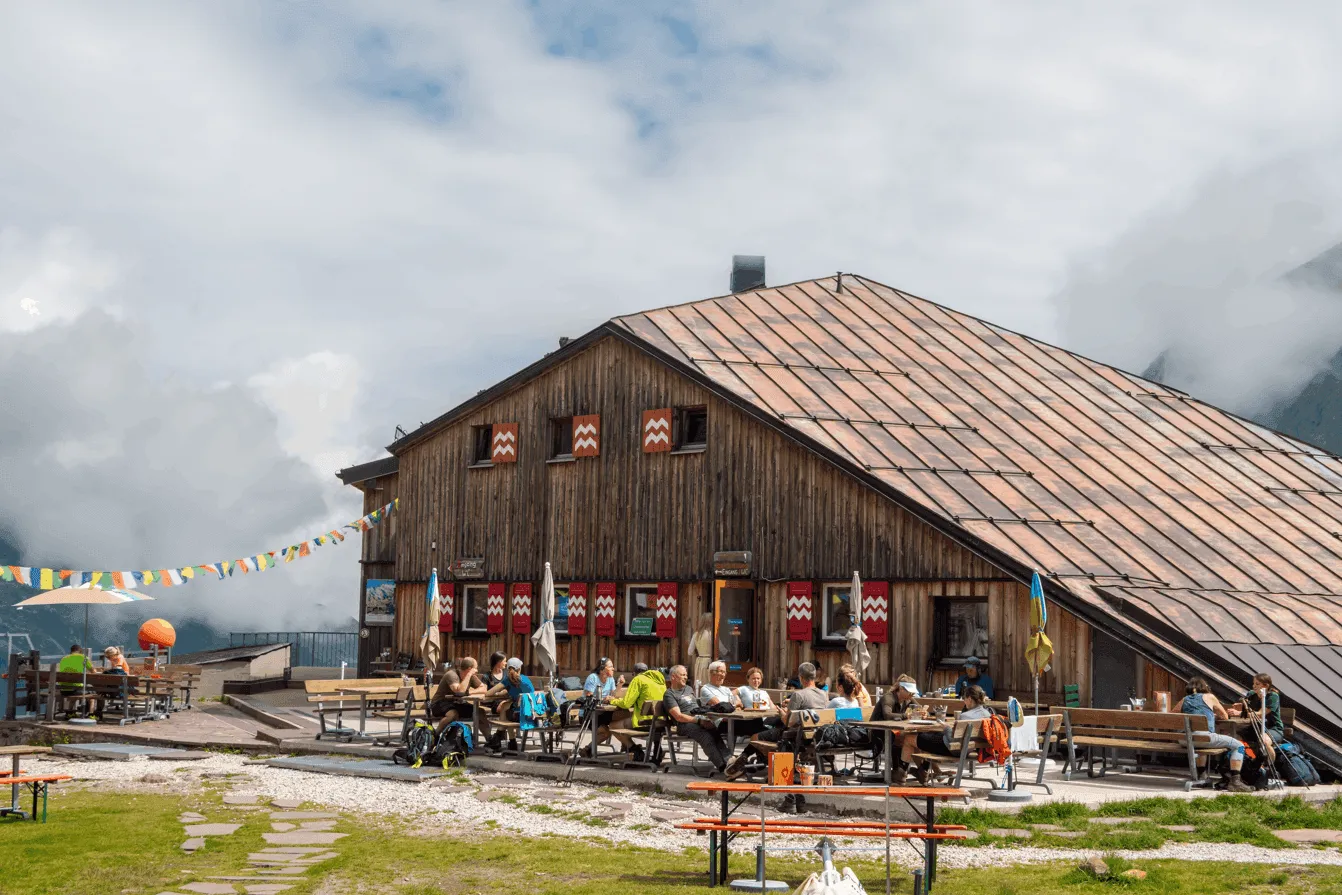
Mountain huts are an important part of life in the Austrian Alps. Originally built to support farmers, shepherds, and travelers moving through the mountains, many of these huts today welcome hikers and trekkers. They offer a place to rest, meet other hikers, and experience a bit of local hospitality. Hut keepers often know the surrounding trails well and are happy to share advice or stories about the area. For many people hiking in Austria, stopping at a mountain hut becomes one of the most memorable parts of the journey.
Mountain Huts and Alpine Hospitality

Walking Through Austria’s Living Heritage

Exploring the Austrian Alps is not only about the mountains themselves. Along the way, you pass through landscapes that have been shaped by people living and working here for centuries. Old paths, traditional villages, and seasonal customs all tell a story about life in the mountains. Many of these traditions are still part of everyday life in alpine communities. For hikers, this means that every trail is also a small journey through Austria’s cultural heritage. The mountains may draw people here, but the traditions and communities along the way are what make the experience truly memorable.
Walking Through Austria’s Living Heritage

About Us

At Bookatrekking.com, you will find the trek that will make your life unforgettable. Whether you want to explore the Inca Trail or climb Kilimanjaro. Bookatrekking.com has a wide and varied range of first-class treks. No false promises are made here. Transparent prices and bookings are fixed instantly. Find, compare, book and trek!
Read more about us
About Us
About Us

Also Interesting