Flora and Fauna in the Alps: Nature, Wildlife, and Traditions

Flora and Fauna in the Alps: Nature, Wildlife, and Traditions
Trekking experts per destination
Free cancellation up to eight weeks in advance
Quick personal advice

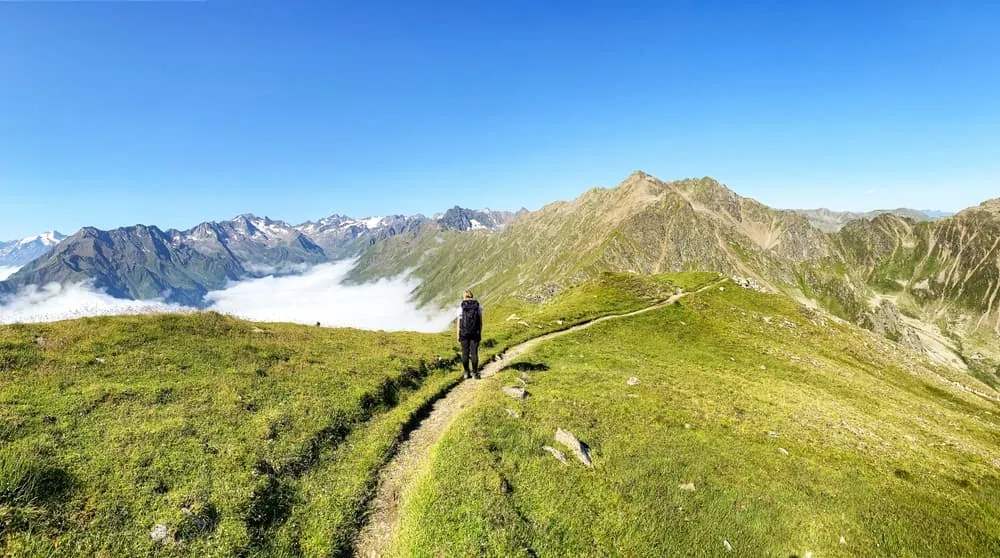
Trekking through the Alps is more than a journey across mountain passes and valleys. It is an immersive walk through one of Europe’s richest natural environments, where altitude, climate, and geography shape life at every level. As you move through the landscape, the scenery shifts constantly, from fertile valley floors and dense forests to open alpine meadows and rugged, windswept ridgelines.

What makes the Alps truly special is the close connection between nature and people. Alpine plants and animals have adapted to extreme conditions, while centuries of farming have shaped the land into a living landscape of pastures, trails, and mountain huts. Together, flora, fauna, and tradition create a dynamic environment that changes with the seasons and makes every day on the trail feel distinct.
Tour du Mont Blanc 12690

Alpine Flora: Meadows, Forests, and High-Altitude Blooms

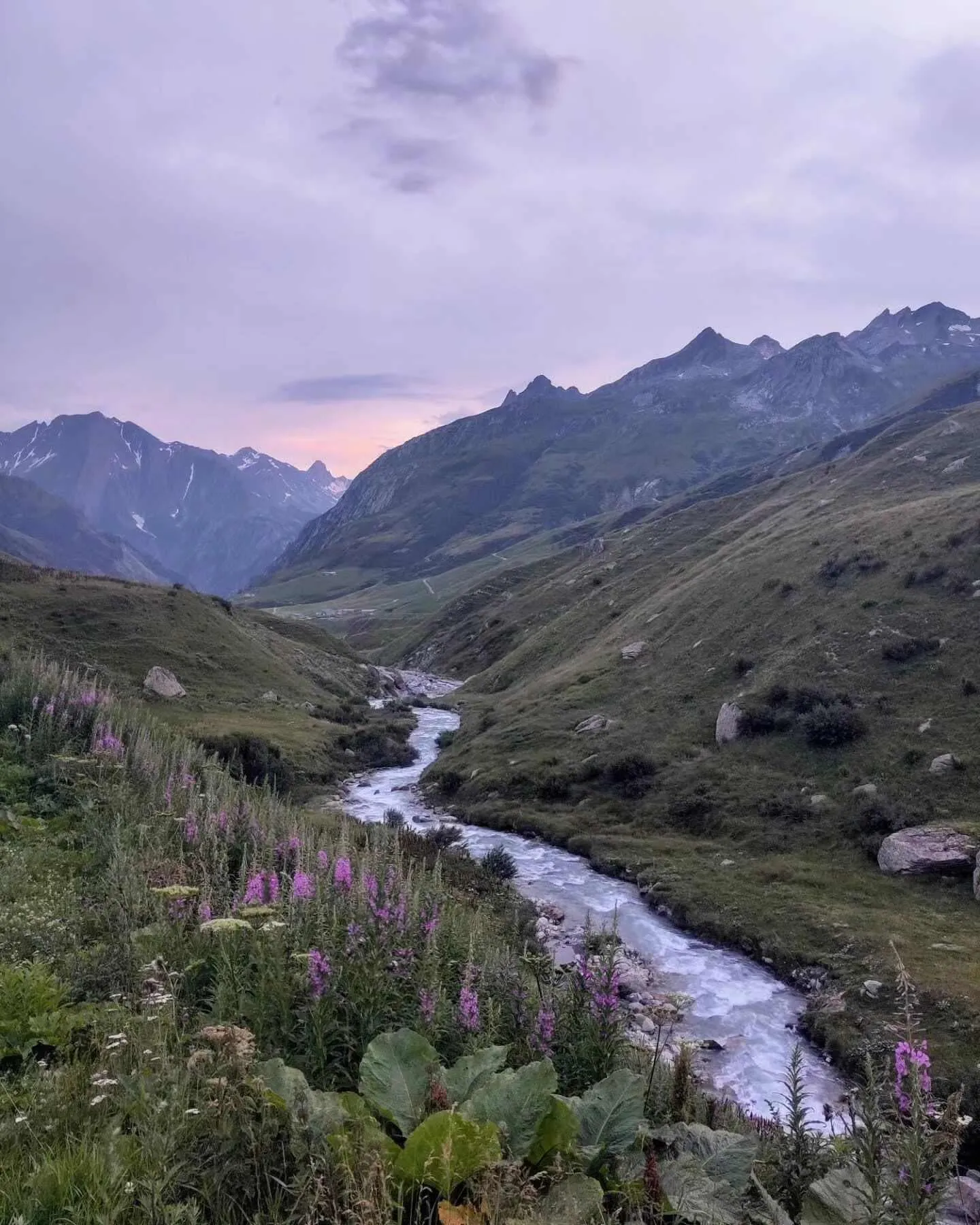
The diversity of Alpine plant life is immediately visible on the trail. Lower slopes and valleys are dominated by green meadows and mixed forests, while higher elevations reveal a tougher, more resilient kind of beauty.

In spring and summer, alpine meadows fill with wildflowers such as daisies, buttercups, orchids, and gentians. Forest zones are made up mainly of spruce, fir, and larch, providing shade and a cooler walking environment on warm days. Above the tree line, vegetation becomes sparse, but the plants that survive there are among the Alps’ most fascinating, clinging to rocky slopes and thriving in thin soil and harsh weather.

🌸 Trail Spotting Checklist – Common Alpine Plants

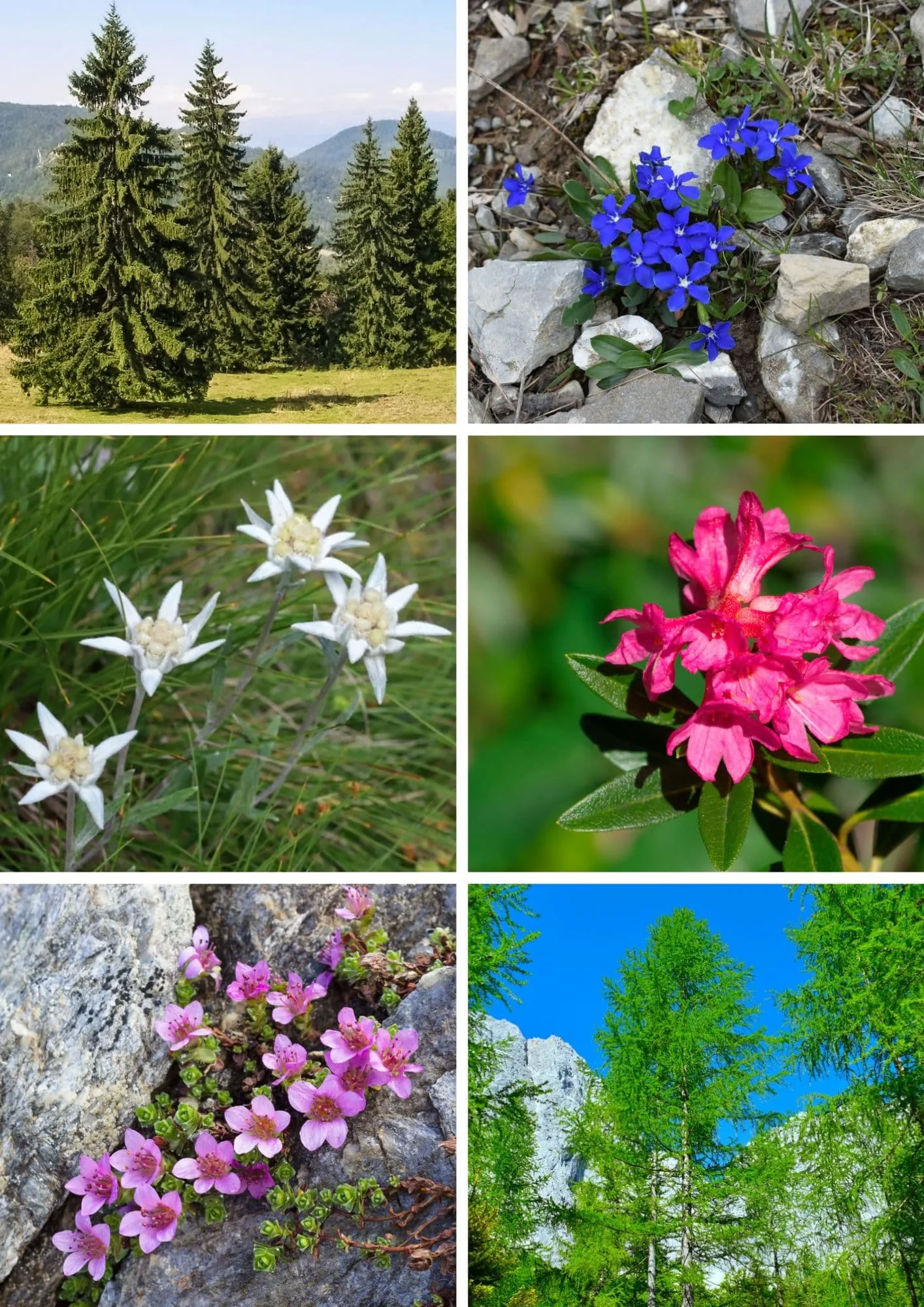
  • Norway spruce (Picea abies) – tall evergreen dominating lower slopes
  • Spring gentian (Gentiana verna) – vivid blue alpine meadow flower
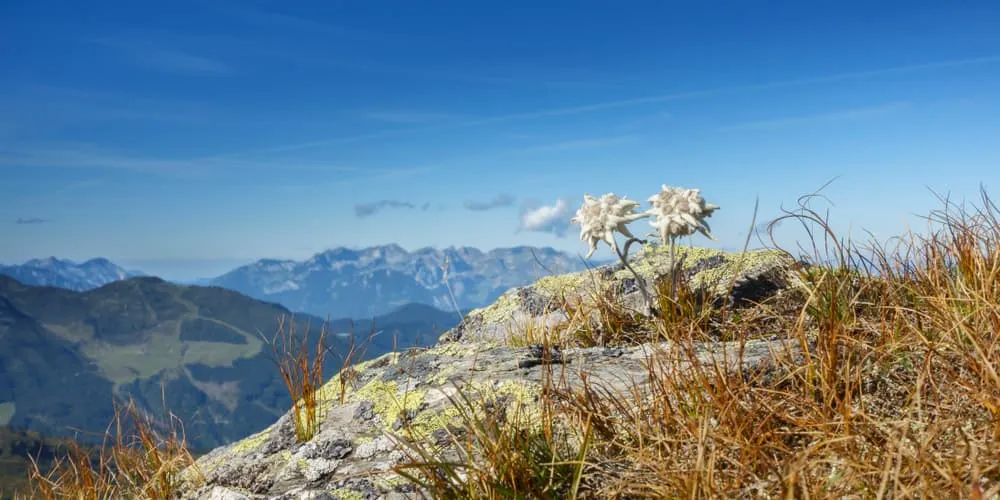
  • Edelweiss (Leontopodium nivale) – the iconic white star of the Alps
  • Alpine rose (Rhododendron ferrugineum) – bright pink flowers in early summer
  • Purple saxifrage (Saxifraga oppositifolia) – early-blooming rock garden plant
  • Larch (Larix decidua) – deciduous conifer turning golden in autumn

Have you seen them on the trails?

Alpine Flora: Meadows, Forests, and High-Altitude Blooms

Edelweiss: A Symbol of Courage and Love

Edelweiss is the most iconic flower of the Alps. Growing high on rocky ledges and exposed slopes, it has long symbolised purity, resilience, and the fragile beauty of mountain life.

Historically, edelweiss also became a symbol of courage. In the past, young men would risk dangerous climbs to pick a single flower as proof of bravery and devotion. Today, the flower is protected in many Alpine regions, and spotting it in the wild is a rare and special moment for trekkers. Edelweiss serves as a reminder that the most beautiful elements of the Alps are often the most delicate.

Edelweiss: A Symbol of Courage and Love

The Role of Altitude: Nature in Layers

One of the defining features of the Alps is how clearly nature changes with altitude. In a single day of trekking, you can pass through multiple natural zones, each with its own conditions and life forms.

As elevation increases, temperatures drop, winds become stronger, and soil becomes thinner and less fertile. Plants adapt in remarkable ways. Many alpine species grow low to the ground to avoid wind damage and retain warmth. Others develop hairy or waxy leaves to protect against cold temperatures and intense sunlight.

Some plants form compact cushion shapes, creating their own sheltered microclimate, while most high-altitude flowers have very short blooming cycles, making the most of the brief alpine summer. For trekkers, this vertical layering is part of the magic. Every ascent brings not just new views, but a completely different natural environment.

The Role of Altitude: Nature in Layers

Wildlife Encounters: From the Ground to the Skies

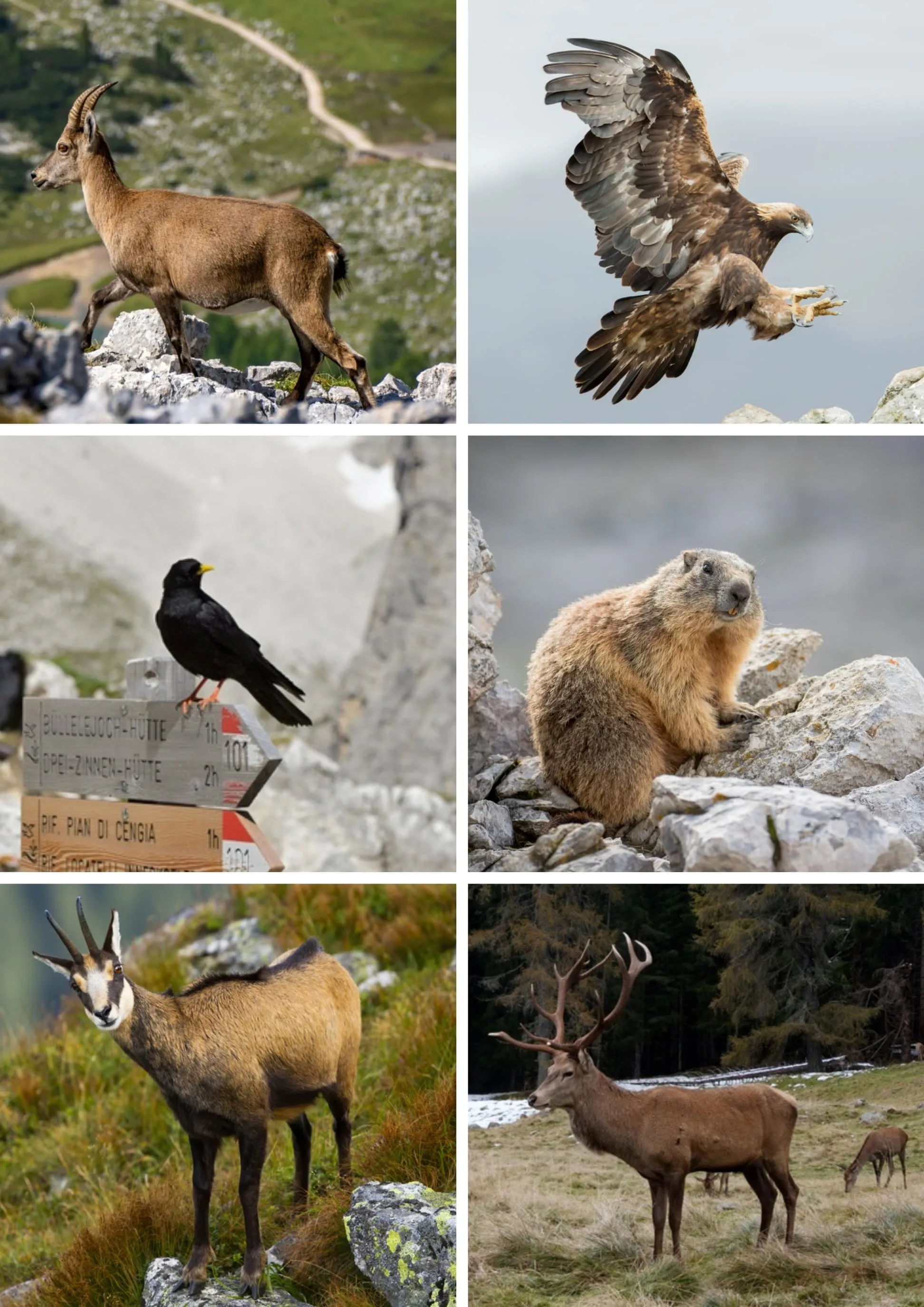
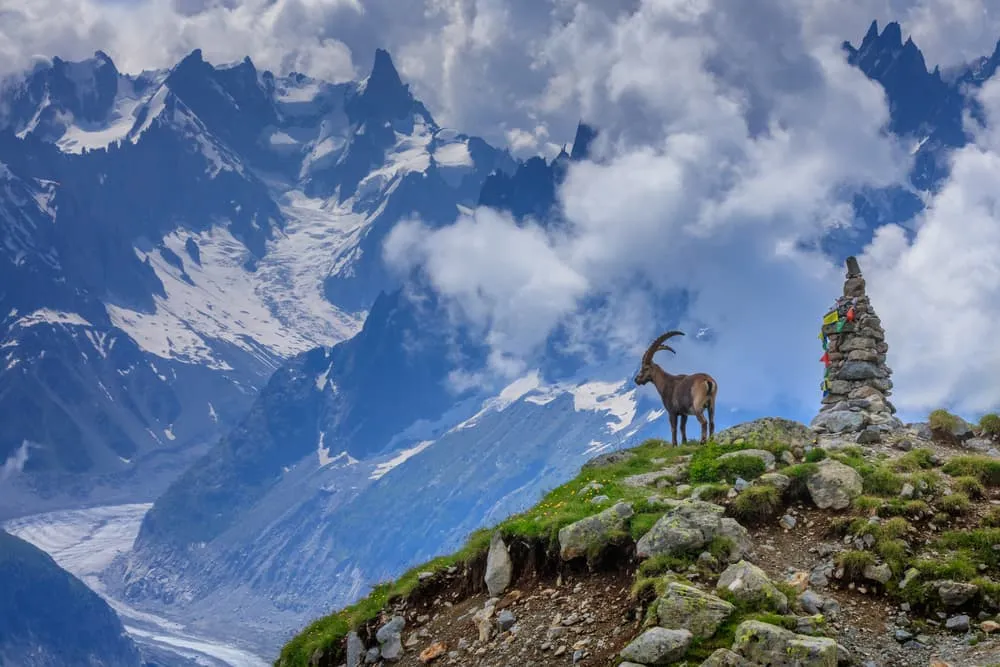
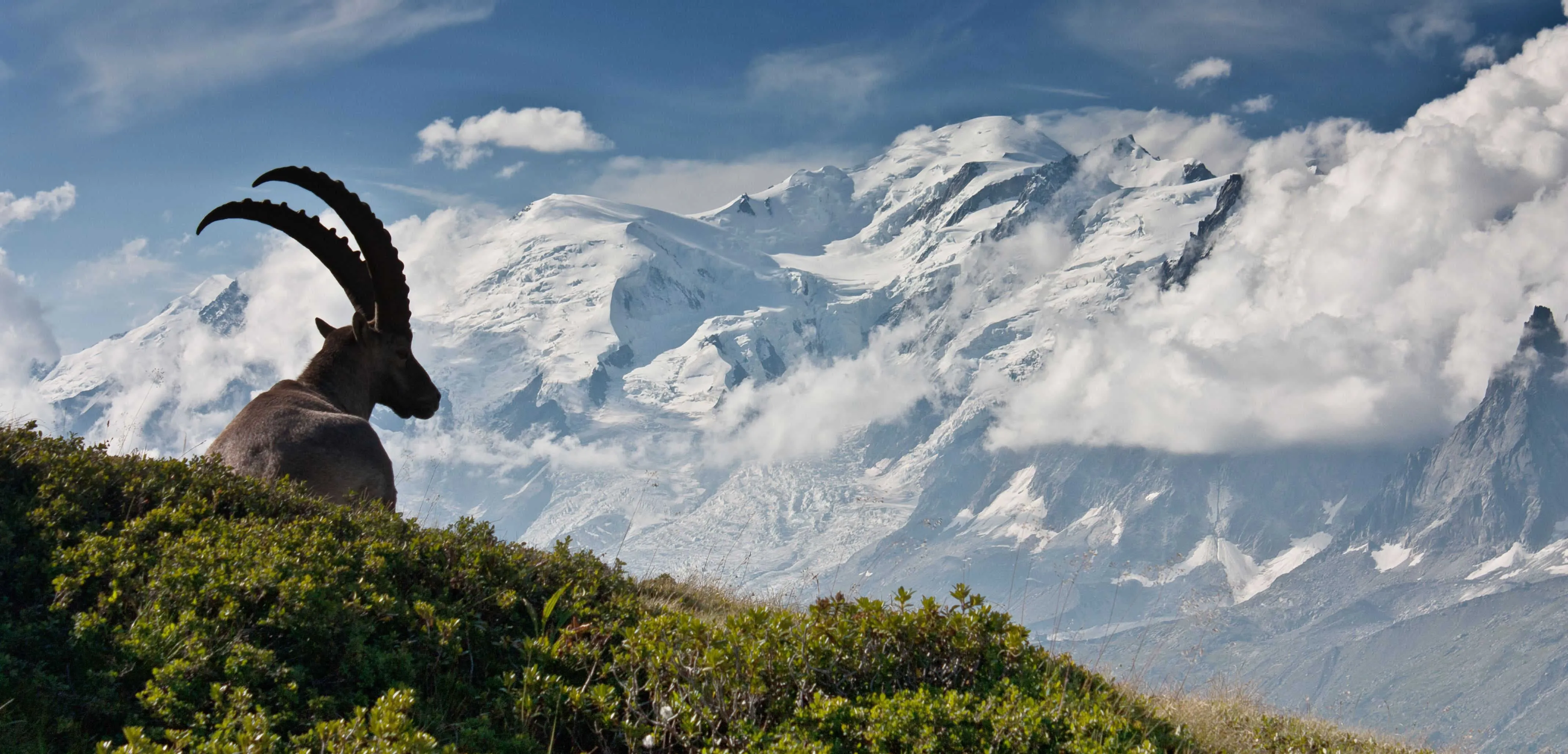
Wildlife in the Alps often reveals itself subtly. Marmots announce hikers with sharp whistles, standing guard over their colonies in open meadows. Chamois and ibex move effortlessly across steep cliffs and rocky ridges, usually spotted from a distance.

In forested areas, red deer roam quietly, most active at dawn and dusk. Above, the skies belong to birds of prey. Golden eagles glide on thermal currents, while alpine choughs circle mountain huts and passes, their calls echoing across the slopes. Summer also brings life to the meadows, with butterflies and bees playing a vital role in pollination.

🦉 Trail Spotting Checklist – Common Alpine Animals

  • Alpine ibex (Capra ibex) – powerful wild goat with curved horns
  • Golden eagle (Aquila chrysaetos) – the king of the alpine skies
  • Alpine chough (Pyrrhocorax graculus) – black bird with a yellow bill
  • Marmot (Marmota marmota) – whistling sentinel of the meadows
  • Chamois (Rupicapra rupicapra) – agile cliff-dweller
  • Red deer (Cervus elaphus) – the largest land mammal in the Alps

These might be a little harder to spot. Have you had any luck finding them?

Wildlife Encounters: From the Ground to the Skies

Farming in the Alps: Shaping the Landscape and Preserving Biodiversity

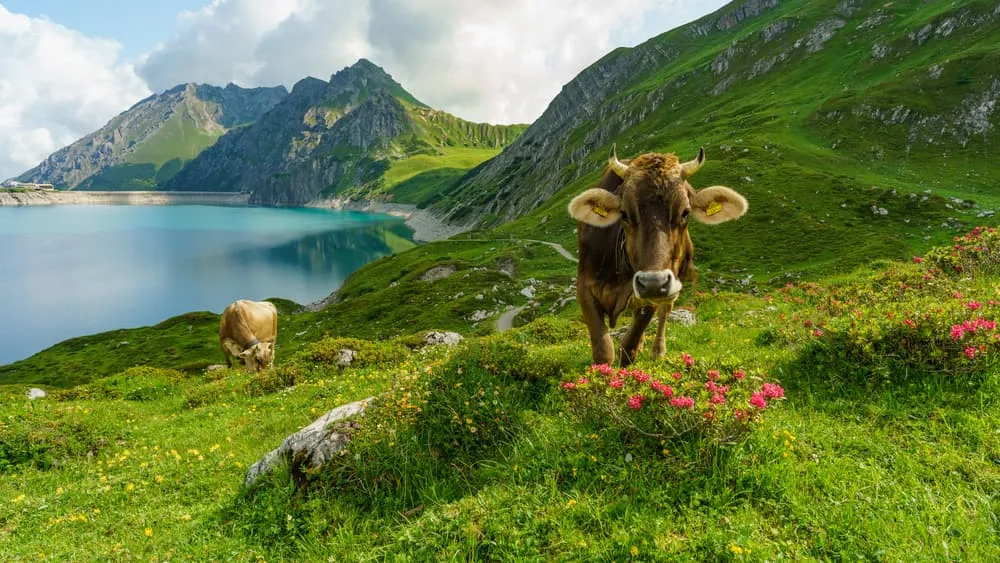
Farming has shaped the Alps for centuries and is inseparable from the landscapes trekkers enjoy today. Many of the open alpine meadows exist because of traditional mountain agriculture. Without grazing, these areas would gradually turn back into forest.

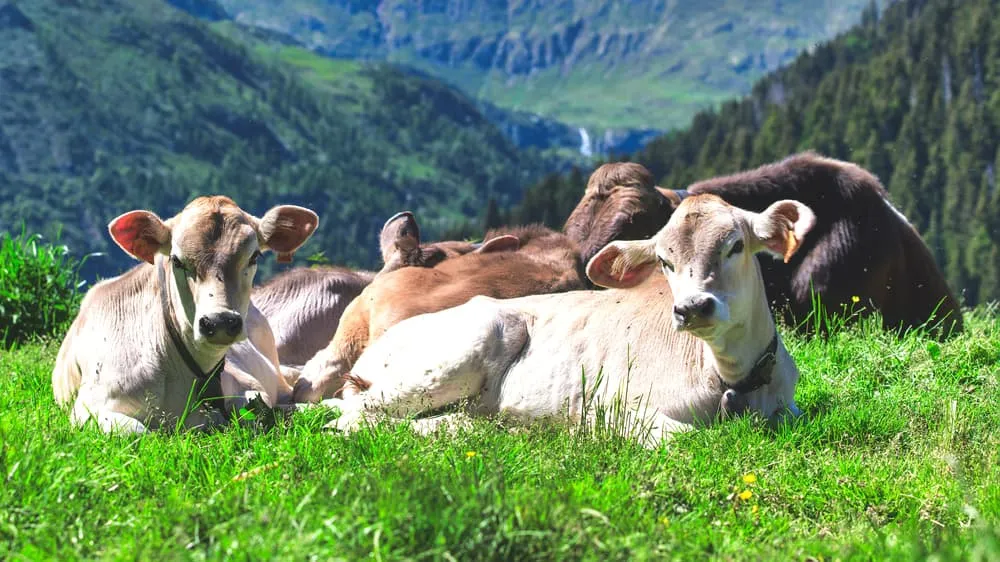
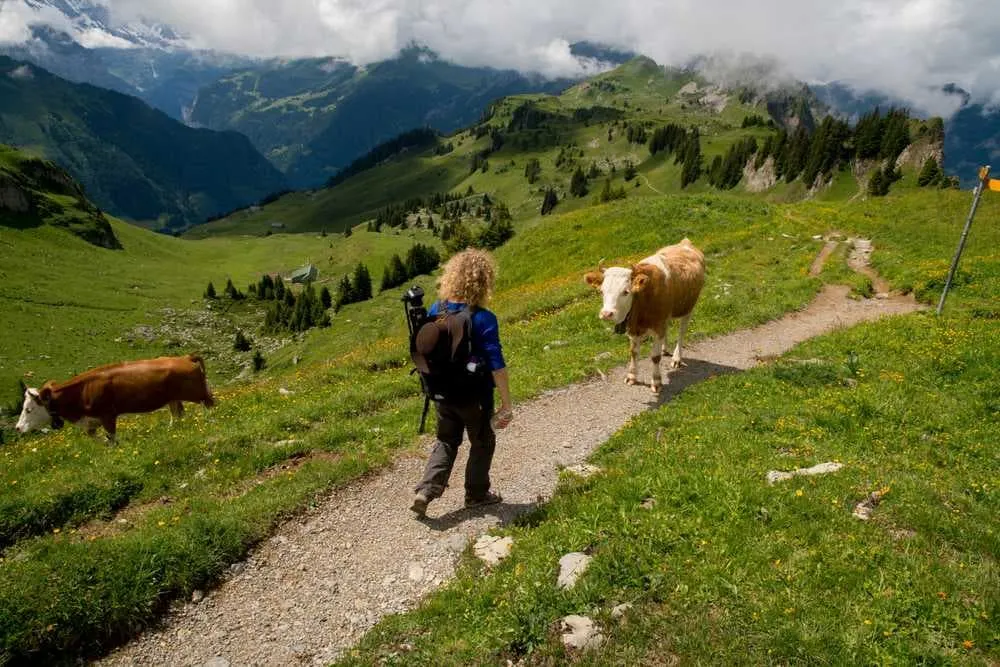
Alpine farming is adapted to short summers and long winters. Livestock is moved uphill in summer and returned to valleys in autumn, a practice known as transhumance. This seasonal rhythm helps maintain biodiversity, keeps mountain pastures open, and preserves the cultural landscape of the Alps.

Farming in the Alps: Shaping the Landscape and Preserving Biodiversity

Cattle are the most common livestock, especially hardy mountain breeds used primarily for milk production. Sheep and goats are also widespread, particularly at higher elevations where grazing is rougher and more scattered. These animals are well adapted to steep terrain and play a key role in maintaining healthy grasslands.

Alpine Cheese, Butter, and Local Products

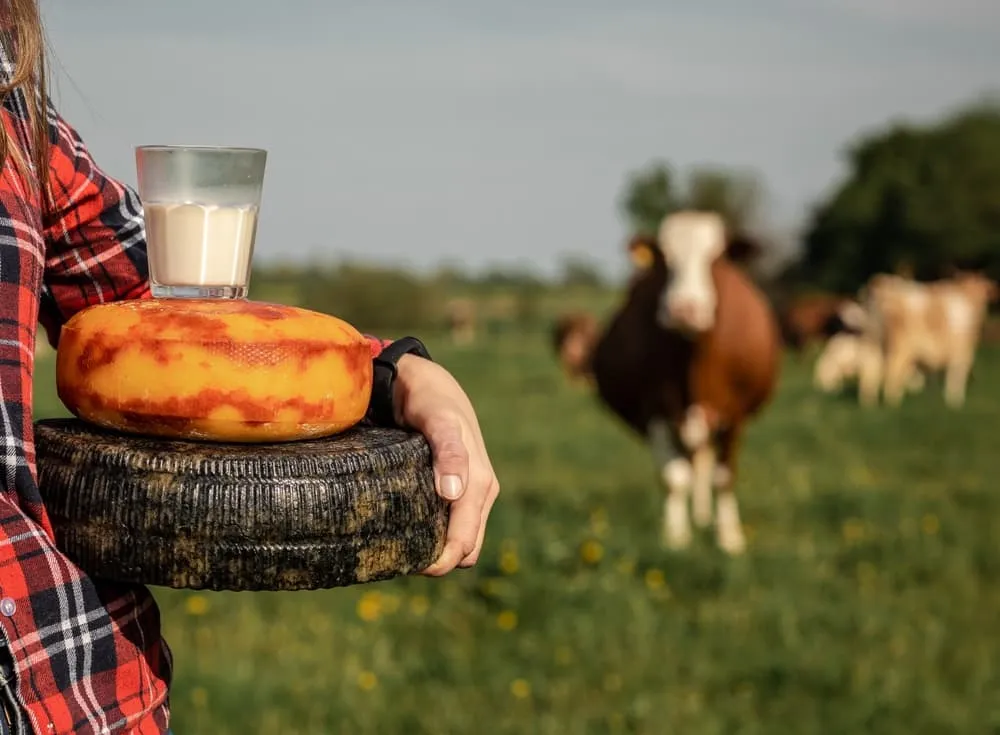
One of the most tangible results of Alpine farming is its food culture. Summer milk, produced when animals graze on herb-rich mountain pastures, is especially aromatic. This directly influences the taste of alpine cheeses, giving each region its own distinctive character.

Cheese, butter, and yogurt are often produced locally, sometimes even at high-altitude farms or mountain huts. For trekkers, this means simple but deeply satisfying meals made from ingredients sourced just a few kilometres from the trail. Alpine food is a direct reflection of the landscape itself.

Alpine Cheese, Butter, and Local Products

A Living Landscape

The Alps are not just a playground for trekkers. They are a living landscape where ecosystems and centuries-old mountain traditions exist side by side. Wildlife, farming, villages, and trails all depend on a delicate balance shaped over generations.

Respecting that balance is part of responsible trekking. Staying on marked paths, keeping distance from animals, and following pasture rules all help protect the fragile environments hikers pass through. By treating the Alps with care, trekkers help ensure these mountains remain wild, healthy, and welcoming for generations to come.

How to Respect the Flora

  • Avoid trampling

  • Don’t pick wildflowers

  • Stay on marked trails

How to Respect the Fauna

  • Keep your distance

  • Move quietly

  • Follow seasonal restrictions

  • Don’t feed them

By treading lightly and observing with care, you ensure that the Alps remain a sanctuary – for its wildlife, its plants, and the hikers who come to marvel at them.

About Us

At Bookatrekking.com, you will find the trek that will make your life unforgettable. Whether you want to explore the Inca Trail or climb Kilimanjaro. Bookatrekking.com has a wide and varied range of first-class treks. No false promises are made here. Transparent prices and bookings are fixed instantly. Find, compare, book and trek!
Read more about us
About Us
About Us

Also Interesting