The Ardennes are not one uniform block. Each sub-region has its own character, its own rhythm and its own kind of walker who feels most at home there. Below are the seven most distinctive areas, from east to west and from north to south.
Hautes Fagnes and the Hoëgne valley
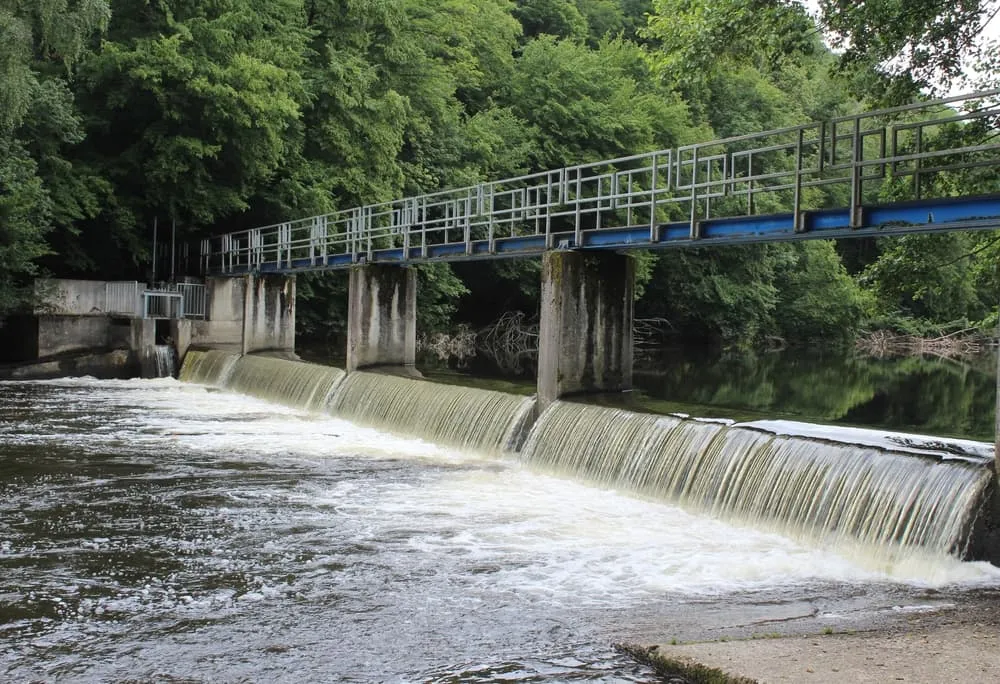
The Hautes Fagnes are the most open and expansive part of the Ardennes: a high plateau where the peat is meters thick, the wind has free rein and the horizon sits far away. Wooden boardwalks keep you above the wet sphagnum moss. The Baraque Michel is the traditional resting point in the middle of the plateau. On the edge of the fens, the Hoëgne valley drops away to the west: a river walk past rocks, small waterfalls and wooden footbridges that shows walking beside water at its best. The Hoëgne is the most loved day hike in the province of Liège and starts and finishes in Jalhay or at the parking area at Roquez.
Ourthe valley around La Roche-en-Ardenne and Durbuy
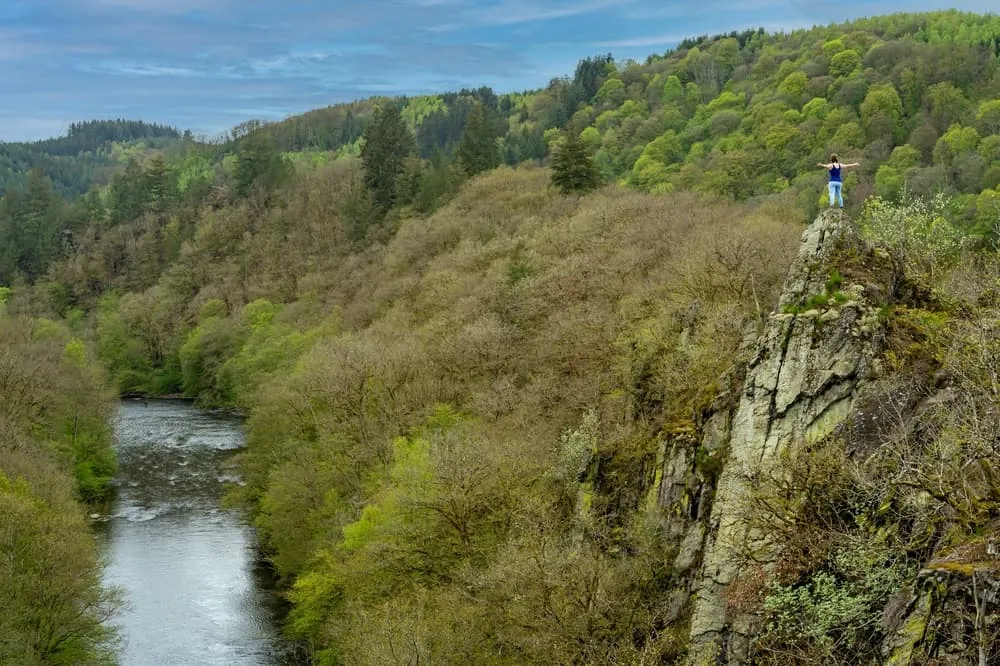
La Roche-en-Ardenne is the hiking capital of the Belgian Ardennes. The Ourthe winds through the valley here in broad loops while the slopes climb steeply to rock outcrops with long views over the bends below. Durbuy, a little further upstream, is built the same way: narrow lanes, a rocky ridge above the town and waymarked day loops that bring you back to a terrace in two to four hours. This is the area where most day walkers and weekend walkers first get to know the Belgian Ardennes.
Amblève and Warche: Coo, Stavelot and Malmedy
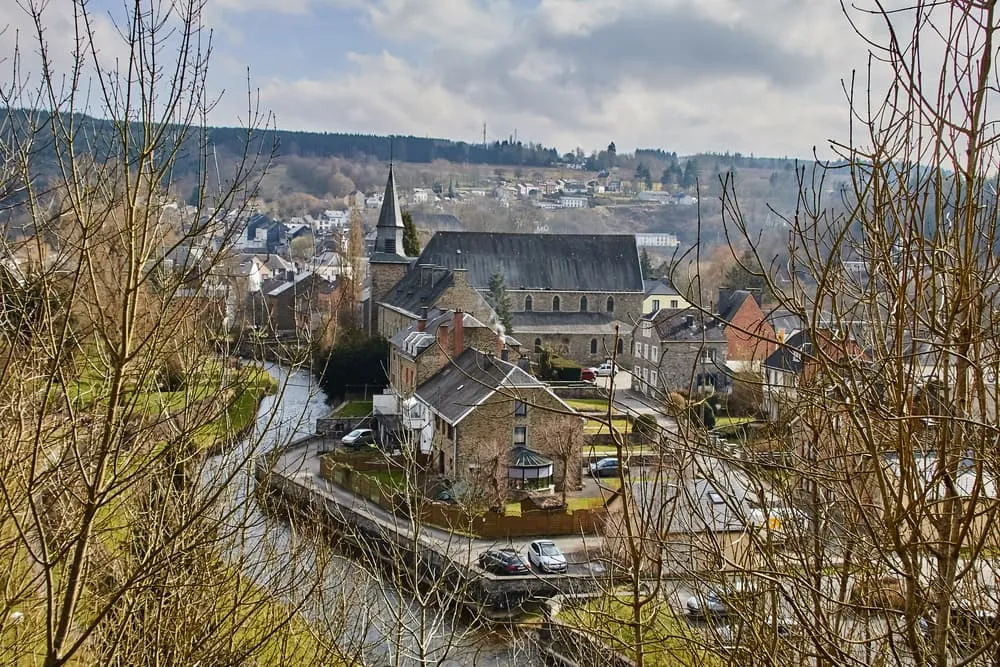
North of the Hautes Fagnes, the Amblève and the Warche drop down through wooded gorge country. At Coo the waterfalls tumble down, the best known in the Belgian Ardennes. Stavelot and Malmedy are characterful small towns with a rich abbey history. The trails here run alternately through forest, along streams and across open slopes, and are quieter than the more popular spots around La Roche.
Semois around Bouillon, Rochehaut and Botassart
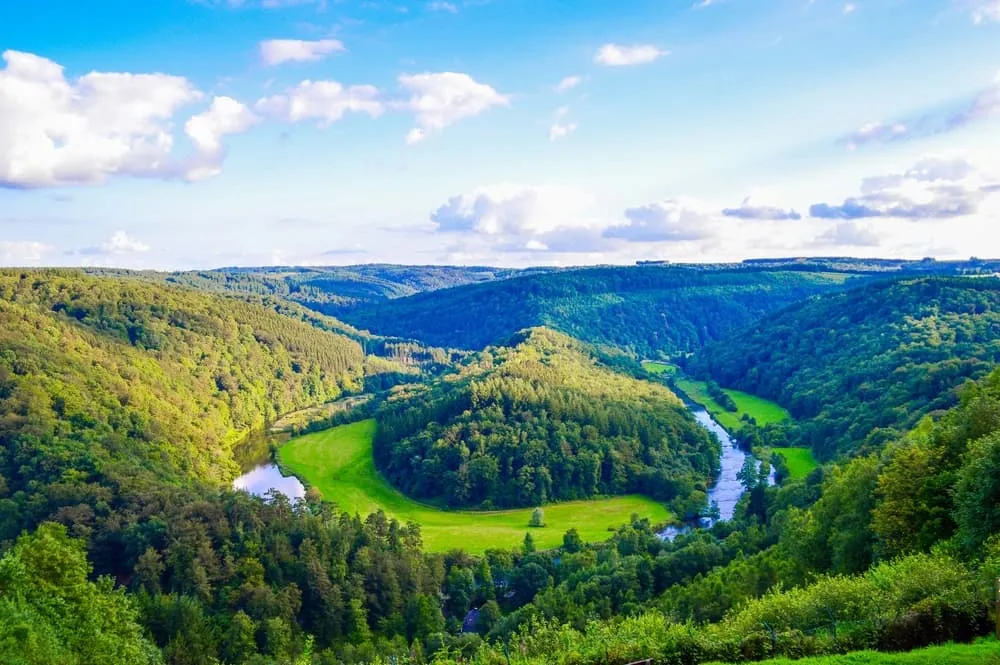
The Semois is the most picturesque river in the Belgian Ardennes. At Botassart the river wraps around an elongated hill so completely that it looks as though an island is floating in the forest, a view that appears on every list of the finest sights in the Ardennes. Rochehaut looks out over a broad river bend, and Bouillon sits tucked in below its castle. The paths here are more adventurous, the valleys deeper and the sun lower than in the north.
Lesse and Viroin around Dinant and Han-sur-Lesse
The western part of the Belgian Ardennes is limestone country. The reefs rise straight up along the Lesse and the Meuse. Han-sur-Lesse has the best-known caves in the country. Trails run alongside and through limestone cliffs, with views that are fundamentally different from the slate hills further east. Less crowded than people expect, certainly outside the summer season.
The Gaume: the most southerly and quietest corner
The Gaume, the southernmost tip of the province of Luxembourg, is one of the hidden gems of the Belgian Ardennes. The climate is sunnier and milder, the landscape more open, and the villages look almost French and Burgundian. Trails along the Viroin and through the hills around Florenville and Virton are barely busy. Anyone looking for something other than the classic Ardennes atmosphere will find their corner here.
The Luxembourg Oesling and the Mullerthal
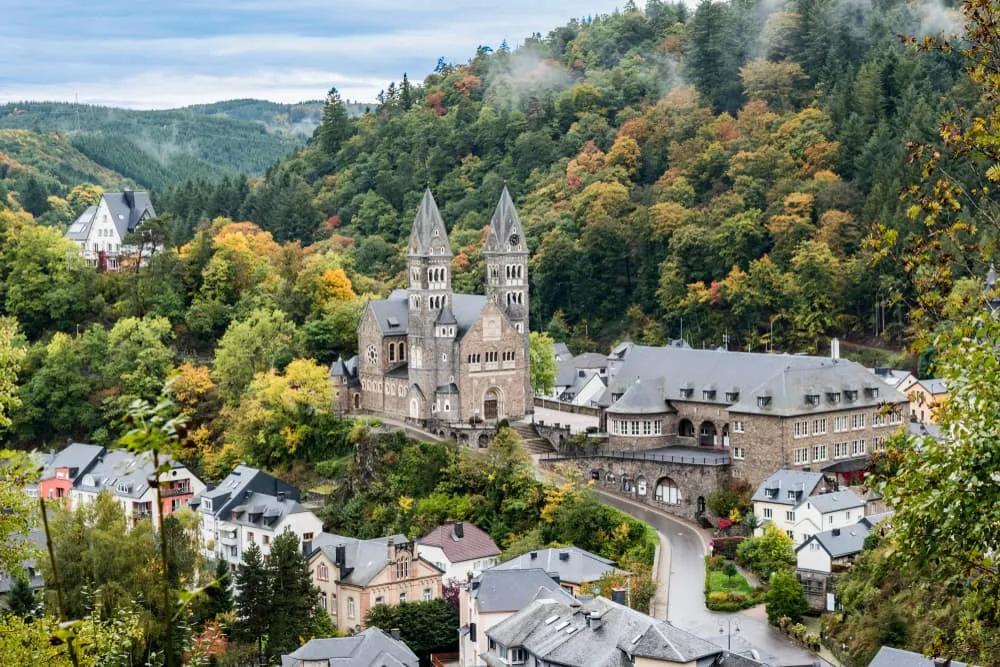
The Oesling, the Luxembourg part of the Ardennes plateau, consists of slate ridges cut through by deep river valleys. Kautenbach, Clervaux and Vianden are the loveliest villages. The neighboring Mullerthal, also called Little Switzerland, surprises with narrow rock passages, moss-green ravines and sandstone that looks quite unlike the Belgian side. Both areas are easy to reach by train and form the starting point for most of the multi-day Ardennes hiking trails that Bookatrekking offers.