

Hiking in the Black Forest: Trails, Multi-Day Routes and the Best Places to Walk in Southwest Germany

Hiking in the Black Forest: Trails, Multi-Day Routes and the Best Places to Walk in Southwest Germany
Trekking experts per destination
Free cancellation up to eight weeks in advance
Quick personal advice

The Black Forest, known in German as the Schwarzwald, is a long, high plateau of dark spruce forest, open pasture and moorland tucked into Germany's southwest corner. It is stitched together by one of the densest, best-signposted trail networks in Europe, with a village, a guesthouse or a bus stop never far away. Hiking in the Black Forest is genuinely beginner-friendly for long-distance walking: trails are waymarked, gentle underfoot, free of serious altitude and easy to break into short days. At Bookatrekking we take care of the hotels, move your luggage between overnight stops and give you our app with offline maps, GPX tracks and a per-stage weather forecast, so you only carry a day pack. This guide covers everything you need to plan: where the region is and how to get there from the US, the best areas, the multi-day routes we run, the long-distance trails, day hikes, difficulty, season, accommodation and how to choose the right trip.


Why go hiking in the Black Forest?

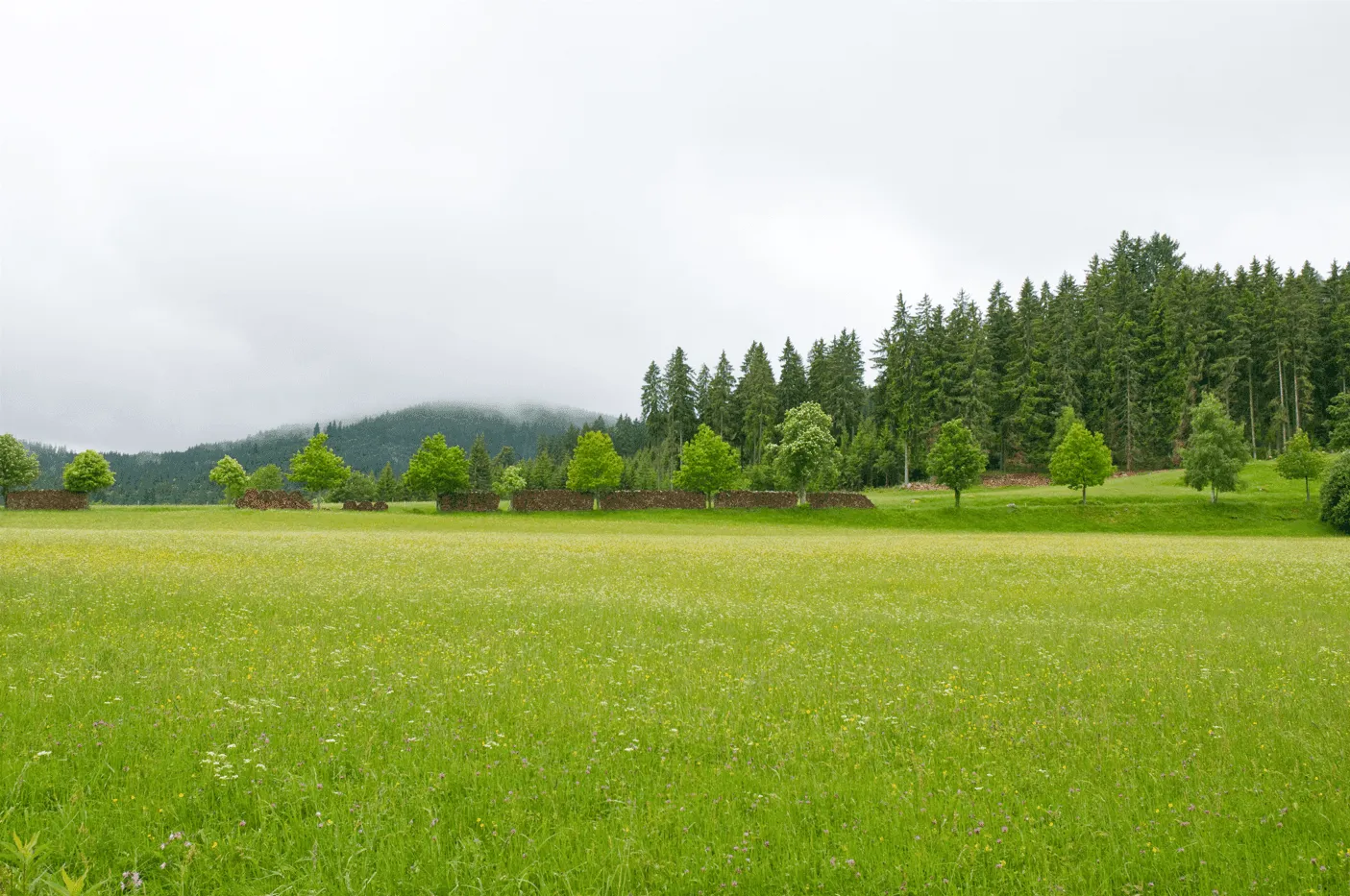
The case starts with infrastructure. The Schwarzwaldverein, a voluntary hiking organisation founded before the German Alpine Club, has maintained and waymarked the trails here for well over a century. A consistent system of diamond and lozenge signs guides you between overnight stops, and the trail network across the region runs to several thousand kilometres. Half-timbered villages and working farms appear regularly, keeping you within sight of a warm room and a hot meal. Scenic highlights include limestone gorges, waterfalls that run full even in summer, clear glacier-carved lakes and the wide moorland plateaus of the high Schwarzwald.

The best hiking in the Black Forest starts earlier in the year and finishes later than in the Alps, because you are never above the treeline and most trails are walkable from April. It is also worth being honest about what the region is not: this is forest and moorland walking, not mountain scenery. Views are framed by trees for long stretches and appear in windows rather than continuously. The weather changes quickly, and the forest traps drizzle.

Is the Black Forest worth visiting? For walkers, absolutely. Nowhere else in central Europe combines this level of trail quality, ease of access, cultural interest and comfortable overnight infrastructure at this density. It is not dramatic in the way the Dolomites are, but it rewards walkers who move slowly and pay attention to the detail of the landscape.


Where is the Black Forest and how do you get there?

The Black Forest sits in southwest Germany, in the state of Baden-Württemberg. The range runs roughly north to south, from Karlsruhe in the north to the Swiss border in the south, with the Rhine valley and France to the west and the Swabian plateau to the east. Switzerland begins just a short distance south of the southernmost trails.

For travellers flying from North America, the most practical gateways are Frankfurt, Zurich, Stuttgart and Basel. All four connect to the region by train without a car. High-speed and regional rail services reach the main towns along the western edge: Karlsruhe, Baden-Baden, Offenburg and Freiburg, with local lines pushing into the valleys. The Höllentalbahn climbs from Freiburg into the hills toward Titisee, and the Schwarzwaldbahn threads through the central forest. A car is optional: the public transport network is good enough to walk point to point without one, and most overnight accommodation in the region issues guests a card that covers local buses and trains. Ask your host about this when you check in.


Hiking in the Black Forest, Germany: the best areas region by region

The Northern Black Forest stretches from Karlsruhe and Baden-Baden south through the Murg valley and into the Black Forest National Park. The Hornisgrinde ridge is the high point of the north, the Mummelsee sits just below the ridge, and the Schwarzwaldhochstrasse road follows the crest. Hiking trails in the Black Forest's northern section tend to be quieter and feel wilder than those further south, making this a good choice if you want space.

The Central Black Forest, centred on Triberg, Gutach and Schiltach, is the most visited part of the region. The Triberg waterfalls are the most famous single sight in the Schwarzwald, and the half-timbered towns and open-air museum farmsteads here fit the picture-postcard idea of Germany most closely.

The Southern Black Forest is the highest part and the best for serious walking. Feldberg, at 1,493 metres, is the highest summit in the range and the centre of a popular circuit. The Belchen and Schauinsland give broad views west toward the Vosges and south toward the Alps on clear days. Titisee and Schluchsee are both glacial lakes with good trail access. Hiking Black Forest Freiburg-style means using the city as a base: the southern region is largely within easy reach by train or bus, and the trails in the Black Forest near Freiburg are some of the most varied in the Schwarzwald.

The far southeast, toward the Wutach gorge and the Swiss border, is quieter still. The hiking trails in Black Forest Germany's southeastern corner include some of the most spectacular gorge walking in the country, and this is where our own routes concentrate their mileage.


Multi-day walking in the Black Forest: our self-guided routes

Walking holidays Black Forest Germany-style work differently from Alpine hut tours. Here, you sleep in small hotels and family guesthouses in the valleys and villages, never in unstaffed mountain huts. Your main bag travels by road to the next overnight stop each morning, so you walk with only a day pack. Distances between overnight stops are civilised, and a shorter day is almost always possible by bus or train.

Self-guided means there is no group and no walking guide: you walk when you like, at your own pace. Bookatrekking handles the beds, half board where the inn offers it, luggage transfers and navigation through our app. A Black Forest multi day hike with us runs on the Schluchtensteig route, which threads the finest gorge and lake country in the southern Schwarzwald.

We run three trips. The Short Schluchtensteig is a five-day version: the right choice for a first long-distance walk or a short trip from the US. The Schluchtensteig for the experienced is an eight-day version with longer daily stages, suited to walkers who want the full route at pace. The Extended Schluchtensteig takes nine days and spreads the same route out so you have time to explore the gorges and villages without feeling rushed. For a broader overview of walking holidays in Germany, our pillar page covers the full range of trails and regions we work in.


The Schluchtensteig and the other long-distance trails

The Schluchtensteig is the finest multi-day route in the southern Black Forest, and because we have built our three trips around it, it deserves a proper introduction.

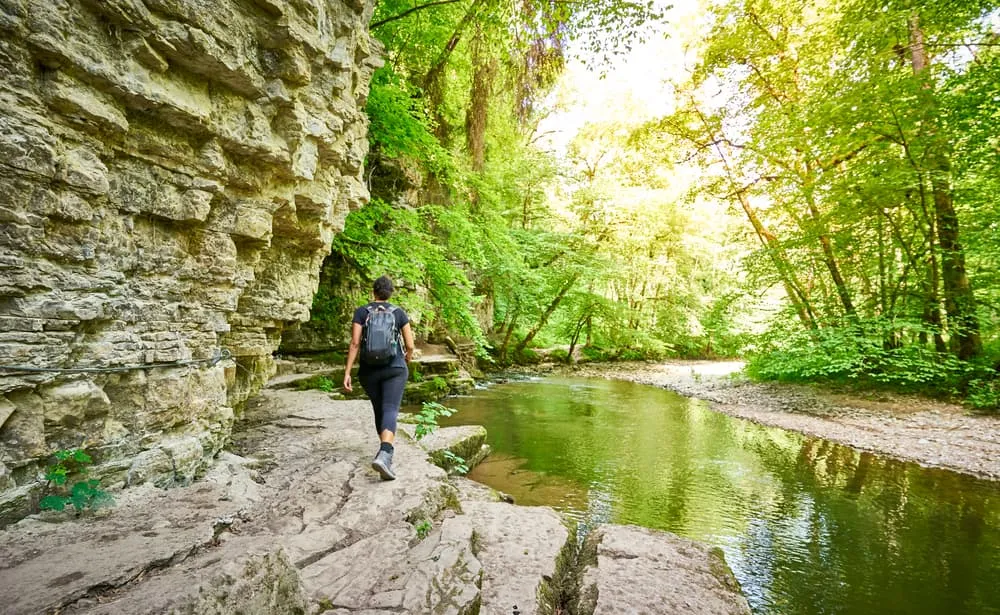
The trail runs between Stühlingen, near the German-Swiss border in the southeast, and Wehr, a small town on the edge of the upper Rhine plain. It takes its name from the German word for gorge, and gorges are exactly what it delivers: the route threads through seven of them, beginning with the Wutach gorge, the most dramatic canyon in the entire Schwarzwald. The Wutach carved its channel after the last ice age and the river still runs fast and clear at the bottom, with steep wooded walls rising on both sides. Further along, the trail passes the Schluchsee, the largest reservoir lake in the Black Forest, before climbing to moorland plateaus and descending into the Wehra valley.

In between gorges, the Schluchtensteig crosses forest ridges, passes the old Benedictine town of St. Blasien with its famous cathedral dome, and traverses the open pasture above Todtmoos. The combination of enclosed gorge floors and wide moorland tops gives the route a variety that single-terrain trails cannot match. Waymarking is clear throughout, with the characteristic blue diamond of the long-distance Schwarzwald routes guiding you at every junction.

Among the other Black Forest hiking routes, the Westweg is the classic. Running 290 kilometres from Pforzheim in the north to Basel in Switzerland, it crosses the Feldberg and passes through the full length of the western Schwarzwald. It was originally marked in 1900 and is the oldest long-distance trail in Germany. The Mittelweg and Ostweg follow a similar north-south line but further east and with a quieter character: both connect Pforzheim to the Swiss border through the central and eastern flanks of the range, with daily stages that are manageable for most walkers.

Shorter Steig routes give you a more focused experience. The Zweitälersteig loops through the Elz and Simonswäldertal valleys north of Freiburg. The Albsteig covers the Baar plateau in the east. The Belchensteig, voted Germany's most beautiful hiking trail in 2020, circles the Belchen summit above Freiburg.

For walkers who want the gorge character of the Schluchtensteig on a shorter trip, the five-day Short Schluchtensteig covers the first three walking days of the route. For those who want the full experience at pace, the eight-day trip walks the whole trail without rest days. The nine-day extended version adds time in the villages and by the lakes.


Day hikes and shorter loops for hiking in the Black Forest

The Black Forest walking trails are not just for multi-day walkers. The day-hike layer is just as well developed, and many trails end at a bus or train stop so you can walk one way and ride back.

The Wutach gorge trail is the single best day walk in the southern Schwarzwald: a riverside path through one of the most dramatic canyons in Germany, walkable from the car park at Schattenmühle. The Triberg waterfalls, in the central forest, are the highest falls in Germany and easy to combine with the old town. The ascent of the Feldberg and its summit ridge circuit, at the top of the southern range, gives the widest panorama in the Black Forest: on clear days you can see the Alps from the summit plateau.

Above Freiburg, the Belchen and Schauinsland both reward the effort of getting there. Schauinsland has cable car access from the valley, making it a practical half-day from the city. Black Forest hiking trails above Freiburg tend to be busier than those further into the forest, but the views justify it. The Ravenna gorge in the Höllental is short, dramatic and easy to reach by train from Freiburg, while the loop around the Schluchsee gives a full day of lake and forest walking with the option of stopping for a swim. The Mummelsee and the Lotharpfad in the national park show a different side of the Schwarzwald: open bog, wind-shaped firs and the aftermath of storm damage that has since become its own wild habitat. The Zweribach falls in the highlands between St. Peter and St. Märgen are a quieter choice that most visitors miss.

The Black Forest walking trails in each of these areas connect to the regional bus and train network, and the Bookatrekking app gives you offline GPX tracks and an up-to-date weather forecast for each location.


How hard is hiking in the Black Forest, and who is it for?

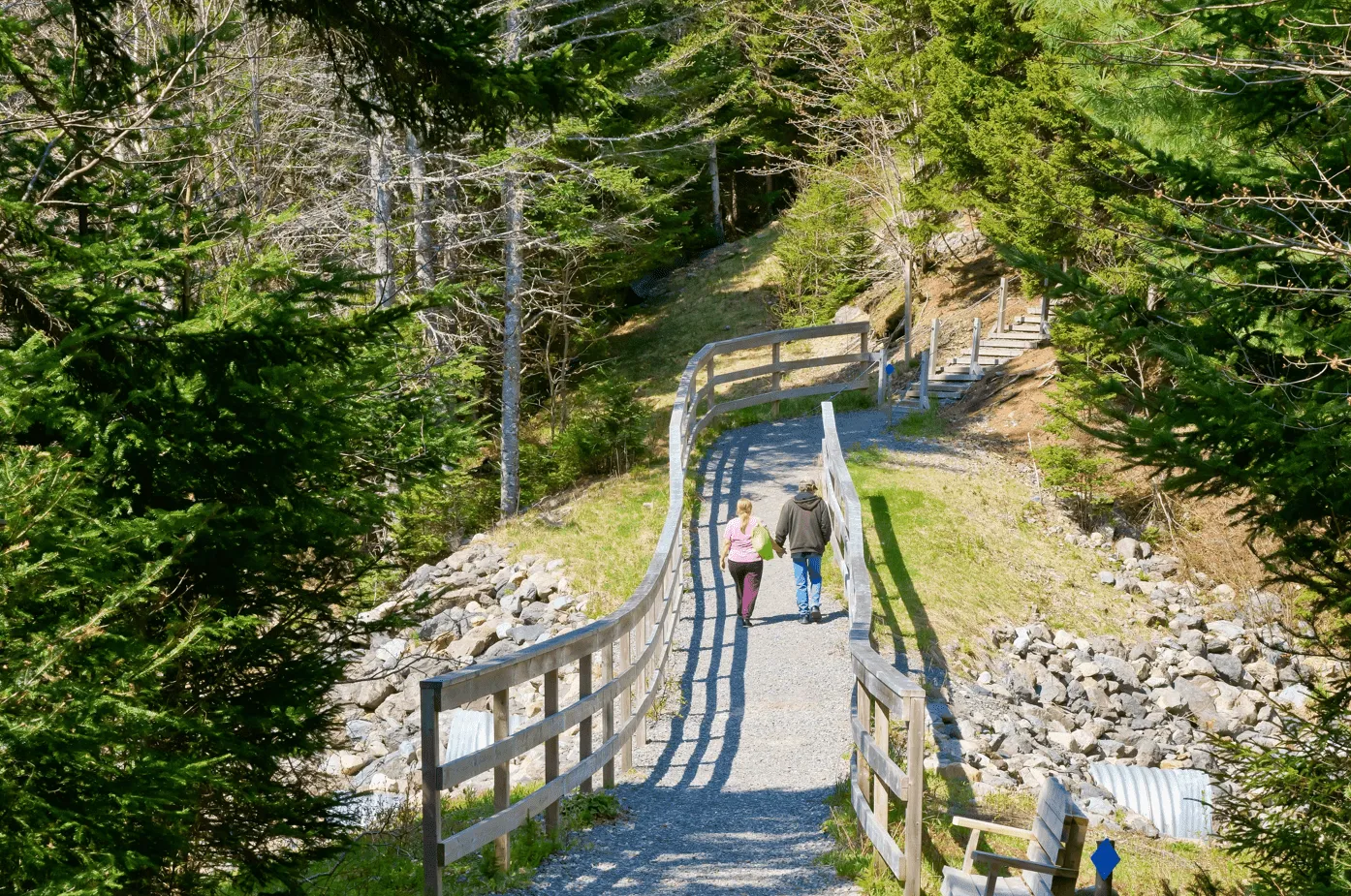
This is moderate walking, not mountaineering. The terrain is forest track, soft path and the occasional stepped gorge boardwalk. There is no altitude problem, no glacier, no exposed ridge and no scrambling. The difficulty on a multi-day trip comes from the cumulative ascent across long days and from wet tree roots and slick boardwalks after rain, both of which are common in the Schwarzwald's changeable climate.

The Black Forest suits first-time long-distance walkers well. It also works for older walkers, for reasonably active families with teenagers and for anyone who wants a European point-to-point walking experience without alpine risk. Very experienced mountain hikers may find the terrain undemanding, though the gorge sections of the Schluchtensteig have enough character to keep most walkers engaged.

Two things people tend to underestimate: waterproof footwear with a proper grip sole, and a good rain shell. The forest paths stay wet long after rain stops and the temperature drops quickly when cloud moves in. Neither is a reason not to go; both are reasons to pack properly.


The best time to go hiking in the Black Forest

May and June are excellent: the days are long, the forest is vivid green, and the waterfalls run at their fullest after the winter snowmelt. Trails are quieter than in high summer and the guesthouses are not yet crowded.

July and August bring the warmest and most settled weather, with the best chance of clear views from the high points. The lakes at Titisee and Schluchsee are busy at weekends and during German and European school holidays, and popular trails near the honeypot sights fill up. If your dates fall here, start early in the day and stay in the valley villages rather than the resort towns.

September and early October are the quiet favourite. The air is clear, the beech woods begin to colour, prices drop and the trails are noticeably less crowded than in August. This is when experienced walkers tend to book.

From November to April, the low-level valley paths stay walkable, but the heights and the gorge paths become a different proposition: wet, dark and snow-covered above 800 metres, with some gorge sections closing after storms or in icy conditions. Check locally before committing to any specific trail in winter. The Bookatrekking app shows an up-to-date weather forecast for the coordinates of each stage, which is useful for spotting a short weather window.


Where you sleep and what happens to your luggage

Accommodation on these routes is in family-run Gasthöfe and small hotels in the valleys and villages, with larger hotels available in the resort towns. Unlike walking routes in the Alps, there are no staffed mountain huts on the Schluchtensteig or the other Black Forest long-distance trails: you sleep in a private room with a real bed every night. Many guesthouses serve a hearty half-board dinner of regional cooking, which matters more than you might expect after a long day on the trail.

Luggage transfer works simply: your main bag is collected from your overnight stop each morning and delivered to the following night's accommodation by road while you walk. You carry only a day pack on the trail. Bookatrekking organises this as part of the package.

Booking ahead is important in summer, particularly in the smaller valley villages where there may be only one or two guesthouses. Most overnight accommodation issues guests a regional visitor's card that covers local buses and trains; ask when you check in. This makes it much easier to catch a bus back from a shorter day or to travel between overnight towns without a car.


Which Black Forest route suits you best?

Route Days Best for Price
Short Schluchtensteig 5 days A first multi-day walk, or a short trip See the trip page
Schluchtensteig for the experienced 8 days Longer days and the full route at pace See the trip page
Extended Schluchtensteig 9 days The whole route at a relaxed rhythm See the trip page

The decision is straightforward: under a week, choose the five-day trip. Fit and wanting the full route without rest days, choose the eight-day trip. The whole route with time to linger in the gorges and villages, choose the nine-day trip.

On the trail itself, the waymarking is clear and consistent, but junctions in dense forest can look alike, particularly in overcast conditions. Bookatrekking supplies the app with offline maps, the full GPX track for your route and a weather forecast based on the coordinates of each stage rather than the nearest town, so you know what is actually coming in the hills. Our walking holidays in Germany page covers the full range of regions and routes we run if you want to compare the Black Forest with other parts of the country.


Frequently asked questions about hiking in the Black Forest

  • Is Black Forest, Germany worth visiting?

    Yes, the Black Forest is genuinely worth visiting for walkers. It combines Europe's densest waymarked trail network with comfortable overnight infrastructure, dramatic gorge scenery and easy access by train from major airports. It is not alpine in character, but for forest, lake and gorge walking it is one of the best regions on the continent.

  • What is the best month to visit the Black Forest?

    September is widely considered the best month: the trails are quieter than in summer, the beech woods add colour, the weather tends to be clear and stable, and prices are lower. If you are flexible on dates, also avoid German public holidays and school half-term weeks in August, when the lake resorts fill quickly.

  • How long does it take to hike the Black Forest?

    A full north-to-south traverse of the Schwarzwald on the Westweg takes around two weeks of continuous walking. Our self-guided trips on the Schluchtensteig in the southern Black Forest run from five to nine days depending on the version you choose, which suits most travellers with standard holiday allowances flying from North America.

  • How many days are enough for Black Forest?

    Five days is enough to walk the most dramatic southern section and get a genuine feel for the region. Eight or nine days covers the full Schluchtensteig route and allows time to explore the gorges, lakes and villages properly. A long weekend from a German city covers a good selection of day hikes but misses the point-to-point experience.

  • What is the best hike in the Black Forest?

    The Wutach gorge is the single finest day hike in the region: a river-level path through a steep limestone canyon that feels unlike anything else in Germany. For multi-day walkers, the Schluchtensteig is the best overall route, combining the Wutach gorge with six other gorges, the Schluchsee and open moorland plateau across the southern Schwarzwald.

  • What are some good walks in the Black Forest?

    Good walks in the Black Forest include the Wutach gorge trail, the Feldberg summit circuit, the Ravenna gorge in the Höllental, the Belchen and Schauinsland above Freiburg, the loop around the Schluchsee and the Lotharpfad in the national park. Most connect to a bus or train stop so you can walk one way and ride back.

  • Which is the most beautiful area of Black Forest?

    The Southern Black Forest, centred on Freiburg, the Feldberg, Titisee and Schluchsee, is the most scenic for walkers. The highest peaks, the most dramatic gorges and the clearest lakes are all here. The national park in the north has a wilder, less visited character that some walkers prefer for its solitude.

  • What is the best town to stay in the Black Forest in Germany?

    Freiburg is the most practical base: it is the largest city in the southern Schwarzwald, has excellent train connections from Frankfurt, Basel and Zurich, and puts the whole of the southern trail network within easy reach by local rail and bus. Titisee-Neustadt suits walkers who want to be closer to the high terrain from the first morning.


    For more inspiration across the country, the complete guide to hiking in Germany covers the best long-distance routes from Bavaria to the Rhine. If you are drawn to the hut-to-hut style of walking in the Alps, our guide to hut-to-hut hiking in Germany explains how those routes work and which ones suit different levels. And if the idea of a long-distance trail through dramatic scenery appeals but the Schwarzwald feels too forested, the Malerweg in Saxon Switzerland is the other great German long-distance route, with sandstone towers and canyon landscapes completely unlike anything in the Black Forest.

Packing List for the Schluchtensteig

It doesn't matter where you are trekking or for how long: carrying the right equipment with you is paramount. For a hiking trip in the mountains, a good is backpack essential. Its size will depend on how many days you will be spending in the mountains, the season, and the clothes you will be taking with you. We have prepared a packing list with some essential clothing that you should include and some extras that you may find useful:
  • Essentials

  • Extras

Safe Hiking Tips for the Schluchtensteig

When hiking, it is wise to be aware of a few points. Even if this is not your first time, you should never underestimate the mountains. Good tour planning and compliance with the regulations in the mountains will significantly increase safety. To ensure that your hiking adventure is a safe and enjoyable experience, here below you can find a list of 8 recommendations for safe hiking in the mountains:
  • Know your limits

    Hiking the Schluchtensteig is the perfect outlet to escape from daily life. It is an endurance sport along with a beautiful nature experience with a positive effect on body and mind —as long as one is in good shape and has a realistic picture of one's possibilities and limits—. Never overestimate yourself or underestimate the route. Don't overdo it! Always choose the slower option and take more time for your plans. Hiking under time pressure is not fun and at too fast a pace it can be dangerous. Be wise!

  • Plan carefully

    Good planning is half the work! Hiking maps, literature, the Internet and expert advice are invaluable when planning the route of the Schluchtensteig and enable you to determine the length, altitude difference, difficulty and conditions of the hike. When planning group treks, the itinerary should always be planned for the weakest member of the group! The weather in the mountains can change incredibly quickly and rain, wind and cold all increase the risk factor. For this reason, always check the weather forecast beforehand and contact our trekking experts to find your way before you start.

  • Be fully equipped

    Equipment is everything. In the most extreme case, it makes the difference between life and death, and in any case, it definitely makes the difference between having fun and having a bad time. Food and water, sunscreen and waterproof and warm clothes must always be in your backpack, as well as a first aid kit and a mobile phone with a full battery (in case there is an emergency). However, packing light makes hiking easier, so don't take too much extra luggage with you. Your equipment should always be suitable for the terrain you'll be hiking on in the Schluchtensteig.

  • Wear suitable footwear

    Good walking shoes protect your feet and provide a better fit. Shoes with a good fit, with non-slip soles, water-resistant and lightweight are a must for additional walking pleasure during the Schluchtensteig. Trail running shoes are great for a weekend in the mountains, but on longer hikes or more technical trails, you'll want at least A/B hiking boots. That means it is recommended wearing high mountain shoes that are water-repellent with extra ankle support to prevent sprains.

  • Stay on marked trails

    Schluchtensteig has endless marked hiking trails, which are controlled and maintained and should not be deviated from. It may be tempting, but it's not a good idea to take shortcuts or alternative routes through unmarked terrain. It increases the risk of disorientation and you're more likely to get lost and have accidents or fall in the mountains. Even steep slopes of packed old snow are often underestimated and dangerous. Are you in doubt? Better don't do it. For easy navigation we work with our trusted partner Komoot, whose interactive maps, also available offline, provide you with the necessary digital means to get from A to B. As a backup, make sure to bring a hiking guide or a paper map with you. FYI, 75% of stumbles occur due to carelessness on marked paths or roads, not in open terrain!

  • Take regular breaks

    Remember you're on a hiking trip. Timely and regular breaks not only provide welcome relaxation but also make it possible to enjoy the Schluchtensteig. The body needs a regular food and drink intake to maintain performance and concentration. Our advice is that if you have little time, it's better to follow the short itinerary than to speed up the long one.

  • Stay reachable

    If you are hiking solo or in small groups it is advisable to inform people back home about your plans, what route you are taking and when you plan to return. Even small incidents can lead to unpleasant emergencies so make sure you are available at all times. Bring a charged phone containing at least the phone numbers of immediate family members, your accommodations en route and the emergency phone numbers operating on the Schluchtensteig.

  • Respect nature

    Leave no rubbish behind, prevent noise, stay on the marked trails, do not disturb wildlife or grazing animals, and respect protected areas.

Where Can I Book the Schluchtensteig?

At Bookatrekking.com you can book the self-guided Schluchtensteig and many other treks. We take care of all the details for you, including arranging accommodations and providing you with relevant information well in advance of your trek. Find our offers here. Our easy-to-use platform allows you to browse and compare different trekking options and to find the perfect fit for your interests, abilities, and budget.

If you have any questions about a specific trek or need help choosing the right one for you, our team of trekking experts is here to assist you. Simply reach out to us and we will be happy to provide you with personalized recommendations and advice to help you plan the trekking adventure of a lifetime.

About Us

At Bookatrekking.com, you will find the trek that will make your life unforgettable. Whether you want to explore the Inca Trail or climb Kilimanjaro. Bookatrekking.com has a wide and varied range of first-class treks. No false promises are made here. Transparent prices and bookings are fixed instantly. Find, compare, book and trek!
Read more about us
About Us
About Us