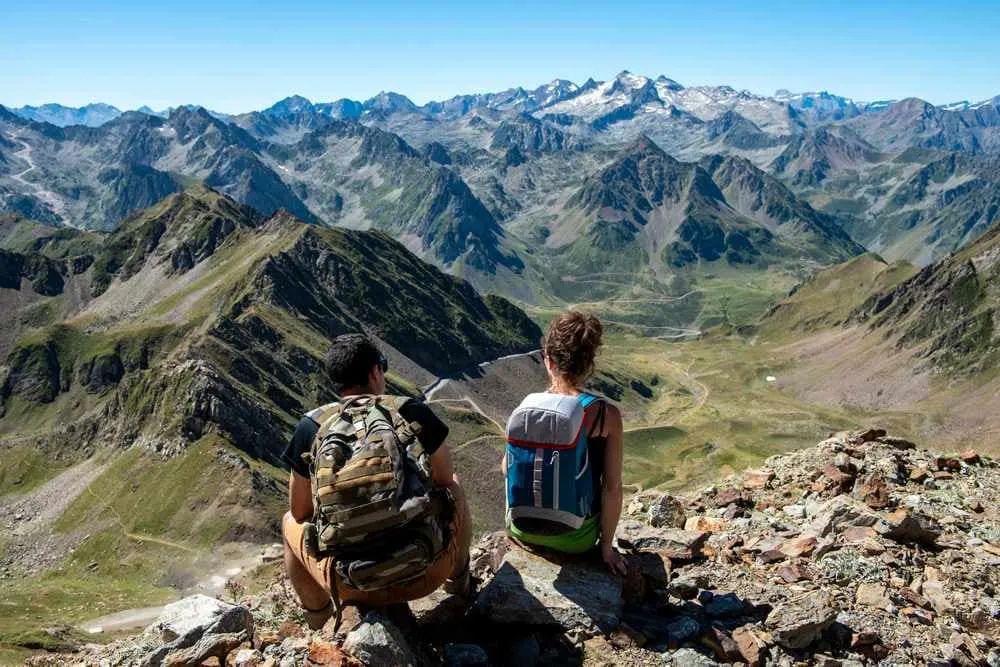
The Pyrenees: Ancient Mountains Shaped by Time, Borders, and History

The Pyrenees: Ancient Mountains Shaped by Time, Borders, and History
Trekking experts per destination
Free cancellation up to eight weeks in advance
Quick personal advice

At first glance, the Pyrenees don’t shout for attention. There are no needle-sharp skylines like in the Alps, no endless cable cars slicing up the slopes. Instead, the range stretches calmly between the Atlantic and the Mediterranean, wide and compact, as if it has been there forever. In a way, it has.

The Pyrenees are one of Europe’s oldest mountain ranges, and that age explains much of what hikers feel here today: the quiet trails, the long ridgelines, the sense of remoteness, and the deep connection between landscape and history. It is exactly this timeless character that makes hiking in the Pyrenees such a unique experience compared to other European mountain ranges.
La Porta del Cel 12783

Mountains Born Before the Alps

The story of the Pyrenees begins tens of millions of years before the Alps ever existed. While the Alps rose dramatically around 30 million years ago, the Pyrenees started forming much earlier, roughly between 50 and 70 million years ago, when the Iberian landmass pushed northwards into what is now Europe.

This collision did not create a soaring, jagged chain. Instead, it compressed the earth into a dense, compact range. Over an immense stretch of time, wind, water, and ice slowly reshaped the mountains, wearing down sharp edges and carving deep valleys.

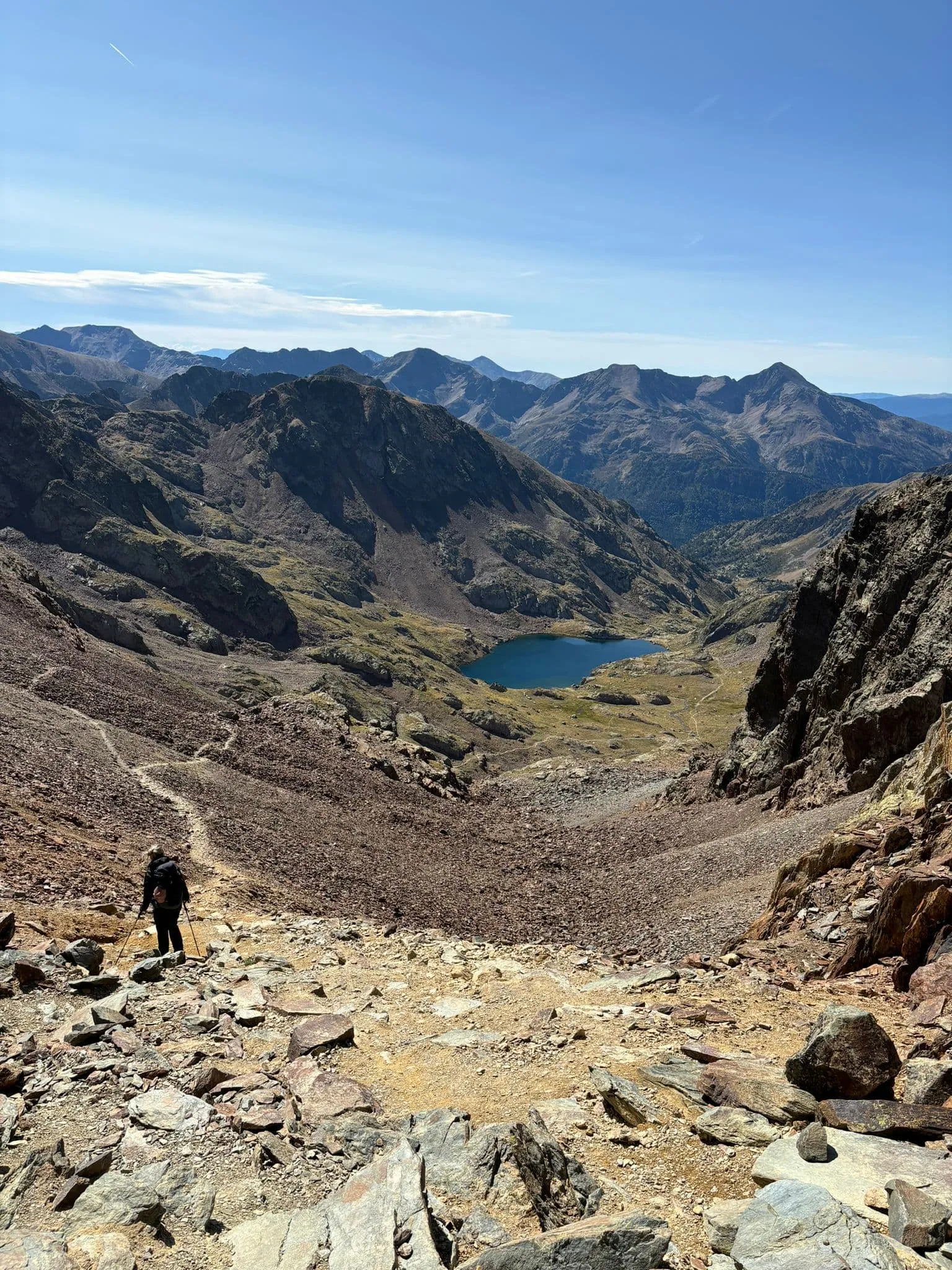
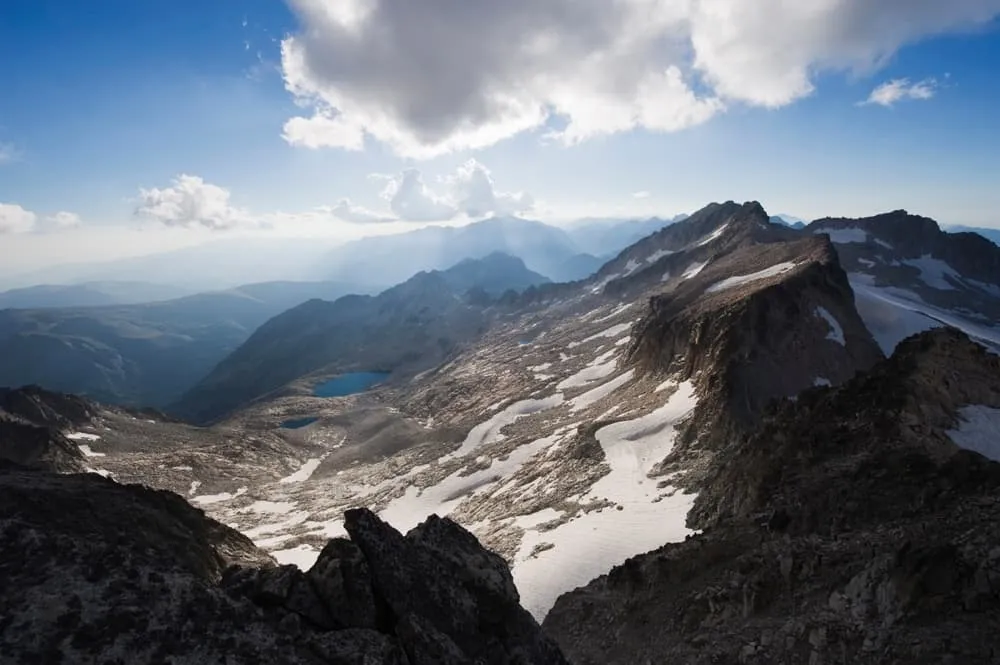
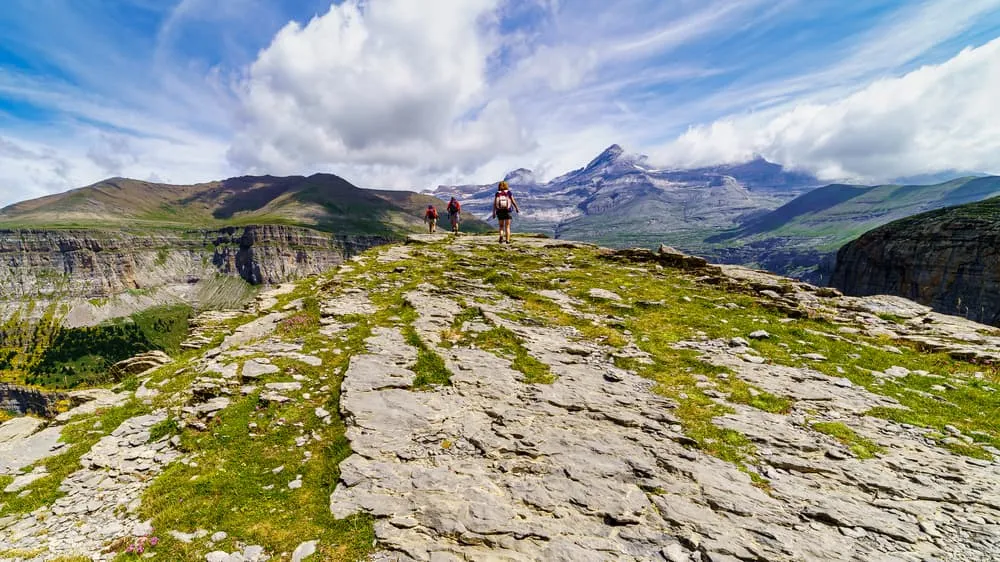
That long erosion is visible everywhere. Rounded summits give way to sudden limestone cliffs. Broad plateaus end in dramatic cirques carved by ancient glaciers. For hikers, this means long, flowing routes across high ground, broken by steep descents into quiet valleys rather than constant vertical climbs. You are walking through a landscape that has had time to settle.

High Peaks in a Subtle Landscape

Despite their older, softer appearance, the Pyrenees are anything but low. In the heart of the range, the mountains rise well above 3,000 meters. The highest of them, Aneto, reaches 3,404 meters and dominates the Maladeta massif. Nearby peaks such as Monte Perdido and Vignemale form a rugged core where glaciers once ruled the terrain.

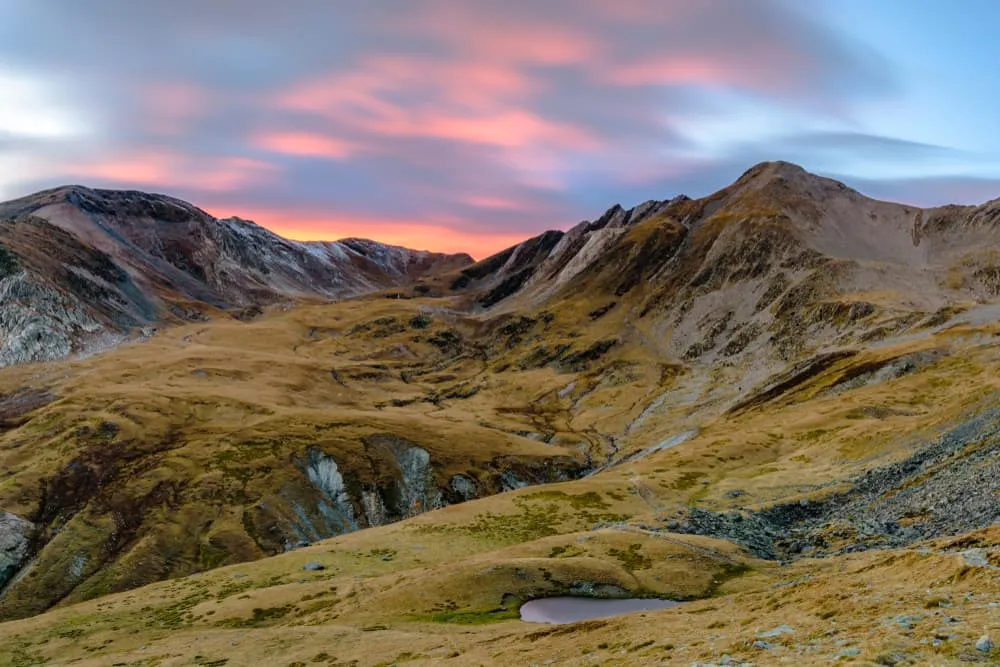
From west to east, the range slowly changes character. The western Pyrenees are greener and wetter, shaped by Atlantic weather systems. The central Pyrenees hold the highest and most dramatic terrain. Further east, the mountains gradually soften and dry, influenced by the Mediterranean climate.

This constant shift in scenery is one of the joys of trekking here. Even on long routes, the landscape never feels repetitive.

High Peaks in a Subtle Landscape

Why the Pyrenees Feel Wilder and Quieter

Many hikers notice it almost immediately: the silence. Compared to the Alps, the Pyrenees feel strikingly undeveloped. Large ski resorts are limited to a handful of valleys. Cable cars are rare. Entire stretches of the range remain untouched by mass tourism.

This is not accidental. Historically, the Pyrenees were not a crossroads of trade or empire. They were a boundary. Where the Alps connected regions, the Pyrenees separated them. Roads came late. Development followed cautiously. Nature remained dominant.

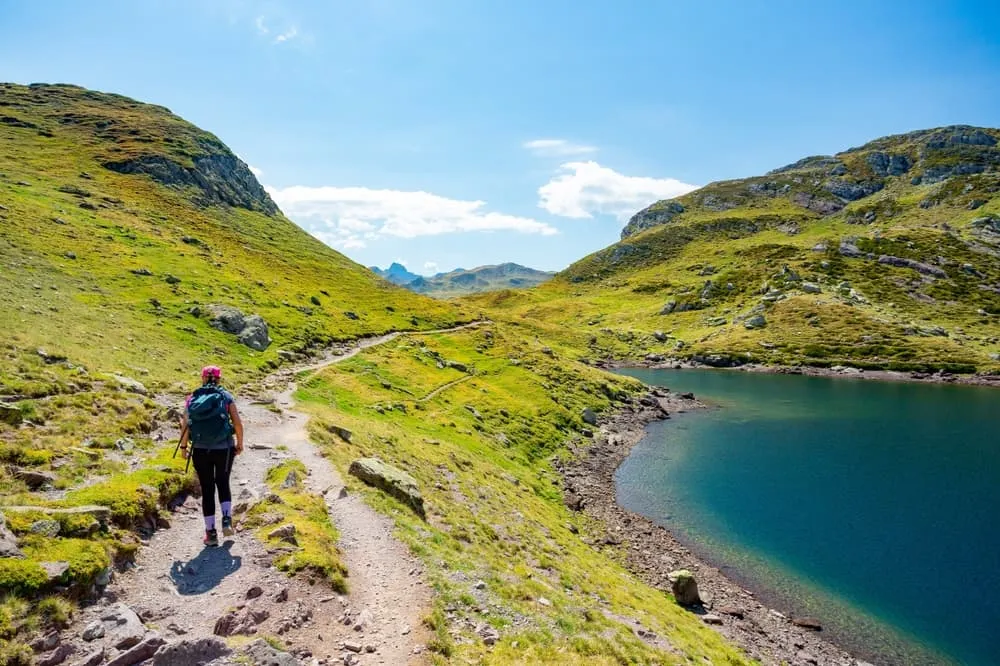
As a result, it is still possible to walk for hours without seeing another person, especially on long-distance trails such as the GR10, GR11, or the Haute Route Pyrénéenne. The sense of solitude here is not staged. It is real.

Why the Pyrenees Feel Wilder and Quieter

A Name Born of Fire and Legend

Like many ancient landscapes, the Pyrenees carry their mythology in their name. According to Greek legend, the mountains are named after Pyrene, a tragic figure associated with the hero Heracles. After her death, Heracles is said to have piled rocks into a vast tomb, creating the mountain range in her memory.

Another explanation links the name to the Greek word pyr, meaning fire. Some ancient writers believed the mountains were named after great fires, perhaps natural or set by shepherds, that once burned across their slopes.

Whether born from myth, language, or both, the name reflects how deeply these mountains were woven into early imagination. They were never just geography.

A Name Born of Fire and Legend

Mountains of Passage and Survival

Although the Pyrenees form a natural border between France and Spain, they were never completely closed. For centuries, people moved quietly through the high passes, guided by local knowledge passed down through generations.

Smuggling routes crisscrossed the range, especially in the 18th and 19th centuries. Salt, tobacco, coffee, and textiles were carried across the border under cover of darkness, avoiding customs posts in the valleys below. Many modern hiking paths follow these same discreet routes.

During World War II, the Pyrenees once again became mountains of escape. Resistance fighters, Jewish refugees, and downed Allied pilots crossed the range from occupied France into neutral Spain. These journeys were long, dangerous, and often deadly, particularly in winter. Today, hikers walk these paths with light packs, often unaware of the desperation that once filled the same valleys.

Walking Through Time

To hike in the Pyrenees is to move through layers of time. Beneath your boots lie rocks formed in ancient oceans. Around you are valleys carved by ice long gone. Ahead, passes once used by shepherds, smugglers, pilgrims, and fugitives still guide the way.

This is why the Pyrenees feel different. Not louder or higher, but deeper. Older. More patient. And for those willing to walk slowly through them, endlessly rewarding.

Walking Through Time

About Us

At Bookatrekking.com, you will find the trek that will make your life unforgettable. Whether you want to explore the Inca Trail or climb Kilimanjaro. Bookatrekking.com has a wide and varied range of first-class treks. No false promises are made here. Transparent prices and bookings are fixed instantly. Find, compare, book and trek!
Read more about us
About Us
About Us

Also Interesting