Hiking in Norway: the finest regions, trails and multi-day treks

Hiking in Norway: the finest regions, trails and multi-day treks
Trekking experts per destination
Free cancellation up to eight weeks in advance
Quick personal advice

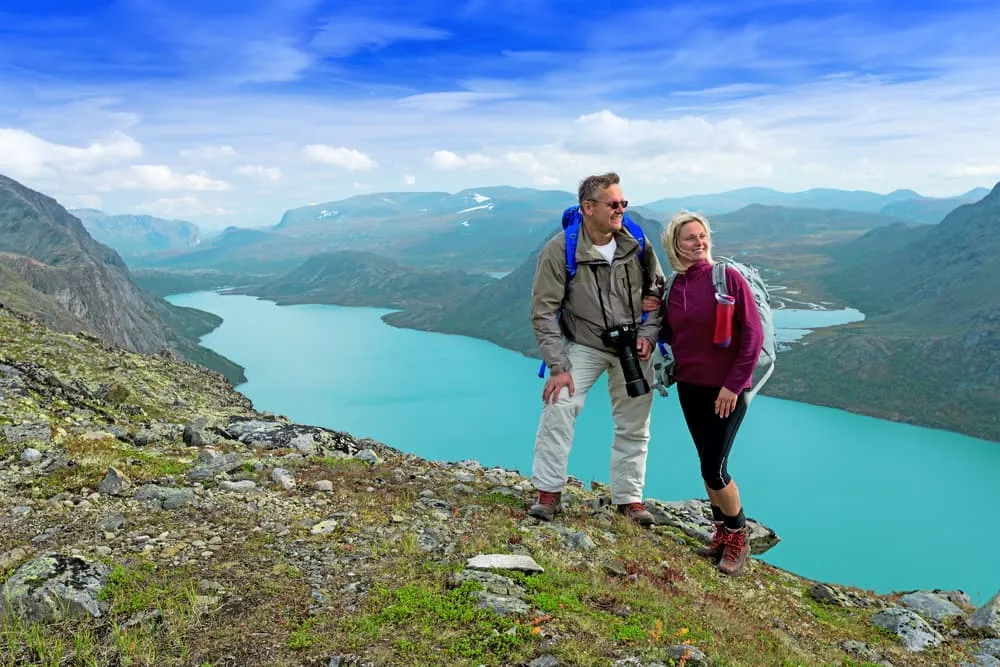
Norway is not one hiking destination but five or six very different ones, and the first decision you make — high plateau, fjord valley or Arctic coast — matters more than which individual trail you pick. Hiking in Norway means choosing between Jotunheimen's glacier-carved peaks, Rondane's wide reindeer plateaux, Trollheimen's green wooded loops, Aurlandsdalen's descent from mountain to fjord, and the dramatic coastal ridges of the Lofoten Islands. Two things shape all of it in ways that have no real parallel elsewhere in Europe: allemannsretten, the legal right to roam across virtually any open land, and the DNT hut network, which makes multi-day walking possible without carrying a tent or cooking your own food.

At Bookatrekking, we take care of the planning behind the scenes. We book the huts along your route in advance, arrange luggage transfer between overnight stops so you walk with a daypack, and give you our app with offline navigation, GPX tracks and an up-to-date weather forecast for each stage based on that hut's exact coordinates. You plan the adventure; we handle the logistics. Explore our full range of walking holidays in Norway once you have chosen your region.

Read this article in order: choose a region first, then a route.


What makes hiking in Norway different

Hiking in Norway is structurally different from walking in the UK or the Alps, and understanding two principles before you book saves a lot of confusion on the trail.

Allemannsretten is Norway's right to roam, enshrined in law. You may walk, camp and cross almost any uncultivated land, including forests, mountains, coastline and open heathland, without asking anyone's permission. The obligations that come with it are equally clear: keep at least 150 metres from the nearest dwelling when you pitch a tent, do not light fires near woodland or vegetation between 15 April and 15 September, leave the land as you found it and do not disturb livestock or cross cultivated farmland. The freedom is real, but it is not a free pass to behave carelessly.

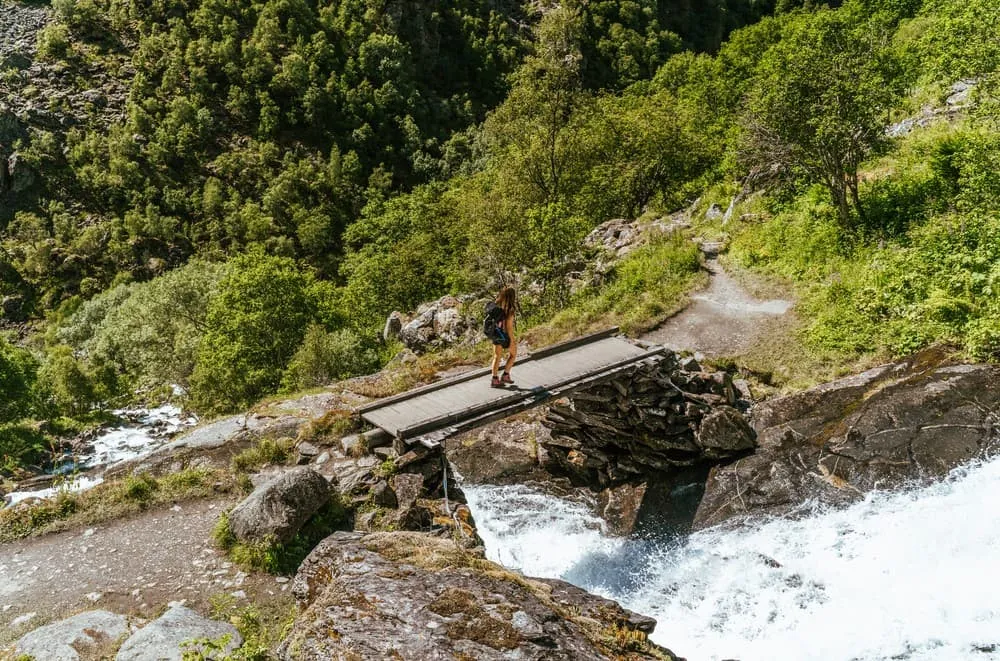
The terrain is mostly open ground, not managed paths. Red-T waymarks on rocks, and cairns across open ridges, mark routes rather than formal paths. "Trail" in Norway often means a line across a plateau or boulder field that you follow by reading the markers and the landscape, not a worn strip of earth with drainage and signage every 500 metres. This is very different from Snowdonia or the Lake District. The mountains are unfenced, largely unserviced, fully exposed to North Atlantic weather and often without phone signal. None of this is a reason to stay away; it is simply what the experience is.


Where do you start: regions, airports and getting around

For British walkers, the main entry points are Oslo and Bergen for the southern mountain regions. Oslo is the natural base for reaching Jotunheimen and Rondane — the train north from Oslo Sentralstasjon reaches Otta and Dombås, which are the jumping-off points for both massifs, and buses from those stations serve the trailheads. Bergen connects to the fjord side: the famous train over the plateau drops you at Myrdal for the Flåm valley, and the fjord towns are accessible by road and water from there.

For Trollheimen, Trondheim is the closest city of size, and the region is reachable by a combination of train and local bus. For Lofoten, you fly into Bodø and take the ferry across, or fly direct into Harstad-Narvik or Svolvær depending on the season.

The important caveat for every part of this: services are seasonal and thin outside June to early September. Local bus routes to trailheads run only in summer, ferries change schedule annually, and some access roads are closed by snow well into spring. Always verify timings and connections at the time of booking, not from a general guide. Check national rail and regional bus operators for the year you intend to travel.


The best hiking regions in Norway compared

This is the section to read if you are still deciding where to go. Each region offers a genuinely different experience, and none is simply a "harder" or "easier" version of another.

Jotunheimen

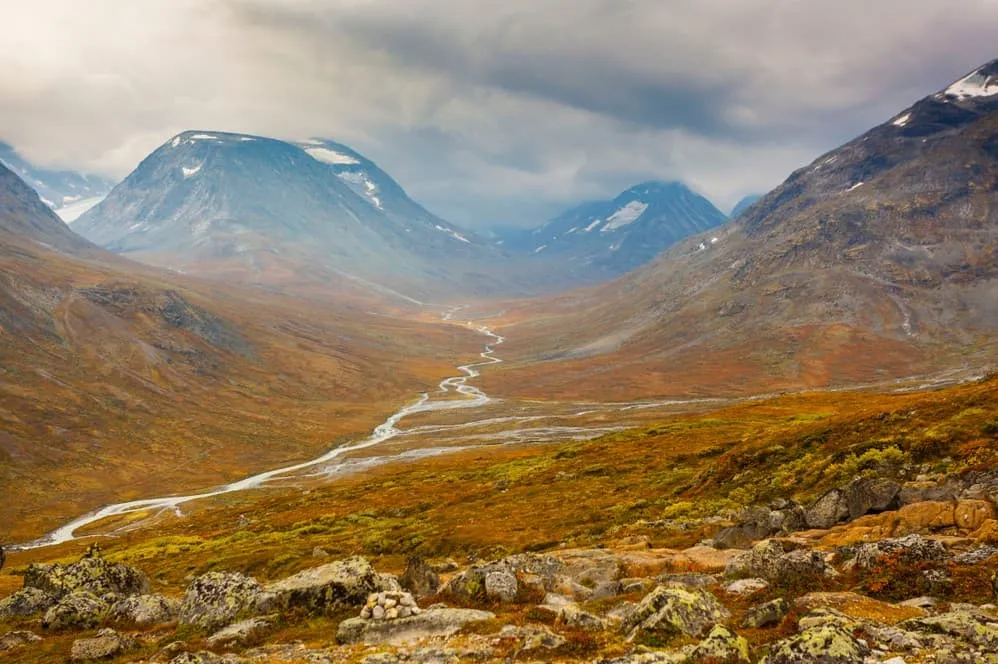
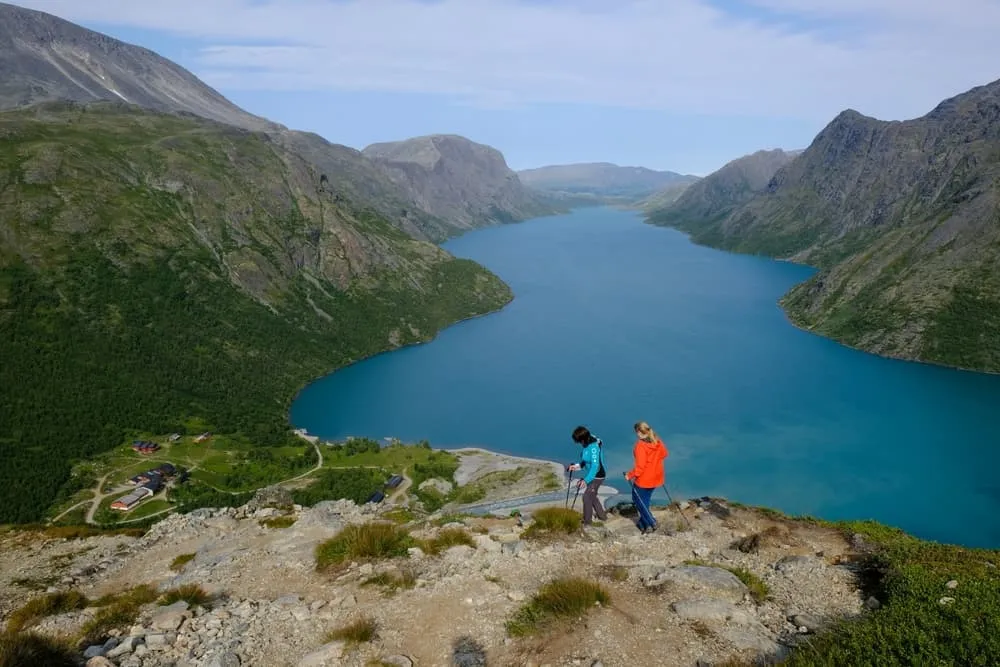
Hiking in Jotunheimen National Park puts you in the middle of Norway's highest terrain. The "Home of the Giants" holds the two tallest peaks on the Scandinavian mainland, Galdhøpiggen and Glittertind, and the walking reflects that: glacially carved valleys, ridgelines above luminous lakes, and a scale that dwarfs most things in Western Europe. The classic multi-day routes link DNT huts across varied terrain, combining high passes with valley descents and, on some stages, views down to Lake Gjende below. Jotunheimen suits walkers who want a genuine high-mountain feel: the terrain is serious, weather moves fast, and the rewards are commensurately large. It does not suit anyone looking for gentle gradients or forest walking.

Rondane

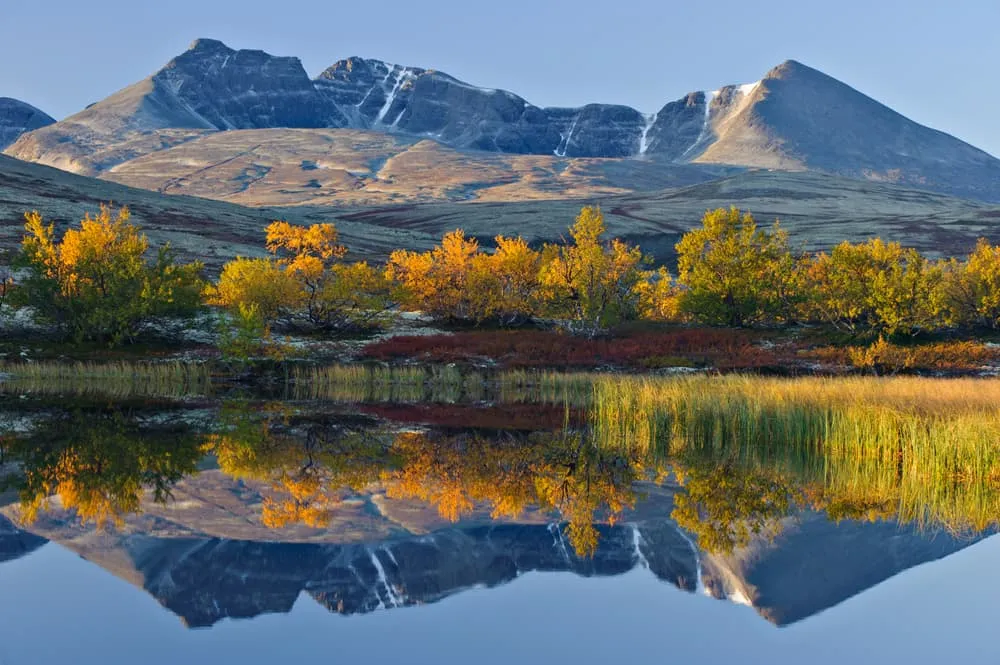
Rondane is Norway's oldest national park and, by Jotunheimen standards, a gentler one. The terrain is drier, the plateaux wider, and the distances between huts more forgiving. Wild reindeer are a real presence, not a scenic promise, and the sense of open Scandinavian wilderness is hard to match anywhere else in southern Norway. Rondane suits walkers doing their first multi-day trek in Scandinavia, or anyone who prefers the feeling of space over the drama of altitude. What it does not offer is the glacier scenery or peak-to-peak drama of Jotunheimen.

Trollheimen

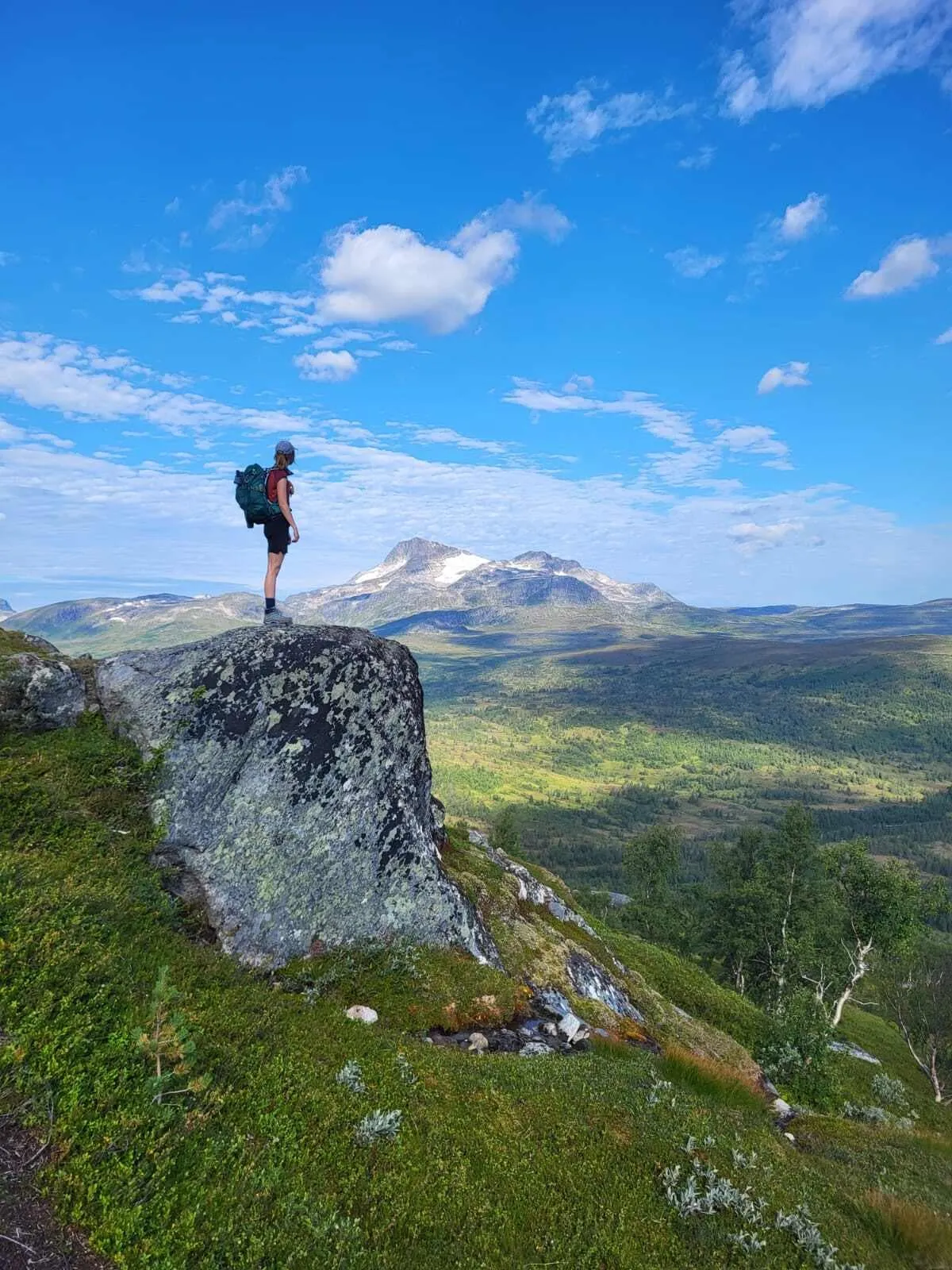
Trollheimen sits between Jotunheimen and the Trondheim coast and has a different character from both: greener, more wooded on the lower sections, with a mix of river valleys and open summit country in the same loop. The region's relative obscurity among international visitors is part of its appeal. Trails are well-maintained, the DNT huts are welcoming, and the weather window is often slightly more flexible than on the high plateau. Trollheimen suits walkers who want variety within a single route — a day in birch forest followed by a day on open ridges — and those who prefer a loop format.

Aurlandsdalen

Aurlandsdalen is where hiking in the Norwegian fjords becomes a multi-day journey in its own right. The valley is sometimes called Norway's Grand Canyon: a long descent from high mountain plateau to the fjord, following rivers past waterfalls, remote farms and gorge sections that close the sky above you. Fjord Norway hiking at this scale feels like genuine travel through a changing landscape, not a circular walk. The route ends at sea level in the fjord country, which gives it a narrative logic that point-to-point walkers love. The walking is less technically demanding than Jotunheimen but longer in terms of cumulative descent. It does not suit those looking for high ridgelines or summit views.

Lofoten

Hiking in Lofoten is unlike anything else in Norway. The islands sit well above the Arctic Circle, and the mountains rise almost directly from white-sand beaches and the sea. Peaks are shorter in absolute terms than Jotunheimen but feel dramatic out of all proportion to their height, because the contrast between vertical rock, blue water and fishing-village harbours below is immediate and intense. Lofoten is covered here as a destination guide. Bookatrekking currently runs multi-day treks in Jotunheimen, Rondane, Trollheimen and Aurlandsdalen; for Lofoten, the sections below on day walks and famous trails will give you the practical picture.



The best hiking regions in Norway compared

Multi-day treks: our Norway hiking routes

If you know your region, here is what we offer. Every trip includes accommodation booked in advance along the route, luggage moved between overnight stops, and access to our app with offline navigation, GPX tracks and a per-stage weather forecast drawn from the coordinates of each overnight hut.

Jotunheimen — two ways in. Our eight-day Jotunheimen Trek is the classic, covering 96.5 km across six walking days through the full sweep of the massif, with daily stages ranging from around 10 to just under 22 km and cumulative ascent that reflects the high-mountain character of the terrain. If you want a shorter introduction to the same landscape, our Jotunheimen Experience is a seven-day trip with three walking days on a lake-loop circuit, total distance 37 km, that gives you the scenery without the commitment of a full traverse. Both suit experienced day-walkers who are comfortable on consecutive full mountain days; the eight-day is the more serious undertaking.

Aurlandsdalen — fjord-valley walking. Our six-day Aurlandsdalen Trek covers 49 km across four walking days, with a maximum daily stage of 14.5 km. The route descends from the plateau to the fjord, and the final day into Flåm via Vassbygdi is described in the itinerary as challenging. This is the right choice if fjord scenery and a clear journey narrative matter more to you than altitude.

Rondane. Our five-day Rondane Triangle covers 63.3 km across five walking days with a longest stage of 21 km. The terrain is open plateau walking with good waymarking and a strong chance of seeing wild reindeer. A solid first multi-day Scandinavian trek.

Trollheimen. Our five-day Trollheimen Triangle covers 58.6 km across three walking days, looping between three DNT huts through a mix of valley and open mountain terrain. The final day has the most ascent. A good choice for walkers who want a complete loop with variety rather than a point-to-point journey.

For the full picture, including any additional routes and the current departure dates and prices, see our walking holidays in Norway overview. If you are still deciding between Norway and other European long-distance trails, the 20 most beautiful long-distance trails in Europe is a useful comparison.


Multi-day treks: our Norway hiking routes

Besseggen and the best-known trails, briefly

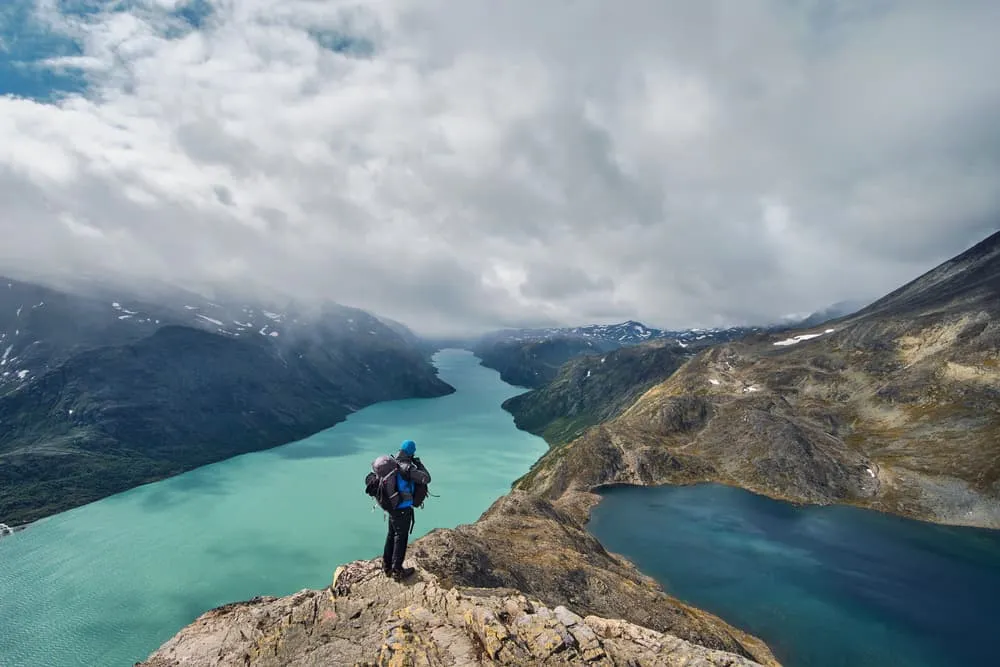
The most famous single hike in Norway — and one of the most talked-about in Europe — is Besseggen ridge. Hiking Besseggen ridge means walking a narrow arête above two lakes of different colours, with a boat connection as part of the day out. The hiking besseggen ridge experience is a day objective, not a multi-day trek, and in high summer the path carries serious crowds. The queues at the boat are real and the trail can feel busy.

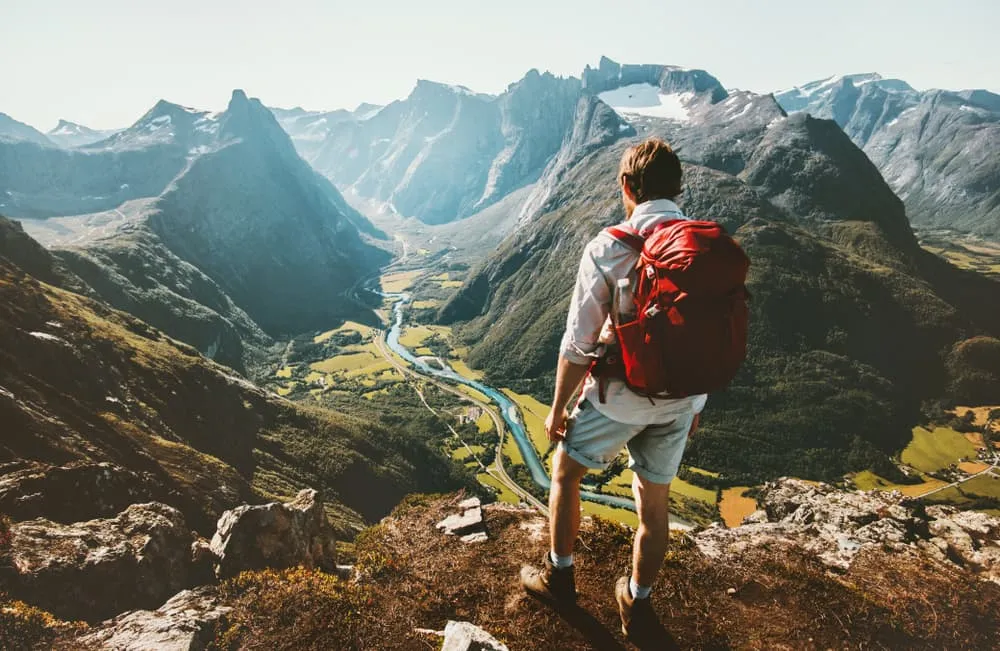
Trolltunga, Preikestolen and Romsdalseggen are in the same category: genuinely spectacular, genuinely popular, and best understood as demanding day hikes rather than the core of a walking holiday. Each delivers a specific payoff — Trolltunga's ledge above the lake, Preikestolen's cliff platform above the Lysefjord — but none links naturally into a longer walking week without a lot of driving between trailheads.

If you are planning a week of walking rather than a single iconic day, the region comparison above is the more useful starting point. These famous routes will still be there on your rest day or as a standalone add-on; they do not need to be the centrepiece.


Day walks and shorter circuits

Not every walker wants a five- or eight-day commitment, and the best hikes in Norway include some excellent shorter options.

In Lofoten, the short coastal climbs are a category of their own. Peaks rise steeply from sea level and most trails gain several hundred metres in a relatively short horizontal distance. Ryten, with its view down to Kvalvika Beach, is among the most photographed summits in the islands. Reinebringen above Reine gives a classic Lofoten panorama over the village and the fjord. The important thing to understand is that "short" here does not mean easy: the ascent-to-distance ratio on most Lofoten routes is steep, the trails are often rocky and exposed, and a three-hour walk can feel considerably harder than a longer day on a plateau. Arrive early, check the weather and give yourself more time than the trail description suggests.

Near the fjords, valley walks offer a calmer alternative: paths along the Flåmsdalen from Myrdal, circuits from fjord-side villages with river crossings and waterfall viewpoints, and shorter loops from mountain lodges in Rondane and Jotunheimen where guests take a half-day out across the plateau without a full hut-to-hut commitment. These options suit walkers combining hiking with other travel, or those who want to test their legs before a longer route.


How hard is hiking in Norway and who is it for

Hiking in Norway is accessible to a wide range of fitness levels, but it is honest with you in a way that managed walking routes sometimes are not. The real variables are not just gradient and distance; they are things like the absence of clear path surfaces across boulder fields, the speed at which mountain weather arrives, the possibility of river crossings without bridges, snow patches persisting on high routes well into summer, and long stretches with no phone signal and no other walkers in sight.

The fitness picture is this: you need to be comfortable on consecutive full walking days, sure-footed on uneven and sometimes loose ground, and content without the reassurance of mobile coverage. You do not need to be an athlete, and you do not need prior alpine experience for most routes.

In practical terms, Rondane and Trollheimen are the more forgiving starting points. Stages are achievable at a moderate pace, the terrain is less technical, and the huts are well spaced. Jotunheimen is the step up: longer maximum stages, more cumulative ascent, and terrain that demands more attention underfoot. Aurlandsdalen sits between the two in physical terms but requires good balance and sure footing on the descent sections, particularly on the final day.

The single most common mistake British walkers make is underestimating how long a Norwegian "trail" takes compared to the same distance on a maintained path at home.


When to go hiking in Norway

The practical mountain season is defined by two things: when the DNT staffed huts open and when the mountain bus services run. Both are decided annually and must be verified for the year you intend to travel; treat any specific date as provisional until you have checked the current year's information with DNT or the relevant regional tourist authority.

In broad terms, the mountain hut season runs roughly from late June to early September for most staffed huts in Jotunheimen, Rondane and Trollheimen. High passes hold snow into June most years, and some routes are not passable safely until July. July and August are the busiest months: huts are fully open, buses are running, and the days are long. Late summer — the last two weeks of August and the first week of September — is often a sweet spot: trails are quieter, the landscape turns amber and red, the air is cleaner, and the going underfoot is dry and settled. The tradeoff is shorter daylight and an increased chance of early autumn weather.

In Lofoten, the summer months bring near-constant daylight: the midnight sun means you could theoretically hike at midnight and see clearly. The flip side is that the shoulder periods before and after the core season are wetter and darker, with fewer services and some huts closed. October in the fjords and on the coast is genuinely post-season: trails are quiet, weather is variable, and many facilities shut down. It can be beautiful, but it requires more self-sufficiency.

The Bookatrekking app shows the current weather forecast for each hut on your route, pulled from that hut's coordinates, so you can check stage-by-stage conditions in real time rather than relying on a broad regional forecast.


Huts, DNT and luggage transfer

The DNT network covers over 550 huts across Norway, and understanding the three grades matters before you book.

Staffed (betjent) huts are the most comfortable: a warden is present through the summer season, hot meals are served in the evening, breakfast is provided, and you sleep in bunk rooms or small private rooms. These are the huts used on our Bookatrekking routes. Self-service (selvbetjent) huts are unlocked with a DNT key, which comes with membership. You find food stores, cooking equipment and sleeping facilities, but you cook for yourself and leave payment in the honesty box. Unmanned (ubetjent) emergency shelters are basic stone buildings kept open for safety purposes, with minimal equipment.

For any hut below full-staffed level, a DNT membership is required for access. Membership is worth considering if you plan to spend significant time in the Norwegian mountains; it also gives discounts at staffed huts.

For a detailed guide to how hut-to-hut walking in Norway actually works — what you carry, how nights in the huts feel, and how to plan a route through the network — read our full guide to hut to hut hiking in Norway.

On a Bookatrekking trip, the huts along your route are reserved in advance under your name, your luggage travels between stops so you walk each day with a daypack, and the app gives you offline navigation, GPX tracks and a weather forecast for every stage based on each hut's exact location. You focus on the walking; we have handled everything that could otherwise take weeks of phone calls and planning.


Which Norway trek suits you

You are doing your first multi-day walk in Scandinavia and want something achievable but genuinely wild. The Rondane Triangle is the right starting point: open plateau terrain, well-spaced huts, manageable daily stages and a strong chance of reindeer on the horizon.

You want a full high-mountain experience with iconic Norwegian scenery. The eight-day Jotunheimen Trek is what this kind of walking holiday in Norway is built around. Six days of varied mountain terrain, glacier-carved valleys and ridge walking. Be prepared for the commitment.

You want Jotunheimen but have a shorter window or want a gentler introduction. The Jotunheimen Experience gives you the same landscape on a lake-loop circuit over three walking days, with a total distance that suits walkers easing into mountain routes.

Fjord scenery is the priority and you want a journey with a narrative arc. Aurlandsdalen descends from high plateau to the fjord over four walking days, following rivers and gorges down to Flåm. The scenery changes with every stage.

You want variety: forests, rivers, open summits, all in a loop. The Trollheimen Triangle covers all of that in five days and is quieter than the more famous massifs.

You are still comparing regions or want to see everything available. Start with the full walking holidays in Norway overview. Current departure dates and prices are on each product page.


Frequently asked questions

  • How difficult is the hike to Trolltunga?

    Trolltunga is a long and demanding day hike, not a gentle walk. The return route covers a significant distance with substantial elevation gain, and the trail includes rocky, exposed sections. Most walkers need a full day to complete it comfortably. Fitness, proper footwear and an early start are essential; check current trail conditions with local operators before you go.

  • Which fjord in Lofoten is considered the most beautiful?

    Most visitors and photographers point to the Reinefjord area, seen from above Reine, as the most striking fjord view in Lofoten. The combination of the village below, the still water and the surrounding peaks creates an image that defines the islands. That said, beauty is genuinely subjective in Lofoten; almost every inlet has its advocates.

  • How hard is hiking in Lofoten?

    Hiking in Lofoten is consistently more demanding than the trail lengths suggest. Mountains rise steeply from sea level, trails are rocky and often require hands-on scrambling, and the terrain is exposed to North Atlantic weather that can shift quickly. Even routes described as moderate by Norwegian standards will challenge walkers unused to steep, unpathed terrain. Prepare accordingly.

  • Is Jotunheimen National Park worth visiting?

    Yes, unequivocally. Jotunheimen offers Norway's most spectacular mountain scenery: glacially carved valleys, Norway's two highest peaks, clear alpine lakes and ridge walking at a scale that has no equivalent in the British Isles. It demands genuine fitness and respect for mountain weather, but the rewards are proportionate. For multi-day walkers in particular, it is one of the finest destinations in Europe.

  • What are the top 3 hikes in Norway?

    Norway's most celebrated day hikes are Besseggen ridge in Jotunheimen, Preikestolen above the Lysefjord and Trolltunga near Odda. All three are genuinely spectacular and consistently busy in high summer. For a walking holiday with consecutive days on the trail, the multi-day routes in Jotunheimen, Aurlandsdalen and Rondane are more satisfying choices than a list of single-day objectives.

  • What is the most iconic hike in the Lofoten Islands?

    Reinebringen, rising above the village of Reine, is generally considered the most iconic hike in Lofoten. The view from the summit over the red-roofed village and the surrounding fjord system is one of the most reproduced images in Norway. Ryten, with its view down to Kvalvika Beach, runs it close in photographic terms and is often considered the more rewarding climb.

  • How hard is the Lofoten crossing?

    The Lofoten traverse, crossing the length of the islands on foot, is a serious multi-day challenge involving steep ascents and descents, potentially difficult river crossings, route-finding across open ground and several stages in remote terrain without huts. It is not a beginner route. Experienced mountain walkers who are comfortable with exposure and self-reliance complete it, but it requires thorough preparation and up-to-date local knowledge before setting out.

  • How long does it take to complete the St. Olav's Way pilgrimage?

    Most walkers complete the main Oslo-to-Trondheim route, covering roughly 640 km, in four to five weeks. Shorter sections and alternative starting points are common; many pilgrims join at Lillehammer or Dovre and walk the final 300-odd km to Trondheim in two to three weeks. Exact duration depends on daily distance, fitness and how many rest days you take.

Packing List for the Jotunheimen Trek

It doesn't matter where you are trekking or for how long: carrying the right equipment with you is paramount. For a hiking trip in the mountains, a good is backpack essential. Its size will depend on how many days you will be spending in the mountains, the season, and the clothes you will be taking with you. We have prepared a packing list with some essential clothing that you should include and some extras that you may find useful:
  • Essentials

  • Extras

Safe Hiking Tips for the Jotunheimen Trek

When hiking, it is wise to be aware of a few points. Even if this is not your first time, you should never underestimate the mountains. Good tour planning and compliance with the regulations in the mountains will significantly increase safety. To ensure that your hiking adventure is a safe and enjoyable experience, here below you can find a list of 8 recommendations for safe hiking in the mountains:
  • Know your limits

    Hiking the Jotunheimen Trek is the perfect outlet to escape from daily life. It is an endurance sport along with a beautiful nature experience with a positive effect on body and mind —as long as one is in good shape and has a realistic picture of one's possibilities and limits—. Never overestimate yourself or underestimate the route. Don't overdo it! Always choose the slower option and take more time for your plans. Hiking under time pressure is not fun and at too fast a pace it can be dangerous. Be wise!

  • Plan carefully

    Good planning is half the work! Hiking maps, literature, the Internet and expert advice are invaluable when planning the route of the Jotunheimen Trek and enable you to determine the length, altitude difference, difficulty and conditions of the hike. When planning group treks, the itinerary should always be planned for the weakest member of the group! The weather in the mountains can change incredibly quickly and rain, wind and cold all increase the risk factor. For this reason, always check the weather forecast beforehand and contact our trekking experts to find your way before you start.

  • Be fully equipped

    Equipment is everything. In the most extreme case, it makes the difference between life and death, and in any case, it definitely makes the difference between having fun and having a bad time. Food and water, sunscreen and waterproof and warm clothes must always be in your backpack, as well as a first aid kit and a mobile phone with a full battery (in case there is an emergency). However, packing light makes hiking easier, so don't take too much extra luggage with you. Your equipment should always be suitable for the terrain you'll be hiking on in the Jotunheimen Trek.

  • Wear suitable footwear

    Good walking shoes protect your feet and provide a better fit. Shoes with a good fit, with non-slip soles, water-resistant and lightweight are a must for additional walking pleasure during the Jotunheimen Trek. Trail running shoes are great for a weekend in the mountains, but on longer hikes or more technical trails, you'll want at least A/B hiking boots. That means it is recommended wearing high mountain shoes that are water-repellent with extra ankle support to prevent sprains.

  • Stay on marked trails

    Jotunheimen Trek has endless marked hiking trails, which are controlled and maintained and should not be deviated from. It may be tempting, but it's not a good idea to take shortcuts or alternative routes through unmarked terrain. It increases the risk of disorientation and you're more likely to get lost and have accidents or fall in the mountains. Even steep slopes of packed old snow are often underestimated and dangerous. Are you in doubt? Better don't do it. For easy navigation we work with our trusted partner Komoot, whose interactive maps, also available offline, provide you with the necessary digital means to get from A to B. As a backup, make sure to bring a hiking guide or a paper map with you. FYI, 75% of stumbles occur due to carelessness on marked paths or roads, not in open terrain!

  • Take regular breaks

    Remember you're on a hiking trip. Timely and regular breaks not only provide welcome relaxation but also make it possible to enjoy the Jotunheimen Trek. The body needs a regular food and drink intake to maintain performance and concentration. Our advice is that if you have little time, it's better to follow the short itinerary than to speed up the long one.

  • Stay reachable

    If you are hiking solo or in small groups it is advisable to inform people back home about your plans, what route you are taking and when you plan to return. Even small incidents can lead to unpleasant emergencies so make sure you are available at all times. Bring a charged phone containing at least the phone numbers of immediate family members, your accommodations en route and the emergency phone numbers operating on the Jotunheimen Trek.

  • Respect nature

    Leave no rubbish behind, prevent noise, stay on the marked trails, do not disturb wildlife or grazing animals, and respect protected areas.

Where Can I Book the Jotunheimen Trek?

At Bookatrekking.com you can book the self-guided Jotunheimen Trek and many other treks. We take care of all the details for you, including arranging accommodations and providing you with relevant information well in advance of your trek. Find our offers here. Our easy-to-use platform allows you to browse and compare different trekking options and to find the perfect fit for your interests, abilities, and budget.

If you have any questions about a specific trek or need help choosing the right one for you, our team of trekking experts is here to assist you. Simply reach out to us and we will be happy to provide you with personalized recommendations and advice to help you plan the trekking adventure of a lifetime.

About Us

At Bookatrekking.com, you will find the trek that will make your life unforgettable. Whether you want to explore the Inca Trail or climb Kilimanjaro. Bookatrekking.com has a wide and varied range of first-class treks. No false promises are made here. Transparent prices and bookings are fixed instantly. Find, compare, book and trek!
Read more about us
About Us
About Us