Hiking in Poland: the Tatras, Zakopane and the finest mountain trails

Hiking in Poland: the Tatras, Zakopane and the finest mountain trails
Trekking experts per destination
Free cancellation up to eight weeks in advance
Quick personal advice

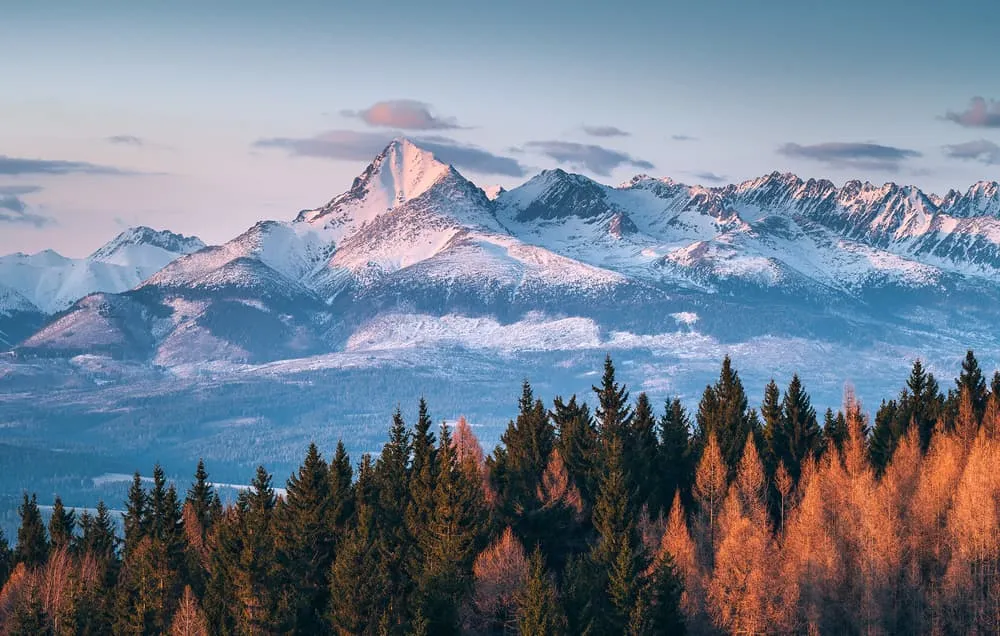
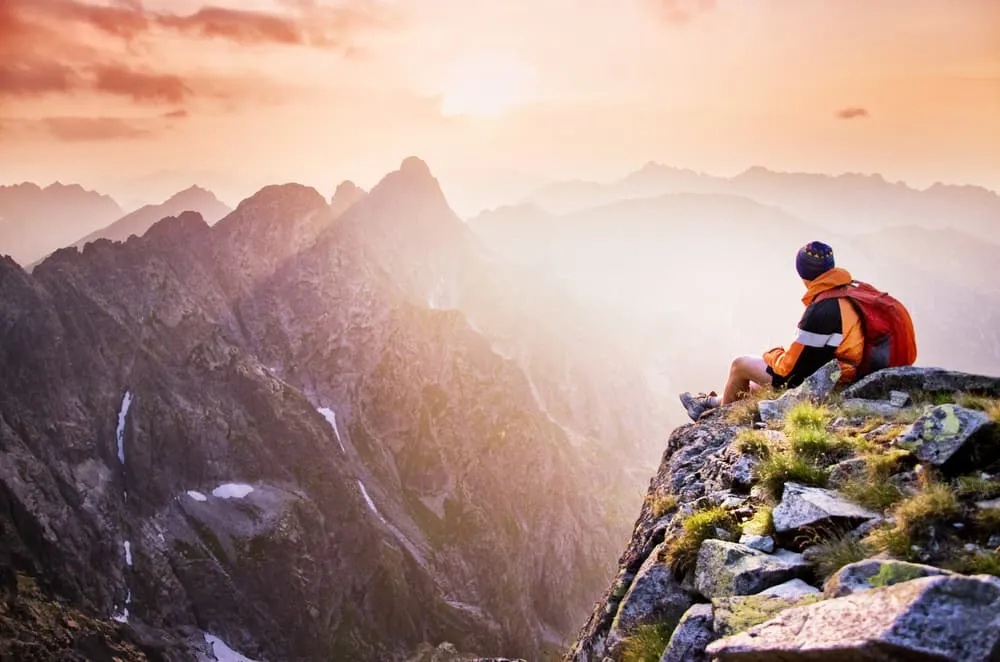
Most people picture Poland as flat. They arrive expecting plains and end up standing below a granite ridge that rises sharply out of dense pine forest, with glacial lakes gleaming in the valleys below. Hiking in Poland is concentrated in the south, where three distinct mountain ranges run along the country's borders, each with a different character. The High Tatras behind Zakopane are the most alpine, rocky and dramatic. The Bieszczady in the far south-east are rolling, remote and almost empty. The Karkonosze on the Czech border offer broad plateau walking above the treeline. This article covers all three, so you can decide within a few minutes which one matches what you are looking for. Our own walking holidays are in the Tatras, and we will be straight about that throughout.

What Bookatrekking adds to any of these routes: we book the accommodation along the way, arrange luggage transfer between overnight stops so you walk with a day pack, and give you our app with offline navigation, GPX tracks and a live weather forecast per stage. The rest of this article covers the regions, the seasons, the difficulty and where to sleep.


What makes hiking in Poland different

Poland's trail network is denser and better-maintained than most walkers expect. Trails across the national parks are marked with colour-coded blazes painted on trees and rocks: red typically follows the main ridge, blue and green take the valleys and cross-routes, yellow handles shorter connector paths. Navigation on the ground is genuinely straightforward, which matters when the weather closes in quickly, as it tends to do in the mountains here.

The best walking in Poland is concentrated in a narrow band along the southern border. North of that band, the country becomes lake country and coastal plain, scenic in a different way but not mountain walking. The national parks that govern the southern ranges set the rules clearly: stay on marked trails, no wild camping inside the park boundaries, pay the entrance fee at the checkpoint and carry your rubbish out. These rules are enforced, and the parks take conservation seriously. The result is mountain terrain that stays in good condition even with the significant visitor numbers the Tatras draw in summer.

The mountain hut culture is one of the pleasures of hiking in this part of Europe. Huts here are staffed year-round or close to it, they serve hot meals and drinks, and they operate as genuine social spaces rather than simple dormitories. On a busy August evening, a High Tatras hut feels like a small community. Regulars from Kraków sharing a table with walkers from Berlin and families from Warsaw. The food is hearty Polish mountain cooking, the beer is cold and the mattresses are acceptable. Book ahead: the popular huts fill up.

One thing that surprises first-time visitors is how steep Polish trails are per kilometre. The country's reputation as flat makes people underestimate how hard the southern ranges work you. Ascents are often direct rather than switchbacked, the rock underfoot is frequently loose above the treeline, and chain-assisted sections on the more technical routes demand genuine concentration. This is not a criticism — it is part of what makes the Tatras rewarding — but it is worth knowing before you lace up.


Which side do you start from: regions and getting there

For the Tatras and Zakopane, Kraków is the obvious gateway. The city has a well-connected international airport, a direct bus and rail link to Zakopane and easy road access. Zakopane itself sits at the foot of the mountains and is where most walkers base themselves for day hikes or join a multi-day trip. Our own trips begin and end on the Slovak side of the range, accessed via Poprad, which is reached comfortably from Kraków or from Košice in Slovakia. The Tatras straddle the Polish–Slovak border, and trails and huts exist on both sides, so when people search for "high tatras hiking" they may be thinking of either; it is worth checking which country a specific route or hut sits in before you plan. Our trips are on the Slovak side, though the summit of Rysy, the highest point on the traverse, sits right on the border.

For the Bieszczady, Rzeszów is the practical starting point. This is a longer journey from the main UK airports, which is part of why the Bieszczady remains far quieter than the Tatras. The roads into the range are slower and the public transport connections are sparse. Check current timetables rather than relying on generalised journey estimates.

For the Karkonosze, Wrocław is the closest city with good air links, and Jelenia Góra is the stepping-off town for the mountains. The Czech side of the range is called the Krkonoše; trails cross the border freely, and a day can easily take you into both countries.

Once you are in any of these areas, the question is whether to base yourself in one place and walk out and back each day, or to move each night along a route. The Tatras support both. Zakopane is large enough to offer a comfortable base with everything you need, and from it you can reach a different valley or ridge each day. Alternatively, a multi-day route that moves from hut to hut or hotel to hotel gives you a genuinely different perspective and takes you further into the mountains than any single day allows.


The best regions for hiking in Poland compared

The High Tatras are the reason most people go hiking in Poland. The terrain is properly alpine: granite, exposed ridgelines, passes with chains bolted into the rock, and the kind of scenery that appears on every Polish tourism poster. Zakopane is the base for hiking in Zakopane and for Tatra mountains hiking in general, and the town has everything a walker needs. The trade-off is crowds. In July and August the most popular trails, particularly the approach to Morskie Oko and the route up to Kasprowy Wierch, carry enormous numbers of people. Starting early and choosing less-obvious paths makes a significant difference, but the Tatras in peak season are not a wilderness experience. What they are is spectacular, accessible and genuinely challenging, with a quality of mountain scenery that rivals anything in the Alps for drama, in a fraction of the space.

The Bieszczady are a revelation for walkers who find the Tatras too busy. The range runs along the Ukrainian and Slovak borders in the far south-east of Poland, and its character is entirely different: broad, open ridges covered in połoniny (subalpine grassland), long views across valleys that feel genuinely remote, and a population of wildlife that includes bison, wolves and bears in the surrounding forests. The walking is gentler underfoot than the Tatras, the elevation is lower, and the chain-and-chains exposure is absent. What you trade for that is infrastructure. Huts are fewer, transport links are thin and the area demands more self-reliance. For walkers who want quiet, open country and the feeling of being genuinely away from it, the Bieszczady is one of the finest walking destinations in central Europe.

The Karkonosze form the border ridge with the Czech Republic in the south-west. The character here is different again: a broad plateau above the treeline, open weather and exposed walking rather than the technical scrambling of the Tatras. The ridge itself is not technical, but it is exposed to wind and the weather changes fast at altitude. This suits walkers who want a sustained high-level walk without chain sections, and the combination of both the Polish and Czech trail networks means there is plenty of ground to cover. The surrounding landscape of sandstone towns and valley villages gives the area a different cultural backdrop from the highlander traditions of the Tatras.

Our own programme sits in the Tatras, for the straightforward reason that the combination of scenery, hut infrastructure and technical interest is hard to match elsewhere in Poland. But the Bieszczady in particular deserves more attention from UK walkers than it currently gets.



The best regions for hiking in Poland compared

Multi-day hiking in Poland: our routes

If you want a structured multi-day walking experience in the Tatras with accommodation, luggage handling and navigation sorted in advance, Bookatrekking runs two versions of the High Tatras traverse.

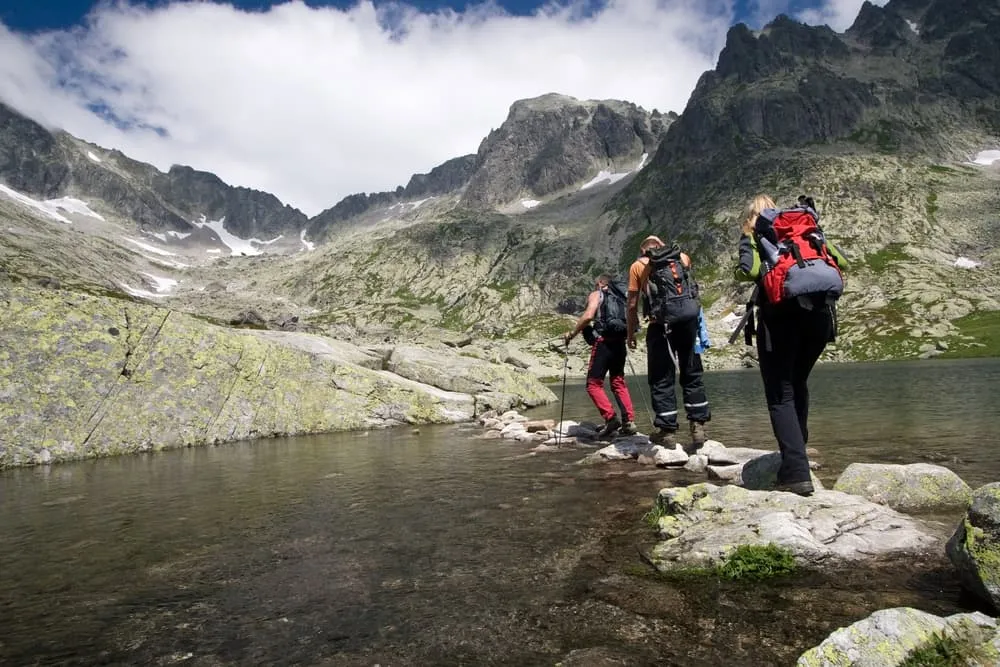
The five-day High Tatras Traverse covers five days of walking through the heart of the range, from the valley forests around Tatranská Lomnica to the mountain hotel at Štrbské Pleso. The total distance across the five days is 51.4 km, with the longest single day at 13.4 km. The character moves from forest walking on day one, through a serious high-mountain day with a secured chain section on day two, into more moderate high-altitude traversing on days three and four, which includes the ascent of Rysy, and a gentler final stage out to the railway on day five.

The seven-day version of the High Tatras Traverse covers the same route but builds in an arrival day and a departure day at each end. The total walking distance across the five active days is essentially the same, but the extra buffer at each end makes the itinerary considerably more relaxed: no rushing from an overnight flight to a trailhead, and no scramble to reach a train after the final stage. For walkers coming from the UK, the additional days make the logistics significantly more manageable and the overall experience more enjoyable.

Both trips include: accommodation booked at each overnight stop, luggage transported between those stops so you walk with a day pack, and the Bookatrekking app loaded with offline maps, GPX tracks and a weather forecast that updates per stage, based on the coordinates of the hut or hotel where you are sleeping that night. Current prices and departure dates are on the product pages.


Multi-day hiking in Poland: our routes

The best-known route in brief

The classic High Tatras hut-to-hut traverse threads through some of the finest mountain scenery in central Europe: staffed huts with hot meals, ridge lines with genuine exposure and a final summit push to the highest point in Poland. It is the kind of route that builds daily, each stage a little harder than the last until the high mountain day in the middle, then easing out to a well-earned finish.

For the full stage-by-stage account — what the terrain looks like at each key point, which sections carry chains, how the huts differ from each other and what to expect on the summit day — the complete High Tatras hiking guide has everything you need.


Day walks and shorter loops from Zakopane

Zakopane is the natural base for anyone who wants to experience hiking in Zakopane and the surrounding Tatra mountains without committing to a multi-day route. The town sits directly below the range and most of the major trailheads are reachable on foot, by local bus, or by the cable car to Kasprowy Wierch.

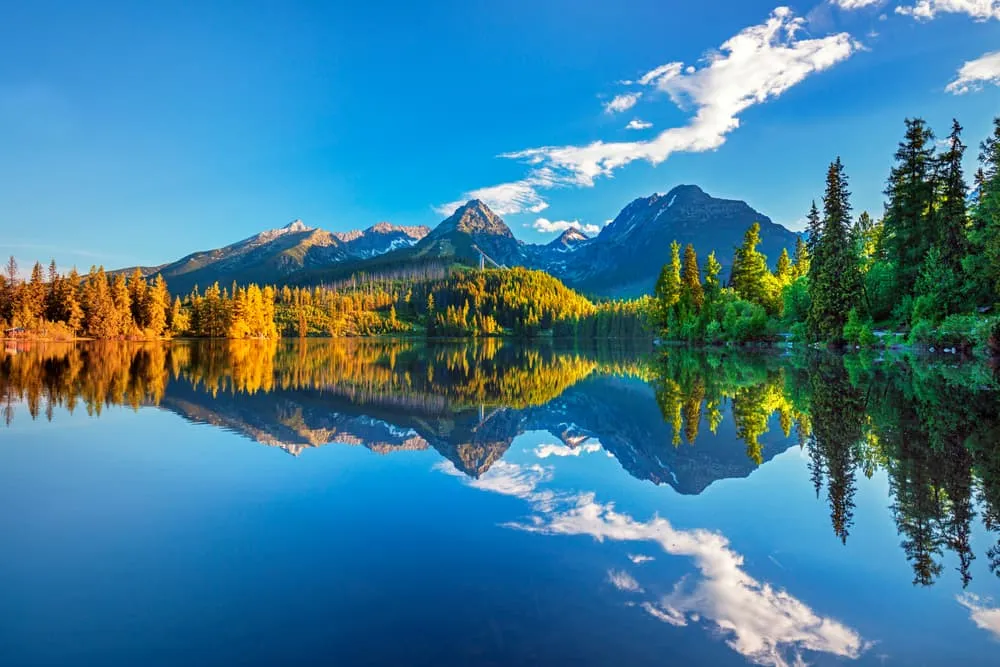
The type of day out available varies considerably. Valley walks through limestone gorges are accessible to anyone in reasonable fitness. The walk in to Morskie Oko, following a broad track through dense forest to the most famous lake in the Polish Tatras, is doable for walkers of almost any level, though it is also the busiest trail in the park and in peak summer the sheer volume of people can diminish the experience if you arrive at midday. Starting before 8am makes a substantial difference.

Above the valley floors, the character changes fast. Trails climb steeply into open rocky terrain, the tree cover drops away and the views open across to Slovakia. Ridgelines above the treeline require good footwear and careful footing on wet rock. Some of the routes from a Zakopane base involve the same chain-assisted sections you find on the multi-day traverse, and the same rules apply: take your time, three points of contact on the steep parts, and turn back if the weather is moving in rather than pushing on into deteriorating conditions.

For walkers combining a Zakopane stay with a multi-day trip, the day before the trek starts is well spent doing a shorter walk from town to calibrate your legs on the actual terrain rather than a treadmill. The western valleys tend to be quieter than the routes directly behind Zakopane and give a better sense of what the mountains feel like without the crowds.

The Bookatrekking app shows a weather forecast per stage based on the coordinates of your hut or viewpoint for that day, which is a useful tool for deciding in the morning whether to aim high or stick to the valley.


How hard is hiking in Poland and who is it for

The range is wider than most walking destinations. At one end: flat gravel paths through limestone valleys, suitable for anyone who can walk for a few hours. At the other: chained, exposed ridge traverses at altitude that require focus, surefootedness and experience on technical mountain terrain. Most walkers who come to the Tatras for a multi-day trip land somewhere between those extremes.

A typical active day on the High Tatras traverse involves sustained ascent and descent, rarely flat for more than a short stretch, on rocky ground that demands attention. You will be on your feet for between four and seven hours depending on the stage, and the cumulative effect of consecutive days means the later stages feel harder than the numbers suggest they should. The challenging day two on the traverse involves a secured section with chains and metal rungs on exposed rock: it requires confidence at height and previous experience on similar terrain, but it does not require mountaineering equipment.

The Tatras suit walkers who are comfortable with consecutive days on their feet, who are not troubled by exposure and who have enough mountain experience to read changing weather and make sensible decisions. They are less well-suited to anyone who wants flat, predictable paths or who needs to avoid heights entirely. The Bieszczady is a much better fit for the latter.

The Karkonosze sits in the middle: sustained high-level walking without the technical exposure of the Tatras, but with more wind and bigger weather than the sheltered Tatra valleys.


When to go hiking in Poland

Summer, from mid-June through early September, is the reliable window for high-mountain hiking in Poland. The high trails are largely snow-free, the huts are open and staffed, and the days are long enough to complete the longer stages comfortably. It is also the busiest period, particularly in July and August. If crowds on the Morskie Oko track or the summit of Rysy will bother you, early June and September are better. The mountain weather in summer is generally pleasant but never guaranteed: an afternoon pattern of building cloud and thunderstorms is the norm across the Tatras, and starting stages early means you are typically at or past the high point before the worst of it develops.

Early autumn, through September and into October, is the choice of many experienced walkers. The air is clearer, the light on the mountains is better and the trails are noticeably quieter. The risk is that conditions deteriorate faster with altitude. Some higher huts reduce their service or close earlier in autumn. Check current opening before you go.

Spring is unpredictable. Snow lingers on the higher trails well into May and sometimes into June, and the conditions on chain sections and exposed passes are genuinely hazardous when there is ice underfoot. This is not a season for the high mountain routes unless you have winter mountaineering experience and appropriate equipment.

Winter is a separate activity. Snowshoeing and ski touring are popular in the Tatras, but they require different gear, different skills and a different approach to risk assessment. Some huts stay open for winter; check current availability. For hiking in Poland in the conventional sense, winter is not the time to visit unless you know exactly what you are doing on snow and ice.


Accommodation, mountain huts and luggage transfer

There are two basic ways to approach sleeping arrangements on a multi-day walk in Poland. The first is to stay in one place, typically a guesthouse or hotel in Zakopane or in one of the Slovak resort villages near the range, and walk out and back each day. This is comfortable, flexible and means you sleep in the same bed for a week. The second is to move each night along the route, staying in mountain huts or mountain hotels as you go, and this is how our trips are structured.

Polish and Slovak mountain huts are honest places. Shared sleeping rooms are the standard, though some huts have smaller rooms available. Meals are served at set times, typically breakfast and dinner, and the cooking is straightforward: soups, meat dishes, dumplings, something warm. The huts are busy in season and booking ahead is not optional — it is essential. A walker who shows up without a reservation in August will find a floor, if they are lucky.

The practical advantage of going with Bookatrekking is that we handle all of this. The accommodation is booked at each overnight stop before you arrive, and your main luggage is transported between those stops while you walk with a day pack. This is only possible where the route touches the road network: on most stages of the High Tatras traverse this is the case, but there are high hut stages where the logistics work differently, and we explain exactly how in the trip information.

The Bookatrekking app carries the offline maps, the GPX tracks and a weather forecast updated for the coordinates of each overnight stop. You are not dependent on mobile data, and the forecast is specific to where you are sleeping that night rather than a general regional average.


Which trip suits you

If this is your first multi-day mountain trip and you want the structure handled for you, the five-day High Tatras Traverse is the cleaner choice: five walking days, a logical progression in difficulty, and a clear finish. It assumes previous hill-walking experience and comfort on rough terrain.

If you are an experienced ridge walker and want the full Tatra experience with more breathing room, the seven-day High Tatras Traverse including pre and post accommodation gives you the same route with an arrival day and departure day that make the whole thing significantly less pressured. The extra days at each end are genuinely useful, not padding.

If you have four or five days and want to base yourself in Zakopane rather than moving each night, the day-walk approach described in the section above is a reasonable alternative. You will not see as much of the range, but you will see the best of the valleys and you have the flexibility to go lighter or harder depending on how the first day feels.

If you want to understand the traverse stage by stage before committing, the High Tatras hiking guide walks through each day in detail.

If you are weighing Poland against other European mountain destinations, the guide to the twenty most beautiful long-distance trails in Europe puts the Tatras in context and covers the alternatives worth comparing.

Current prices and available departure dates are on the product pages for both trips.


Frequently asked questions

  • Is it safe to hike in the Tatra Mountains?

    Yes, for walkers with appropriate experience and preparation. The Tatras are genuine mountain terrain with unpredictable weather, rocky ground and exposed ridge sections on the harder routes. The trail network is well-maintained and well-signed. The risks are manageable with sensible decision-making: start early, check the weather, turn back if conditions change and stay on marked trails.

  • Is hiking allowed in the Tatra Mountains?

    Yes. The Polish and Slovak Tatra National Parks have an extensive network of marked trails open to hikers. Walkers must stay on marked paths, pay the park entrance fee at the checkpoints and follow the national park rules, which include no wild camping, no dogs on most trails and no drones. Certain trail sections close seasonally for conservation or safety.

  • Are there bears in the Tatra Mountains?

    Yes, brown bears are present in the Tatra Mountains on both the Polish and Slovak sides. Encounters are uncommon, particularly on the busier trails, but they do happen, especially at dawn and dusk and in the quieter valleys. The Tatra National Park advises moving away quietly if you encounter a bear and not approaching or feeding it.

  • Are there bears in Zakopane?

    Bears occasionally appear at the edges of Zakopane and in the forests immediately surrounding the town, particularly during spring when food sources are scarce higher up. Sightings in the town itself are rare but not unheard of. The Bieszczady region to the south-east has a significantly higher bear population. In the Zakopane area, the standard advice is the same: keep distance, do not feed.

  • Do you need bear spray in the Tatra Mountains?

    Bear spray is not standard practice in the Tatra Mountains and is not part of the recommended kit list for hiking here. Encounters are infrequent and the Polish approach focuses on behaviour rather than deterrent: make noise on quieter trails, move away calmly if you see a bear and avoid surprising wildlife in dense forest. Carrying bear spray is a personal choice, but it is not typical among walkers in this range.

  • How difficult is the hike to Morskie Oko?

    Morskie Oko is one of the more accessible hikes in the Polish Tatras. The route follows a broad, well-surfaced track through forest to the lake. It is long rather than technical, and the ascent is gradual. It suits walkers of most fitness levels. The main challenge is the distance and the crowds in peak summer. Starting early significantly improves the experience.

  • What not to miss in Zakopane?

    The Krupówki promenade gives a quick sense of the town's highlander character, with traditional carved woodwork, regional food and the ciupaga shepherd's axes that are both genuine cultural artefacts and tourist souvenirs. The Tatra Museum covers the natural and cultural history of the range. Rusinowa Polana, a subalpine meadow above the treeline accessible on a moderate hike from Palenica Białczańska, is one of the finest viewpoints in the Polish Tatras and far less visited than Morskie Oko.

  • How many days is enough in Zakopane?

    Three days gives you time to see the town and complete two or three substantial day hikes. Five to seven days allows you to cover the main valleys and ridges, or to join a multi-day traverse. For walkers who want to experience the full range of what the Tatras offer, combining two or three Zakopane base days with a multi-day hut-to-hut section gives the most complete picture of the mountains.

Packing List for the Tatra Mountains

It doesn't matter where you are trekking or for how long: carrying the right equipment with you is paramount. For a hiking trip in the mountains, a good is backpack essential. Its size will depend on how many days you will be spending in the mountains, the season, and the clothes you will be taking with you. We have prepared a packing list with some essential clothing that you should include and some extras that you may find useful:
  • Essentials

  • Extras

Safe Hiking Tips for the Tatra Mountains

When hiking, it is wise to be aware of a few points. Even if this is not your first time, you should never underestimate the mountains. Good tour planning and compliance with the regulations in the mountains will significantly increase safety. To ensure that your hiking adventure is a safe and enjoyable experience, here below you can find a list of 8 recommendations for safe hiking in the mountains:
  • Know your limits

    Hiking the Tatra Mountains is the perfect outlet to escape from daily life. It is an endurance sport along with a beautiful nature experience with a positive effect on body and mind —as long as one is in good shape and has a realistic picture of one's possibilities and limits—. Never overestimate yourself or underestimate the route. Don't overdo it! Always choose the slower option and take more time for your plans. Hiking under time pressure is not fun and at too fast a pace it can be dangerous. Be wise!

  • Plan carefully

    Good planning is half the work! Hiking maps, literature, the Internet and expert advice are invaluable when planning the route of the Tatra Mountains and enable you to determine the length, altitude difference, difficulty and conditions of the hike. When planning group treks, the itinerary should always be planned for the weakest member of the group! The weather in the mountains can change incredibly quickly and rain, wind and cold all increase the risk factor. For this reason, always check the weather forecast beforehand and contact our trekking experts to find your way before you start.

  • Be fully equipped

    Equipment is everything. In the most extreme case, it makes the difference between life and death, and in any case, it definitely makes the difference between having fun and having a bad time. Food and water, sunscreen and waterproof and warm clothes must always be in your backpack, as well as a first aid kit and a mobile phone with a full battery (in case there is an emergency). However, packing light makes hiking easier, so don't take too much extra luggage with you. Your equipment should always be suitable for the terrain you'll be hiking on in the Tatra Mountains.

  • Wear suitable footwear

    Good walking shoes protect your feet and provide a better fit. Shoes with a good fit, with non-slip soles, water-resistant and lightweight are a must for additional walking pleasure during the Tatra Mountains. Trail running shoes are great for a weekend in the mountains, but on longer hikes or more technical trails, you'll want at least A/B hiking boots. That means it is recommended wearing high mountain shoes that are water-repellent with extra ankle support to prevent sprains.

  • Stay on marked trails

    Tatra Mountains has endless marked hiking trails, which are controlled and maintained and should not be deviated from. It may be tempting, but it's not a good idea to take shortcuts or alternative routes through unmarked terrain. It increases the risk of disorientation and you're more likely to get lost and have accidents or fall in the mountains. Even steep slopes of packed old snow are often underestimated and dangerous. Are you in doubt? Better don't do it. For easy navigation we work with our trusted partner Komoot, whose interactive maps, also available offline, provide you with the necessary digital means to get from A to B. As a backup, make sure to bring a hiking guide or a paper map with you. FYI, 75% of stumbles occur due to carelessness on marked paths or roads, not in open terrain!

  • Take regular breaks

    Remember you're on a hiking trip. Timely and regular breaks not only provide welcome relaxation but also make it possible to enjoy the Tatra Mountains. The body needs a regular food and drink intake to maintain performance and concentration. Our advice is that if you have little time, it's better to follow the short itinerary than to speed up the long one.

  • Stay reachable

    If you are hiking solo or in small groups it is advisable to inform people back home about your plans, what route you are taking and when you plan to return. Even small incidents can lead to unpleasant emergencies so make sure you are available at all times. Bring a charged phone containing at least the phone numbers of immediate family members, your accommodations en route and the emergency phone numbers operating on the Tatra Mountains.

  • Respect nature

    Leave no rubbish behind, prevent noise, stay on the marked trails, do not disturb wildlife or grazing animals, and respect protected areas.

Where Can I Book the Tatra Mountains?

At Bookatrekking.com you can book the self-guided Tatra Mountains and many other treks. We take care of all the details for you, including arranging accommodations and providing you with relevant information well in advance of your trek. Find our offers here. Our easy-to-use platform allows you to browse and compare different trekking options and to find the perfect fit for your interests, abilities, and budget.

If you have any questions about a specific trek or need help choosing the right one for you, our team of trekking experts is here to assist you. Simply reach out to us and we will be happy to provide you with personalized recommendations and advice to help you plan the trekking adventure of a lifetime.

About Us

At Bookatrekking.com, you will find the trek that will make your life unforgettable. Whether you want to explore the Inca Trail or climb Kilimanjaro. Bookatrekking.com has a wide and varied range of first-class treks. No false promises are made here. Transparent prices and bookings are fixed instantly. Find, compare, book and trek!
Read more about us
About Us
About Us