

Hiking in Slovenia: the Julian Alps, Triglav and the finest trails

Hiking in Slovenia: the Julian Alps, Triglav and the finest trails
Trekking experts per destination
Free cancellation up to eight weeks in advance
Quick personal advice

Slovenia is smaller than Wales, yet it packs limestone alps, a fluorescent-turquoise river valley, karst plateaus and a short Adriatic coastline into a space you could drive across in a morning. Hiking in Slovenia means choosing between four genuinely different mountain worlds — the Julian Alps, the Kamnik–Savinja Alps, the Soča Valley, and the Bled and Bohinj corridor — plus the Karavanke ridge that forms the border with Austrian Carinthia. This page helps you pick the right region and the right type of walking holiday Slovenia has to offer, whether that is a single day out or a week of hut-to-hut trekking. At Bookatrekking we arrange the accommodation along your route, transfer your luggage between overnight stops so you walk with a daypack, and give you our app with offline navigation, GPX files and a per-stage weather forecast pulled from the coordinates of each hut.

What makes hiking in Slovenia different

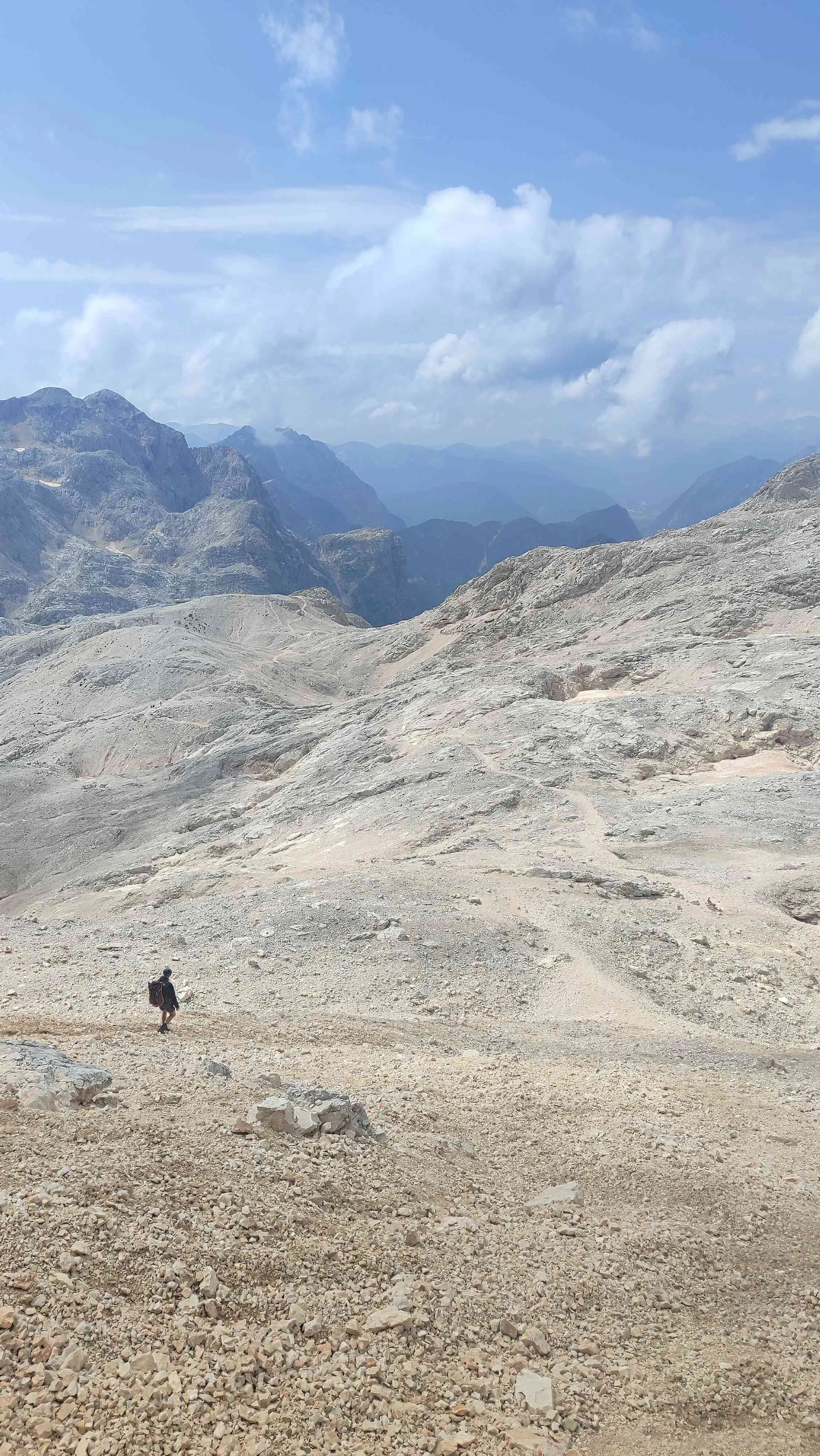
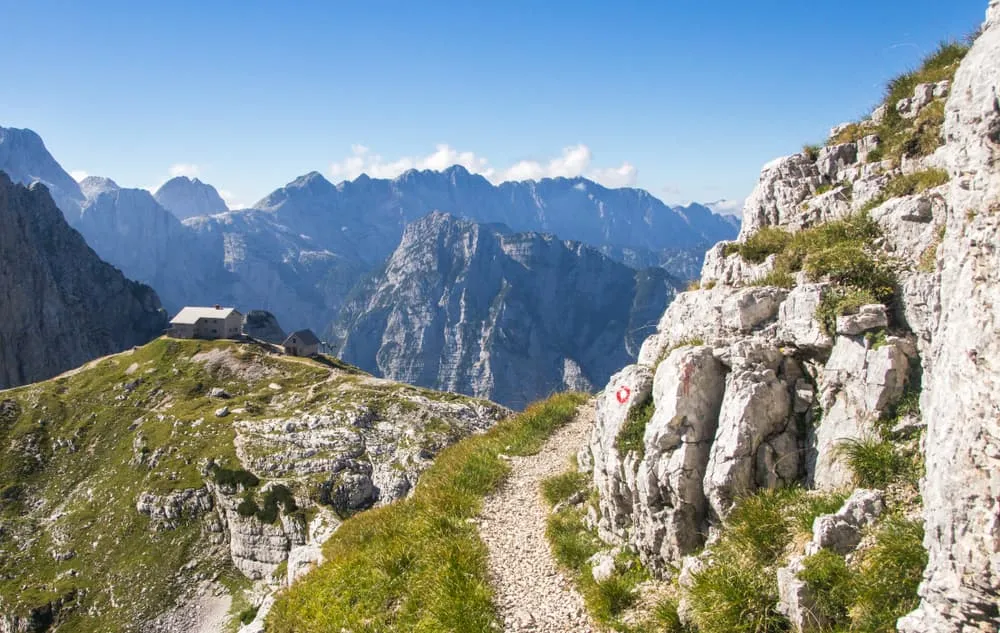
Hiking in Slovenia offers something that the bigger Alpine countries rarely manage: dramatic high-mountain terrain compressed into a country you can move across in a day. Most of the high ground sits inside Triglav National Park, Slovenia's only national park and one of the oldest protected areas in Central Europe, which means the trail network is dense, well-signed and actively maintained. Hiking in Triglav National Park you move through a landscape shaped by glacier and karst: hollow limestone ridges, cirque lakes at altitude, and underground drainage that means surface water disappears on the high plateaux.

What sets the Julian Alps apart from their Austrian or Italian neighbours is the double character of the range. The eastern slopes drop towards the deep, forested valleys of Bohinj and Bled — green, relatively sheltered, with valley guesthouses and lakeside paths at one end of the spectrum. The western slopes fall away sharply into the Soča Valley, where the river runs a colour that looks digitally altered, and where the walking shifts from pastoral to wild very quickly. The Karavanke, running along the border with Austrian Carinthia, offer a quieter third register: ridge walks without the altitude exposure of the central Julians. If you are combining Slovenia with Carinthia, the two regions connect naturally across that ridge.

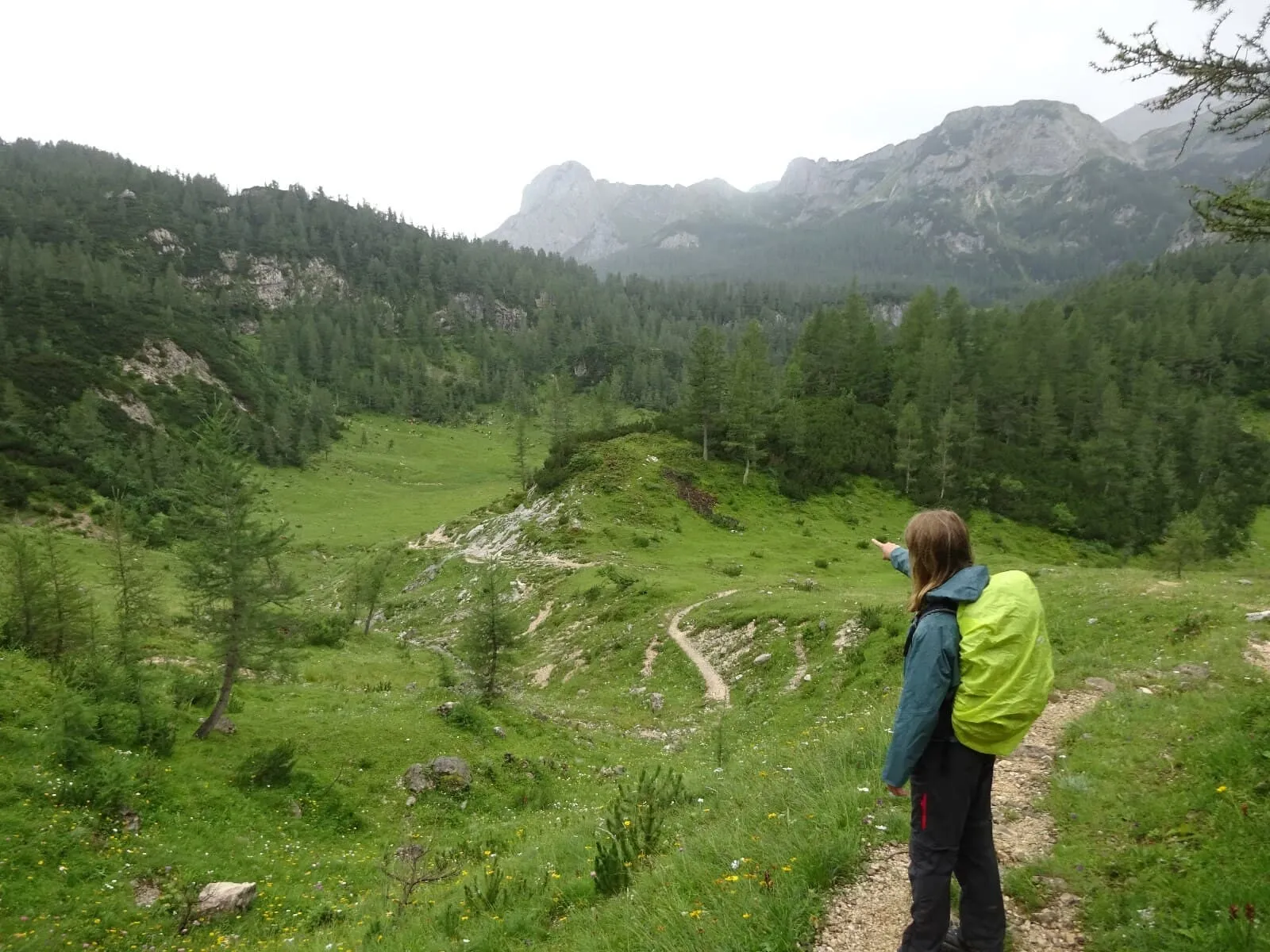
The marked-trail culture here is thorough. The Slovenian Mountain Society maintains more than 10,000 km of waymarked paths, and its 43 mountain huts inside the Julian Alps alone mean that a multi-day itinerary rarely requires wild camping. That infrastructure is what makes hiking in the Slovenian Alps practical and pleasant for walkers who are not alpinists.


Where to start: regions and getting there

The practical answer is Ljubljana: it is the main international gateway, served by direct flights from London Stansted, Gatwick, Luton and Manchester, and from Ljubljana you can reach every main hiking base by road. For Bled and Bohinj, the drive is under an hour and there are regular bus connections; this corridor is the easiest entry point for first-time visitors to Slovenia walking country. For the Soča Valley, the road climbs over the Vršič Pass — one of the most scenic mountain roads in Europe — and then descends into Bovec or Kobarid; figure on two hours from Ljubljana by road, with seasonal bus services on the main corridor. For the Kamnik–Savinja Alps and Logar Valley, the drive north-east from Ljubljana takes roughly an hour and a half and the area sees far fewer international visitors than the Julians. The Karavanke ridge is accessible from Kranjska Gora in the west of the Julian Alps cluster.

We do not print bus or train timetables here because they change seasonally; the Slovenian national transport planner is the right source for current connections. What matters for planning purposes is which valley base you choose, because each determines which trails are within easy reach and which mountain huts you can realistically reach on foot in a day.


The finest hiking regions in Slovenia compared

The Julian Alps are the obvious headline, and for good reason: hiking in the Julian Alps puts you inside Triglav National Park, with the full range from flat valley walks to steep, cable-assisted ridgeline traverses. The scenery is consistently dramatic — grey limestone walls, turquoise glacial lakes, long ridge views into Italy and Austria — and the hut network is dense enough to support multi-day itineraries at any pace. The drawback is popularity: the trails closest to Bled and around the main Triglav approaches are busy in July and August, and some mountain huts fill weeks in advance during peak season.

The Kamnik–Savinja Alps, north-east of Ljubljana, offer julian alps hiking-quality scenery with a fraction of the foot traffic. The Logar Valley is one of the most beautiful glacially carved valleys in Slovenia, and the ridge walks above it are technically moderate but feel genuinely remote. Facilities are fewer, which suits experienced walkers who prefer solitude over convenience.

The Soča Valley combines flat, easy riverside walking along one of Europe's most photographed rivers with serious alpine options above Bovec and Kobarid. It suits walkers who want variety within a single base: a morning on the river trail, an afternoon at a waterfall, and a tougher day in the mountains when the weather is settled. Historical layers from the First World War add an unexpected dimension to the walking here.

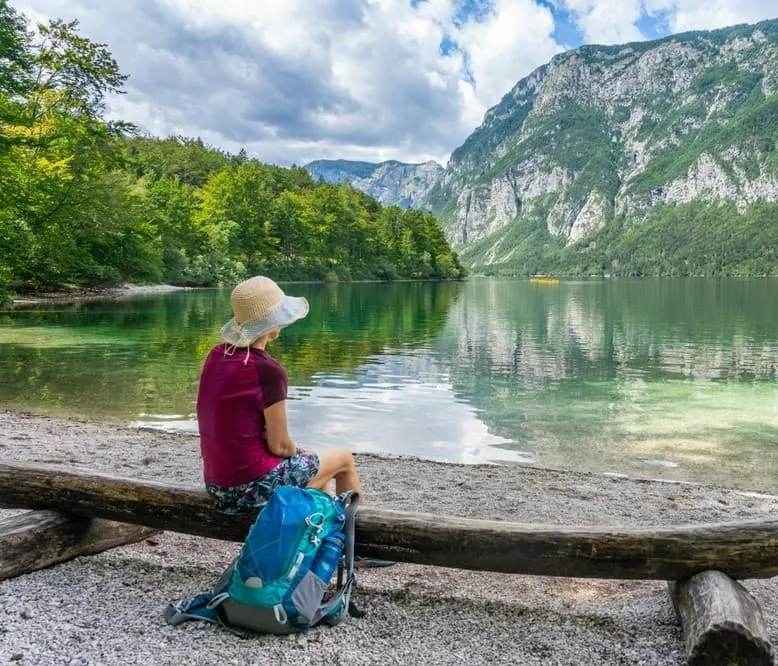
Bled and Bohinj function as two ends of a single valley corridor. Bled is the busier, more tourist-facing end with well-maintained lakeside paths and excellent transport links; Bohinj, at the valley's quieter western end, is the more natural base for multi-day walking into the heart of the Julian Alps. Hiking hiking slovenian alps terrain from Bohinj means gaining altitude quickly and reaching serious mountain country within a single walking day.

The Karavanke ridge is the choice for best hikes slovenia visitors who want long ridge walking without technical demands: the terrain is grassy rather than rocky, the views extend across both countries, and it connects naturally with Carinthian walking routes on the Austrian side.


The finest hiking regions in Slovenia compared

Multi-day hiking in Slovenia: our routes

A supported multi-day walking holiday in Slovenia means you arrive at the trailhead with a daypack, walk to the next overnight stop, and find your main luggage already there. Bookatrekking arranges the bed bookings along the route, coordinates luggage transfer between the valley-based overnight stops, and gives you access to our app with offline GPX navigation, stage-by-stage route notes and a weather forecast drawn from the coordinates of each hut. Current prices and departure dates are on the individual product pages.

We run four durations in the Julian Alps, and the right one depends on how much time you have and how much alpine exposure you want.

The Triglav Lake Loop (3 days) is the most compact option: a circular route from Lake Bohinj that takes in the Seven Triglav Lakes Valley and overnights in two mountain huts. It covers 36.5 km in total, with the longest day at 15.7 km. No via ferrata experience is required. It is the right starting point for walkers new to hut-to-hut trekking in the Julian Alps or those with limited time.

The Triglav National Park Adventure (4 days) covers 39.2 km on a route from Bohinj through the Mostnica Gorge and up to high-altitude huts at 2,210 m before returning via the Triglav Lakes Valley. The longest day is 14.5 km with 1,330 m of ascent; no via ferrata sections are involved. This is the most popular option for walkers who want genuine alpine terrain without the summit climb.

Both trips are also available with accommodation before and after the walking days: the Triglav Lake Loop (5 days including hotel nights) and the Triglav National Park Adventure (6 days including accommodation) add a valley hotel at the start and end, giving you time to settle in and depart without rushing.

For context on where these routes sit among the wider world of long-distance walking, the 20 most beautiful long-distance trails in Europe puts Slovenia's alpine walking in company with the Tour du Mont Blanc and the GR20.


Multi-day hiking in Slovenia: our routes

Slovenia's best-known route in brief

The classic multi-day itinerary in Slovenia is the hut-to-hut circuit of the Julian Alps: a route that links the valley bases around Triglav National Park through a sequence of mountain huts, high passes and lake basins. It is the route that most walkers mean when they talk about a week's hiking holiday in Slovenia, and it is the one that earns Slovenia its reputation among European long-distance walkers. Our dedicated guide to hut-to-hut hiking in Slovenia covers the stages in full, including hut names, booking windows, what to carry and when to go. This page does not duplicate that detail.

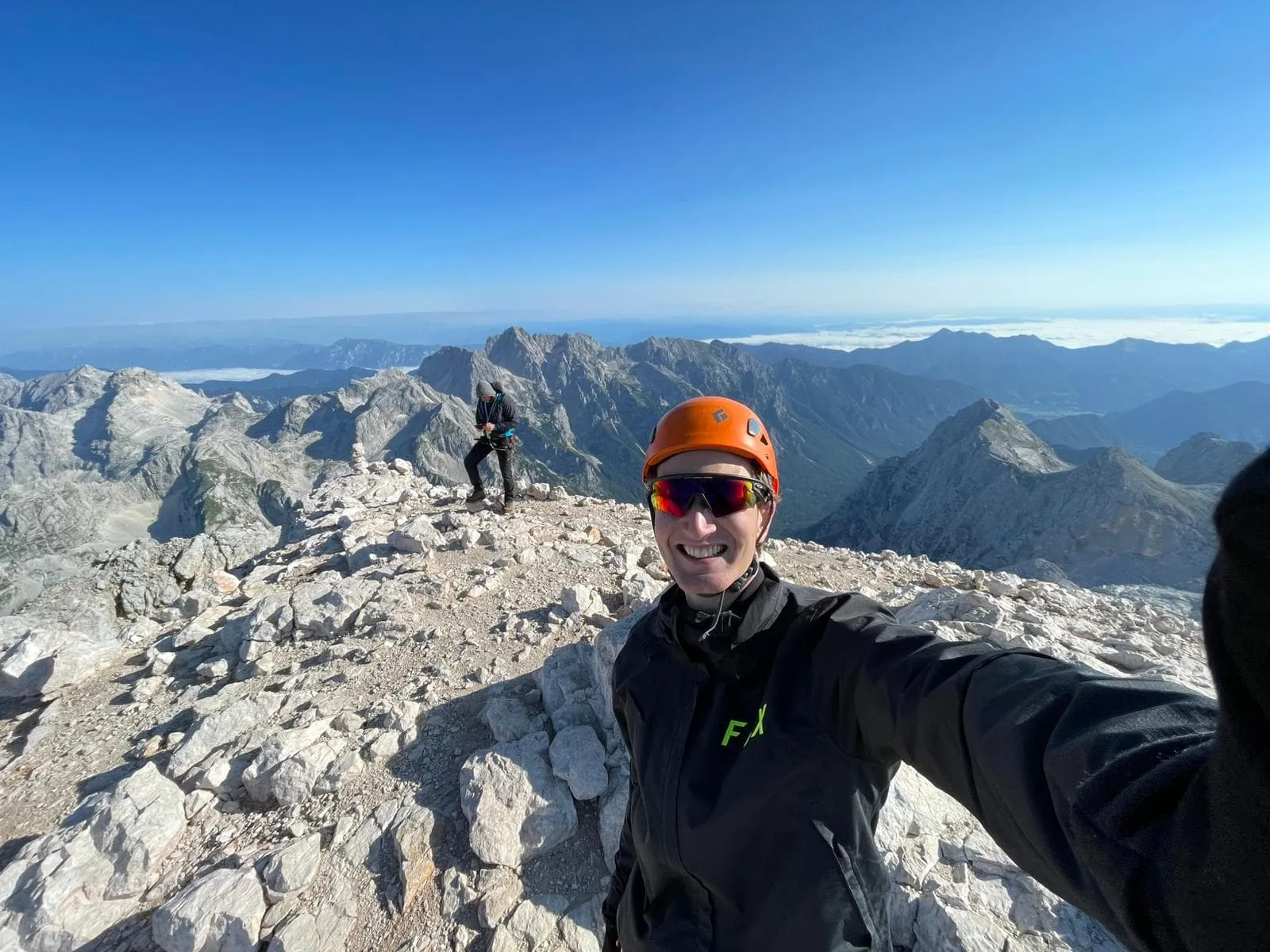
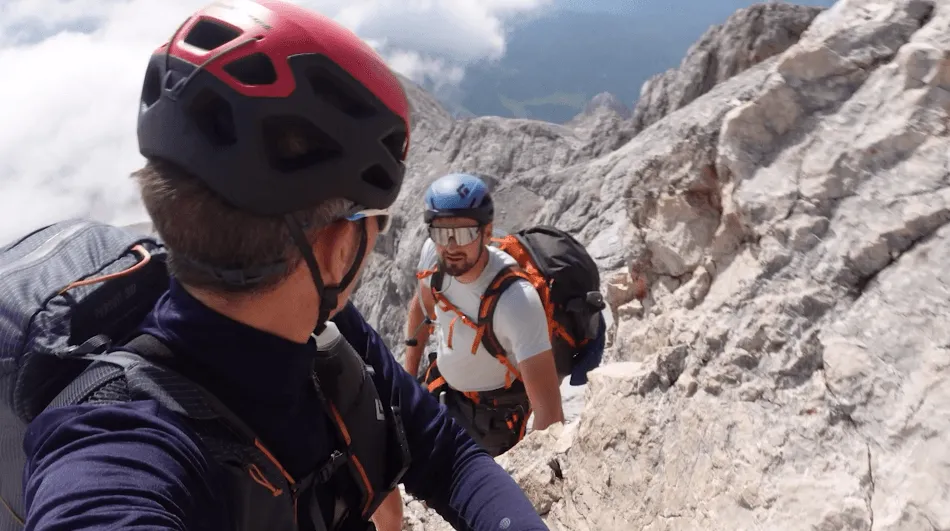
Mount Triglav, at 2,864 m, sits at the heart of the national park and is the natural summit objective for walkers who want to go higher. The upper section of the ascent involves fixed cables and a harness, and it is a genuinely demanding day out. Our guide to climbing Mount Triglav covers preparation, the route options and what to expect on the summit day. You can book the self-guided ascent as either the 3-day Mount Triglav Climb (42.2 km total, longest day 14.6 km with 2,000 m of ascent from Lake Bohinj) or the 5-day version including pre- and post-walk accommodation.


Day walks and shorter circuits

You do not need a multi-day itinerary to get something memorable from hiking in Slovenia. The lake and valley walking is genuinely excellent and has a much longer accessible season than the high routes.

Lake Bled hiking is the entry point for most visitors. The shoreline circuit is a lake bled hike of around 6 km that most walkers complete in under two hours at a comfortable pace, with the famous island and castle framing the view throughout. The path is surfaced and essentially flat; it suits all ages and fitness levels. Hiking in lake bled does not stop at the shoreline. The forested hills above the western end of the lake — Mala Osojnica and Ojstrica — offer short, steep climbs to viewpoints that look directly down onto the island, and these are the photographs you actually came for. Hiking lake bled Slovenia for a full day means combining the shoreline walk with one of these viewpoint climbs and then continuing along the Vintgar Gorge path, a 1.6 km boardwalk through a narrow river gorge a short distance from the town. The hiking lake bled circuit described above is achievable without any special equipment or prior mountain experience.

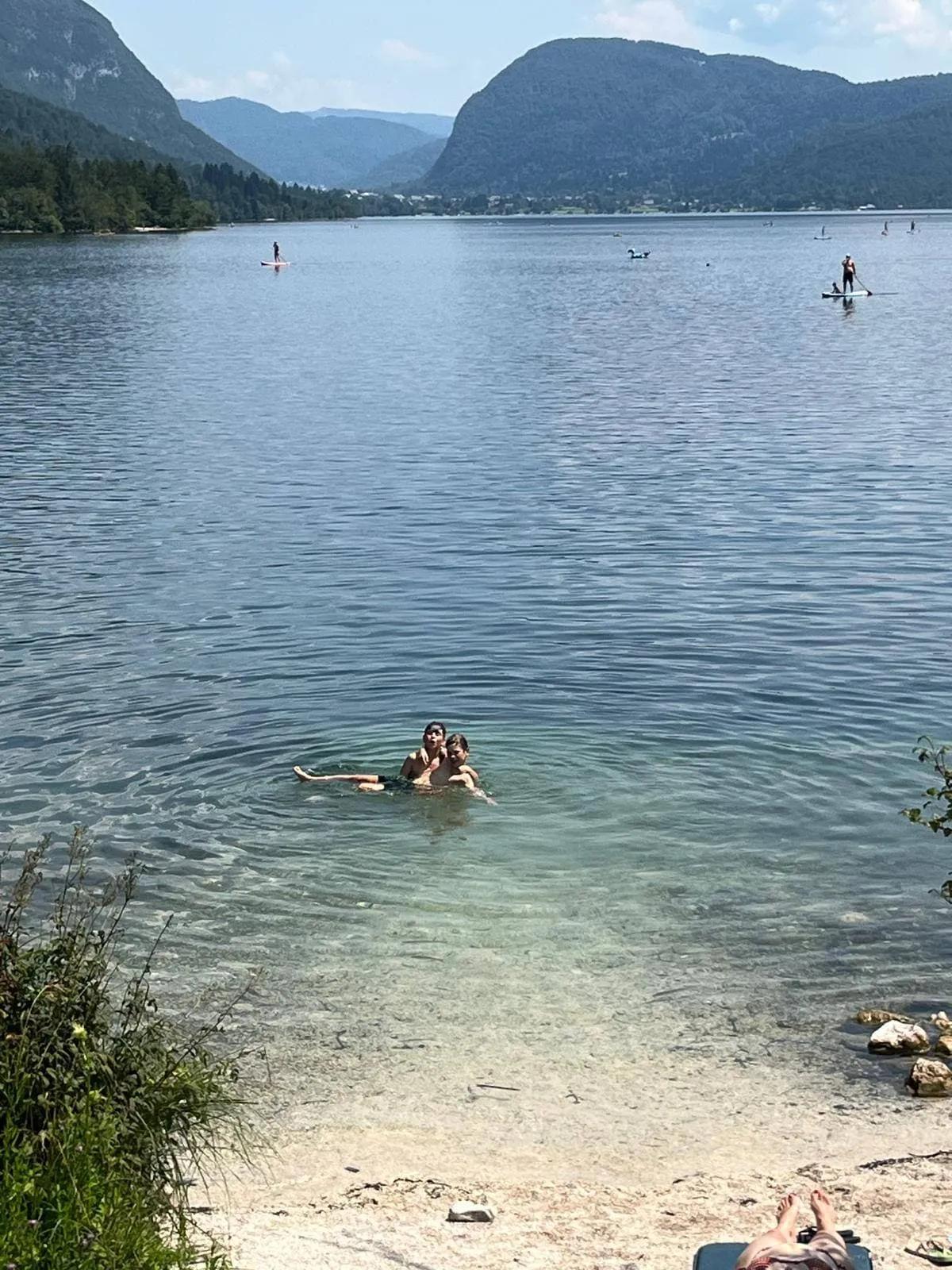
Lake Bohinj, at the valley's quieter end, has its own shoreline path and a cable car to Vogel that lifts you quickly to panoramic ridge walking without a full day's ascent. The Mostnica Gorge walk from Stara Fužina is one of the best short routes in the area: a riverside path through a dramatic slot canyon that requires nothing more than good footwear.

In the Soča Valley, the flat riverside trails beside the emerald water are easy and spectacular in equal measure; the Soča Trail connects a series of gorges, pools and historical sites along the valley floor. Waterfalls are a feature of the whole region, with Peričnik in Vrata Valley and Rinka in Logar Valley among the most visited.


How hard is hiking in Slovenia and who is it for

Hiking in Slovenia spans a wider range of difficulty than most walkers expect before they arrive. At one end of the spectrum are the flat lake-circuit paths at Bled and Bohinj, which are entirely accessible and require no mountain experience. At the other end are the summit approaches on Mount Triglav and the Julian Alps Traverse, where sections of exposed ridge involve fixed steel cables and a climbing harness.

The word "exposed" in a Slovenian hiking context means you are on a narrow path or scramble with a significant drop to one side and little natural protection — not technical climbing, but a situation where a fall would be serious. Via ferratas add permanent steel fixtures to these sections: ladders, cables and iron pegs that allow a harnessed walker to move safely across terrain that would otherwise require climbing skill. These are common on the higher routes in the Julian Alps and are well-maintained, but they require a harness, two carabiners and a helmet, and a degree of comfort at height.

For our supported multi-day trips, fitness rather than technical skill is usually the relevant question. The Triglav Lake Loop and the Triglav National Park Adventure involve no via ferrata sections; the main demands are sustained ascent on the first day (up to 1,330 m on the National Park Adventure) and the ability to walk 12-15 km on uneven mountain paths. If you walk regularly in hilly country and have a day's hiking fitness, these routes are within reach. The Triglav summit itinerary requires more preparation, and the detail of that is in our Triglav climbing guide.


Best time of year for hiking in Slovenia

The broad season for high-level hiking in Slovenia runs from late June through to early October, when the mountain huts are open and the high passes are typically free of snow. The valley walks at Lake Bled and Bohinj, and the lower Soča Valley trails, have a much longer window and are walkable from early spring into late autumn in most years.

Snow on north-facing high ground can persist into June at altitude and can return in September on the highest routes. The practical consequence is that the upper hut sections of the Triglav approaches are best attempted in July, August or the first half of September. Hut opening periods vary by year and by altitude, and we confirm current status when we book.

July and August bring the busiest trails and the warmest conditions, but also the most reliable afternoon thunderstorm risk. Storms in the Julian Alps build quickly on hot afternoons; the standard local practice is to start early, reach your overnight hut before midday if you are on an exposed ridge, and treat any darkening cloud on the western horizon in the afternoon as a reason to stop moving. The Bookatrekking app shows a per-hut weather forecast based on the hut's exact coordinates, which is more useful on ridge terrain than a general valley forecast and is updated throughout the day.

June and September are the quieter shoulder weeks: trails are less crowded, the light is often better for photography, and the mountain huts are more likely to have space without booking months ahead. September in particular offers good walking conditions on most routes, with stable weather in settled periods and the first autumn colour appearing in the larch forests by late in the month.


Accommodation, mountain huts and luggage transfer

A Slovenian walking holiday involves two very different types of overnight stop, and understanding the difference shapes how you pack.

Valley guesthouses and small hotels at Bohinj, Bovec, Kobarid and Kranjska Gora are comfortable, typically family-run, and include dinner and breakfast. They are the overnight option on the first and last nights of most itineraries and, on some routes, for valley-stage nights in the middle.

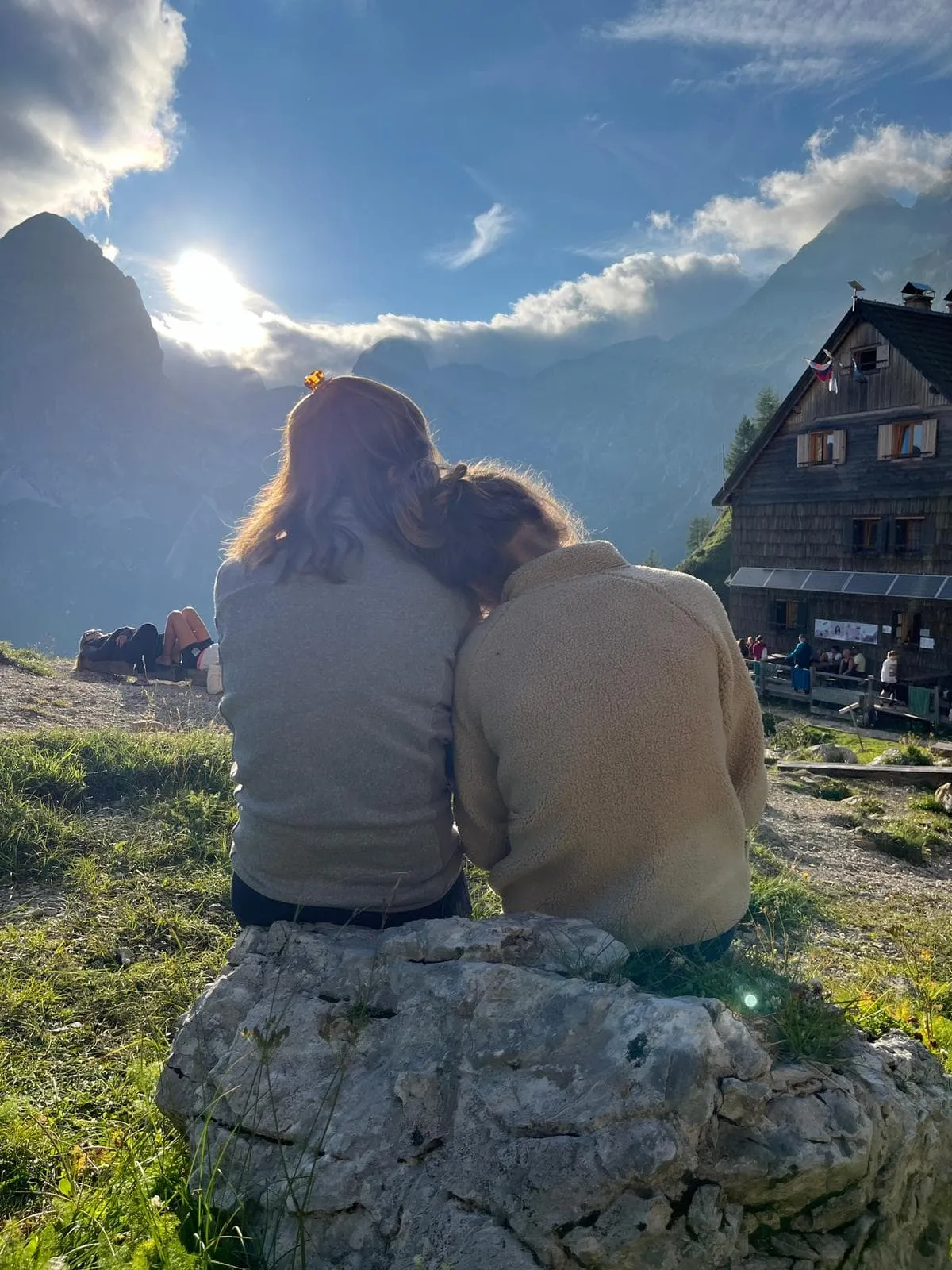
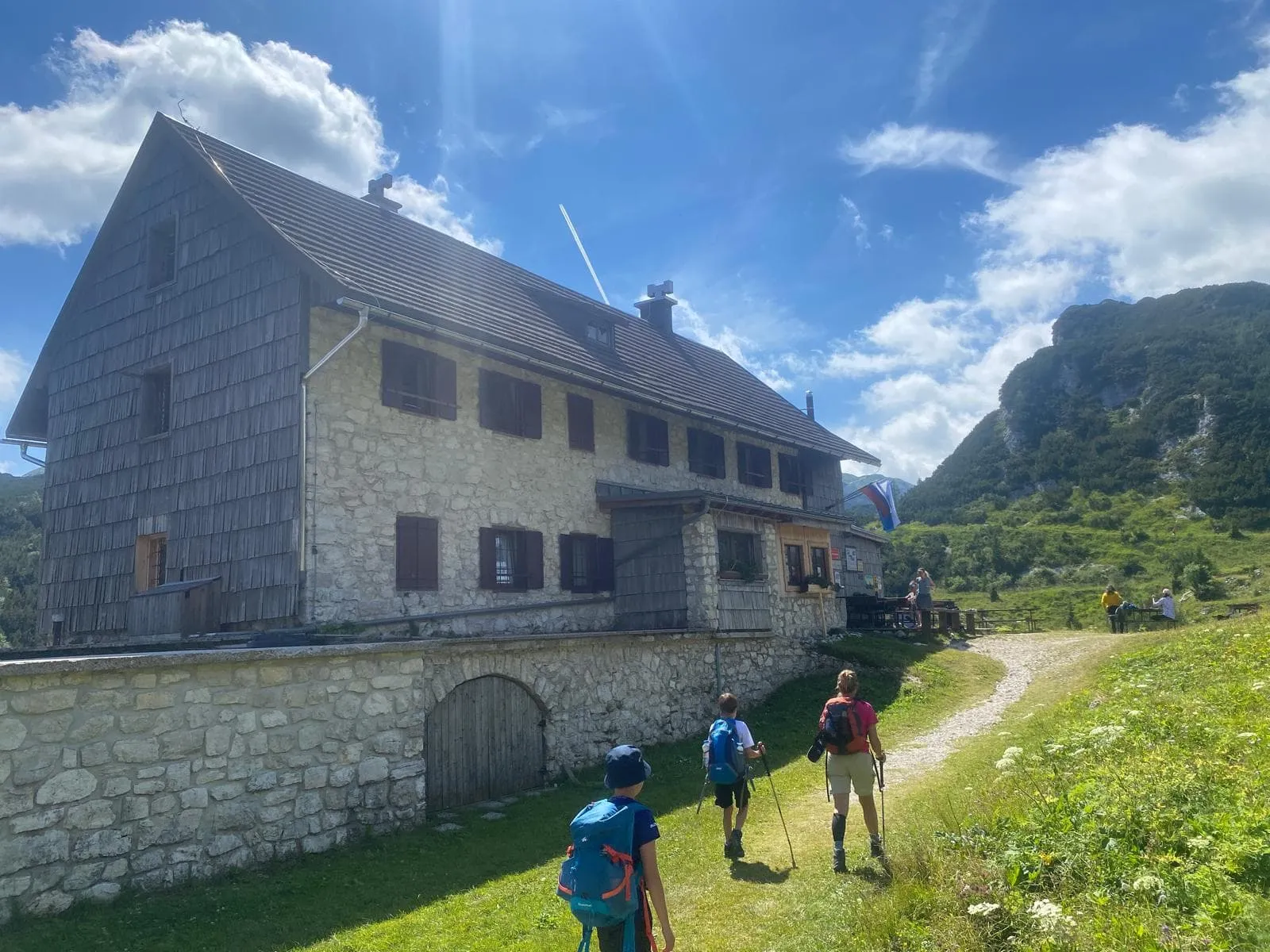
Mountain huts — the 43 inside the Julian Alps alone — are a different experience. Most are above the road network and are supplied by helicopter, which limits what they can offer. You sleep in a dormitory or small shared room; showers, where they exist, cost a few euros extra; the menu runs to hearty Slovenian stews, sausages, bean soups and štruklji. The atmosphere is warm and genuinely social. Booking ahead is essential in July and August: the most popular huts fill weeks in advance. We manage these bookings as part of your trip package.

Luggage transfer is available on the valley-based sections of our itineraries, where a vehicle can move your main bag between overnight stops while you walk. On the high-hut nights — where the hut is reachable only on foot — you carry everything you need for that night in a daypack. We are explicit about which nights fall into which category when you book, so you can pack accordingly. The Bookatrekking app includes offline maps, GPX files for each stage and a weather forecast tied to each hut's location, which is more useful on ridge terrain than a general forecast.


Which Slovenia trip suits you

First alpine multi-day walk: You have walked in hilly country but have not done hut-to-hut trekking before. Start with the 3-day Triglav Lake Loop for a compact introduction, or consider the 5-day version with hotel nights at each end if you want more time to settle in.

Experienced walker wanting a proper week's circuit: The 4-day Triglav National Park Adventure covers the core of the Julian Alps without via ferrata. The 6-day version including pre- and post-walk accommodation adds flexibility at both ends of the trip.

Summit-focused walker: The 3-day Mount Triglav Climb is the route to the top of Slovenia. Read the full preparation guide at our climbing Mount Triglav blog before booking. The 5-day version with accommodation includes valley hotel nights before and after the climb.

Family or slow traveller based in Bled or Bohinj: Day walks from the lake — the Bled shoreline circuit, Mala Osojnica, Vintgar Gorge, the Mostnica Gorge from Bohinj — do not require a booked multi-day package. When you are ready to go further, the 3-day loop is the natural next step.

For the full picture of how Slovenia's routes compare with other European long-distance walks, read our guide to the 20 most beautiful long-distance trails in Europe. For all stage detail, hut names and booking windows on the classic Julian Alps circuit, the dedicated hut-to-hut hiking in Slovenia guide is the place to start. Current prices and departure dates for every product are on the individual trip page.


Frequently asked questions about hiking in Slovenia

  • Are there bears in the Julian Alps?

    Yes, brown bears are present in Slovenia, though they are far more common in the southern forests around Kočevje than in the Julian Alps. Sightings in Triglav National Park are rare. Bears in Slovenia are generally shy and avoid people; hikers are not required to carry bear spray, and no specific encounter protocol is legally mandated for the Julian Alps region.

  • What is the best hike in the Julian Alps?

    The hut-to-hut circuit through Triglav National Park is widely regarded as the finest multi-day walk in the Julian Alps. For day walks, the route from Lake Bohinj through the Mostnica Gorge to Vodnikov Dom combines accessible terrain with dramatic alpine scenery. The Seven Triglav Lakes Valley is consistently rated among the most beautiful single-day routes in Slovenia.

  • How long is the walking trail around Lake Bled in Slovenia?

    The circular trail around Lake Bled is approximately 6 km long and takes most walkers between one and one and a half hours to complete at a relaxed pace. The path is surfaced and largely flat, making it accessible for all fitness levels. Most walkers extend the day by adding the short, steep climb to Mala Osojnica viewpoint above the western shore.

  • Which way is best to walk around Lake Bled?

    Either direction works well; there is no single preferred way. Walking clockwise from the town means you reach the classic island viewpoint from the east early in the route, while anti-clockwise puts the Ojstrica and Mala Osojnica viewpoints at the start. In practice, most walkers follow whichever flow feels natural from the car park or bus stop where they begin.

  • How many days are needed to walk the Juliana Trail?

    The Juliana Trail is a 270 km circular long-distance trail divided into 16 stages of roughly 17.5 km each. Completing the full circuit at a stage a day takes approximately 16 days of walking. Many walkers complete individual sections over shorter trips. Stages are designed so you can pause at the end of any one and return later to continue.

  • How difficult is the Via Alpina?

    The Via Alpina is a network of five long-distance routes crossing the Alps from Slovenia to Monaco. The sections through Slovenia follow the Red Trail, which includes high-level mountain terrain with some exposed passages and via ferrata sections in the Julian Alps. It is rated as demanding, requiring alpine experience, good fitness and the ability to navigate in mountain conditions. It is not a beginner route.

  • Can a beginner climb Triglav?

    A fit beginner with no via ferrata experience should not attempt Triglav without proper preparation. The upper 400 m of the ascent involves fixed cables and requires a climbing harness, helmet and carabiners. With guided support and adequate fitness, it is achievable — but "beginner" in a lowland walking sense is not sufficient preparation. Read the full detail in our guide to climbing Mount Triglav before deciding.

  • Is it possible to swim in the Soča Valley in Slovenia?

    Yes, swimming in the Soča River and its tributary pools is popular in summer. The water is glacier-fed and cold even in August; the turquoise colour comes from the mineral content of the karst rock it drains through. Several accessible swimming spots exist near Bovec and along the river trail between Bovec and Kobarid. Check local signage for any restricted areas inside Triglav National Park.

Packing List for the Julian Alps

It doesn't matter where you are trekking or for how long: carrying the right equipment with you is paramount. For a hiking trip in the mountains, a good is backpack essential. Its size will depend on how many days you will be spending in the mountains, the season, and the clothes you will be taking with you. We have prepared a packing list with some essential clothing that you should include and some extras that you may find useful:
  • Essentials

  • Extras

Safe Hiking Tips for the Julian Alps

When hiking, it is wise to be aware of a few points. Even if this is not your first time, you should never underestimate the mountains. Good tour planning and compliance with the regulations in the mountains will significantly increase safety. To ensure that your hiking adventure is a safe and enjoyable experience, here below you can find a list of 8 recommendations for safe hiking in the mountains:
  • Know your limits

    Hiking the Julian Alps is the perfect outlet to escape from daily life. It is an endurance sport along with a beautiful nature experience with a positive effect on body and mind —as long as one is in good shape and has a realistic picture of one's possibilities and limits—. Never overestimate yourself or underestimate the route. Don't overdo it! Always choose the slower option and take more time for your plans. Hiking under time pressure is not fun and at too fast a pace it can be dangerous. Be wise!

  • Plan carefully

    Good planning is half the work! Hiking maps, literature, the Internet and expert advice are invaluable when planning the route of the Julian Alps and enable you to determine the length, altitude difference, difficulty and conditions of the hike. When planning group treks, the itinerary should always be planned for the weakest member of the group! The weather in the mountains can change incredibly quickly and rain, wind and cold all increase the risk factor. For this reason, always check the weather forecast beforehand and contact our trekking experts to find your way before you start.

  • Be fully equipped

    Equipment is everything. In the most extreme case, it makes the difference between life and death, and in any case, it definitely makes the difference between having fun and having a bad time. Food and water, sunscreen and waterproof and warm clothes must always be in your backpack, as well as a first aid kit and a mobile phone with a full battery (in case there is an emergency). However, packing light makes hiking easier, so don't take too much extra luggage with you. Your equipment should always be suitable for the terrain you'll be hiking on in the Julian Alps.

  • Wear suitable footwear

    Good walking shoes protect your feet and provide a better fit. Shoes with a good fit, with non-slip soles, water-resistant and lightweight are a must for additional walking pleasure during the Julian Alps. Trail running shoes are great for a weekend in the mountains, but on longer hikes or more technical trails, you'll want at least A/B hiking boots. That means it is recommended wearing high mountain shoes that are water-repellent with extra ankle support to prevent sprains.

  • Stay on marked trails

    Julian Alps has endless marked hiking trails, which are controlled and maintained and should not be deviated from. It may be tempting, but it's not a good idea to take shortcuts or alternative routes through unmarked terrain. It increases the risk of disorientation and you're more likely to get lost and have accidents or fall in the mountains. Even steep slopes of packed old snow are often underestimated and dangerous. Are you in doubt? Better don't do it. For easy navigation we work with our trusted partner Komoot, whose interactive maps, also available offline, provide you with the necessary digital means to get from A to B. As a backup, make sure to bring a hiking guide or a paper map with you. FYI, 75% of stumbles occur due to carelessness on marked paths or roads, not in open terrain!

  • Take regular breaks

    Remember you're on a hiking trip. Timely and regular breaks not only provide welcome relaxation but also make it possible to enjoy the Julian Alps. The body needs a regular food and drink intake to maintain performance and concentration. Our advice is that if you have little time, it's better to follow the short itinerary than to speed up the long one.

  • Stay reachable

    If you are hiking solo or in small groups it is advisable to inform people back home about your plans, what route you are taking and when you plan to return. Even small incidents can lead to unpleasant emergencies so make sure you are available at all times. Bring a charged phone containing at least the phone numbers of immediate family members, your accommodations en route and the emergency phone numbers operating on the Julian Alps.

  • Respect nature

    Leave no rubbish behind, prevent noise, stay on the marked trails, do not disturb wildlife or grazing animals, and respect protected areas.

Where Can I Book the Julian Alps?

At Bookatrekking.com you can book the self-guided Julian Alps and many other treks. We take care of all the details for you, including arranging accommodations and providing you with relevant information well in advance of your trek. Find our offers here. Our easy-to-use platform allows you to browse and compare different trekking options and to find the perfect fit for your interests, abilities, and budget.

If you have any questions about a specific trek or need help choosing the right one for you, our team of trekking experts is here to assist you. Simply reach out to us and we will be happy to provide you with personalized recommendations and advice to help you plan the trekking adventure of a lifetime.

About Us

At Bookatrekking.com, you will find the trek that will make your life unforgettable. Whether you want to explore the Inca Trail or climb Kilimanjaro. Bookatrekking.com has a wide and varied range of first-class treks. No false promises are made here. Transparent prices and bookings are fixed instantly. Find, compare, book and trek!
Read more about us
About Us
About Us