Gesäuse National Park
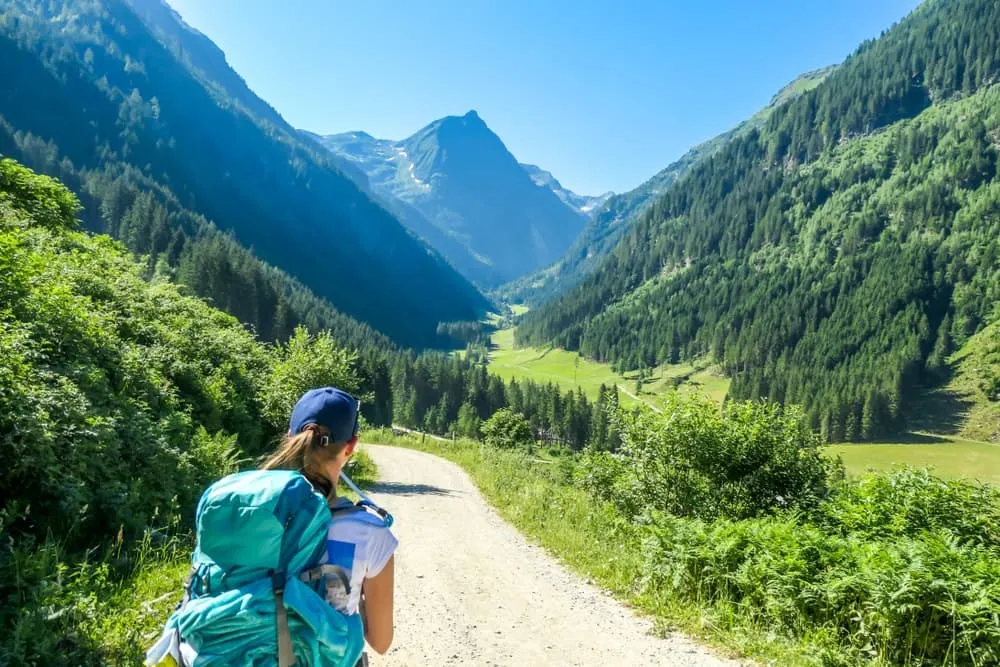
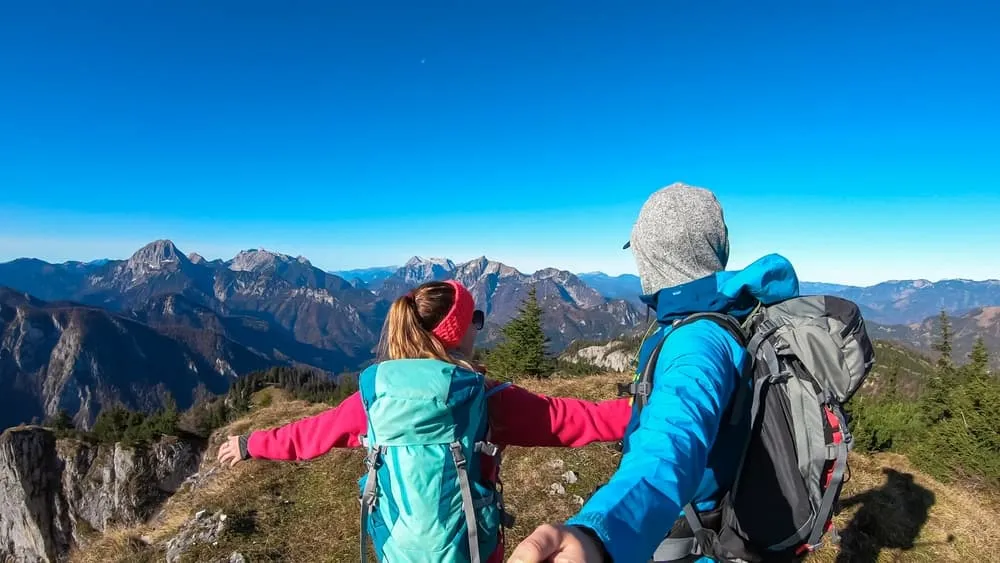
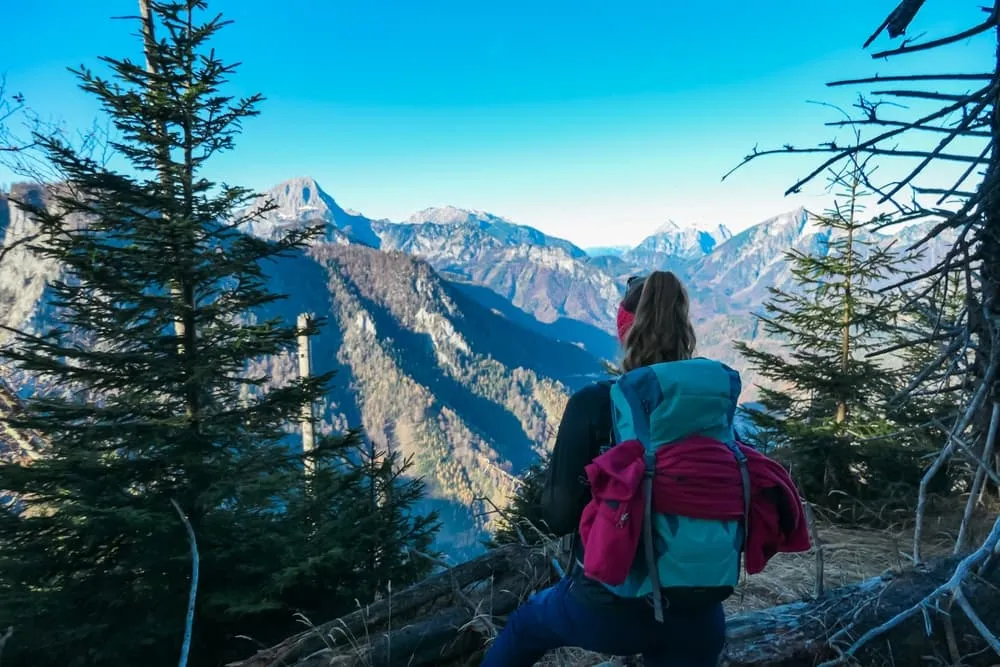
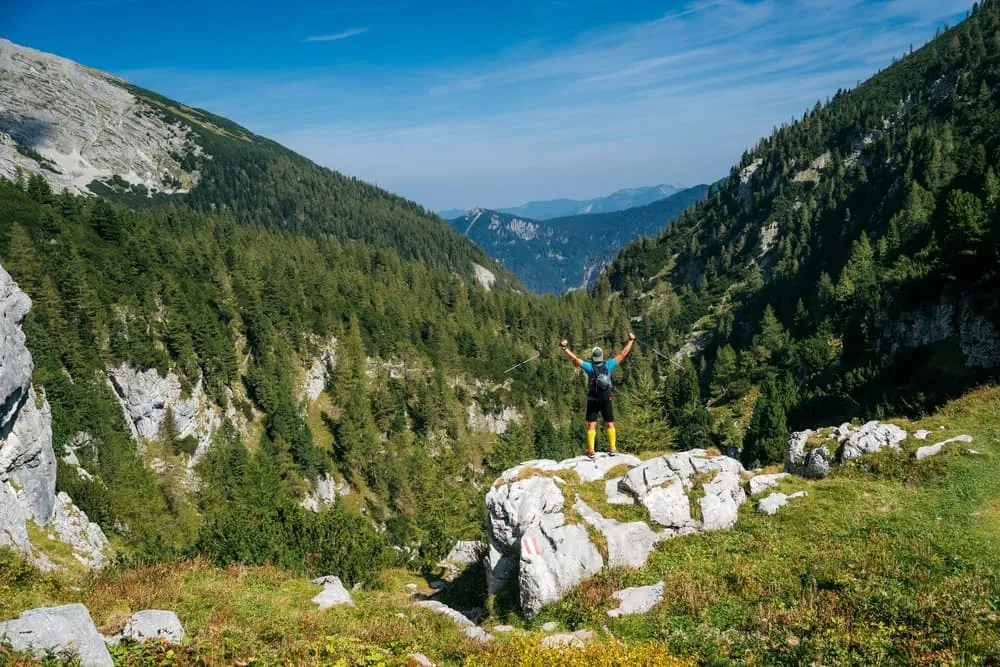
Hiking in the Gesäuse means steep, limestone, and dramatic. The Enns carves its way through sheer rock walls, the Johnsbach valley opens up behind them into a quiet mountaineering village, and the great peaks — Hochtor, Buchstein, Planspitze — are goals for experienced mountain hikers. Down in the valley, gentle paths follow the Enns, easily managed by families and beginners. All three of our bookable Gesäuse hut tours run through here, and the region is especially well suited to anyone wanting to experience their first night in a mountain hut without having to tackle a demanding summit straight away. Compared with the Hochschwab, the Gesäuse is more varied and compact; compared with the Schladming Tauern, it's rockier and more technical.
The southern Dachstein: Ramsau and the southern walls
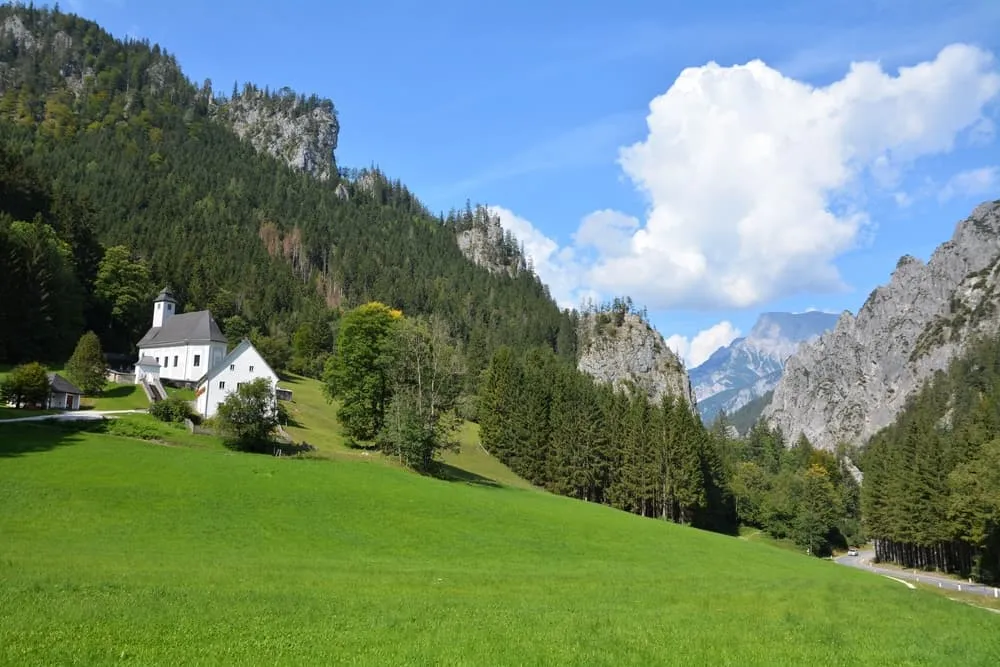
The Ramsau sits on a broad plateau directly beneath the sheer limestone walls of the Dachstein. Above, it's alpine and serious; below, alpine meadows, gorges such as the Silberkarklamm, and family-friendly circular routes open up. Families are well catered for here: the alpine pastures are staffed, the paths well marked, and cable cars bridge the toughest sections of ascent. The area makes a good base for day hikes — and the Dachstein circular trail, which loops around the entire massif, gets its own section further below. Compared with the Gesäuse, the southern Dachstein is gentler to start with; compared with Schladming, it's quieter and less developed.
Hochschwab and the Grüner See
The Hochschwab is the lesser-known face of Styria's mountains, and that's its greatest strength. The karst plateau near Seewiesen and the Aflenzer Bürgeralm is wide, remote and short of water, and if you're after openness rather than rock, this is one of the quietest corners of the Eastern Alps. The Grüner See near Tragöß is the best-known single destination: depending on the season, the crystal-clear water shimmers emerald green or deep ultramarine, and an easy loop around the shore needs nothing more than ordinary shoes. Compared with the Gesäuse, it lacks the drama of sheer walls; compared with Schladming, there's hardly any lift infrastructure. Ideal for hikers who value solitude and space over via ferrata anchors and cables.
Schladming Tauern
Hiking around Schladming is the most family-friendly option in Styria's alpine north. The ancient bedrock of the Tauern is rounder and gentler than the limestone of the Gesäuse, cable cars from Schladming, Rohrmoos and the Reiteralm open up the higher altitudes, and the Untertal valley, with its Wilde Wasser stream and the Riesach Falls, is one of Styria's most beautiful valleys. Clear mountain lakes wait behind almost every ridge. Compared with the Gesäuse, access is easier and the infrastructure more modern; compared with the Hochschwab, there's more activity and more places to stop for refreshments. For families with children who aren't yet sure how much hut-to-hut hiking they want, Schladming is the ideal base.
Southern Styria: hiking in wine country
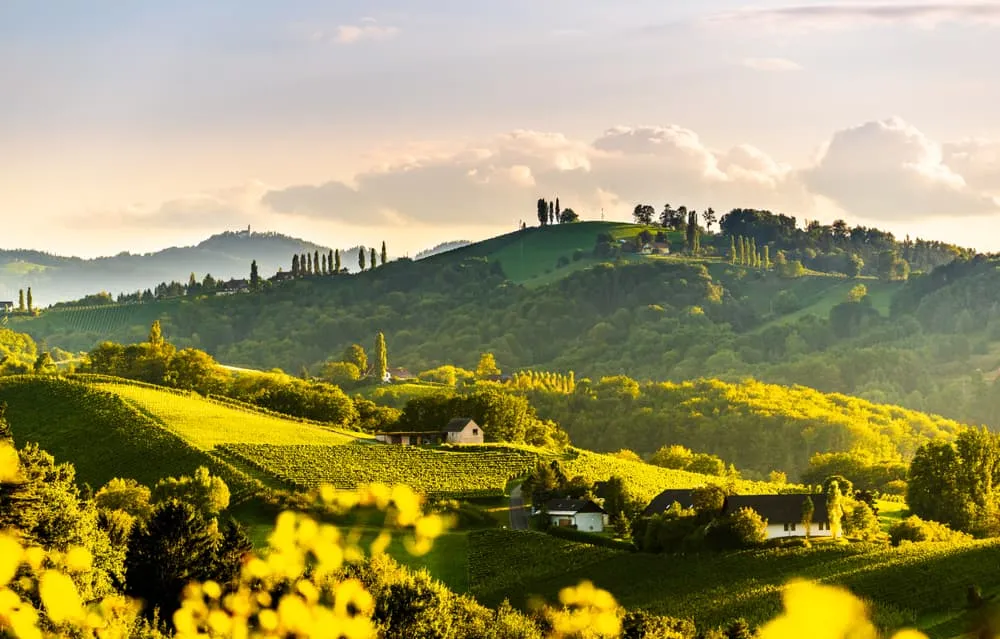
Hiking the southern Styrian Wine Road is a category all of its own, with little to do with alpinism. The hills around Gamlitz, Ehrenhausen, Leutschach and Kitzeck are gentle, the paths wind between vines and small woods, and the border hills towards Slovenia offer sweeping views on a clear day. You stay in a guesthouse or winery, and eat and drink at a Buschenschank. For anyone who sees hiking as a matter of pleasure and has no need for hut-life romance, southern Styria is this region's strongest argument. Compared with the north, there are no technical demands at all; compared with Tyrol or Salzburg, it's an entirely different character altogether.