Which valley suits you? Here are Vorarlberg's five faces, side by side.
Montafon: Silvretta, Lünersee and the great high-level routes
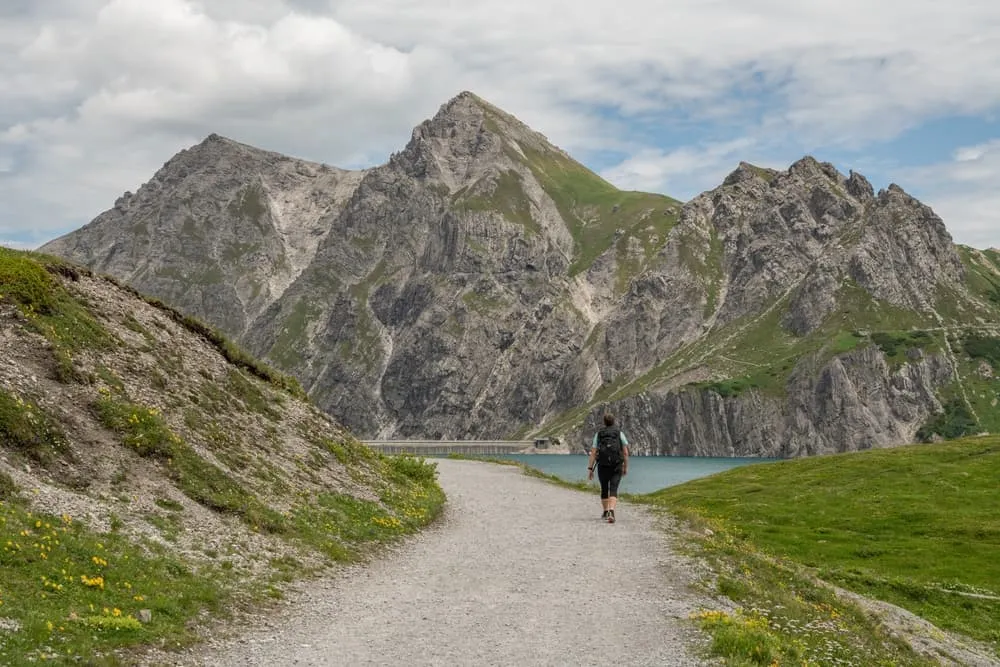
Montafon is Vorarlberg's most alpine valley. Three mountain ranges meet here: the rugged Rätikon, the glaciated Silvretta, and the unspoilt Verwall. The Silvrettastausee reservoir on the high alpine road, the Lünersee in the Brandnertal, and the lakes around the Bielerhöhe are the best-known bodies of water in this landscape.
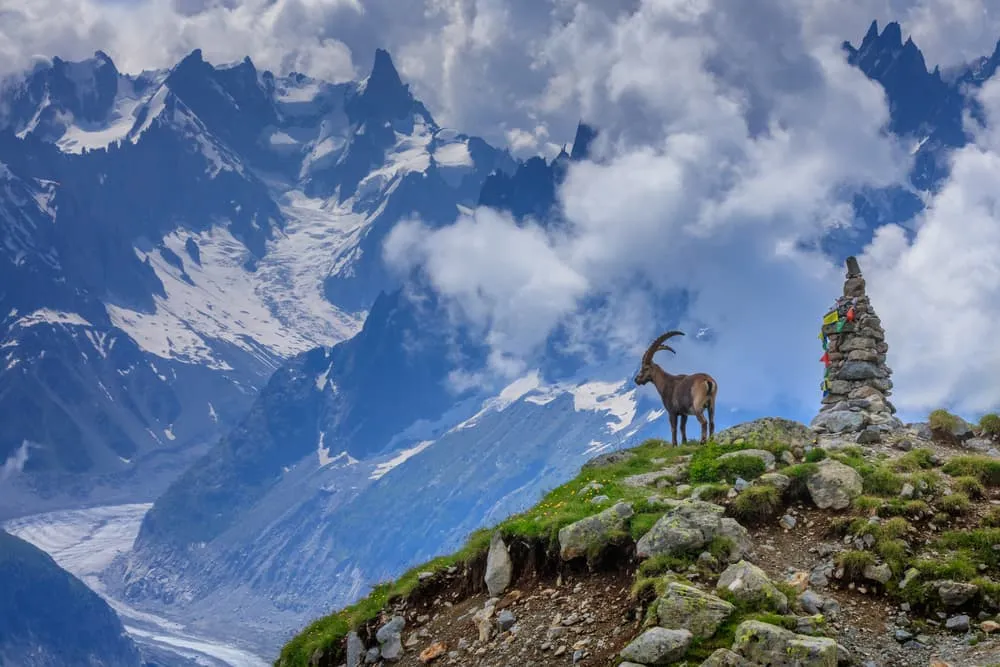
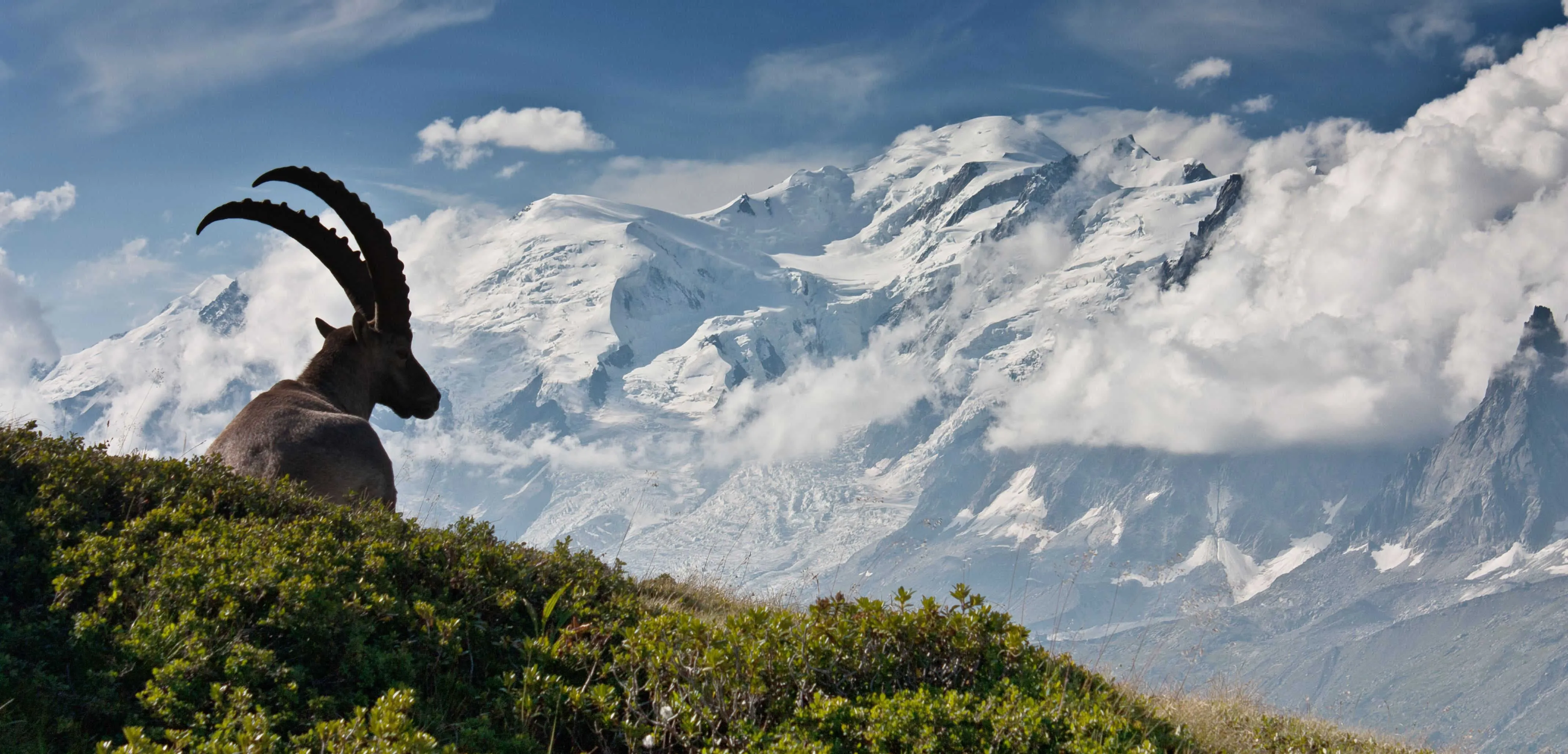
Hiking in Montafon means high-level routes with glacier views towards the Piz Buin, multi-hour ascents and descents between valley and alpine pasture, and ibex on the ridges. A hiking holiday in Montafon suits anyone wanting genuine alpine character without being tied to via ferratas. The bases of Schruns, Gaschurn and Gargellen are easily reached. For beginners wanting to go alpine, Montafon is more demanding than the Bregenzerwald, but manageable. Compared with the Kleinwalsertal: Montafon goes higher, is rougher, and feels more remote.
Bregenzerwald: cheese pastures, timber villages and the Kanisfluh
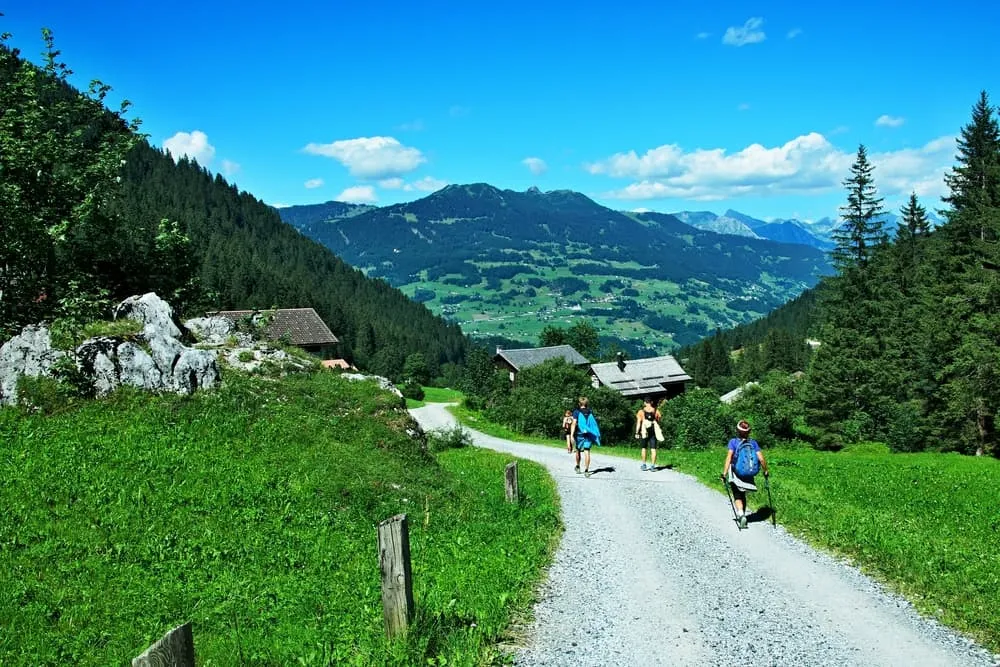
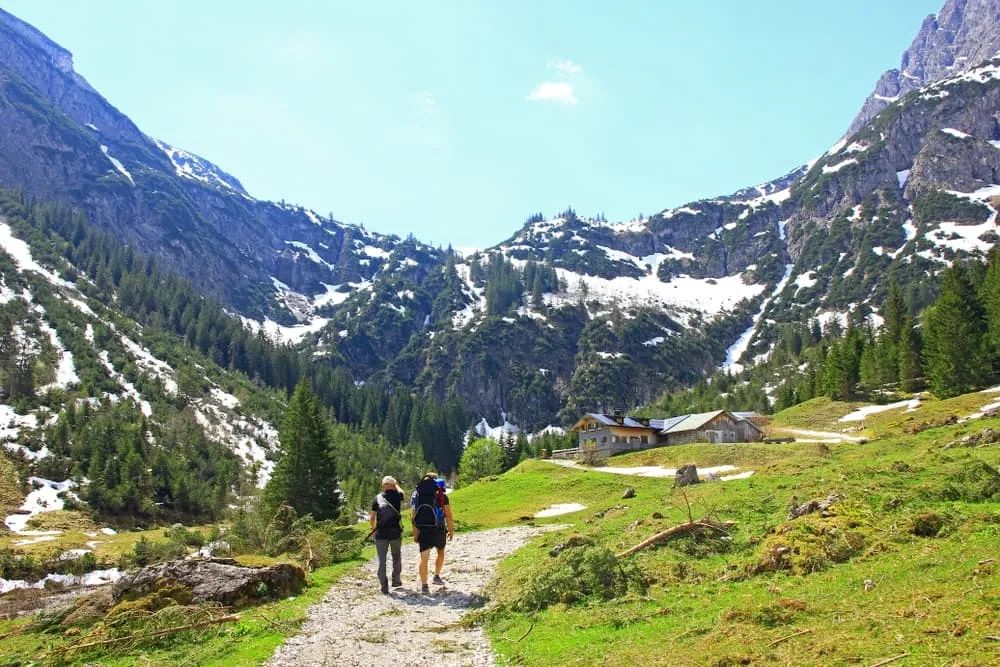
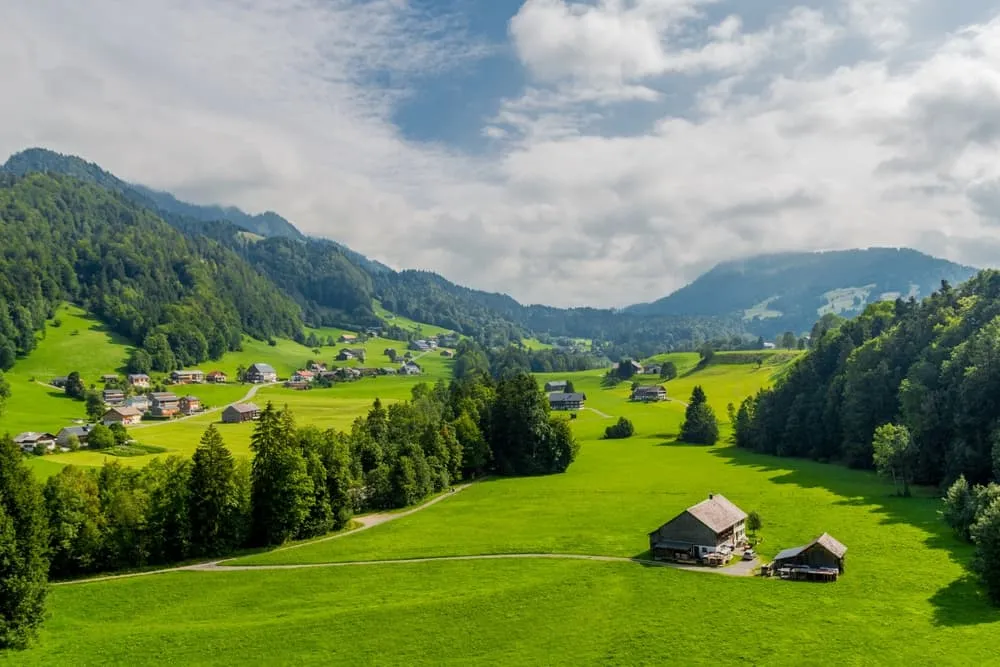
The Bregenzerwald is the gentlest of Vorarlberg's major hiking valleys. Here you walk through foothill landscapes, past staffed cheese-making alpine pastures, and through villages renowned for their timber architecture: Bezau, Schwarzenberg, Mellau, Damüls, Au and Schoppernau.
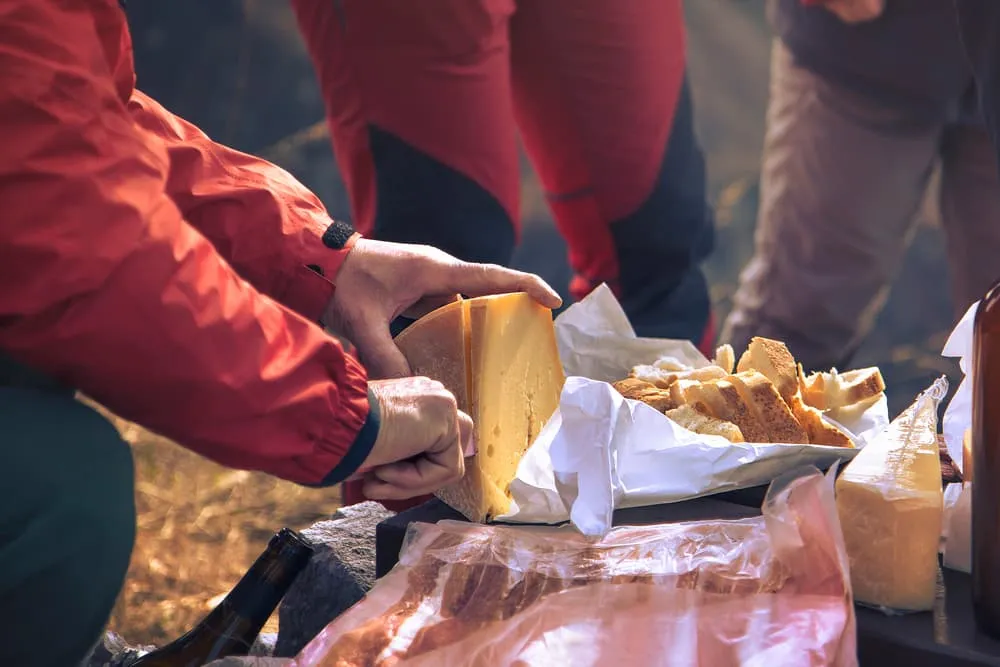
A hiking holiday in the Bregenzerwald often follows the Cheese Road, a network of paths linking dairies, alpine pastures and villages. The Kanisfluh above Mellau and Au is the valley's landmark: a long rocky ridge offering views across the entire Bregenzerwald. Hiking in the Bregenzerwald means good huts and guesthouses, shorter ascents and descents than in Montafon, and more green, less rock. For anyone wanting their first multi-day hike in more alpine terrain, the Bregenzerwald is the gentler introduction.
Kleinwalsertal: Walser villages in a dead-end valley
The Kleinwalsertal is an Austrian enclave accessible only from Oberstdorf. The villages of Riezlern, Hirschegg, Mittelberg and Baad sit in a narrow valley that ends at the Widderstein and the Walmendingerhorn in the south. The Walsers, a group of medieval settlers from Valais, built villages here and preserved their independence.
Hikes in the Kleinwalsertal thrive on flower meadows in early summer, high-level routes between the Ifen, Widderstein and Walmendingerhorn, and straightforward access from the Allgäu. The valley suits anyone wanting to go alpine without travelling far. It's more alpine than the Bregenzerwald but not as rugged as the Silvretta. More on this in section 5.
Arlberg and Lechquellengebirge: wild and little-walked
Lech, Zürs, Stuben and Warth are a ski region in winter and quiet starting points for one of Vorarlberg's least-known hiking areas in summer. The Lechquellengebirge between the Formarinsee, the Rote Wand and the Klostertal is rugged, steep and rarely walked. Here, you'll often have the paths to yourself.
The Formarinsee near Lech is one of Vorarlberg's most beautiful mountain lakes and also a starting point for demanding high-mountain routes. A crossing into the Lechtal in Tyrol is possible. The Arlberg area isn't suited to a first alpine trip, but it's ideal for anyone who has gained experience in Montafon and the Bregenzerwald and is looking for something quieter.
Rätikon and Brandnertal: limestone walls on the Swiss border
The Rätikon lies in south-western Vorarlberg, right on the border with Graubünden. Pale limestone walls, towers and ridges such as the Schesaplana, the Drei Türme and the Zimba define the scenery. The Brandnertal, with the Lünersee, is the best-known access point: from the Lünerseebahn cable car, broad high-level paths lead on with views of the rock walls.
Routes in the Rätikon are technically more demanding than in the Bregenzerwald or Kleinwalsertal, but the scenery rewards the extra effort. Anyone familiar with the limestone walls of the Dolomites will feel instantly at home in the Rätikon. Compared with Montafon: here rock and limestone dominate, rather than glaciers and shale.