

Walking in Luxembourg: the finest regions, routes and multi-day tours

Walking in Luxembourg: the finest regions, routes and multi-day tours
Trekking experts per destination
Free cancellation up to eight weeks in advance
Quick personal advice

Search for "walking in Luxembourg" and the sandstone cliffs of the Müllerthal usually spring to mind first, yet the country actually has five quite distinct walking regions, and choosing between them makes all the difference to how your trip turns out. The rocky Müllerthal, also known as Little Luxembourg Switzerland, around Echternach and Berdorf. The Éislek or Ösling, with the Ardennes valleys of the Our and Sûre around Vianden and Clervaux. The vineyard slopes of the Moselle. The rolling Guttland around the capital. And the old mining country of the Minett in the south. What makes this country so practical for walkers: it's close by, the path network is superbly signposted, public transport is entirely free, and there are two long-distance routes with hotels spaced a day's walk apart. At Bookatrekking we book your hotels for you, transport your luggage from stage to stage, and give you access to an app with offline maps, GPS tracks and an up-to-date daily weather forecast. This guide covers all five regions, the multi-day tours, the best day walks, difficulty, when to go and where to stay.


What makes walking in Luxembourg so special?

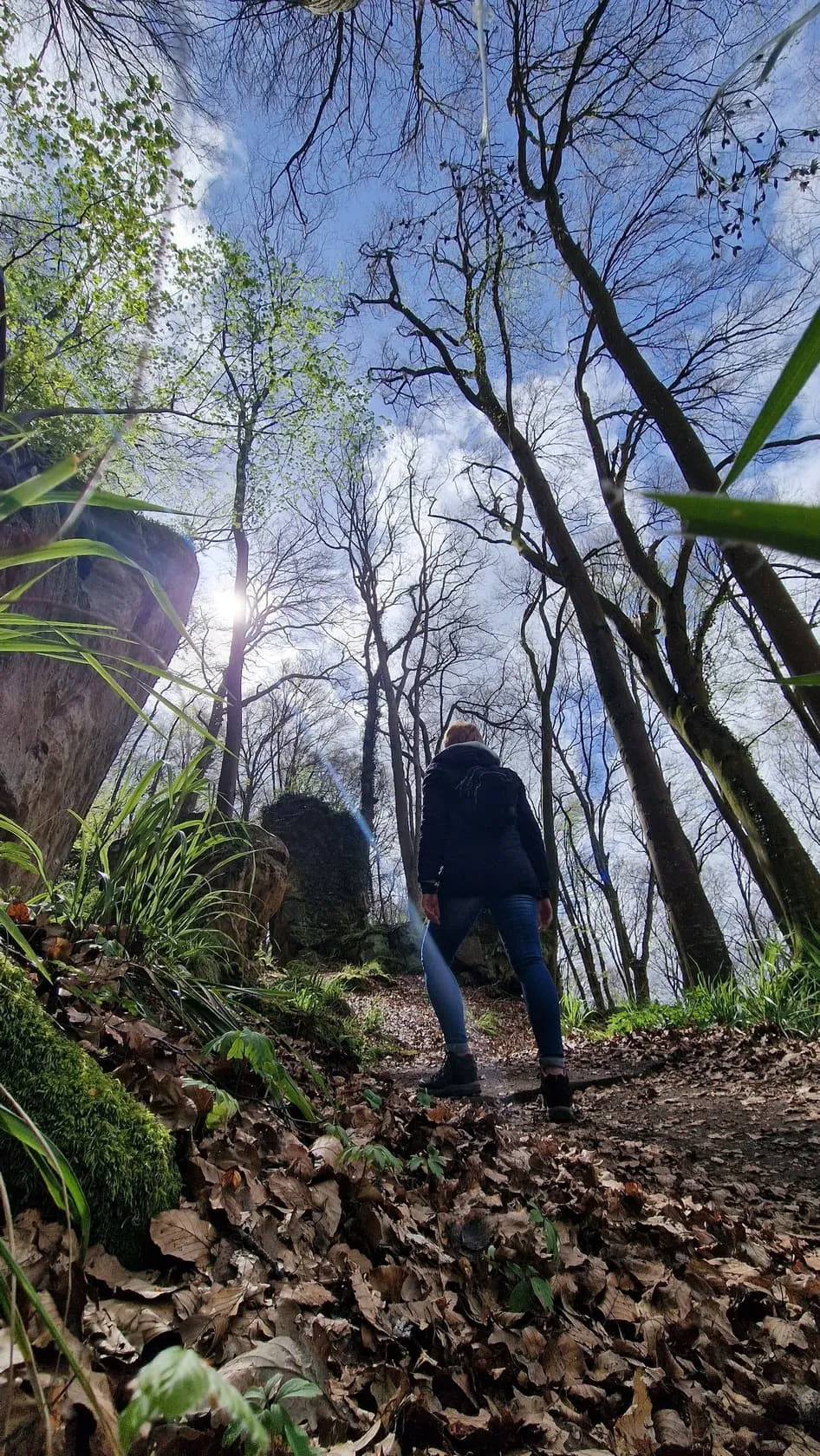
Walking in Luxembourg differs from walking in most neighbouring countries, and that's entirely down to the variety packed into a small area. You step from sandstone cliffs and moss-green gorges in the Müllerthal to open Ardennes plateaux with deep river valleys in the Éislek, to vineyard terraces along the Moselle, and to the red, reforested mining landscape in the south. That range is rare for a country of this size.

What makes a walking holiday in Luxembourg so practical: the path network is dense and well signposted, local circular walks (auto-pédestres) start from almost every village, and buses and trains are free throughout the entire country. That last point is especially useful if you're walking a linear route and don't want the hassle of a second car at the start. Two long-distance routes have hotels spaced a day's walk apart, lending themselves perfectly to multi-day walking without a tent.

Compared with the neighbours: the Belgian Ardennes are wilder and more expansive, with more relief and lower population density; see our guide to walking in the Ardennes. The Eifel has a more volcanic character and feels rougher underfoot; read more in our guide to walking in the Eifel. Luxembourg is more compact, rockier in the east, and better organised for multi-day walkers who want everything taken care of.


Where is what in Luxembourg, and how do you get there?

Orientation doesn't start with the map but with a simple question: which gateway takes you into which region?

For the Müllerthal in the east, Echternach, Berdorf and Beaufort are the natural arrival points. You reach the Éislek in the north via Vianden, Clervaux, Wiltz or Esch-sur-Sûre. The Moselle region in the south-east opens up via Remich, Grevenmacher and Schengen. The Guttland in the middle, the hilly heart of the country, is accessible via Mersch and the capital, Luxembourg City itself. The Minett in the south, the former iron-mining district, spreads out around Esch-sur-Alzette, Dudelange and Differdange.

As for the borders: to the east, the Our and Sûre take you straight into the German Eifel, a border you can cross on foot, and to the west the Éislek links up seamlessly with the Belgian Ardennes. Scenically, the Éislek is simply the Luxembourg portion of that same Ardennes plateau.

By car, you drive from the Netherlands or Belgium via the Ardennes or via Trier. By train, you arrive in Luxembourg City, from where trains and buses take you free of charge to the walking villages. If you're walking a linear route, you don't need your own car: free public transport handles the return trip to your start point or your overnight stop. That solves the classic logistical headache of a point-to-point route entirely.


Walking in Luxembourg: the finest walking regions compared

Müllerthal: Little Luxembourg Switzerland

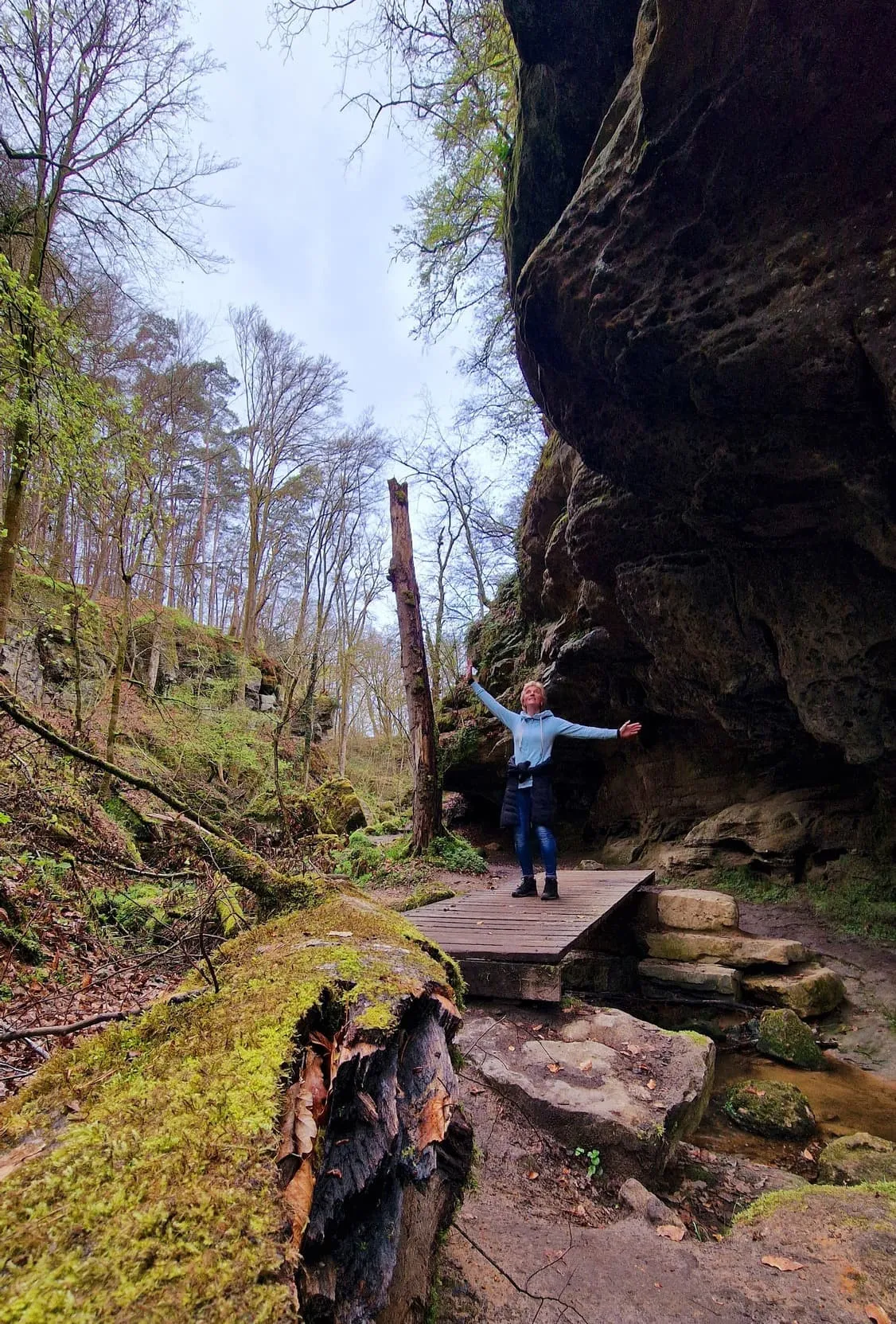
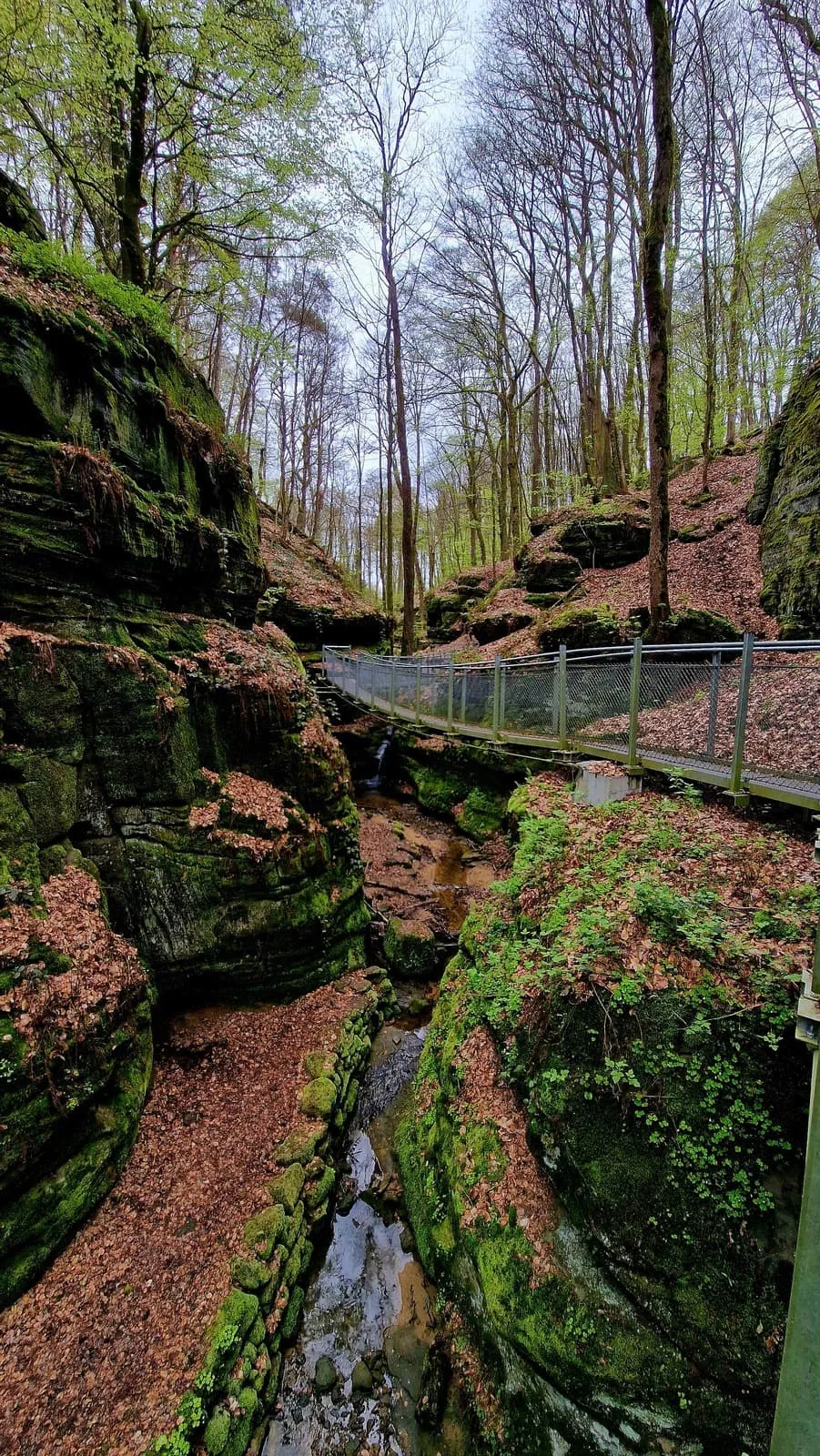
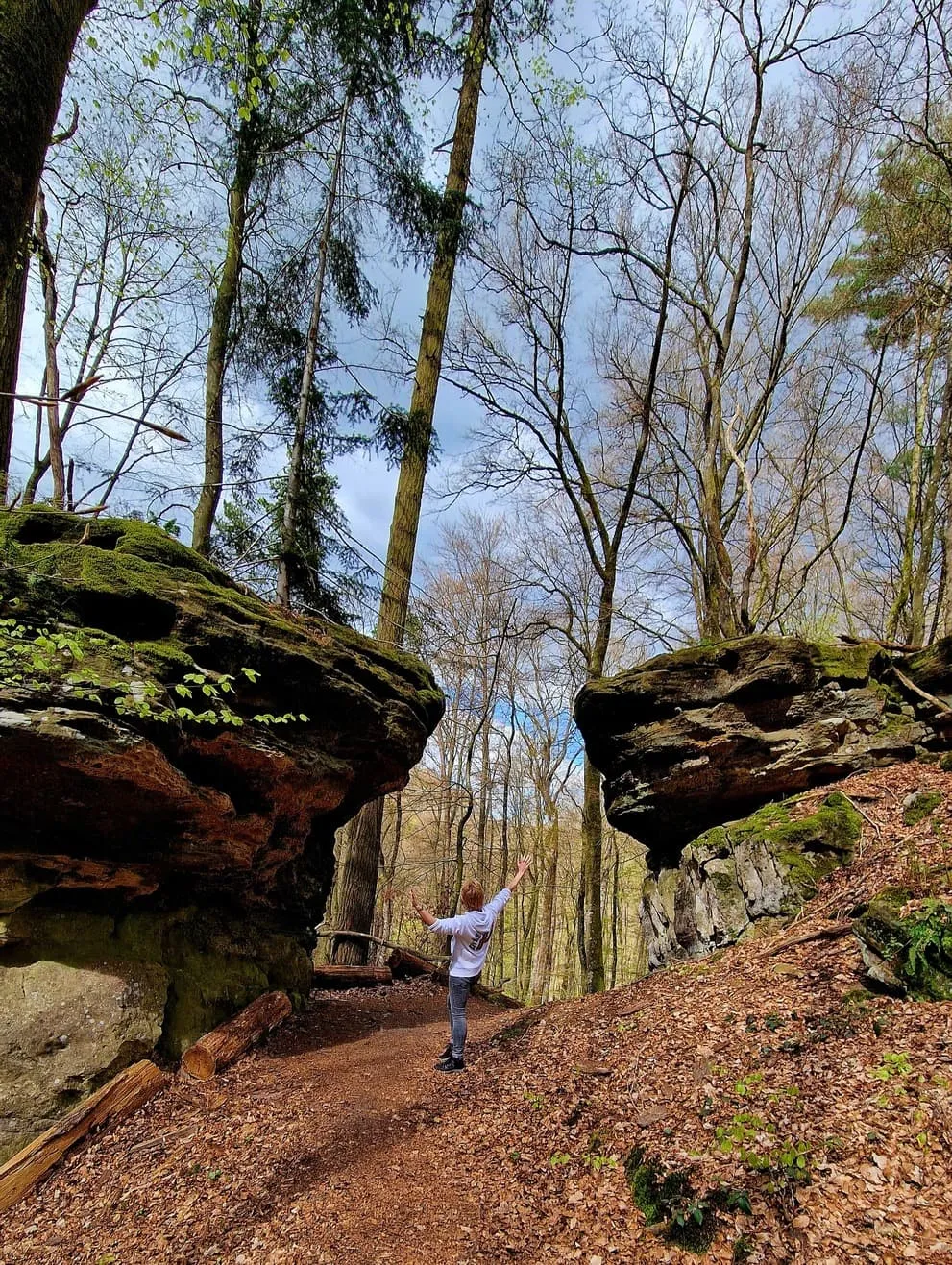
Little Luxembourg Switzerland is the reason most Dutch and Belgian walkers choose Luxembourg in the first place. The region around Echternach and Berdorf is built from sandstone, shaped over millennia by rivers and streams into gorges, caves and rock pillars. What you'll see: the Wolfsschlucht near Echternach, the Hohllay cave near Berdorf, the Schiessentümpel waterfall, the castles of Beaufort and Larochette, and the historic abbey town of Echternach, the oldest town in Luxembourg. The finest walks in the Müllerthal are those threading through the narrow gorge passages and along the rock formations near Berdorf. What sets Little Luxembourg Switzerland apart from the other regions: nowhere else in the country do you get so close to the rock, walking quite literally through the stone itself.

Éislek and Ösling: Vianden, Clervaux and the Luxembourg Ardennes

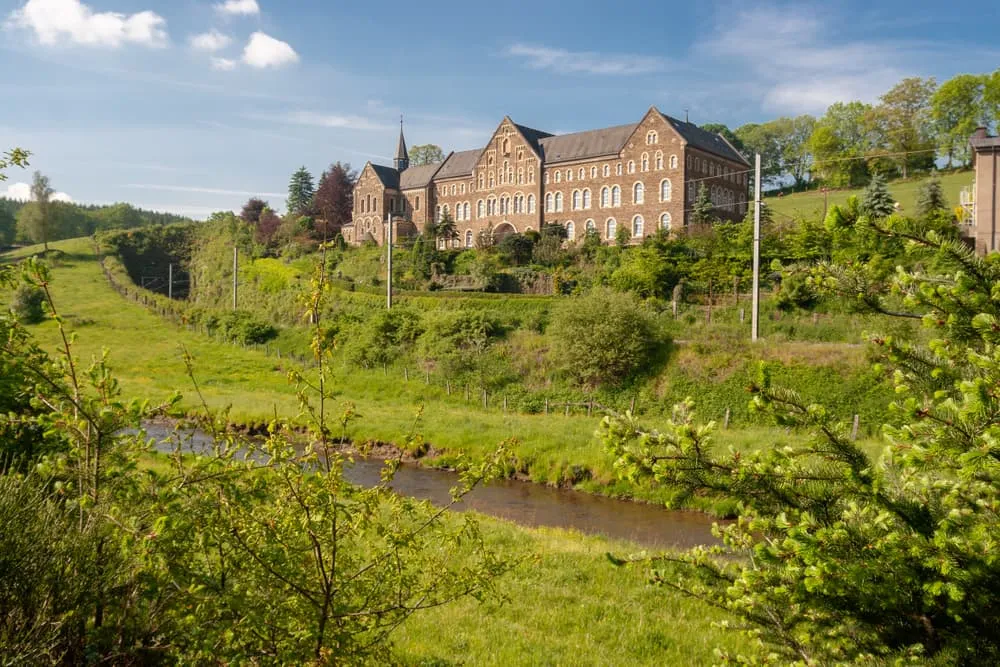
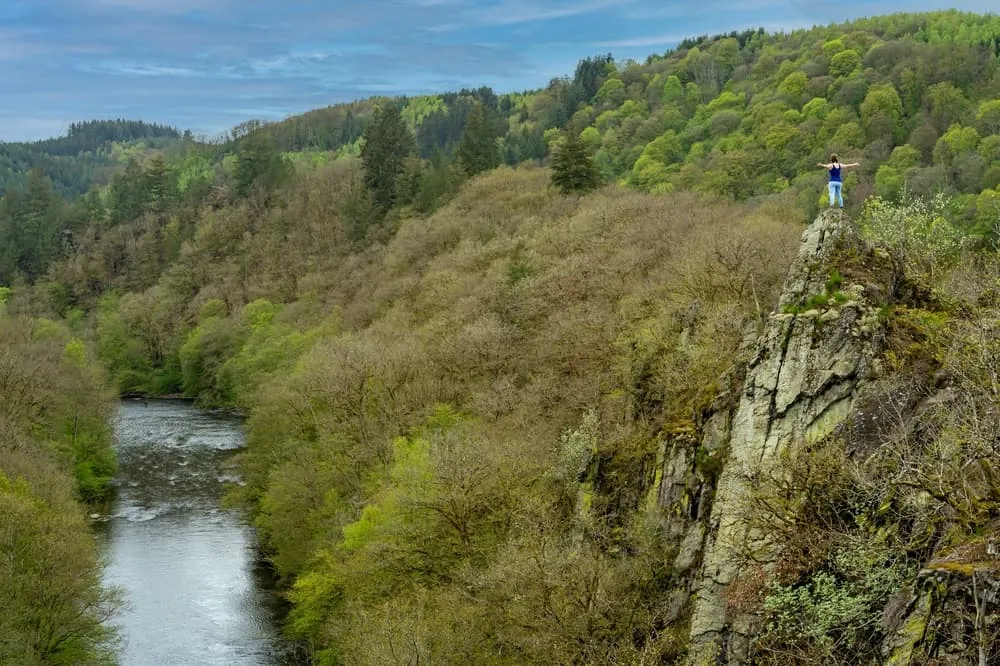
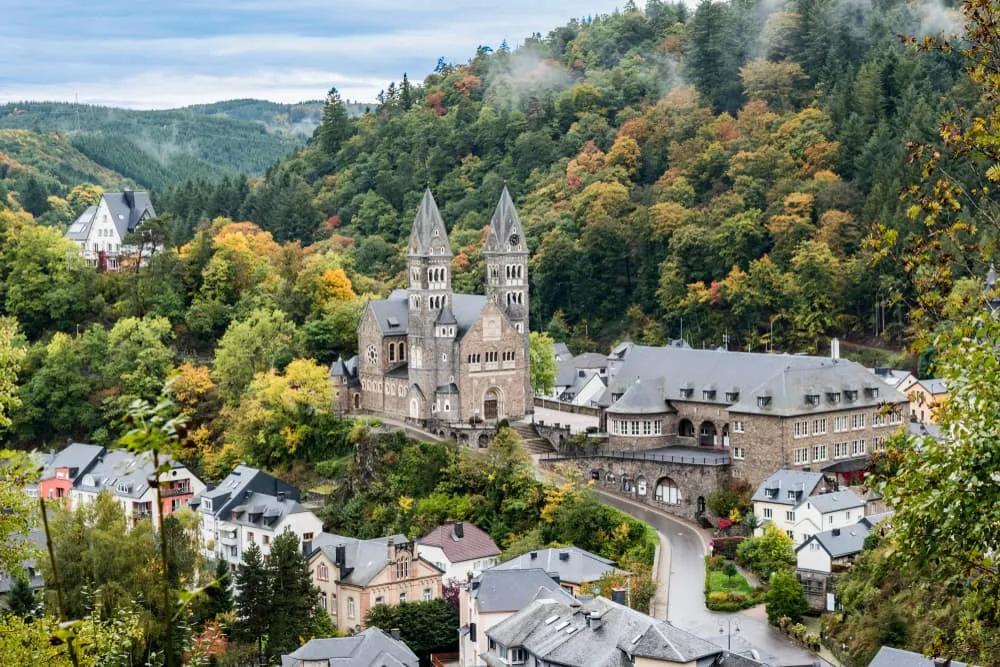
The Éislek is the northern part of Luxembourg and forms part of the Ardennes plateau. The Luxembourg Ardennes are narrower and more accessible than their Belgian counterpart, but the sense of openness and quiet is comparable. High above the Our stands the castle of Vianden, one of the most impressive medieval fortresses in the Benelux. Clervaux has an abbey that rises up before you as you climb from the valleys. The Sûre winds in sweeping meanders through a deep valley near Esch-sur-Sûre, within the Naturpark Öewersauer. Open plateaux alternate with deep river valleys. This is the region for those who want wide-open views rather than squeezing through narrow gorges.

Moselle Luxembourg: walking among the vineyards

Along the Moselle from Schengen via Remich and Wormeldange to Grevenmacher, vineyard terraces climb the slopes above the river. The climate here is milder than in the rest of the country, the routes run over the hills between the vines, and offer views over the river to Germany on the far bank. This isn't a technical walking area but a region where pace and scenery take centre stage, with villages at the foot of the hills always offering a place to rest.

Guttland: the rolling heart around the capital

The Guttland is the hilly middle section of Luxembourg, less dramatic than the Müllerthal but all the more accessible for it. The Valley of the Seven Castles along the Eisch near Mersch is one of the finest day walks in this part of the country. The rocks of Nommern lie in the transition zone towards the Müllerthal. And then there's the walk through Luxembourg City itself: the Corniche, the Grund and the Pétrusse valley have genuine changes in elevation that surprise anyone who assumes city walking is flat. This is the region for combining a multi-day tour with a day in the capital.

Minett and the Land of the Red Earth

Southern Luxembourg was, for a century, the industrial heartland of Europe. The former iron-mining sites around Esch-sur-Alzette and Dudelange have now been partly transformed into a UNESCO biosphere area. Walking reserves such as Ellergronn and Giele Botter cross old mining terrain of rust-red rock and regenerating nature. Honestly, this isn't the first choice for a classic walking holiday, but it does surprise walkers who enjoy contrast and want something a little off the beaten track.


Walking in Luxembourg: the finest walking regions compared

Multi-day walks in Luxembourg: from a long weekend to ten days

A multi-day walk in Luxembourg means a different place to sleep each night, a hotel or guesthouse booked in advance, your suitcase travelling ahead to the next stage, and you carrying just a light day pack. That combination works well here because the routes run neatly through villages where accommodation is available. Bookatrekking offers six multi-day tours across two route families.

Müllerthal family: rock, gorge and forest

The Müllerthal Trail Route 2 in four days is the long weekend option, taking in the rockiest core of Little Switzerland. Two days of walking, with arrival and departure included. Those wanting more should choose the Müllerthal Trail Routes 1 and 2 in six days: two loops around Echternach, a full short break amid rock and forest. The complete Müllerthal Trail in eight days covers the whole region, including the third loop via Larochette and Beaufort.

Ardennes/Éislek family: open heights, river valleys and castles

The Escapardenne Lee Trail in five days runs through the Sûre valleys of northern Luxembourg, for those seeking quiet and open landscapes. The Escapardenne Eislek Trail in seven days passes through Clervaux towards the Belgian border, offering wide views across open heights. Those who really want to walk long distances and combine both regions should choose the full Escapardenne Trail in ten days.

On all six tours we transport your luggage between stages. You walk each day with just a day pack. A multi-day walk in Luxembourg otherwise requires little organisation: we book the accommodation, you follow the route in the app. If you'd also like to explore the Belgian side of the Ardennes, our guide to walking in the Ardennes gives a good overview of the neighbouring tours.


Multi-day walks in Luxembourg: from a long weekend to ten days

The Mullerthal Trail and the Escapardenne in brief

The Mullerthal Trail is the circular long-distance route through Little Luxembourg Switzerland. It's made up of several loops around Echternach, Berdorf and Beaufort, and carries the Leading Quality Trails mark from the European Ramblers' Association. Our Müllerthal tours are built around this route.

The Escapardenne is the cross-border Ardennes route, with a southern section (Lee Trail) and a northern section (Eislek Trail). The route connects Luxembourg with the Belgian Ardennes. Our Éislek tours follow this trail. Most walkers cover a section of four to seven days.

For the complete stage-by-stage description, with start points, highlights and practical daily information, see our complete guide to the Mullerthal Trail and our guide to the Escapardenne: Lee Trail and Eislek Trail.


Day walks and circular routes in Luxembourg

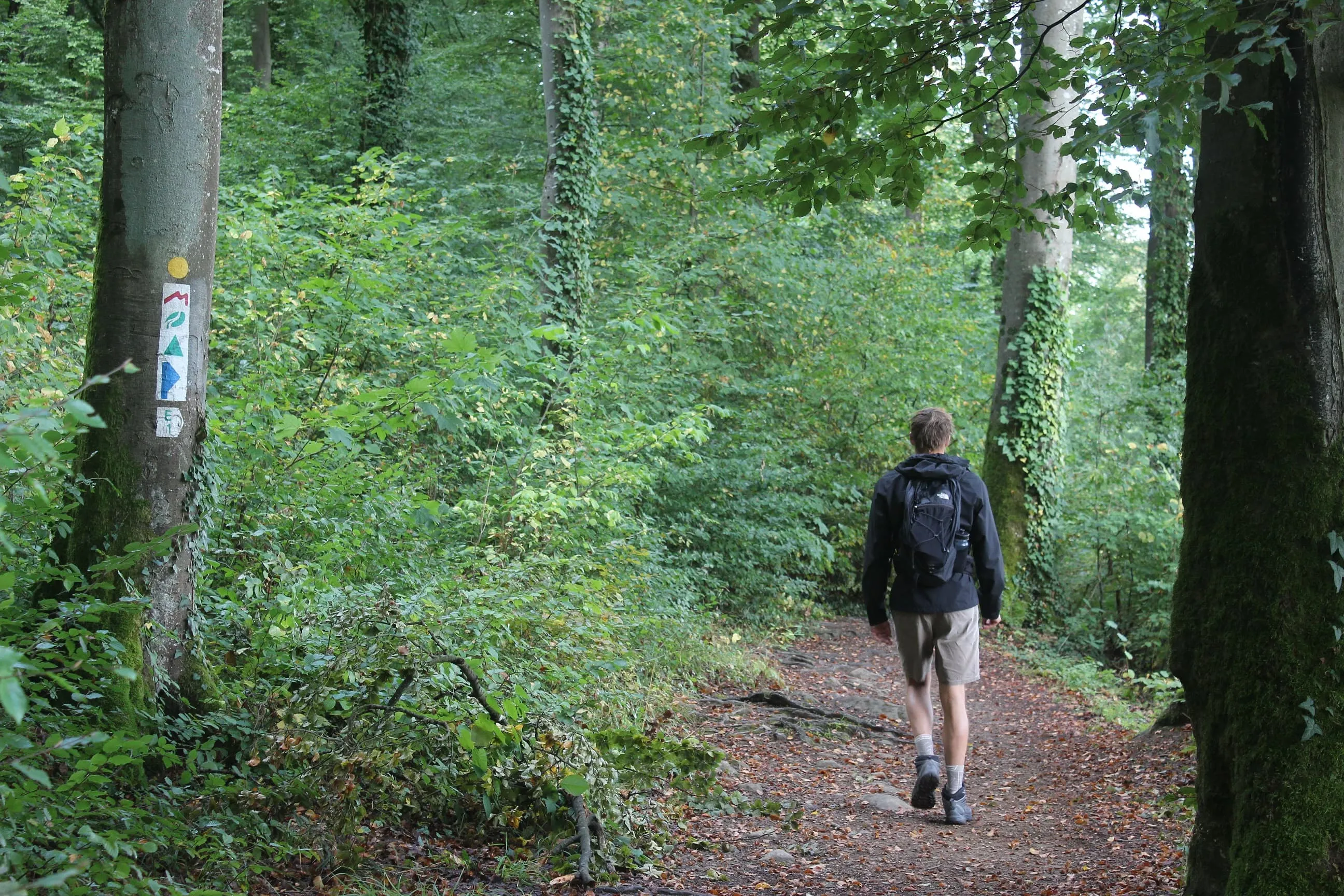
Not everyone wants to walk for several days in a row. For those after a day walk, Luxembourg offers an extensive network of auto-pédestres: local, numbered circular routes that start from a village or car park, are well signposted, and are spread right across the country. The signs are recognisable by a letter-number combination on a white background. The regional routes through the nature parks add a further option for those wanting something bigger than a local loop.

Some highlights worth seeking out, by region:

  • The rock circuit near Berdorf, passing the Hohllay cave and the Perekop rock
  • The Wolfsschlucht from Echternach, the gorge where the walls close in high above your head
  • The Schiessentümpel, the waterfall with the stone footbridge that has become the symbol of the whole region
  • The castle circuit around Vianden, with views over the Our from the castle ruins
  • The Sûre meanders near Esch-sur-Sûre, one of the finest river valleys in the country
  • A vineyard walk above Remich with sweeping views over the Moselle
  • The Ellergronn near Esch-sur-Alzette, a walking reserve on former mining ground

Walking in Luxembourg City is more rewarding than it sounds. The Corniche, known as Europe's most beautiful balcony, runs along the historic fortifications. The Grund and the Pétrusse valley lie tens of metres below the upper town and are reached on foot via steep steps and sloping paths. There's genuine elevation change in a city walk here.

Finest walks in the Müllerthal: the rocks and gorges near Berdorf and Echternach are the absolute highlight of Luxembourg's walking country. The Schiessentümpel is a waterfall on a modest, mid-mountain scale, impressive despite its size. Note: after rain, the sandstone and tree roots underfoot become slippery. Always wear walking shoes with good grip, even on a day walk.

Walking in Luxembourg with children works well on the shorter auto-pédestres that offer a clear reward at the end: a castle, a rock to climb, a viewpoint. The gorges near Berdorf are popular with children over eight. The shorter routes keep a comfortable pace and offer plenty to see along the way.


How demanding is walking in Luxembourg, and who is it for?

Luxembourg is mid-mountain terrain, not mountaineering. There are no ropes, no via ferrata, no technical climbing sections, and fear of heights is barely an issue anywhere. Still, first-time visitors often underestimate the effort involved, and there's a good reason for that.

The strain doesn't come from dramatic changes in altitude but from the constant short ups and downs along valley edges and rock faces. Over a full day's walking, that adds up and takes its toll on the legs differently to a long, flat distance at home. The real points to watch, region by region: in the Müllerthal, the sandstone and tree roots become slippery after rain, the gorge passages are narrow, and the little climbs over the sandstone rock are technical without being difficult. In the Éislek, the days are more open, the elevation change greater, and wind on the plateaux is sometimes a factor.

Who is it suited to? Those new to multi-day walking do well on the shorter Müllerthal tours. Families with children aged around ten and over can manage the shorter stages. Experienced mountain walkers looking for a change of pace between seasons will find plenty of challenge in the Éislek.

Ranking the six tours by difficulty: the Müllerthal tours are more technical due to the rocky terrain; the Éislek tours are longer and more open. A tour of four or five days makes a good introduction; ten days is a genuine challenge. For more on whether the Mullerthal Trail is demanding and which route suits which level, see our complete Mullerthal Trail guide.


Best time to go walking in Luxembourg

Luxembourg's walking routes are passable all year round, but each season brings its own trade-offs.

April and May bring fresh greenery to the gorges, blossoming hillsides and long, light days. Mornings are cool, which makes for pleasant walking. Easter and Ascension draw plenty of visitors to the Müllerthal, so expect crowds on the popular routes.

June to August are the warmest months. The beech forests and gorges of the Müllerthal stay relatively cool in the shade. The open heights of the Éislek and the vineyard slopes along the Moselle get warmer. There's a chance of afternoon thunderstorms, especially in August. July is the busiest month in the Müllerthal.

September and October are, for most walkers, the best season. The weather is more settled, crowds thin out noticeably, the autumn colours in the forests are at their best, and the Moselle is in the middle of the grape harvest. A combination that leaves little to be desired.

November to March brings short daylight hours, the possibility of snow and ice on the Ardennes heights, and slippery rocks in the gorges. Many businesses in the walking villages operate limited hours during this period. Walkers who do venture out at this time have the landscape largely to themselves, but need to be well equipped.

Our multi-day tours run most comfortably during the summer half of the year. Want to know what the weather's doing at the spot you'll be sleeping that night? The Bookatrekking app shows the current forecast based on the coordinates of your overnight stop, which is far more precise than a general regional forecast.


Accommodation and luggage transport in Luxembourg

Luxembourg has no mountain hut system like the Alps. You stay in a village at the end of each stage: a hotel, guesthouse, gîte, youth hostel or campsite. The choice is broad, but the villages are small and availability during high season is limited. Without proper planning, you could find yourself arriving in July only to discover everywhere is fully booked.

That's exactly why we arrange all accommodation in advance as part of the package. You won't need to make a single call or comparison yourself.

Luggage transport makes more of a difference than you might expect. On a route with constant short climbs, narrow rocky passages and root-strewn paths, a heavy backpack really starts to tell by day two. With luggage transport, you walk each day carrying just a light day pack: water, a rain jacket, lunch and your camera. Your bags go on ahead to the next place you're staying.

What's included on our tours: accommodation at carefully selected places along each stage, and the Bookatrekking app with offline maps, GPS tracks and an up-to-date weather forecast for each overnight stop. Luggage transport can be added as an optional extra.

If you'd rather walk from a single base, that's possible too. From Echternach, Vianden or Remich, you can take a different route each day using the free public transport network, sleeping in the same place every night. It's more flexible, but you miss out on the experience of gradually working your way through the landscape.


Which tour suits you? Walking in Luxembourg by time and experience

Tour Days Region Best for Book
Müllerthal long weekend 4 days Müllerthal first multi-day tour or limited time View tour
Müllerthal two loops 6 days Müllerthal a full short break amid rock and forest View tour
Müllerthal complete 8 days Müllerthal covering the whole region View tour
Ardennes south 5 days Éislek quiet and river valleys View tour
Ardennes north 7 days Éislek castles and open heights View tour
Ardennes complete 10 days Éislek walkers wanting a real long-distance challenge View tour

Current prices, dates and everything included are listed on each tour's trip page.

A quick decision guide: if you're after rock and short climbs, the Müllerthal is your destination. If you'd rather have open landscapes, wide views and longer stages, choose the Éislek. Short on time? A tour of four or five days fits well. Have a week or more? Six to ten days gives you the real feeling of travelling through a region rather than hurrying across it. Want day walks and to return to the same base each evening? Choose Echternach, Vianden or Remich as your base and use the free public transport to drop you at a different starting point each day.

On navigation: the waymarking on all routes is reliable and consistent. As a backup, the Bookatrekking app shows your GPS track, an offline map and the weather forecast for each stage, even without a mobile data connection.


Frequently asked questions about walking in Luxembourg

  • What is the finest walking region in Luxembourg?

    That depends on what you're after. The Müllerthal is the finest choice if you want rock formations, gorges and stream valleys: Little Luxembourg Switzerland is the most talked-about region in the country. The Éislek wins out if you prefer openness and wide Ardennes plateaux. The Moselle region is the best choice for combining vineyard terraces with river views.

  • What's a good route for walking through Luxembourg?

    The two finest long-distance routes are the Mullerthal Trail through the rocky eastern corner and the Escapardenne through the Ardennes region in the north. Both lend themselves to multi-day tours with hotels along the way. Our Mullerthal Trail guide and our Escapardenne guide give a full overview of stages and starting points for each route.

  • Which Mullerthal route is the finest?

    The loops around Berdorf and Echternach are the rockiest and most spectacular sections of the Mullerthal Trail. If you want to squeeze through gorges and walk past caves and waterfalls, that's the best place to be. For a full comparison of the three loops, see our complete Mullerthal Trail guide.

  • What is the finest walk in the Müllerthal?

    The rocks and gorges near Berdorf, particularly the passages along the Hohllay cave and the Perekop rock, are considered the finest walk in the Müllerthal. The Wolfsschlucht from Echternach and the Schiessentümpel waterfall are the other two highlights that almost every walker mentions. Paths become slippery after rain, so walking shoes with good grip are essential, not optional.

  • What is the finest multi-day walk in Luxembourg?

    A multi-day tour through the Müllerthal or the Éislek, with luggage transport and hotels booked in advance, gives most walkers the most complete experience. You genuinely journey through the landscape rather than simply looking at it from outside. Four to eight days in the Müllerthal or five to ten days in the Éislek are the most commonly booked options.

  • What are the best walking routes in Luxembourg City?

    The Corniche, often called Europe's most beautiful balcony, is the best-known walking path in the city. From the upper town, you descend to the Grund and the Pétrusse valley via steps and sloping paths, with genuine changes in elevation. The Bock casemates cut into the rock can be viewed from outside as part of the walk along the historic fortifications.

  • What is the finest walk in Luxembourg?

    For rock and adventure: the gorge passages near Berdorf in the Müllerthal. For openness and quiet: a stage along the Our or the Sûre in the Éislek. For atmosphere and views: a vineyard walk above the Moselle. There's no single "finest walk" in Luxembourg as an absolute answer; it depends entirely on what you're looking for from a day outdoors.

  • What shouldn't you miss in the Müllerthal?

    The Schiessentümpel waterfall with its stone footbridge is the most photographed spot in the region. The Wolfsschlucht near Echternach, the Hohllay cave near Berdorf and the castle at Beaufort are the other highlights mentioned in virtually every guide. Echternach itself, as the oldest town in Luxembourg, is well worth a visit as a base for exploring the rocky routes.


    Finally, for those wanting to cross the border after Luxembourg, there are two appealing options close by. The Belgian Ardennes lie directly to the west and are wilder and more expansive in scale. The Eifel in Germany borders the eastern edge of the Müllerthal and has a volcanic character that feels entirely different. And for those walking along the Moselle, the river simply continues on towards Trier, a combination that's not nearly as far away as it might seem for anyone wanting to link the regions together.

Packing List for the Mullerthal Trail

It doesn't matter where you are trekking or for how long: carrying the right equipment with you is paramount. For a hiking trip in the mountains, a good is backpack essential. Its size will depend on how many days you will be spending in the mountains, the season, and the clothes you will be taking with you. We have prepared a packing list with some essential clothing that you should include and some extras that you may find useful:
  • Essentials

  • Extras

Safe Hiking Tips for the Mullerthal Trail

When hiking, it is wise to be aware of a few points. Even if this is not your first time, you should never underestimate the mountains. Good tour planning and compliance with the regulations in the mountains will significantly increase safety. To ensure that your hiking adventure is a safe and enjoyable experience, here below you can find a list of 8 recommendations for safe hiking in the mountains:
  • Know your limits

    Hiking the Mullerthal Trail is the perfect outlet to escape from daily life. It is an endurance sport along with a beautiful nature experience with a positive effect on body and mind —as long as one is in good shape and has a realistic picture of one's possibilities and limits—. Never overestimate yourself or underestimate the route. Don't overdo it! Always choose the slower option and take more time for your plans. Hiking under time pressure is not fun and at too fast a pace it can be dangerous. Be wise!

  • Plan carefully

    Good planning is half the work! Hiking maps, literature, the Internet and expert advice are invaluable when planning the route of the Mullerthal Trail and enable you to determine the length, altitude difference, difficulty and conditions of the hike. When planning group treks, the itinerary should always be planned for the weakest member of the group! The weather in the mountains can change incredibly quickly and rain, wind and cold all increase the risk factor. For this reason, always check the weather forecast beforehand and contact our trekking experts to find your way before you start.

  • Be fully equipped

    Equipment is everything. In the most extreme case, it makes the difference between life and death, and in any case, it definitely makes the difference between having fun and having a bad time. Food and water, sunscreen and waterproof and warm clothes must always be in your backpack, as well as a first aid kit and a mobile phone with a full battery (in case there is an emergency). However, packing light makes hiking easier, so don't take too much extra luggage with you. Your equipment should always be suitable for the terrain you'll be hiking on in the Mullerthal Trail.

  • Wear suitable footwear

    Good walking shoes protect your feet and provide a better fit. Shoes with a good fit, with non-slip soles, water-resistant and lightweight are a must for additional walking pleasure during the Mullerthal Trail. Trail running shoes are great for a weekend in the mountains, but on longer hikes or more technical trails, you'll want at least A/B hiking boots. That means it is recommended wearing high mountain shoes that are water-repellent with extra ankle support to prevent sprains.

  • Stay on marked trails

    Mullerthal Trail has endless marked hiking trails, which are controlled and maintained and should not be deviated from. It may be tempting, but it's not a good idea to take shortcuts or alternative routes through unmarked terrain. It increases the risk of disorientation and you're more likely to get lost and have accidents or fall in the mountains. Even steep slopes of packed old snow are often underestimated and dangerous. Are you in doubt? Better don't do it. For easy navigation we work with our trusted partner Komoot, whose interactive maps, also available offline, provide you with the necessary digital means to get from A to B. As a backup, make sure to bring a hiking guide or a paper map with you. FYI, 75% of stumbles occur due to carelessness on marked paths or roads, not in open terrain!

  • Take regular breaks

    Remember you're on a hiking trip. Timely and regular breaks not only provide welcome relaxation but also make it possible to enjoy the Mullerthal Trail. The body needs a regular food and drink intake to maintain performance and concentration. Our advice is that if you have little time, it's better to follow the short itinerary than to speed up the long one.

  • Stay reachable

    If you are hiking solo or in small groups it is advisable to inform people back home about your plans, what route you are taking and when you plan to return. Even small incidents can lead to unpleasant emergencies so make sure you are available at all times. Bring a charged phone containing at least the phone numbers of immediate family members, your accommodations en route and the emergency phone numbers operating on the Mullerthal Trail.

  • Respect nature

    Leave no rubbish behind, prevent noise, stay on the marked trails, do not disturb wildlife or grazing animals, and respect protected areas.

Where Can I Book the Mullerthal Trail?

At Bookatrekking.com you can book the self-guided Mullerthal Trail and many other treks. We take care of all the details for you, including arranging accommodations and providing you with relevant information well in advance of your trek. Find our offers here. Our easy-to-use platform allows you to browse and compare different trekking options and to find the perfect fit for your interests, abilities, and budget.

If you have any questions about a specific trek or need help choosing the right one for you, our team of trekking experts is here to assist you. Simply reach out to us and we will be happy to provide you with personalized recommendations and advice to help you plan the trekking adventure of a lifetime.

About Us

At Bookatrekking.com, you will find the trek that will make your life unforgettable. Whether you want to explore the Inca Trail or climb Kilimanjaro. Bookatrekking.com has a wide and varied range of first-class treks. No false promises are made here. Transparent prices and bookings are fixed instantly. Find, compare, book and trek!
Read more about us
About Us
About Us