South Tyrolean and Ladin Culture

South Tyrolean and Ladin Culture
Trekking experts per destination
Free cancellation up to eight weeks in advance
Quick personal advice

The Dolomites are not only a world of dramatic cliffs and alpine meadows, they are also a crossroads of cultures, where Central Europe meets the Mediterranean. Whether you are hiking through the Dolomites on high trails or wandering between villages in the valleys, you move through a landscape shaped by people as much as by rock. Two distinct heritages shape life here: the German-speaking South Tyrolean traditions and the ancient Ladin culture, each with its own language, customs, and deep connection to the mountains.

This cultural layering is the result of centuries of shifting borders, trade routes through alpine passes, and communities that learned to survive and thrive in a demanding mountain environment. The Dolomites are recognized not only as a UNESCO World Heritage Site for their landscapes, but also as a region where living traditions remain deeply rooted in everyday life and reveal themselves step by step along the hiking trails.
 12584
12584

South Tyrolean Heritage

South Tyrol (Südtirol in German, Alto Adige in Italian) has a unique blend of influences from centuries under Austrian, Tyrolean, and Italian rule. Until the end of World War I, the region was part of the Austro-Hungarian Empire, which explains why Germanic traditions remain so prominent today. German is widely spoken alongside Italian, and both languages leave their mark on daily life, from bilingual place names to menus mixing Knödel and risotto.

Life here follows a seasonal rhythm:

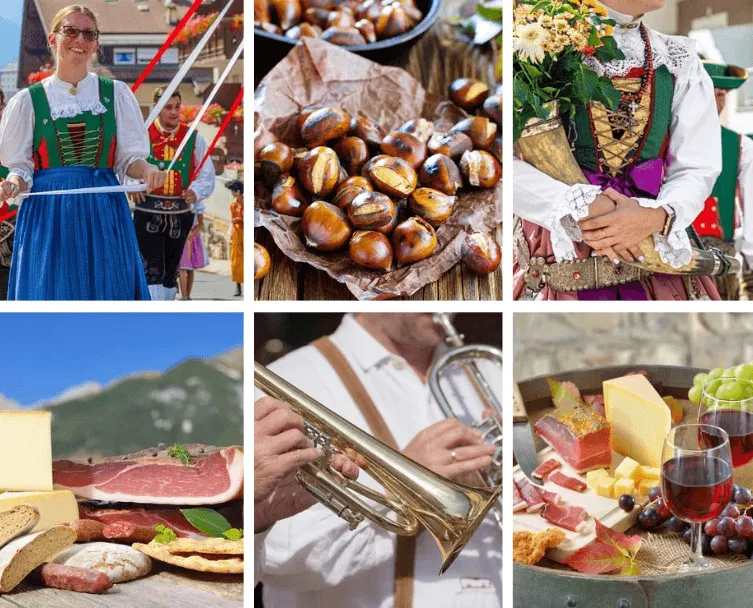
  • Alpine farming remains central to cultural identity. For centuries, families have practiced transhumance, moving cattle to high alpine pastures (Almen) in summer and returning to the valleys before winter. This cycle shapes food traditions, architecture, and social life. In autumn, the Törggelen tradition marks the end of the harvest with communal meals featuring roasted chestnuts, freshly pressed new wine, speck, sausages, and local cheeses. Originating as a farmers’ celebration, Törggelen is both a culinary and social ritual.
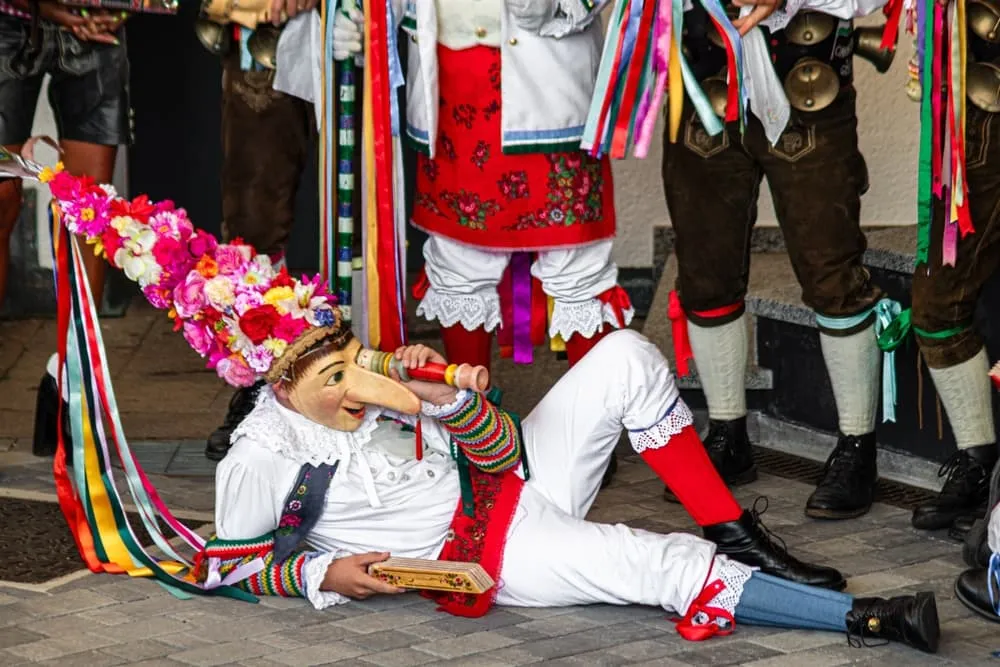
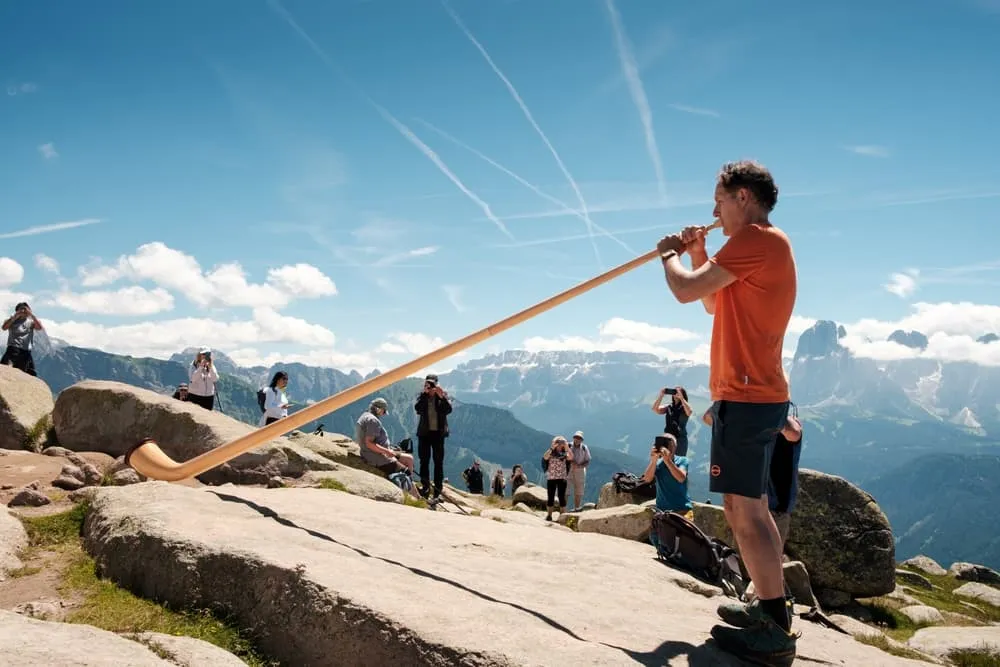
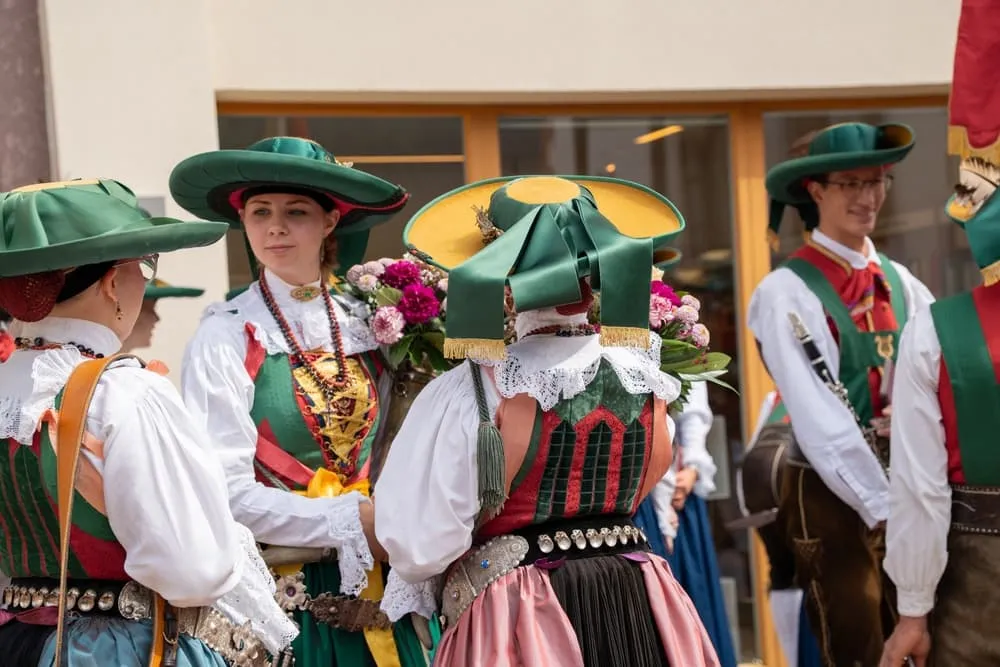
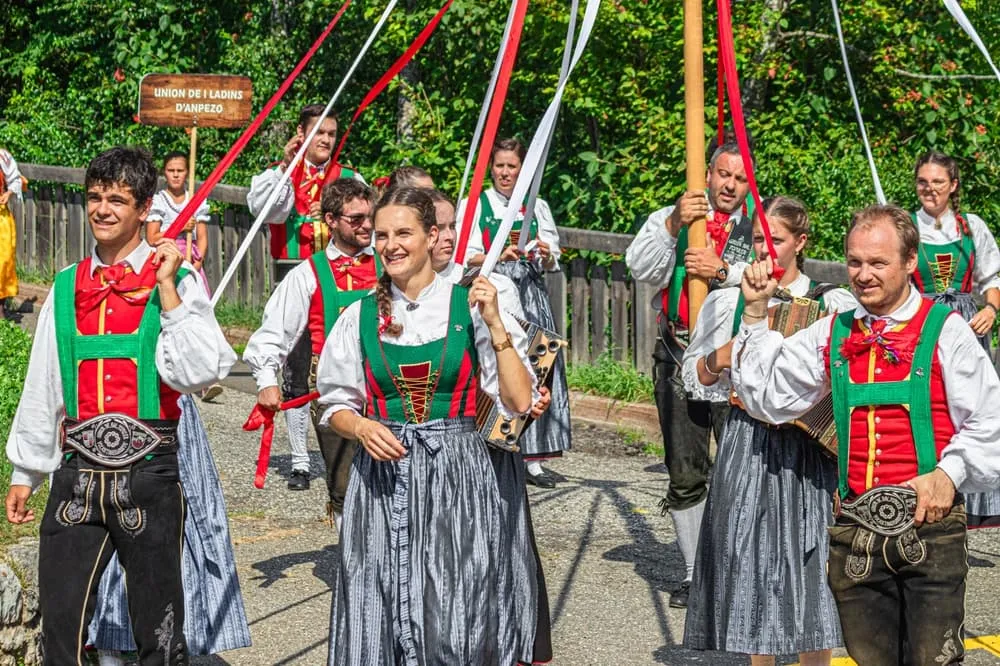
  • Festivals and folk music play a major role throughout the year. Village celebrations often feature traditional brass bands (Musikkapellen) wearing Tracht, the regional traditional dress. Common instruments include trumpets, trombones, tubas, clarinets, alphorns, and accordions. These bands evolved from 19th-century military and civic music traditions and remain central to public ceremonies, religious processions, and seasonal festivals.
  • Religious traditions are closely tied to the calendar. Catholic feast days, such as Corpus Christi and local patron saint celebrations, are marked by processions, floral decorations, and music. Alpine chapels and wayside crosses reflect the historic role of faith as protection for travelers and farmers in a harsh mountain environment.
  • For trekkers, South Tyrolean culture is often most tangible in the mountain huts (Hütten or Rifugi). These shelters evolved from simple herders’ huts into welcoming refuges for hikers and climbers. Hospitality is deeply ingrained, with meals that combine Tyrolean heartiness and Italian refinement: dumplings, soups, and strudel served alongside pasta, espresso, and local wines.
South Tyrolean Heritage

The Ladin People

The Ladin culture is one of the oldest in the Alps, rooted in the valleys around the Sella Massif: Val Gardena (Gherdëina), Alta Badia (Val Badia), Val di Fassa (Fascia), Livinallongo (Fodom), and Ampezzo (Anpezo). The Ladin people descend from Romanized Alpine populations, and Ladin is a Romance language derived from Vulgar Latin, preserved through centuries of relative isolation in high mountain valleys. Today, it is still spoken daily, taught in schools, and protected by regional autonomy laws.

Ladin traditions are closely tied to the mountains:

  • Legends and oral storytelling are central to Ladin cultural identity. Myths such as the Kingdom of the Fanes recount epic tales of queens, warriors, and enchanted landscapes, often linked to specific peaks, lakes, and passes. These stories served both as entertainment and as a way to transmit values, history, and explanations of the natural world.
  • Music and dance reflect Ladin communal life. Traditional songs are often sung in Ladin and performed during village celebrations and seasonal festivals. Instruments commonly include the accordion, violin, guitar, and zither. The music emphasizes storytelling and shared participation rather than formal performance, reinforcing strong community bonds.
  • Craftsmanship remains a hallmark of Ladin valleys, especially woodcarving in Val Gardena. Originally a winter occupation for farmers, carving developed into a refined art form, producing religious sculptures, nativity figures, toys, and contemporary works. This tradition dates back to the 17th century and is still internationally renowned.
  • Cuisine reflects both necessity and creativity. Ladin dishes are rooted in simple, nourishing ingredients suited to alpine life: barley, rye, potatoes, dairy, and preserved meats. Classics include barley soup, spätzle, and game dishes, often paired with polenta, wild herbs, and seasonal vegetables. Food traditions emphasize sustainability and the careful use of local resources.
  • Traditional dress and rituals are still worn and practiced on special occasions. Ladin costumes vary by valley and often feature intricate embroidery, wool, and silver elements. They are worn during religious festivals, weddings, and cultural events, reinforcing local identity in a multilingual region.
The Ladin People
The Ladin People

Enrosadira: the Ladin legend behind the pink glow

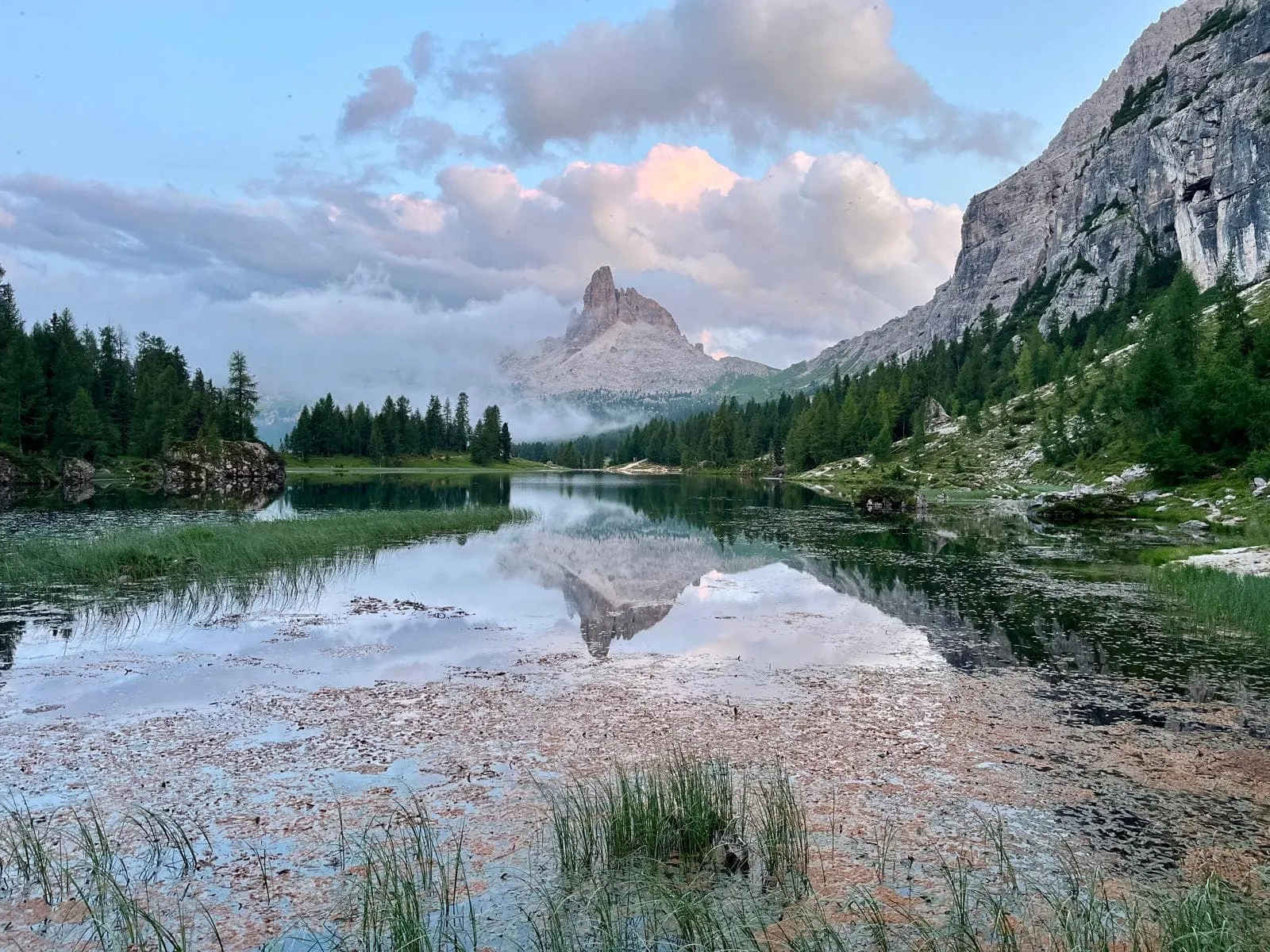
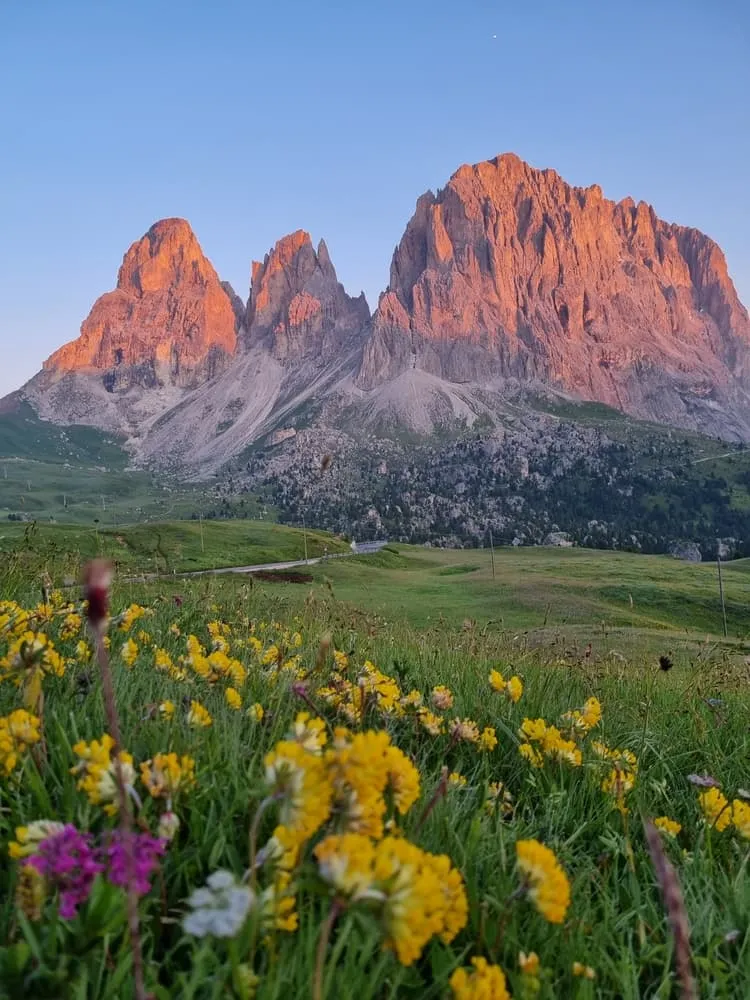
In Ladin culture, as mentioned above, storytelling has long been a vital part of mountain life and tradition. One of the best-known explanations for enrosadira (the rosy glow that appears on the Dolomites at sunrise and sunset) comes from the legend of King Laurin, the dwarf king said to have lived long ago in the Catinaccio mountain group. Laurin spent his days digging deep underground in search of precious stones, and among his treasures he owned a magical belt that could make him invisible.

In the story, Laurin becomes captivated by Similde, the daughter of the King of Adige. Using his invisibility, he abducts her and takes her back to his realm in the Catinaccio. To celebrate his love and to transform the mountain into something extraordinary, Laurin casts a spell that covers the slopes with a thick “mantle” of red roses. This is also how the mountain group gained its German name, Rosengarten (“Rose Garden”).

Similde’s father gathers his men and sets out to bring her home. Laurin believes no one can catch him as long as he can’t be seen but he overlooks one detail: each time he moves through the rose-covered mountain, he crushes flowers underfoot. The rescuers simply follow the trail of trampled roses, reach him, and take away the belt. Laurin is forced to surrender and return Similde to her father.

Before giving up the girl, Laurin places a curse on the roses that betrayed him: no human will ever be able to see the rose garden again, “neither by day nor by night.” The roses vanish, leaving only bare rock. But Laurin forgets one moment that is neither day nor night: sunset. And that, the legend says, is why the Dolomites can still blush red and pink at dawn and dusk as if the hidden rose garden briefly reappears in light.

This version of the legend is documented by Visit Trentino. You can read the full story here.

Enrosadira: the Ladin legend behind the pink glow

A Living Cultural Mosaic

What makes the Dolomites unique is how these cultures coexist and interact within a relatively small geographic area. It is common to hike from a German-speaking valley into a Ladin one in a single day, hearing greetings shift from Grüß Gott to Bun dé. Road signs, school systems, and public life often operate in two or three languages, reflecting a long tradition of coexistence rather than assimilation.

Festivals, markets, and everyday encounters are shaped by this cultural layering. Alpine farming traditions meet Mediterranean influences, ancient legends coexist with modern mountain tourism, and centuries-old rituals continue alongside contemporary life.

Walking the trails of the Dolomites means stepping into a living history. Here, traditions are not museum pieces, but part of daily life, carried forward in music echoing through valleys, in shared meals at mountain huts, and in the stories passed down by the people who have called these mountains home for generations.

A Living Cultural Mosaic

About Us

At Bookatrekking.com, you will find the trek that will make your life unforgettable. Whether you want to explore the Inca Trail or climb Kilimanjaro. Bookatrekking.com has a wide and varied range of first-class treks. No false promises are made here. Transparent prices and bookings are fixed instantly. Find, compare, book and trek!
Read more about us
About Us
About Us

Also Interesting