Lagazuoi Tunnels: A WWI Hike from Passo Falzarego to Rifugio Lagazuoi

Lagazuoi Tunnels: A WWI Hike from Passo Falzarego to Rifugio Lagazuoi
Trekking experts per destination
Free cancellation up to eight weeks in advance
Quick personal advice

The Lagazuoi tunnels are a system of World War I mine and access galleries dug into the Piccolo Lagazuoi above Passo Falzarego in the Dolomites. Restored and open to hikers, they run for more than 1 km inside the mountain, finishing high above the pass near Rifugio Lagazuoi. The full loop from Passo Falzarego takes 2.5 to 3 hours, gains and loses 639 metres, and demands a head torch and a helmet at minimum. Most people ride the Lagazuoi cable car to the top station and walk down through the tunnels to the pass.

This guide covers the route, the historical background, what to wear, how to get there, the Lagazuoi cable car, staying at Rifugio Lagazuoi and how the tunnels fit into the Alta Via 1. One of our team walked the tunnels in summer 2025 and her notes are included further down.

Alta Via 1 11343
Alta Via 1 11343

What are the Lagazuoi tunnels?

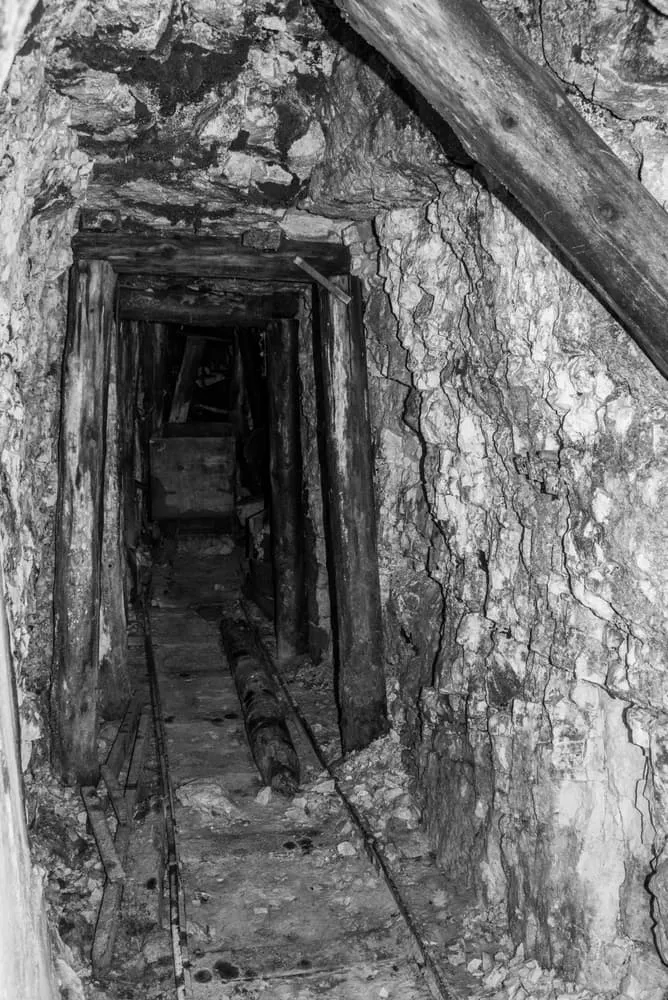
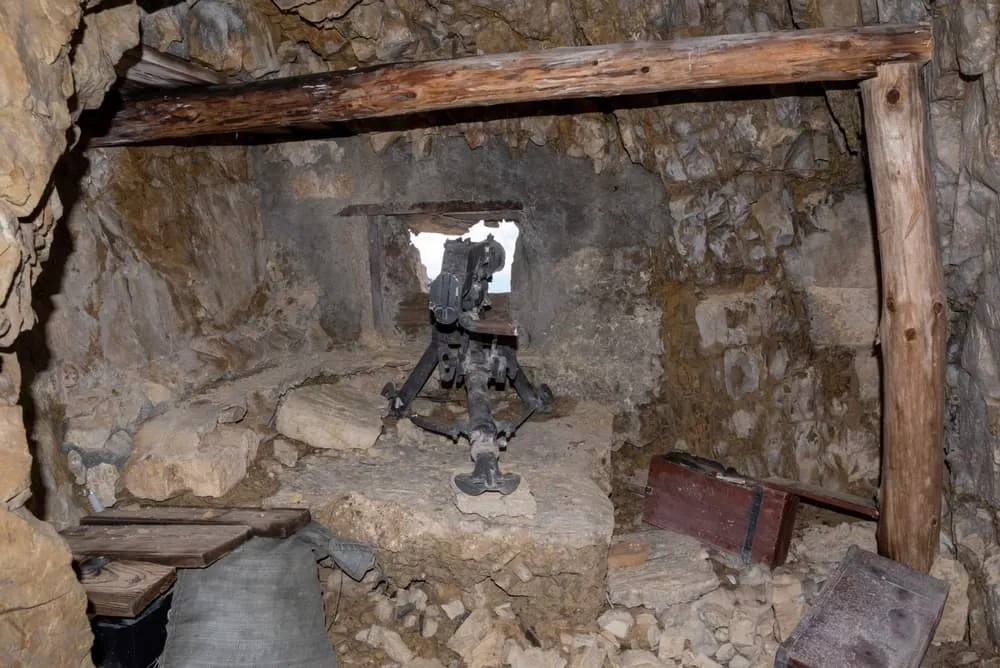
The Lagazuoi tunnels are Italian World War I mine and access galleries dug from the Martini Ledge (Cengia Martini) upward through the rock to the fore-summit, the "Anticima", of the Piccolo Lagazuoi, with the aim of blowing up the Austro-Hungarian position above. The Italians dug a mine branch, a shoulder tunnel opening onto the Anticima, an artillery gallery, a helical (spiral) tunnel, a lower branch back down to the Martini Ledge and a horizontal connecting section. Volunteers, including Italian Alpini and Austrian and German soldiers, cleaned and restored the tunnels and trenches; the Italian page of lagazuoi.it dates that work to 1997-2004.

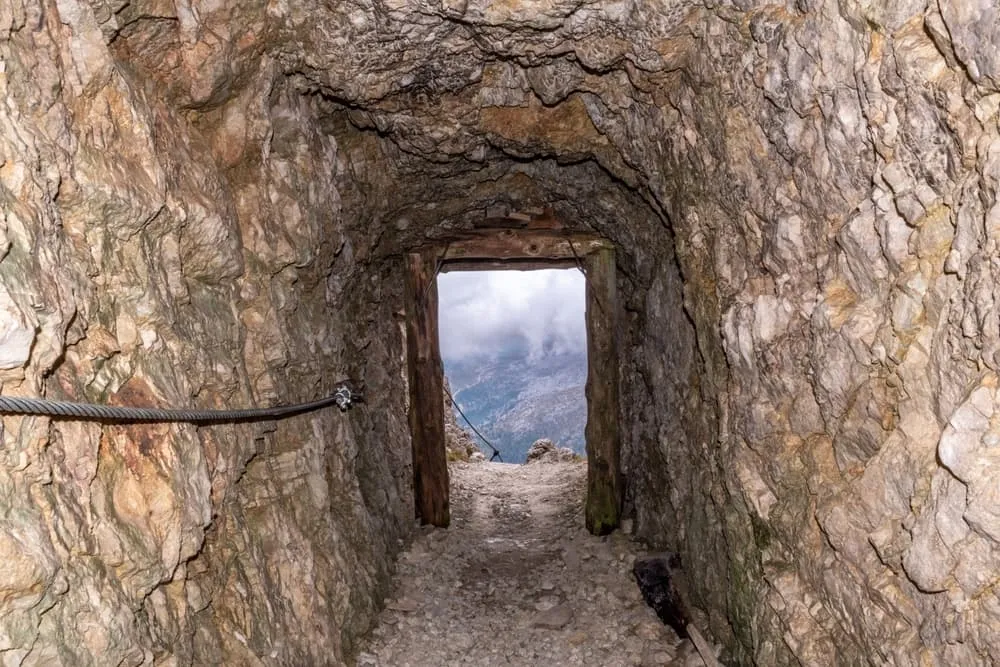
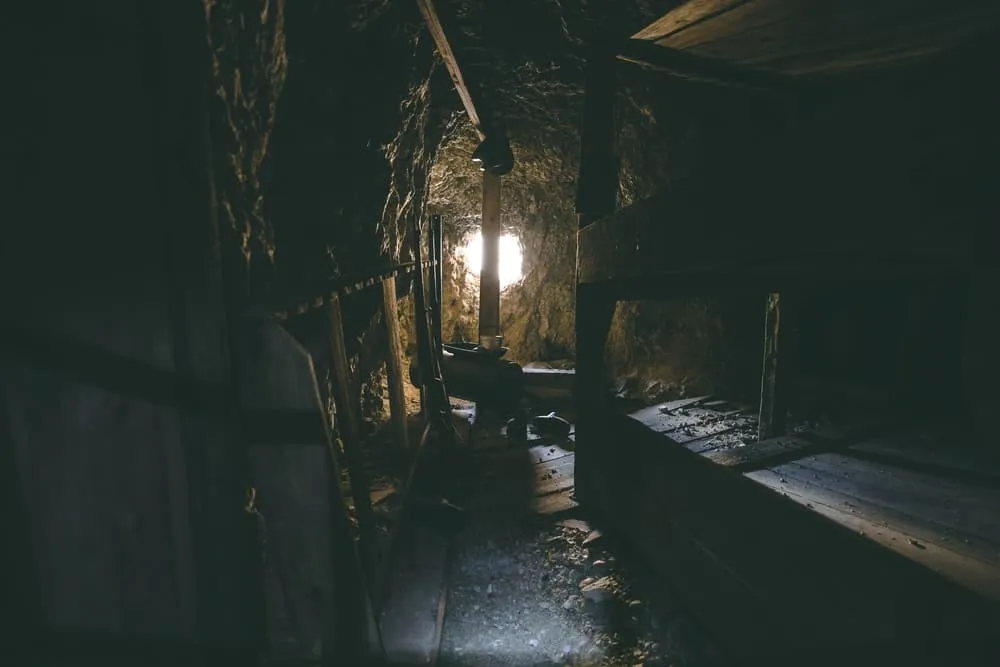
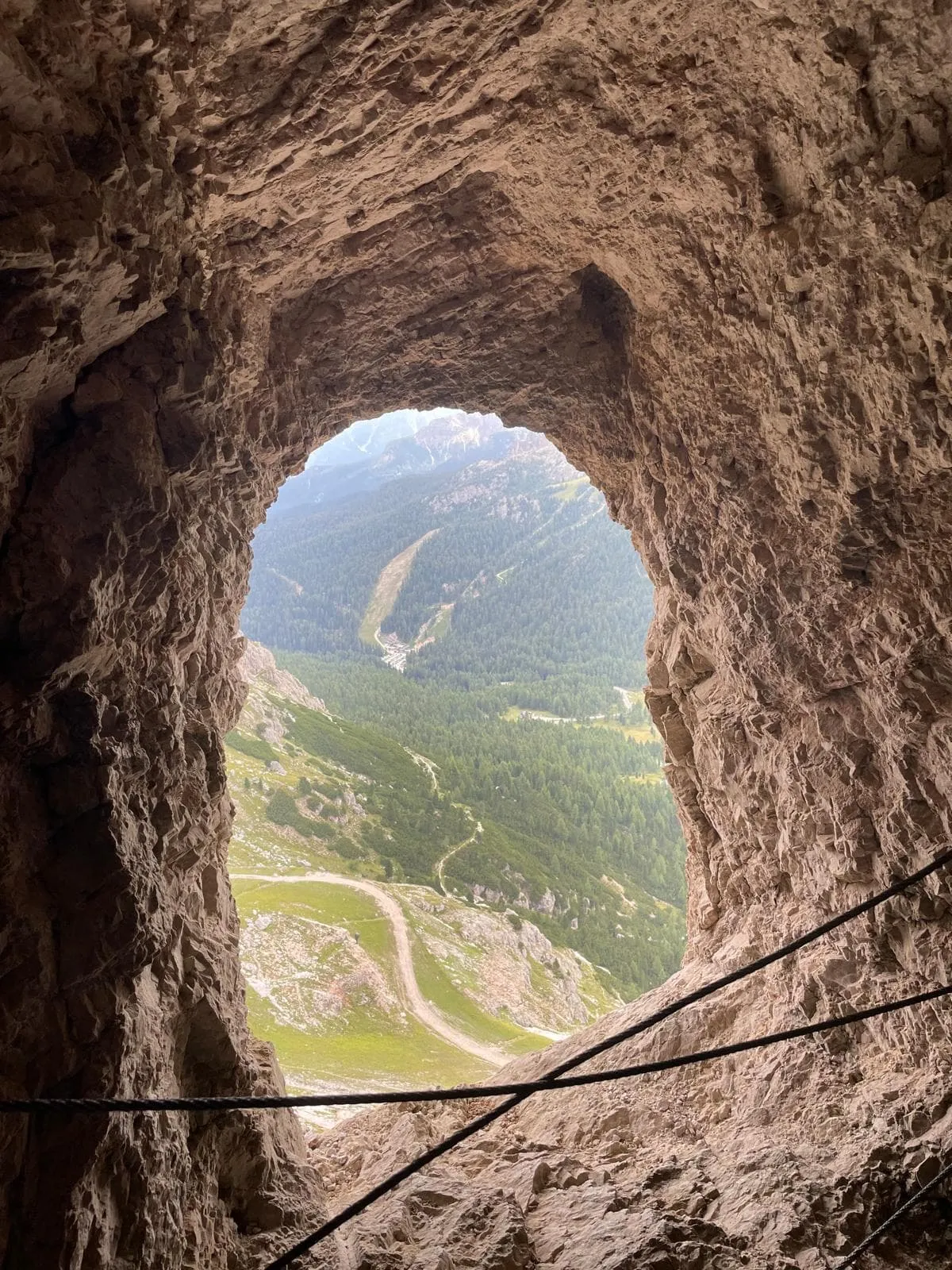
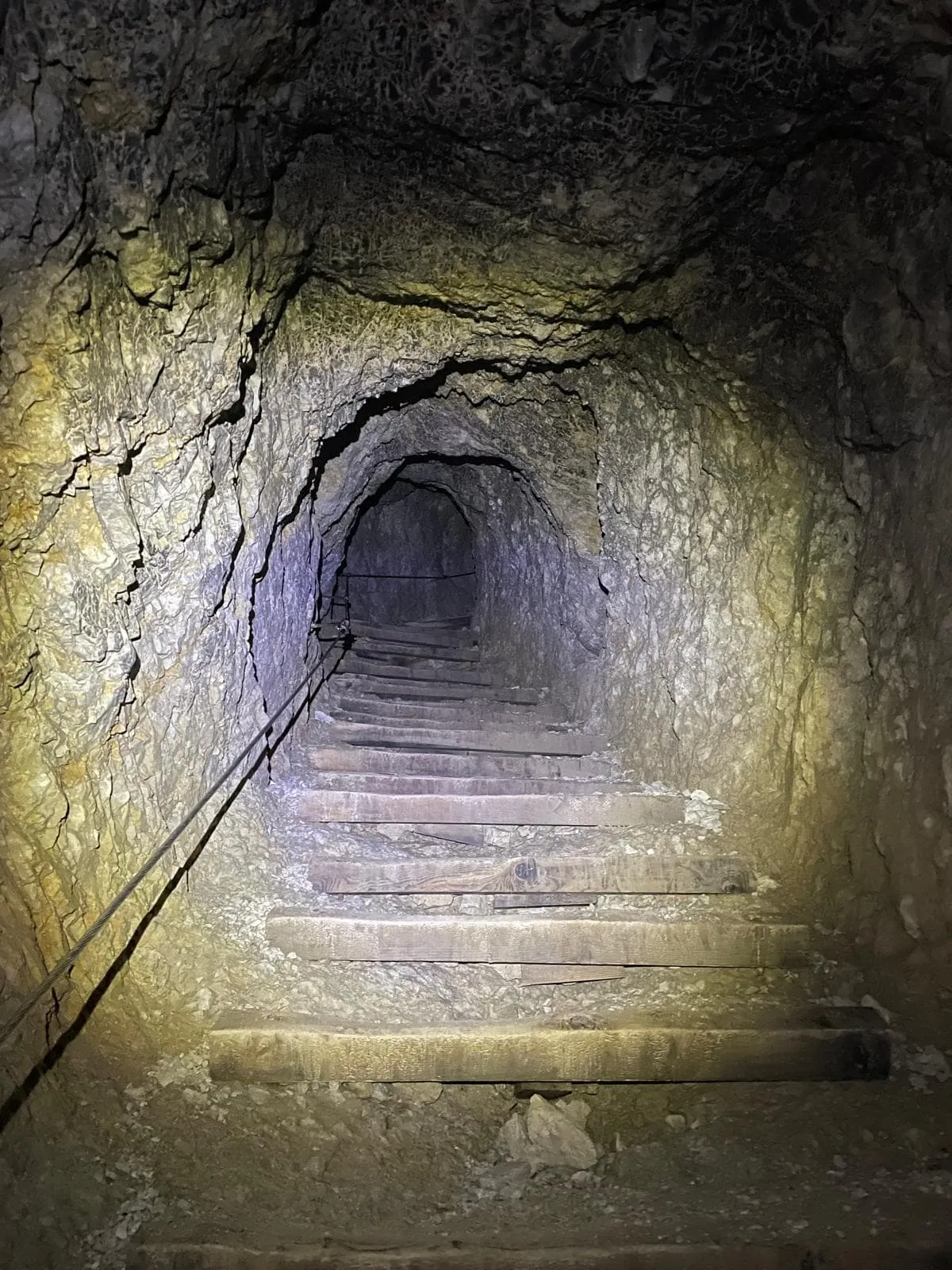
Today you walk down steep steps cut into the rock with a fixed cable to hold, pausing at windows cut directly into the rock with views down over Passo Falzarego and the valley below. Information panels and reconstructed dormitory rooms give you a picture of what life inside the mountain looked like during the war. The tunnels are described by lagazuoi.it as "an atypical via ferrata": technically undemanding, but dark, damp and steep in places.

Lagazuoi open-air museum

The tunnels are the centrepiece of the Lagazuoi open-air museum of the Great War (Museo all'Aperto della Grande Guerra). Nearby, the trenches and bunkers of the Cinque Torri are part of the same museum network. Lagazuoi.it offers a free museum app with texts, images and audio that works offline, with QR codes on the information panels, so you can read and listen as you go.

What are the Lagazuoi tunnels?

The history of the Lagazuoi tunnels

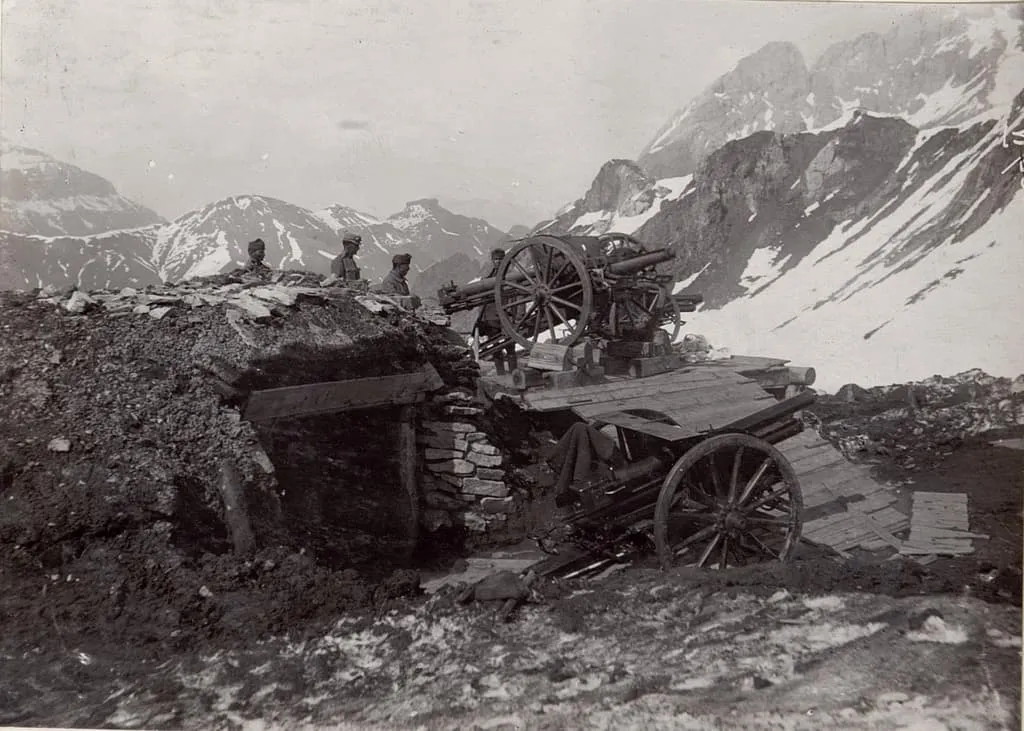
The front on Mount Lagazuoi lasted 29 months, from May 1915 to October 1917. The Piccolo Lagazuoi was a strategically vital position because it blocked both the Falzarego Pass and the lower Valparola Pass. The Italians held the Martini Ledge on the south face of the mountain, a narrow exposed position named after Major Ettore Martini. The Austro-Hungarians held the Anticima and the summit, with the Vonbank emplacement at the foot of the mountain behind six lines of barbed wire.

Italian soldiers tunnelled upward from the Martini Ledge through the rock in order to place a mine beneath the Austro-Hungarian positions above them. The mine gallery was fired on 20 June 1917. The Austrians fired mines of their own: according to lagazuoi.it, the scree on the south side of Mount Lagazuoi was created by four Austrian mines during the war. The fighting in the Dolomites is often called the "White War" because soldiers lived and fought in snow, rock and ice at altitude. For the broader story of how the Great War played out across this region, see our guide to World War I in the Dolomites.

Cengia Martini: the Italian ledge

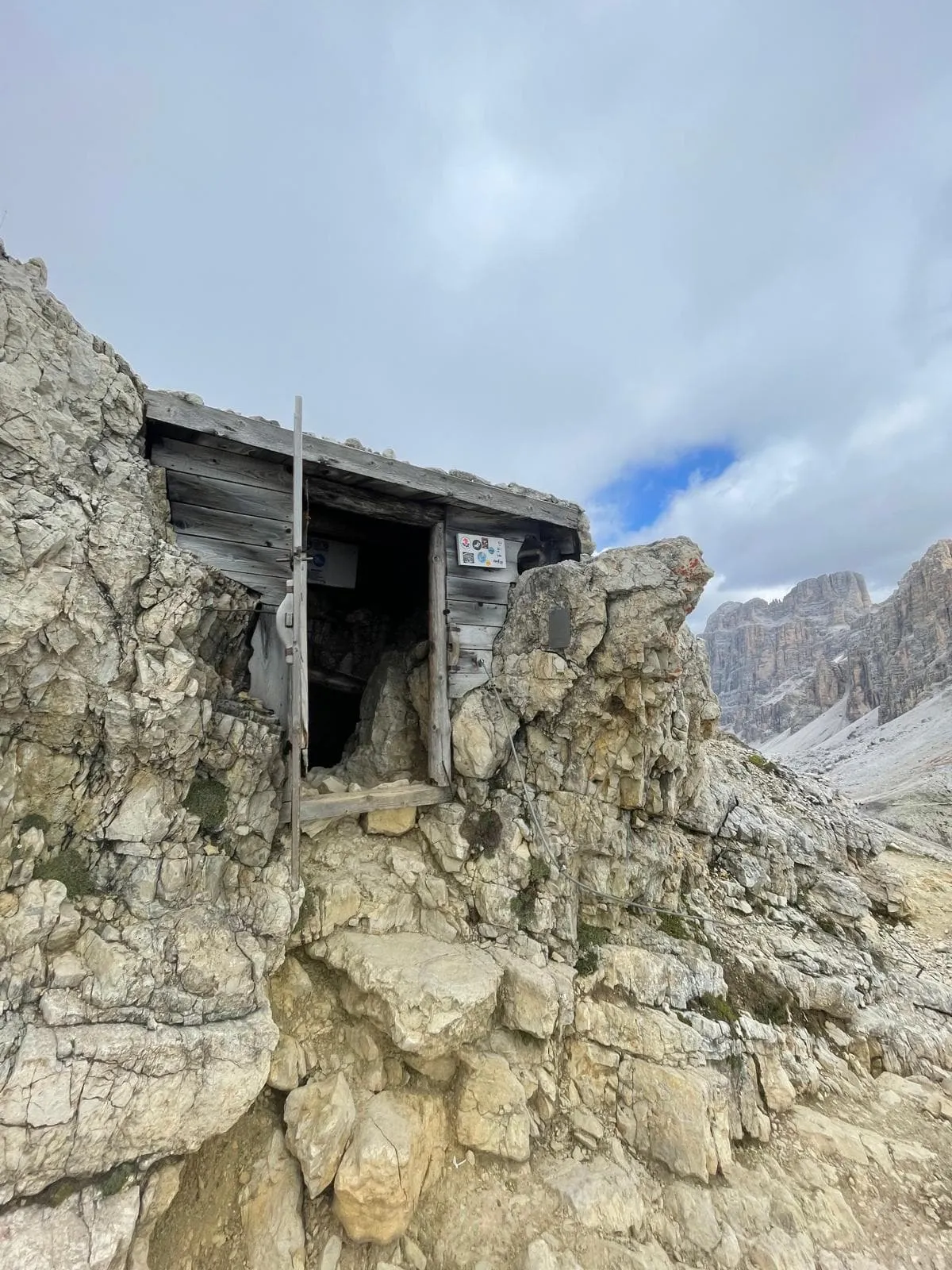
The Cengia Martini, the Martini Ledge, was the Italian foothold on the south face of the Piccolo Lagazuoi, named after Major Ettore Martini. Wooden military huts still stand on the ledge, and it was from this exposed perch that the tunnel system was begun. Lagazuoi.it describes a short detour to the ledge during the tunnel hike as "a must".

Dolomites WW1 tunnels beyond Lagazuoi

The Lagazuoi tunnels are part of a wider landscape of Dolomites WW1 tunnels, trenches and positions. On the same mountain, the Kaiserjäger trail climbs from the Valparola Pass past restored Austro-Hungarian trenches and tunnels. Nearby, the Cinque Torri plateau holds Italian trenches, bunkers and lookout posts from the same period, all part of the same open-air museum. Our dedicated guide to World War I in the Dolomites covers the wider context in full.

The history of the Lagazuoi tunnels

Hiking the Lagazuoi tunnels: route, time and difficulty

The full Lagazuoi tunnels hike is a loop from Passo Falzarego on paths 402 and 401, taking 2.5 to 3 hours, with 639 metres of ascent and descent. The walk through the tunnel itself takes less than an hour. Once you exit at the bottom, it is roughly half an hour back to the pass along the marked trail.

Start and finish Passo Falzarego, at the valley station of the Lagazuoi cable car
Total loop time 2.5 to 3 hours
Time inside the tunnel Less than 1 hour
Ascent and descent 639 m
Lowest point 2,107 m (Passo Falzarego)
Highest point 2,752 m (Rifugio Lagazuoi)
Paths CAI 402 and CAI 401
Tunnel length More than 1 km
Difficulty Technically simple; steep, dark, wet and slippery with cables to hold

The route is rated "easy" in English on lagazuoi.it, but the Italian rating is EE (for experienced hikers), and Cortina's tourist board lists it among via ferratas. In practice lagazuoi.it calls the tunnel technically undemanding, with cables along the steep steps to hold on to, but you should be sure-footed on slippery, uneven ground in the dark.

Down through the tunnel after the Lagazuoi cable car

The most common approach is to take the cable car to the top station at 2,732 m and walk to the Anticima, where a signposted path leads a short distance to the upper entrance of the tunnel. From there you descend through the mountain, following the cables and steps downward. After exiting at the lower end, you are back at Passo Falzarego in about half an hour along path 402.

Up through the tunnel from Passo Falzarego

It is also possible to walk up from the pass. Follow the Frontline Trail (Sentiero del Fronte, path 402) from Passo Falzarego to the junction where you turn left for the lower entrance above the Cengia Malvezzi. The French hiking site horizonrando.fr notes that going upward has an advantage: the tall, slippery steps inside are somewhat easier to manage on the ascent, and you are likely to meet fewer people. After exiting at the top, you can either take the cable car down or descend on path 401 via Forcella Travenanzes (2,507 m) and path 402 back to the pass, a steep descent on loose scree where trekking poles help.

Lagazuoi.it recommends the tunnel route as a good choice when the weather is poor.

Hiking the Lagazuoi tunnels: route, time and difficulty

What to bring: head torch, helmet and via ferrata kit

The essentials for the Lagazuoi tunnels hike are a head torch, a helmet, gloves, proper walking boots with grip and a warm layer. Inside the mountain it is cold and damp even in midsummer, so do not arrive in a T-shirt and trainers.

On the head torch specifically: lagazuoi.it lists it as required, and earthtrekkers.com notes from experience that a phone torch is not bright enough. You need a dedicated head torch because you will want both hands free to hold the cables on the steeper sections.

For helmets: lagazuoi.it and horizonrando.fr both list a helmet as essential. Cortina's tourist board (cortina.dolomiti.org) goes further and includes a via ferrata kit. Horizonrando.fr states that a harness and lanyard are not necessary for the tunnel route itself, but a head torch and helmet are non-negotiable. If you arrive without equipment, lagazuoi.it lists an info point with equipment rental at Passo Falzarego; check in advance what they stock.

Lagazuoi tunnels via ferrata: do you need a kit?

Not strictly: lagazuoi.it lists footwear, gloves, a head torch and a helmet but no harness, and horizonrando.fr says a harness and lanyard are not necessary for the Lagazuoi tunnels, where the fixed cable serves as a handrail on the stairs. Cortina's tourist board does, however, list a full via ferrata kit in its gear list. If you are uncomfortable on steep, wet steps or want added security, carrying a set does no harm. Note that the Kaiserjäger trail, a separate route on the same mountain, does include an exposed passage where a lanyard and climbing harness are genuinely useful.

What to bring: head torch, helmet and via ferrata kit

How to get to the Lagazuoi tunnels

Everything starts at Passo Falzarego, where both the valley station of the cable car and the lower trailhead are located. The pass is reachable by car or public transport from Cortina d'Ampezzo, Arabba or Badia. If you prefer to walk up to Rifugio Lagazuoi rather than take the cable car, follow paths 402 and 401 from the pass, a climb of 630 metres that takes about 2 hours.

Lagazuoi cable car

The Lagazuoi cable car runs from the valley station at Passo Falzarego (2,105 m) to the top station at 2,732 m in 2 minutes 50 seconds, in cabins that carry up to 50 people. The summer 2026 season runs from 6 June to 18 October. The tunnels are visitable during cable car opening hours. Tickets are sold at the valley station and prices are not included in our treks; check current times and ticket prices on the official website, lagazuoi.it, before you go.

How to get to the Lagazuoi tunnels

The Lagazuoi tunnels on the Alta Via 1

The Alta Via 1 crosses the Lagazuoi area between Rifugio Scotoni and Rifugio Scoiattoli. On our Alta Via 1 treks, walking through the Lagazuoi tunnels is offered as an optional alternative on that stage. We also run shorter treks centred on Lagazuoi. The table shows five of our treks that pass Monte Lagazuoi; only the two-day Best of Alta Via 1: Lagazuoi includes a night at Rifugio Lagazuoi.

Trek Days What you do at Lagazuoi From price (2 sharing)
Best of Alta Via 1: Lagazuoi 2 Day 1: circular hike from Passo Falzarego with tunnels as optional route; night at Rifugio Lagazuoi. Day 2: Cinque Torri hike via Rifugio Averau 225 euros
Best of Alta Via 1: Lago di Braies to Lagazuoi 3 Finish on Mount Lagazuoi; cable car down to Passo Falzarego 335 euros
Short Alta Via 1 4 Day 3 crosses Lagazuoi area; tunnels optional alternative 565 euros
Full Alta Via 1 8 Same Lagazuoi stage with tunnels as optional alternative 1,195 euros
Famiglia Alta Via 1 3 Family loop from Passo Falzarego via Rifugio Scoiattoli and Rifugio Dibona 335 euros

Prices per person for two people sharing, as of October 2026; prices can vary by date. All treks include huts booked by us with half board (dinner and breakfast), a detailed day-by-day itinerary and our trekking app with the route on the map, your GPS position, the elevation profile and offline use. The cable car, travel to the trailhead, lunch, drinks and insurance are not included. Free cancellation up to eight weeks before departure.

Staying at Rifugio Lagazuoi

Rifugio Lagazuoi sits at 2,752 m, the highest and largest hut on the Alta Via 1, with a terrace looking out over the Cunturines, the Fanes peaks, the Tofane, the Odle and the Marmolada. One of our Alta Via 1 guests called sunrise at Rifugio Lagazuoi "a particular highlight". Our two-day Best of Alta Via 1: Lagazuoi includes a night there with half board. The upper entrance to the tunnel system is a short signposted walk from the hut.

If your preferred Alta Via 1 dates are no longer available, two other Dolomites treks make a good alternative. The Half Alta Via 2 is a 7-day, 77.2 km route from Bressanone through the Puez, Pisciadù and Marmolada huts, from 795 euros. The Classic Dolorama Weg is a gentler 4-day, 61.8 km hut-to-hut walk through South Tyrol, from 375 euros. See our Alta Via 2 guide and the Dolorama Weg for full details.

The Lagazuoi tunnels on the Alta Via 1

Inside the Lagazuoi tunnels: a first-hand account

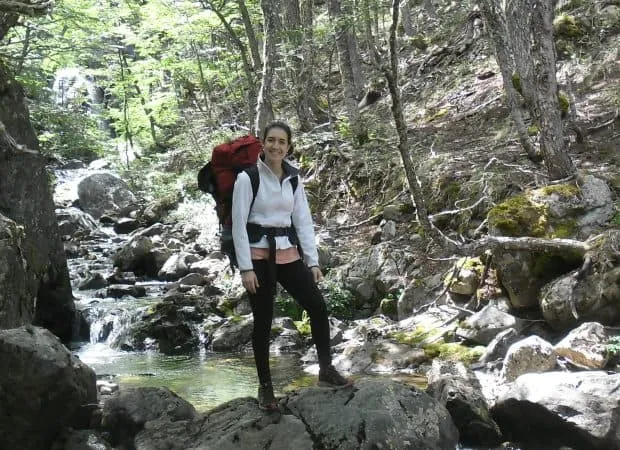
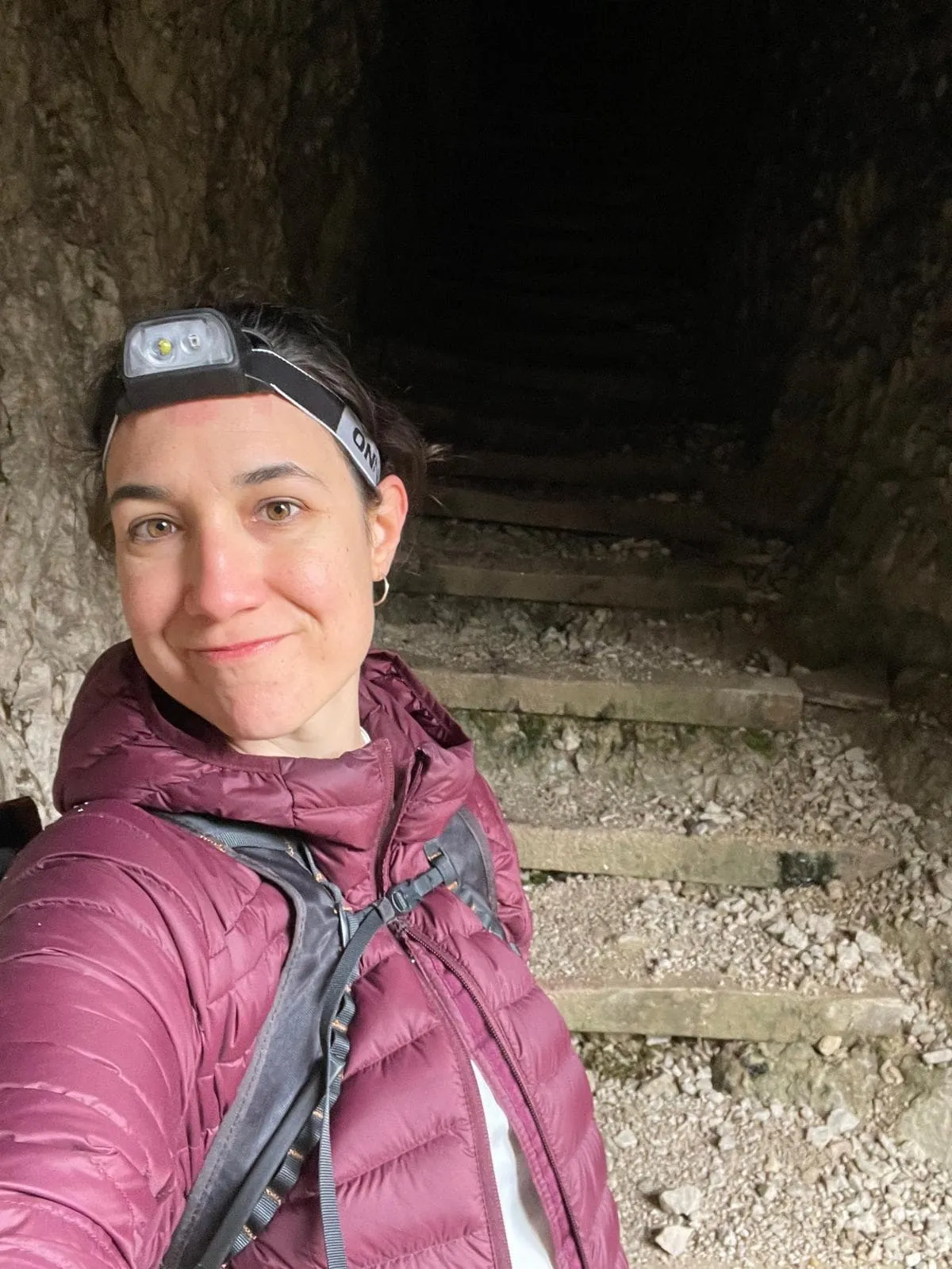
One of our team walked the Lagazuoi tunnels in summer 2025, descending from the top station alone. Her first observation is that you cannot get lost going downward: there are a few side branches you can peer into, but the main tunnel has one exit and that exit is at the bottom.

Inside, it is dark, quiet and damp. Water drips from the ceiling throughout, and the floors are uneven and slippery underfoot. Her strongest piece of advice is not to rush. The cables are there to hold, but the footing demands your attention. She did not wear a helmet, though many other hikers were wearing one. If you are tall, she notes, a helmet is a sensible precaution given the low ceilings at several points.

The head torch proved essential, not as a luxury, but because both hands were needed for the cables on the steeper descents. She spent a little over an hour inside, reading the information panels at each point along the route, and emerged into sharp Alpine light high above the Falzarego valley.

Part way through, she passed an Italian family with three young children, roughly six to eight years old, who were thoroughly enjoying themselves exploring the tunnels. None of the group was wearing via ferrata gear.

The moment that stays with her is stepping out of the dark into that light: the contrast between the narrow, dripping stone corridors and the open Dolomite panorama is immediate and arresting. Walking through passages where soldiers lived and worked for more than two years gives the whole experience a weight that a surface hike does not.

Inside the Lagazuoi tunnels: a first-hand account

More to see around Monte Lagazuoi

The Lagazuoi tunnels combine well with the Kaiserjäger trail on the same mountain, the WWI positions at the Cinque Torri and the huts of Rifugio Averau and Rifugio Nuvolau, all within reach of Passo Falzarego.

Kaiserjäger trail

The Kaiserjäger trail is an equipped path that follows the Austro-Hungarian supply and defensive lines from the Valparola Pass, past the preserved trenches and the Vonbank emplacement, over a suspension bridge and up to the ridge and summit of Mount Lagazuoi at 2,778 m. From the Valparola Pass to Rifugio Lagazuoi the path covers 3,410 metres with 673 metres of ascent from the Falzarego Pass. Lagazuoi.it describes it as demanding and exposed in places, but equipped with fixed ropes. After the suspension bridge there is an exposed passage where a lanyard and climbing harness are useful; our product page for the two-day Lagazuoi trek notes that via ferrata equipment is required on this section. In wartime, this path served as the Austro-Hungarian supply route up the mountain.

The Cinque Torri, close to Passo Falzarego, hold Italian trenches, bunkers and lookout positions from the same period, all part of the same open-air museum as the Lagazuoi tunnels. Day 2 of our two-day Lagazuoi trek passes through the Cinque Torri and Rifugio Averau, combining the WWI history of both sites in a single itinerary. For more multi-day routes in this corner of the Alps, see hut-to-hut hiking in the Dolomites.

Lagazuoi tunnels: frequently asked questions

How do I get to the Lagazuoi tunnels?

The Lagazuoi tunnels start and finish at Passo Falzarego, which you can reach by car or public transport from Cortina d'Ampezzo, Arabba or Badia. From the pass you can take the Lagazuoi cable car to the top station and walk down through the tunnels, or walk up on path 402, a climb of 630 metres taking roughly 2 hours. The cable car valley station and the lower trailhead are both at the pass.

How long are the Lagazuoi tunnels?

The restored Lagazuoi tunnel inside the Piccolo Lagazuoi runs for more than 1 km, according to lagazuoi.it, and you walk through it in less than an hour. The system includes a mine branch, a helical spiral section, an artillery gallery, a connecting branch and a lower section descending to the Martini Ledge. In total the tunnel covers several distinct galleries, all restored with cables, steps and information panels.

How long does it take to walk through the Lagazuoi tunnels?

Walking through the tunnel itself takes less than an hour. Lagazuoi.it gives 2.5 to 3 hours for the whole loop from Passo Falzarego, and about half an hour from the tunnel exit back to the pass. Allow extra time if you want to read every panel inside.

Do you need a helmet for the Lagazuoi tunnels?

A helmet is listed as required by lagazuoi.it, horizonrando.fr and Cortina's tourist board (cortina.dolomiti.org). The tunnel ceilings are low in several places, and the rock is irregular. If you do not have one, lagazuoi.it lists an equipment rental point at the info point in Passo Falzarego; check what is available before you rely on it being open.

Is the Lagazuoi tunnel walk a via ferrata?

Lagazuoi.it describes the tunnel route as "an atypical via ferrata" but rates it as technically undemanding. Horizonrando.fr confirms that a harness and lanyard are not necessary for the tunnel itself. Cortina's tourist board does include a via ferrata kit in its gear list. The cables act as handrails on steep steps. The Kaiserjäger trail on the same mountain is a different matter and does include exposed sections where a harness and lanyard are genuinely useful.

Should you walk the Lagazuoi tunnels up or down?

Most people descend through the tunnels after taking the cable car to the top station, and this is the direction lagazuoi.it describes as usual. Horizonrando.fr notes that walking upward has advantages: the steep steps inside are easier to manage on the ascent and you meet fewer people. Both directions are possible; going down is the usual choice if you take the cable car up.

What is the history of the Lagazuoi tunnels?

Italian soldiers dug the Lagazuoi tunnels during World War I, while the front ran across the mountain from May 1915 to October 1917, to place a mine under the Austro-Hungarian position on the Anticima of the Piccolo Lagazuoi. The mine was fired on 20 June 1917. The front ran here for 29 months, with Italians holding the Martini Ledge and Austro-Hungarians holding the summit and the Vonbank emplacement behind six lines of barbed wire. Volunteers restored the tunnels between 1997 and 2004.

When can you visit the Lagazuoi tunnels?

The Lagazuoi tunnels are visitable during the opening hours of the cable car. In 2026 the summer season runs from 6 June to 18 October. For current opening dates and conditions, check lagazuoi.it directly before you travel.

How do I get to Rifugio Lagazuoi?

Rifugio Lagazuoi at 2,752 m is reached either by the Lagazuoi cable car from Passo Falzarego (top station at 2,732 m, a 2-minute 50-second ride) or on foot via paths 402 and 401 from the pass, a climb of 630 metres taking about 2 hours. On our two-day Best of Alta Via 1: Lagazuoi, you sleep at the hut with half board included, and the upper entrance to the tunnels is a short walk away.


Lagazuoi tunnels: frequently asked questions

About Us

At Bookatrekking.com, you will find the trek that will make your life unforgettable. Whether you want to explore the Inca Trail or climb Kilimanjaro. Bookatrekking.com has a wide and varied range of first-class treks. No false promises are made here. Transparent prices and bookings are fixed instantly. Find, compare, book and trek!
Read more about us
About Us
About Us

Also Interesting