

Alta Via del Camoscio: Part of the lesser known Alta Via 3

Alta Via del Camoscio: Part of the lesser known Alta Via 3
Trekking experts per destination
Free cancellation up to eight weeks in advance
Quick personal advice

The Alta Via del Camoscio, a section of the lesser-travelled Alta Via 3, is a mountain lover's delight tucked away in the eastern Dolomites of northern Italy. Offering a quieter experience than its more famous counterparts, this high-altitude trek covers around 30 kilometres, starting and finishing in the iconic Alpine hub of Cortina d'Ampezzo. Along the way you'll hike through valleys and shimmering alpine lakes, surrounded by peaks such as Punta Nera, Cime del Laudo and La Cesta, which tower above 2,500 metres.

Challenging yet rewarding, the medium to high level of difficulty makes it ideal for experienced hikers with an adventurous spirit. Expect steep climbs and descents that will test your stamina... But oh, the rewards: Endless panoramic views, tranquillity and a connection with the beauty of the Dolomites. If you are looking for an escape from the well-known paths of the Dolomites, the Alta Via del Camoscio is for you. This is your ticket to soak up the views and enjoy the tranquillity of a less crowded - but just as breathtaking - route.

What and Where Is the Alta Via del Camoscio?

Nestled in the heart of the Dolomites, Cortina d'Ampezzo is a jewel of northern Italy, renowned for its vibrant outdoor culture. Known as the 'Queen of the Dolomites', this alpine town sits at 1,224m in the Valle d'Ampezzo and is the perfect base for trekkers, at the start and end of the Alta Via del Camoscio.

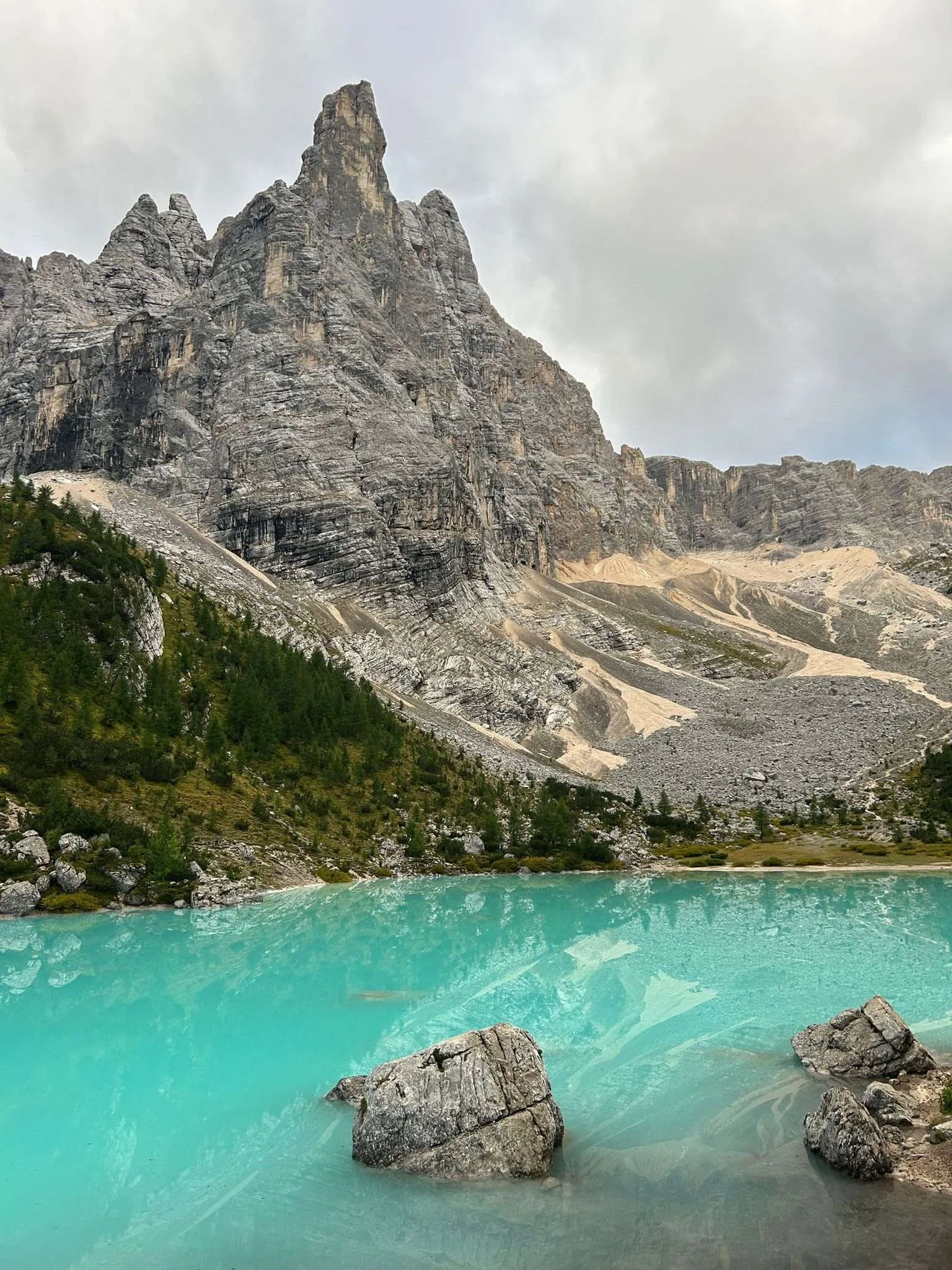
To the east of the town lies the Sorapiss Massif, a group of mountains characterised by jagged peaks, towering rock faces and geological diversity. One of its crown jewels is the Lago di Sorapiss, a glacial lake with turquoise waters framed by cliffs - a must for any hiker. Lucky you, because after the second stage you will spend a refreshing night at the Rifugio Vandelli. The region's dolomitic rock, shaped by millions of years of erosion, gives the landscape a unique texture and colour, changing from soft pinks at sunrise to deep greys and whites as the day progresses.

The area above Cortina is also a playground for outdoor enthusiasts, with trails that wind through lush valleys, climb high mountain passes and trace the ridges of iconic peaks such as Monte Cristallo (3,221 metres) and the Pomagagnon Group. Hikers can enjoy more technical routes, some of which venture into the heart of the Sorapiss massif, such as the Alta Via del Camoscio.

What and Where Is the Alta Via del Camoscio?

Highlights on the Alta Via del Camoscio

The Alta Via del Camoscio is a high altitude alpine trail with unique highlights. Along the way you'll come across some amazing landscapes and attractions. Here are some of the places you can expect:

Monte Cristallo (3221 m)

One of the most iconic peaks in the Dolomites, it dominates the Cristallo Group with its rock faces, jagged ridges and sheer cliffs. The peak is known for being a front line during WWI, with remnants of trenches and tunnels still visible today.

Monte Cristallo (3221 m)
Lago di Sorapiss
Lago di Sorapiss

Lago di Sorapiss

In the heart of the Dolomites lies this glacial lake at 1,923 masl. Known for its turquoise waters, the lake is surrounded by dramatic peaks, including the Dito di Dio (Finger of God). Accessible via a moderately challenging footpath, Lake Sorapiss is a popular destination for adventurers seeking tranquil beauty and unforgettable alpine scenery. Its unique colour is the result of mineral deposits from glacial meltwater, making it one of the most photographed lakes in the Dolomites. You can spend a night near this iconic lake during your Alta Via del Camoscio if you stay at Rifugio Vandelli!

Punta Sorapiss

The highest peak in the Sorapiss massif (3,205m). Known for its jagged silhouette, this mountain is a magnet for experienced climbers. The peak is surrounded by sheer rock faces, ridges and the famous waters of Lago di Sorapiss, at the foot of the massif.

Punta Sorapiss
Punta Sorapiss
Cortina d'Ampezzo
Cortina d'Ampezzo

Cortina d'Ampezzo

Cortina d'Ampezzo, a picturesque alpine resort surrounded by mountains, is a year-round destination offering world-class skiing in winter and hiking and climbing in summer. It also has a charming town centre with boutiques and fine restaurants.

Is the Alta Via del Camoscio for Me? - Difficulty

The Alta Via del Camoscio is a short but demanding trek for experienced hikers only. The route includes the Via Ferrata Terza Cengia: a relatively easy via ferrata with a few more technical sections on exposed, open terrain, for which you need a via ferrata kit (harness, lanyard and helmet), a head for heights and sure feet. Add steep and narrow paths, cables and exposed traverses, and you have a trek that asks for real mountain experience.

On top of that, there is a deadline. The last cable car from Rifugio Faloria down to Cortina already leaves in the mid-afternoon, and the second day is long. This trek is therefore only suitable for hikers who know their own pace and ability well, and who can make sure they reach the cable car in time.

The combination of high altitude, unforgettable views and varied terrain makes this a challenging but unique hiking experience in the Dolomites, ideal for those looking for an unusual trek.

Is the Alta Via del Camoscio for Me? - Difficulty

When is the Best Season to Hike the Alta Via del Camoscio?

The best time to walk the Alta Via del Camoscio is during the summer months, from early or mid-July to mid-September. The trek ends with the Faloria cable car down to Cortina, and this cable car only opens for the summer season in early to mid-July. That is why this trek starts a little later in the season than many other treks in the Dolomites. During this period the weather is generally stable, with clear skies and mild temperatures, ideal for high-altitude trekking.

July and August are the peak summer season, with warm days, fully accessible trails and alpine meadows full of wildflowers in early summer. This also means busier huts and popular routes, so book well in advance. Early in July there may still be snow on some of the higher sections, so check trail conditions before setting out, as well as the opening dates of the Faloria cable car, as the trek depends on it.

Regardless of when you go, it's important to be prepared for the unpredictable weather in the Dolomites. Afternoon thunderstorms are not uncommon in summer, and temperatures can drop significantly at night or at higher altitudes. Always check the local forecast and pack accordingly to ensure a safe and enjoyable hike.

When is the Best Season to Hike the Alta Via del Camoscio?

How to Get To and From the Starting Point of the Trek

As mentioned above, the Alta Via della Marmotta starts in Cortina d'Ampezzo, a famous destination in the Dolomites and a good base for exploring the region. Cortina is easy to reach from the main cities of northern Italy. If you're coming by plane, the nearest airports are Venice Marco Polo and Treviso, both about 2 hours away by car. From the airports you can take direct buses operated by Cortina Express or ATVO.

Alternatively, you can take the train to Cortina railway station. Driving is another option, with scenic roads taking you through the Dolomites. You'll find more information in your personal guide, which you'll receive when you book your Alta Via del Camoscio Loop with us.

How to Get To and From the Starting Point of the Trek

Day by Day Itinerary: 4-Day Tour in the Alta Via del Camoscio

Starting and finishing in Cortina, this 4-day trek combines gentle valley walks with challenging climbs and exposed paths. An adventure for those who love panoramic views and the challenge of an ascent. Here's a typical itinerary:
Day
1

Cortina d'Ampezzo - Via Ferrata Terza Cengia - Rifugio Son Forca

Duration: 05:35 h
Distance: 11.5 km
Ascent: 1250 m
Descent: 270 m
Lowest Point: 1220 m
Highest Point: 2190 m

A short but serious first day, with around 1,250 metres of climbing from the centre of Cortina. The original route takes you over the Via Ferrata Terza Cengia, the grand finale of the day. For that you need a via ferrata kit, a helmet and a head for heights. Not keen on the ferrata? There is a shortcut that skips it and takes you straight to the hut.

The first two kilometres follow a ski lift, and the little lift hut at the top marks the 2-kilometre point. From there you continue on white paths through green grass, with grey mountain walls surrounding you. After about 3.7 kilometres you cross a path where you choose your route: the signposts on the tree show the way, and for the via ferrata adventure you turn left.

From the crossroads the path slowly gets narrower, rockier and steeper, while the view of Cortina spreads out below you. After a total of 6.9 kilometres the Via Ferrata Terza Cengia starts, so make sure you are geared up for the next stretch. It is a relatively easy via ferrata with a few more technical sections, but the terrain stays exposed and open, so keep a cool head.

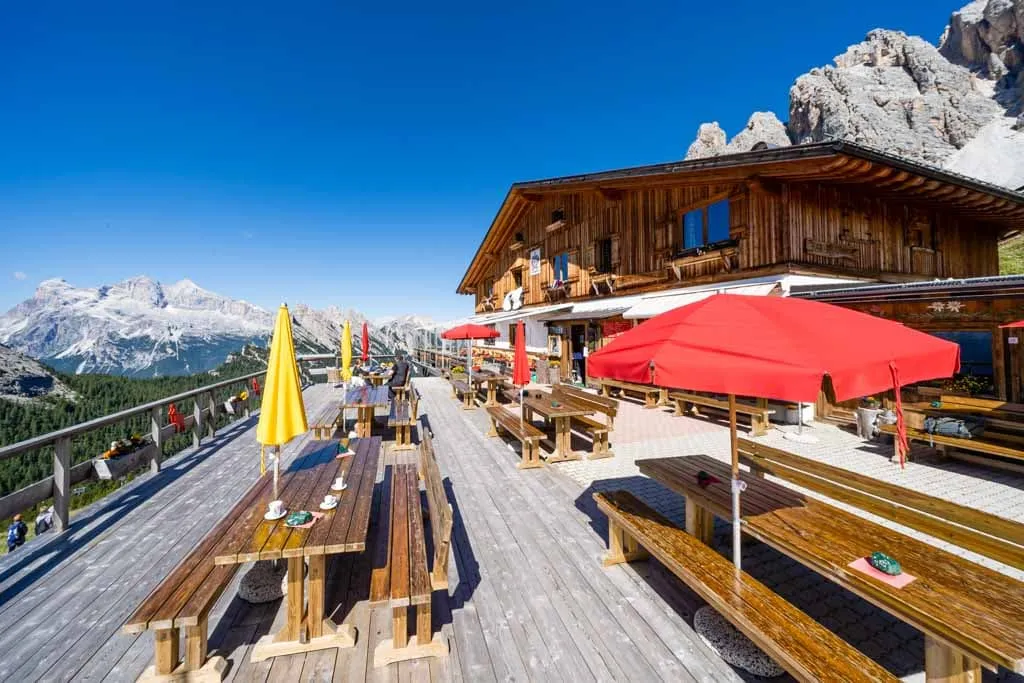
After the ferrata there is a short descent, and compared to earlier in the day the rest of the way is relatively flat. When you start to climb one last time, the hut is almost there. Sit down on the sunny terrace of Rifugio Son Forca and relive your via ferrata adventure.

Rifugio Son Forca

Info
Rifugio Son Forca
Rifugio Son Forca
Day
2

Rifugio Son Forca - Lago di Sorapis - Rifugio Faloria Cable Car

Duration: 07:00 h
Distance: 16.6 km
Ascent: 820 m
Descent: 900 m
Lowest Point: 1730 m
Highest Point: 2290 m

A long and demanding day with a deadline: you have to catch the last cable car from Rifugio Faloria down to Cortina, so check the timetable before you go. Miss it, and you face an extra 5 kilometres and around 900 metres of descent down to Cortina. Have an early breakfast and do not wait until 8:00 to start walking: set off as early as you can and keep an eye on the clock. Is the time pressure too much for you? There is a shortcut, but it skips Lago di Sorapis, the highlight of the day.

The day starts with a descent. It begins easy but soon gets more challenging, with a narrow rocky passage where cables help you across. The first 7 kilometres take you down through the forest to the lowest point of the day, at around 1,730 metres. Then the trail climbs along the cliffs of the Sorapiss group, with metal staircases and a path cut into the rock face, to Rifugio Vandelli. Take a quick break here to recharge, but keep it short. Just beyond the hut lies the milky turquoise Lago di Sorapis at 1,923 metres, one of the most photographed sights of the Dolomites.

From the lake, head back the way you came and bend to the left for the most challenging climb of the day: around 350 metres up a steep and very narrow path. The views are beautiful, but every step needs to be steady, and in places there is little room to let others pass or to take a proper break. After the high point, close to 2,300 metres, a traverse with exposed sections below the Sorapiss group leads to Rifugio Faloria. Grab a drink on the terrace if the clock allows, then take the cable car back down to town.

Alta Via del Camoscio vs Other Treks in The Dolomites

The Italian Dolomites are one of the most popular trekking regions in the world. What makes them so popular is not only the stunning scenery, but also the variety of trekking options available to everyone, regardless of fitness level or previous trekking experience. If you are new to trekking, there are shorter itineraries with accessible paths, such as the Alta Via della Marmotta, Tre Cime di Lavaredo Hike , Alta Via del Granito, or The Palaronda Trek. If you prefer longer routes, you can try the popular Alta Via 1 or the Meraner Höhenweg, which is not technically part of the Dolomites but is located nearby, close to the Austrian border. For experienced hikers seeking a real challenge, the via ferratas on the Alta Via 2 offer the thrill you’re looking for!

While the Alta Via 1 and 2 attract large crowds due to their popularity, the Alta Via del Camoscio offers a sense of solitude and discovery, traversing less travelled paths that still offer the same dramatic landscapes. For those looking for an off-the-beaten track adventure in unspoilt countryside, this trail is a hidden gem waiting to be discovered.

Alta Via del Camoscio vs Other Treks in The Dolomites

Staying in Rifugios on the Alta Via del Camoscio

One of the highlights of trekking along the Alta Via del Camoscio is the opportunity to stay in traditional huts, which offer not only shelter but also an unforgettable experience immersed in the alpine culture of the Dolomites. Strategically located along the route, these huts offer comfort, hearty meals and the chance to rest and recharge after a day's trekking.

You'll stay at the Rifugio Son Forca (2,235 m) near the dramatic Monte Cristallo, the Rifugio Vandelli near the enchanting Lago di Sorapiss, a must-see, and the Rifugio Faloria (2,123 m) with panoramic views of Cortina d'Ampezzo and the surrounding valleys.

Life in the refuge is simple but very enriching. You'll sleep in dormitory-style accommodation or in shared rooms, and most huts offer basic facilities, including bathrooms and sometimes hot showers. Many huts serve local dishes such as polenta, speck and strudel.

Staying in a refuge along the Alta Via del Camoscio is more than just a practical choice; it's an opportunity to meet other walkers, enjoy local hospitality and experience the natural beauty of the Dolomites up close. The above brief description of some of the refuges you can stay in along the Alta Via del Camoscio is subject to availability. If these are not available, you can stay in alternative huts which we can also arrange for you.

Packing List for the Alta Via del Camoscio

It doesn't matter where you are trekking or for how long: carrying the right equipment with you is paramount. For a hiking trip in the mountains, a good is backpack essential. Its size will depend on how many days you will be spending in the mountains, the season, and the clothes you will be taking with you. We have prepared a packing list with some essential clothing that you should include and some extras that you may find useful:
  • Essentials

  • Extras

Alta Via del Camoscio 8187

Where Can I Book the Alta Via del Camoscio?

At Bookatrekking.com you can book the self-guided Alta Via del Camoscio and many other treks. We take care of all the details for you, including arranging accommodations and providing you with relevant information well in advance of your trek. Find our offers here. Our easy-to-use platform allows you to browse and compare different trekking options and to find the perfect fit for your interests, abilities, and budget.

If you have any questions about a specific trek or need help choosing the right one for you, our team of trekking experts is here to assist you. Simply reach out to us and we will be happy to provide you with personalized recommendations and advice to help you plan the trekking adventure of a lifetime.

About Us

At Bookatrekking.com, you will find the trek that will make your life unforgettable. Whether you want to explore the Inca Trail or climb Kilimanjaro. Bookatrekking.com has a wide and varied range of first-class treks. No false promises are made here. Transparent prices and bookings are fixed instantly. Find, compare, book and trek!
Read more about us
About Us
About Us

Also Interesting