Peaks of the Balkans Trail: Route, Stages and Permits

Rintsje Bosch
Rintsje Bosch
Rintsje Bosch
01 Oct 2026 • 17 min read
Peaks of the Balkans Trail: Route, Stages and Permits
Trekking experts per destination
Free cancellation up to eight weeks in advance
Quick personal advice

The Peaks of the Balkans Trail connects Albania, Kosovo and Montenegro in a single circular hike through the Accursed Mountains, a remote corner of the Western Balkans where shepherd paths cross three national borders. Each day ends at a family guesthouse in an isolated valley, far from tourist crowds. If you are considering the Tour du Mont Blanc or the Alta Via 1 and want something rawer and quieter, this is the trail to compare. This guide answers the four questions most hikers ask first: how hard is it, guided or self-guided, how does the permit work, and when should you go. At Bookatrekking, our local partner handles the Cross Border Permits, all guesthouse bookings and the necessary transfers, whether you travel with a guide or with a digital travel guide and interactive maps.

Why Hike the Peaks of the Balkans? A Wilder Alternative to the Tour du Mont Blanc

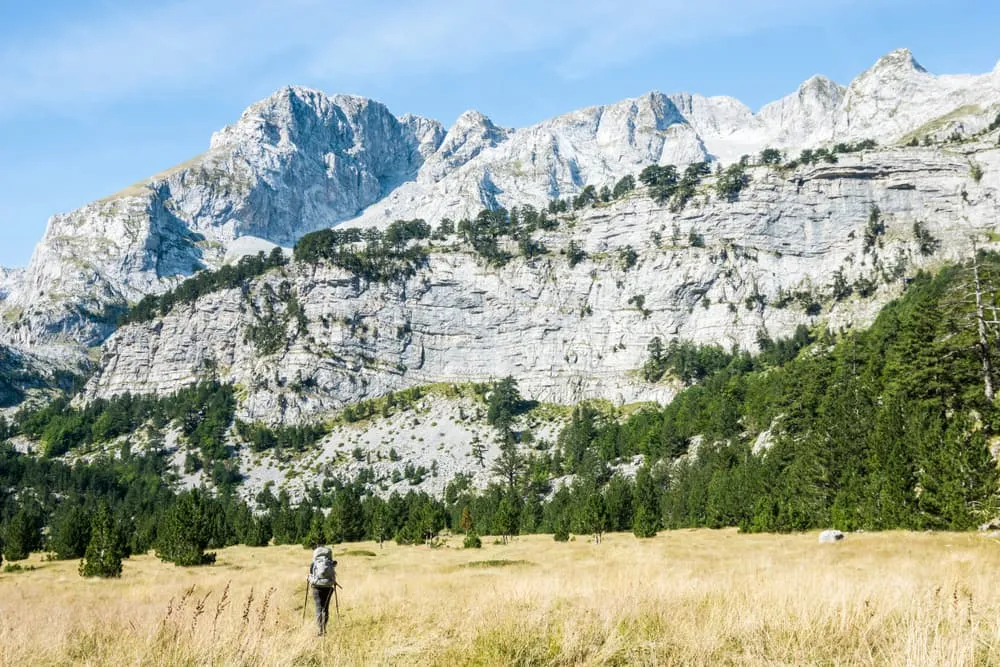
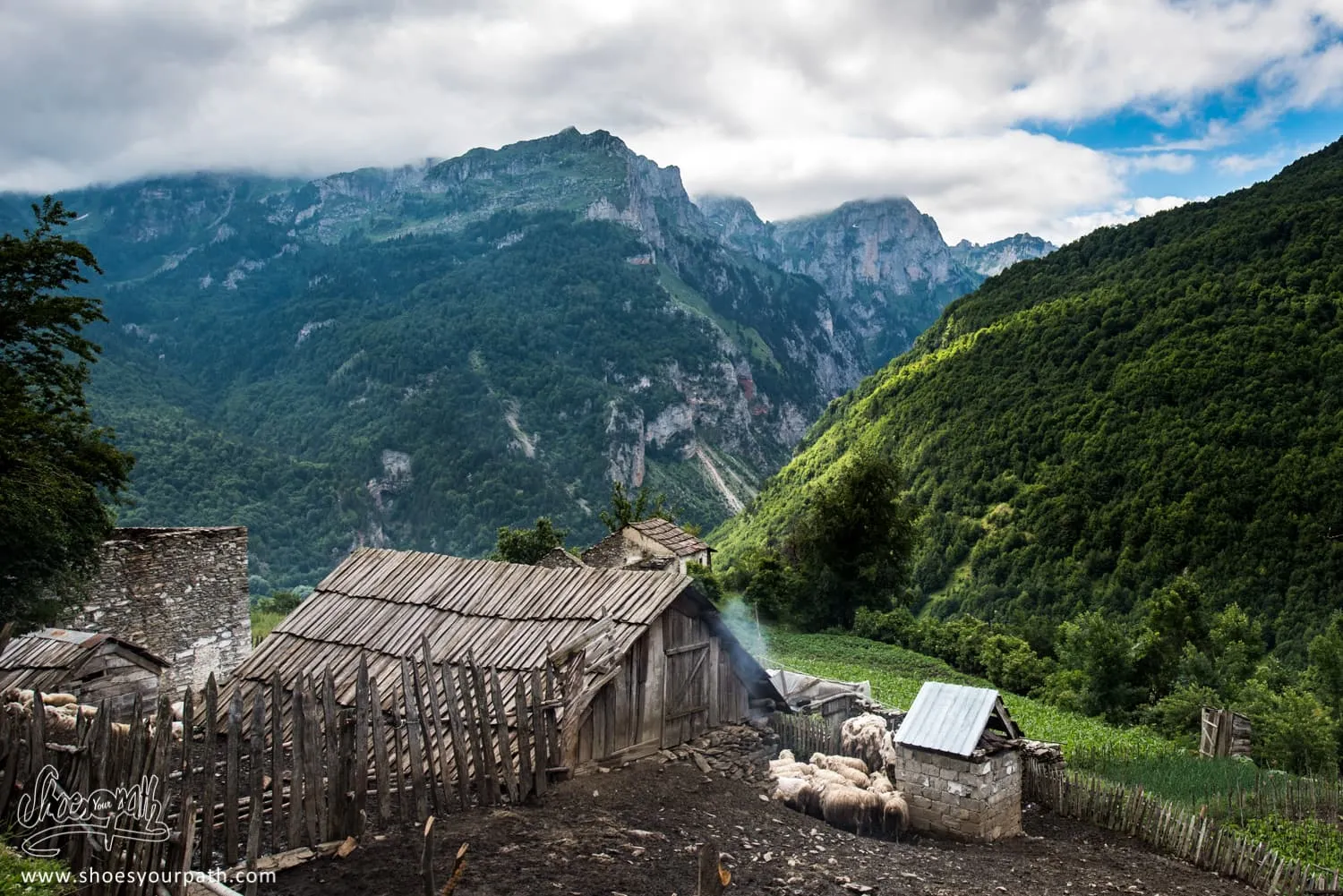
Until roughly twenty years ago this region was virtually inaccessible. The cross-border route only became possible once the borders between Albania, Kosovo and Montenegro opened. Today the 192-kilometre circuit runs through one of Europe's most remote mountain regions. That combination of historical inaccessibility and late-stage trail development is precisely what gives the Peaks of the Balkans its character: the infrastructure is practical rather than polished, the villages have not been rebuilt around tourism, and the landscape has had no reason to change.

The route passes through the Balkan Green Belt, an initiative set up in 1999 that protects wildlife across national borders. Brown bears, wolves and lynx move freely across the three countries here. The trail also crosses Albania's only national nature reserve, home to brown bears and around forty of the Balkan's last remaining lynx. This is not the kind of wildlife-spotting you sign up for on a guided game drive; it is an incidental backdrop to walking through one of Europe's genuine last wildernesses.

The wilder alternative. The Tour du Mont Blanc and the Alta Via 1 are outstanding trails. They are also busy, and their mountain huts fill up far in advance. If your preferred dates for the Alta Via 1 or the Tour du Mont Blanc are no longer available, the Peaks of the Balkans Trail is a natural next choice, with far fewer hikers on the path. The accommodation here is family guesthouses and shepherd's huts, not Alpine refuges, and the local food is as good as anything you will eat in the French or Italian Alps. The self-guided version starts on almost any day throughout the season, which gives you more flexibility with your dates. For a full overview of long-distance routes across Europe, see the best hiking routes in Europe. To go straight to the trip details, visit the guided Peaks of the Balkans Trail in 10 days.

Where Is the Peaks of the Balkans Trail? Map and Route Overview

The trail forms a loop in the Accursed Mountains, also called the Albanian Alps. This range straddles the border zone between northern Albania, western Kosovo and eastern Montenegro. The Albanian Alps are the highest section of the Dinaric Alps, a mountain chain that runs roughly 650 kilometres from Slovenia south through Croatia, Bosnia and Herzegovina and Serbia all the way into Albania. For context on the broader region, see our guides on hiking in Albania and trekking in Montenegro. Those curious about the Dinaric range further north can also explore hiking in Croatia.

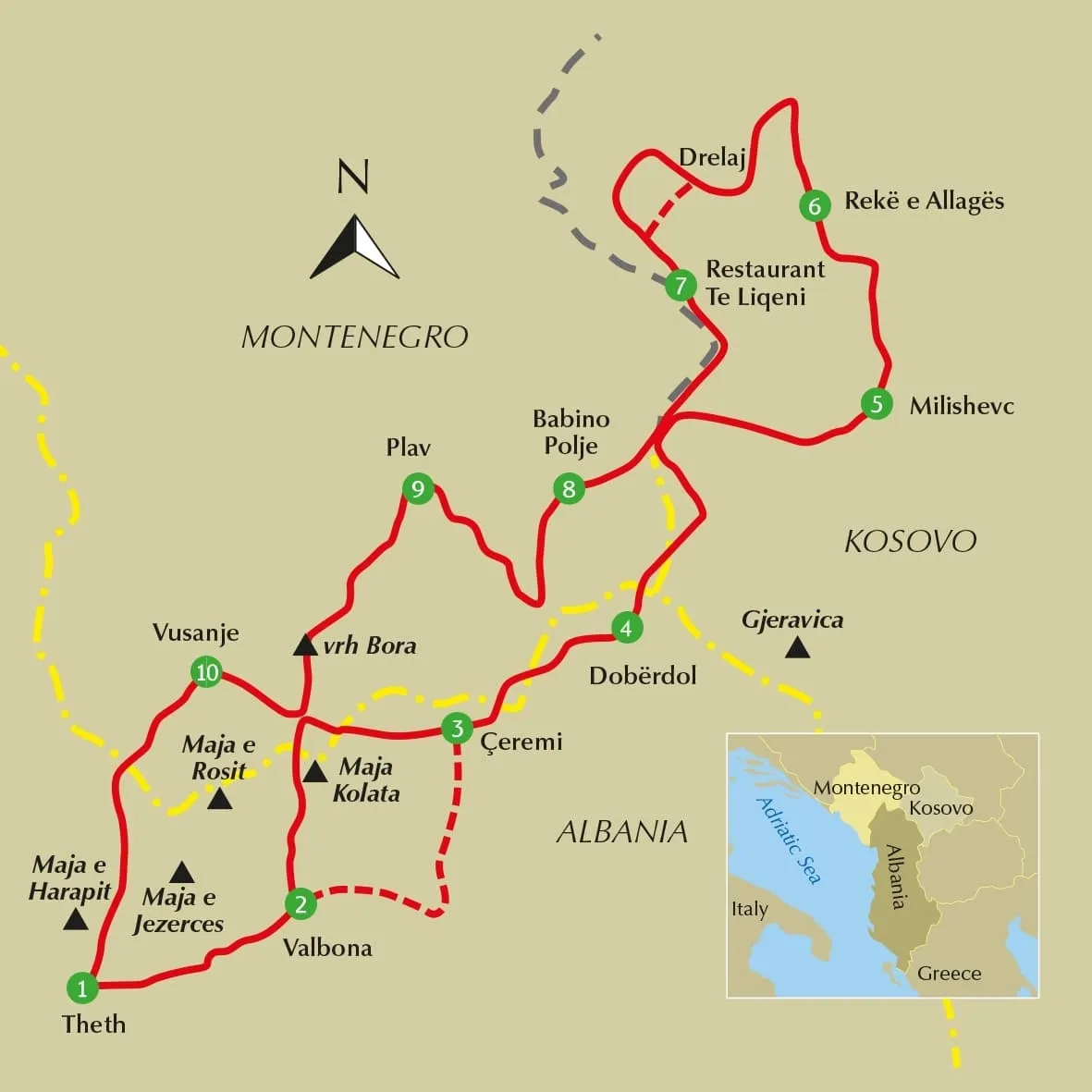
The classic 10-day Peaks of the Balkans route as offered by Bookatrekking runs from the transfer point at Tamarë through Lëpushë, up to the Talijanka Peak where it crosses into Montenegro, down to Vuthaj, over the Peja Pass to Theth, across the Valbona Pass into the Valbona valley, then on to Çerem, Doberdol and finally to Gjeravica in Kosovo before finishing in Gjakova. The full Peaks of the Balkans trail map appears directly below this section, showing the route.

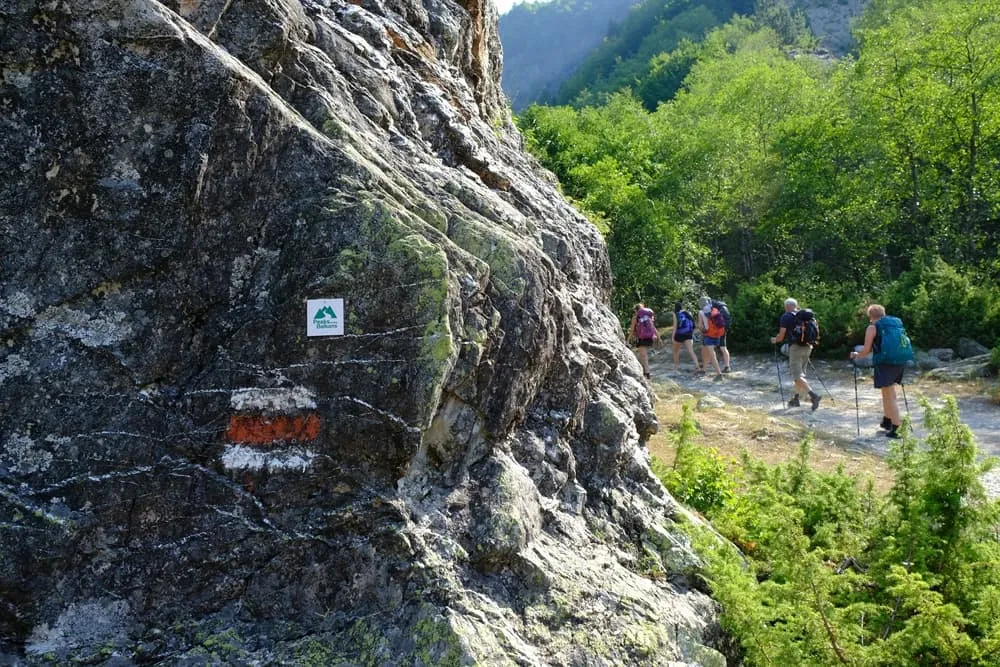
The route is signposted throughout and largely well marked. Navigation is straightforward in clear conditions. When you book the self-guided option, you receive a digital travel guide with route descriptions and interactive hiking maps. Carry a paper map as a back-up: in bad weather, orientation in the high passes can become genuinely challenging.

Where Is the Peaks of the Balkans Trail? Map and Route Overview

How Long Is the Peaks of the Balkans Trail? Distance, Days and Difficulty

The full circuit covers 192 kilometres of marked trails. Most hikers complete the Peaks of the Balkans hike in around ten days, but the route also works as a seven-day intensive version or as a five-day introduction focused on the Albanian highlights. Here is what each option involves.

10 days, the classic Peaks of the Balkans trek

The 10-day version has eight hiking days covering 124 kilometres, an average of 15.5 kilometres and 6 hours 34 minutes per walking day. The full day-by-day programme appears lower on this page, but the stage breakdown is as follows:

Day Route Distance Walking time
1 Tirana / Shkodra – Tamarë – Lëpushë (transfer) 0 km Transfer day
2 Lëpushë – Maja e Berizhdolit – Lëpushë 10 km approx. 5.5 hrs
3 Lëpushë – Talijanka Peak – Vuthaj 12 km approx. 6 hrs
4 Vuthaj – Peja Pass – Theth 21 km approx. 8 hrs
5 Theth – Blue Eye – Theth 18 km approx. 6 hrs
6 Theth – Valbona Pass – Valbona 14 km approx. 7 hrs
7 Valbona – Çerem 20 km approx. 7.5 hrs
8 Çerem – Doberdol 15 km approx. 6.5 hrs
9 Doberdol – Gjeravica – Gjakova 14 km approx. 6 hrs
10 Gjakova – Transfer to Tirana 0 km Transfer day

The full stage descriptions and daily highlights are in the programme section below this page. Book the self-guided Peaks of the Balkans Trail in 10 days to see current availability.

7 days, the intensive version

Yes, hiking the Peaks of the Balkans in 7 days is possible. The 7-day version covers 95 kilometres over six walking days, averaging just under 16 kilometres per day and rated Advanced. Day 1 combines the transfer from Tirana with the walk from Lëpushë over the Talijanka Peak (2,057 m / 6,749 ft) to Vuthaj: 11 kilometres. The day exploring Maja e Berizhdolit and the day visiting the Blue Eye are not included. From Day 2 onwards the stages mirror those of the 10-day version: Vuthaj to Theth (21 km), Theth to Valbona (14 km), Valbona to Çerem (20 km), Çerem to Doberdol (15 km), and Doberdol to Gjakova via Gjeravica (14 km). There is no rest day. This suits experienced hikers who are comfortable with consecutive long days in mountain terrain. Choose from the guided 7-day Peaks of the Balkans trek or the self-guided 7-day version.

5 days, a taste of the Albanian Alps

The 5-day option does not complete the full Peaks of the Balkans circuit, but it covers the most celebrated stages in Albania: the Blue Eye walk, the Grunas Waterfall, the crossing of the Valbona Pass, and a circular walk in the Valbona valley. It is an ideal first introduction to the region for those with limited time. See the guided 5-day Theth, Valbona Valley and Komani Lake trek.

How hard is the Peaks of the Balkans Trail?

The trail is rated Intermediate for the 10-day version and Advanced for the 7-day. It is not technically demanding: there is no scrambling, no via ferrata and no glacier travel. What makes it challenging is the length and the cumulative elevation. The two toughest stages are Day 4 (Vuthaj to Theth, 21 kilometres, around 8 hours, passing alongside Arapi at 2,217 metres and Jezerca at 2,694 m / 8,839 ft) and Day 6 (Theth to Valbona, 14 kilometres with roughly 1,050 metres of ascent to the Valbona Pass at 1,795 m / 5,889 ft, taking around 7 hours). Gjeravica, Kosovo's highest peak at 2,656 m / 8,714 ft, is climbed on Day 9.

For the 10-day version, you should be comfortable walking six to eight hours consecutively over multiple days with a loaded pack. For the 7-day version, add the expectation of doing that every single day without a break. Begin training with full-day walks in hilly terrain several months before departure, increasing the distance each week and including at least one or two back-to-back long days so your body knows what consecutive effort feels like.

Where to Start the Peaks of the Balkans: Theth, Valbona or Plav?

For most British and American hikers, the most practical entry point is Albania, because Tirana has the best international flight connections of the three countries.

Theth and Valbona (Albania) are the most popular starting points. Both sit inside national parks of the same name and offer an immediate immersion in mountain scenery. Both are reached from Tirana. Our packages begin with a morning transfer from Tirana or Shkodra to Tamarë, then continue on foot to Lëpushë before reaching these villages in subsequent stages.

Plav (Montenegro) is an alternative entry for those flying into Podgorica. Plav is one of the larger towns on or near the route and a good place to stock up on supplies before heading into the mountains. For more context on the Montenegrin stages, read our guide on trekking in Montenegro.

Rekë e Allagës (Kosovo) is the least common starting point, reached by bus from Pristina. Trail signage in the Kosovo section is less consistent than in Albania and Montenegro, so this entry point suits experienced navigators.

Our 10-day and 7-day packages start with an early morning departure from Tirana or Shkodra to Tamarë and Lëpushë on Day 1. At the end of the trek, a transfer from Gjakova returns you to Tirana. The self-guided 10-day version travels back to Tirana via Prizren on the last day.

Where to Start the Peaks of the Balkans: Theth, Valbona or Plav?

Guided or Self-Guided: Do You Need a Guide for the Peaks of the Balkans?

A guide is not obligatory on the Peaks of the Balkans. The trail is well marked along most of its length. That said, weather in these mountains is unpredictable, and orientation on the high passes can become difficult when visibility drops. The choice between guided and self-guided is primarily about how much you want to manage yourself.

Guided means an English-speaking guide accompanies you for the entire trek, from the door-to-door transfer on Day 1 to the return journey on the final day. Your guide knows the route in detail, including spots that are difficult to locate alone, such as the hidden water source between Vuthaj and Theth. Guided departures run on fixed dates, which suits travellers who prefer a set schedule. All activities, transfers, guesthouse bookings and Cross Border Permits are arranged in full. This option works particularly well for solo travellers new to the Balkans and for those who prefer to focus entirely on the hiking rather than the logistics. See the full details on the guided Peaks of the Balkans Trail.

Self-guided means you set your own pace and start on almost any day in the season. You receive a digital travel guide with route descriptions and interactive hiking maps. Cross Border Permits, guesthouse bookings and the transfers within the programme are all handled by our local partner. This option suits experienced hikers who are confident reading a map and making daily decisions. Visit the self-guided Peaks of the Balkans Trail in 10 days for the full programme.

If your time is limited, both guided and self-guided options exist for the 7-day intensive version. The self-guided 7-day Intensive Peaks of the Balkans Trail is the right choice for experienced hikers who want maximum trail with minimum time commitment.

Guided or Self-Guided: Do You Need a Guide for the Peaks of the Balkans?

Accommodation on the Peaks of the Balkans: Guesthouses and Shepherd's Huts

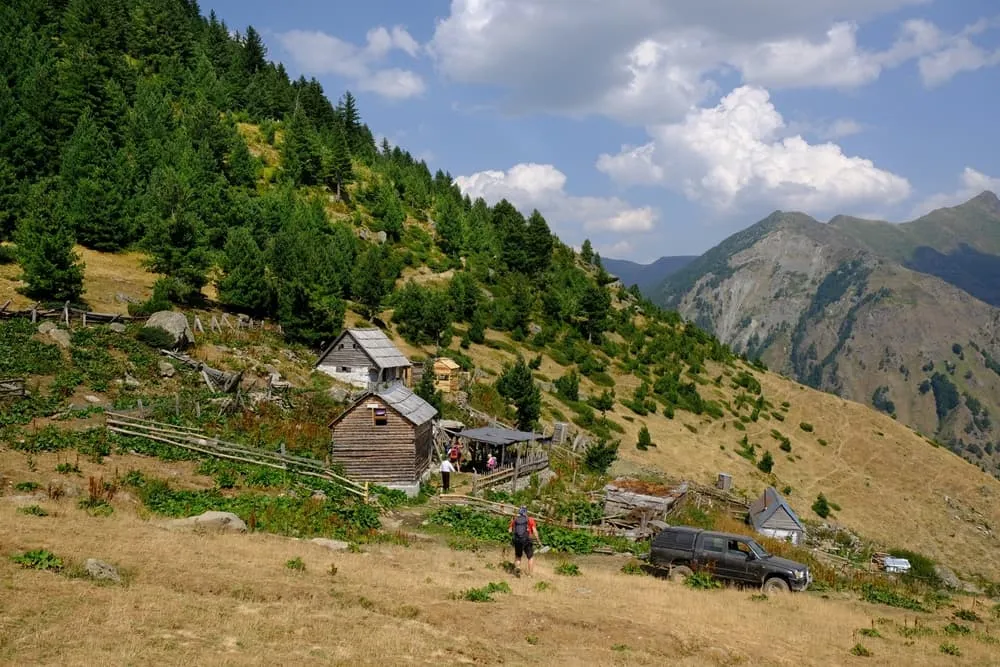
Along the Balkan Trail you stay in family guesthouses, homestays and shepherd's huts. Rooms are typically shared between two to five travellers of mixed gender, unless you book a private room. Most guesthouses provide sheets, blankets and pillows. The experience varies considerably between stages, and that variation is part of what makes the trek memorable.

The guesthouse in Çerem sits at 1,300 metres above sea level with no Wi-Fi and no electricity. Doberdol is a shepherd's village at around 1,800 metres where you sleep on mattresses rather than beds. Conditions are basic, but both hosts are generous and the food is worth the simplicity. In Gjakova on the final hiking night, you stay in a hotel.

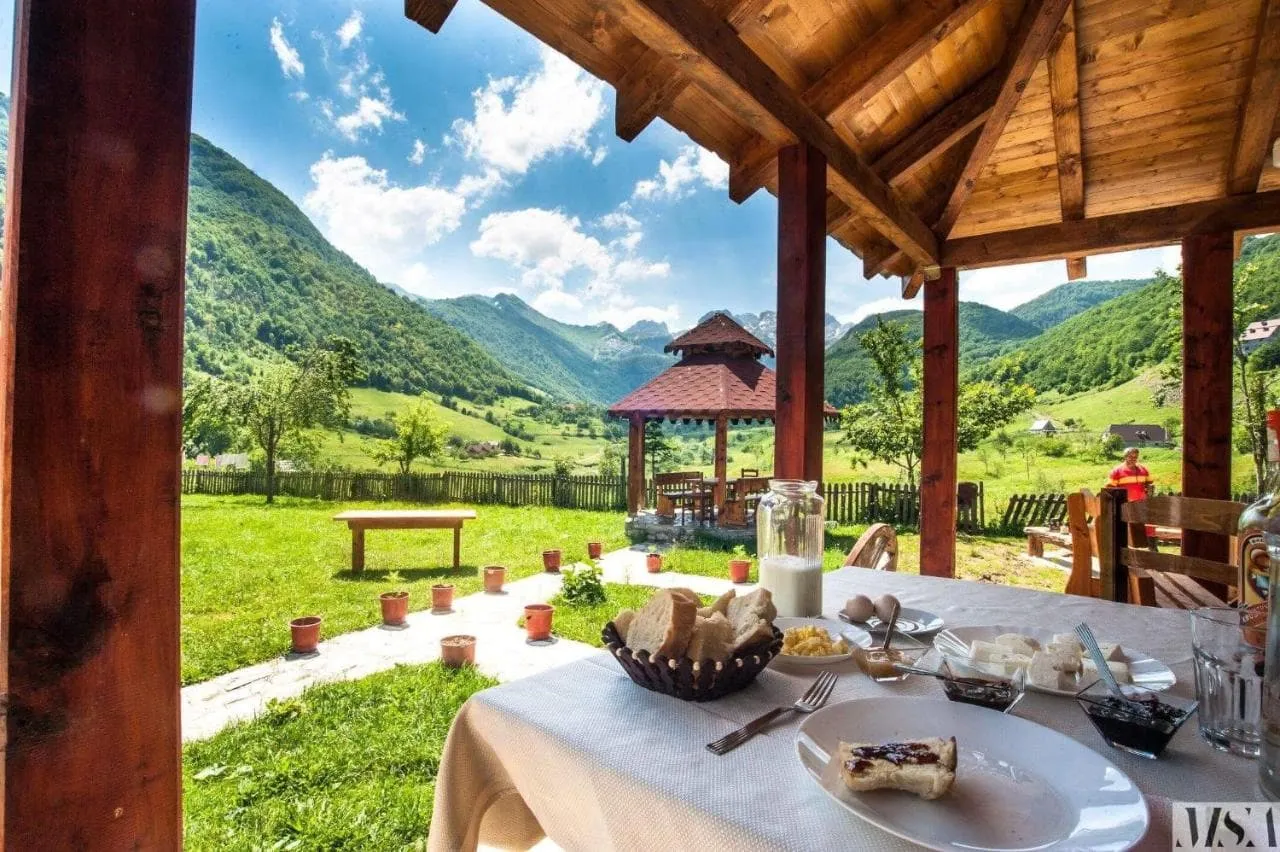
The food deserves its own mention. Breakfast is included in all packages. Dinner at the guesthouses features what the family has grown or raised: salads of cucumber, tomato and onion, stuffed peppers, green beans stewed in milk, thick stews, and crumbly white cheese. With a bit of luck, you can also taste homemade jam. Meals are often rounded off with Turkish coffee. Do not drain your cup: a little coffee always stays at the bottom.

This is family hospitality in a mountain setting, not a dormitory in the Alps. The simplicity is the point.

Accommodation on the Peaks of the Balkans: Guesthouses and Shepherd's Huts

Best Time to Hike the Peaks of the Balkans

The Peaks of the Balkans hiking season runs from June through September, when the high passes are free of snow and the shepherd's huts and summer villages along the route are occupied and open.

June is the start of our season: our departures begin in early June, when the shepherd villages along the route are inhabited again for the summer.

July and August are the busiest months on the trail. Book early for departures in these months.

September is quieter than July and August. Our departures run until the end of September.

Shoulder months and winter. April, May and October bring changeable conditions. Winter brings snow to the high passes and very limited accommodation along the route.

Planning tip. If you are reading this in the autumn or winter, you are planning for summer. Guided departures run on fixed dates. The guesthouses are small, and our local partner needs time to arrange permits and reservations. Locking in your dates early gives you the widest choice of departures. Check the current dates in the calendar on the product page.

Peaks of the Balkans Trail Cost: What Should You Budget For?

The total cost depends mainly on whether you choose guided or self-guided and how much you arrange independently. The current package price is shown on the individual product pages.

Included in all Bookatrekking Peaks of the Balkans packages:

  • Cross Border Permits, arranged by our local partner
  • Breakfast each morning
  • All guesthouse, homestay and shepherd's hut accommodation in the programme
  • Transfers specified in the itinerary (first-day transfer to the trailhead, final-day transfer from Gjakova)
  • Digital travel guide with route descriptions and interactive hiking maps (self-guided)
  • English-speaking guide for the full trek (guided option only)
  • All activities listed in the programme (guided option only)

Not included: plan for these yourself:

  • Return flights to Tirana, Podgorica or Pristina
  • Lunches and dinners
  • Accommodation before and after the trek
  • Travel insurance that covers mountain hiking
  • Personal expenses and tips
  • Optional luggage transport (available as an add-on)

If you are organising the trek independently rather than booking a package, you will also need to arrange the Cross Border Permit through local authorities, book each guesthouse directly, and organise your own transport to the trailhead. In Montenegro and Kosovo the currency is the euro; in Albania it is the Albanian lek. Cash is essential in smaller villages, as card payments are not universally available. Carry enough local currency before you leave each town.

For a price comparison between options, visit the self-guided 10-day Peaks of the Balkans trek or the self-guided 5-day Theth and Valbona trek for the shorter version.

Peaks of the Balkans Permit: How the Cross Border Permit Works

The Peaks of the Balkans Trail crosses international borders in the mountains, away from official border checkpoints. The key crossings are on the Talijanka Peak from Albania into Montenegro (Day 3) and at the Gjeravica approach from Albania into Kosovo (Day 9). Because these crossings happen outside designated checkpoints, hikers need a Cross Border Permit.

The permit is applied for through the local authorities in the relevant countries and must be arranged before you set off. Crossing without a permit means committing an offence simultaneously in the country you are leaving and the country you are entering. You also risk a fine. Arrange the permit in advance; it is not something to sort out on the trail.

When you book any Bookatrekking Peaks of the Balkans package, guided or self-guided, the Cross Border Permit is included. Our local partner handles the application; you simply provide your travel details when requested and allow enough lead time before your departure date. For the full trip details including permit handling, see the guided 7-day Peaks of the Balkans trek.

Luggage Transport on the Peaks of the Balkans Trail: How Does It Work?

Luggage transport is available as an optional add-on on the 7-day and 10-day Peaks of the Balkans packages. If you take this option, your main bag travels between guesthouses while you carry only a day pack on the trail. This makes a meaningful difference on the longer days, particularly Vuthaj to Theth (21 km) and Valbona to Çerem (20 km).

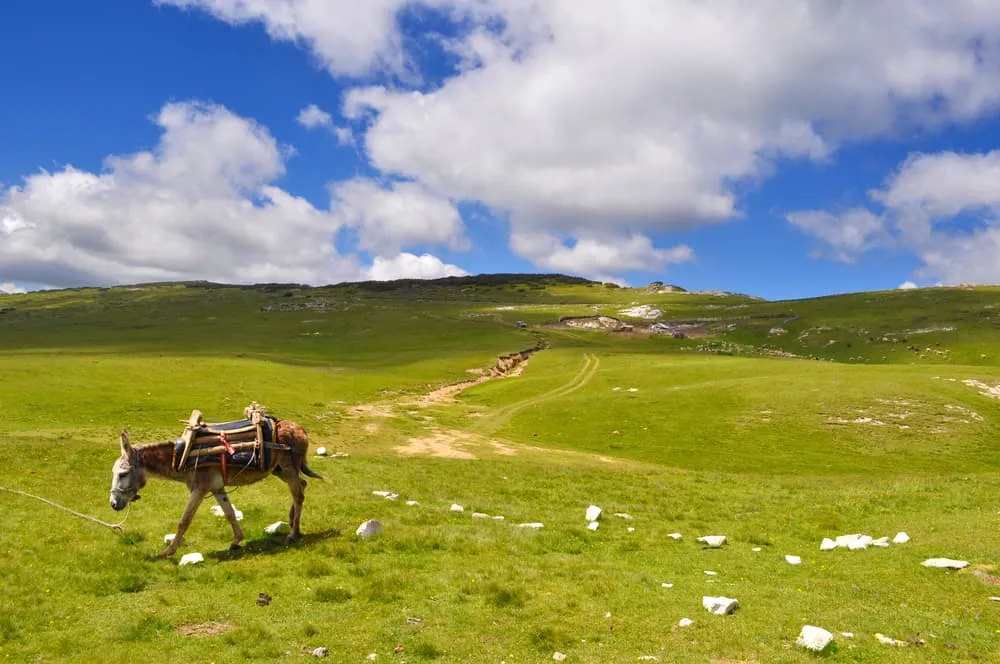
On the 10-day trek, a donkey can carry your gear, which is as much a practical solution as it is a memorable part of the experience. Per person, luggage transport costs less in a group than when you travel solo; speak to our trekking experts or check the add-on options on the product page. If you have luggage you do not want to carry at all, extra bags can also be left at your hotel in Tirana before departure.

The full day-by-day programme appears directly below this section. For the complete guided itinerary, visit the full itinerary of the guided Peaks of the Balkans Trail.

Luggage Transport on the Peaks of the Balkans Trail: How Does It Work?

10-Day Peaks of the Balkans Trek From Day to Day

During this trek, you will be accompanied by experienced guides. They know the trek best and can show you the most beautiful places. Below you will find a global description of the programme, for more details you have to be here. You travel on your own initiative to Tirana, the capital of Albania. Then our partner will pick you up from your hotel and bring you to the starting point Tamarë. All accommodations for the trek will be arranged for you and are included, as well as breakfast and permits. Below is a description of the program:

Day
1

Tirana (Albania) – Shkoder – Tamarë – Lëpushë

Our guide will pick you up from your hotel in Tirana at 6:00 a.m. We’ll drive to Tamarë in Northern Albania, passing through the town of Shkoder. From Tamarë, we’ll begin our hiking adventure through the Peaks of the Balkans. The Peaks of the Balkans are part of the Dinaric Alps, which begin in Slovenia and end in Southeastern Albania. The Albanian Alps are actually the highest part of the Dinaric Alps, and we’ll be exploring them over the next few days.

Later in the day, we arrive in the small village of Lëpushë, known for its stunning nature and a great place to relax after an exciting first day. The name Lëpushë refers to the yellow flower that can be found there in spring. Before the day ends, we’ll have some time to walk and explore the area in the vast grasslands. Northern Albania is known for its many delicious organic dishes made with local products. Their cuisine is unique, flavorful, and can only be found in these areas. You’ll have the chance to try them during the tour. Overnight stay in a guesthouse in Lëpushë.

Lëpushë

Info
Lëpushë
Lëpushë
Day
2

Lëpushë – Maja e Berizhdolit – Lëpushë

Duration: 05:30 h
Distance: 10 km

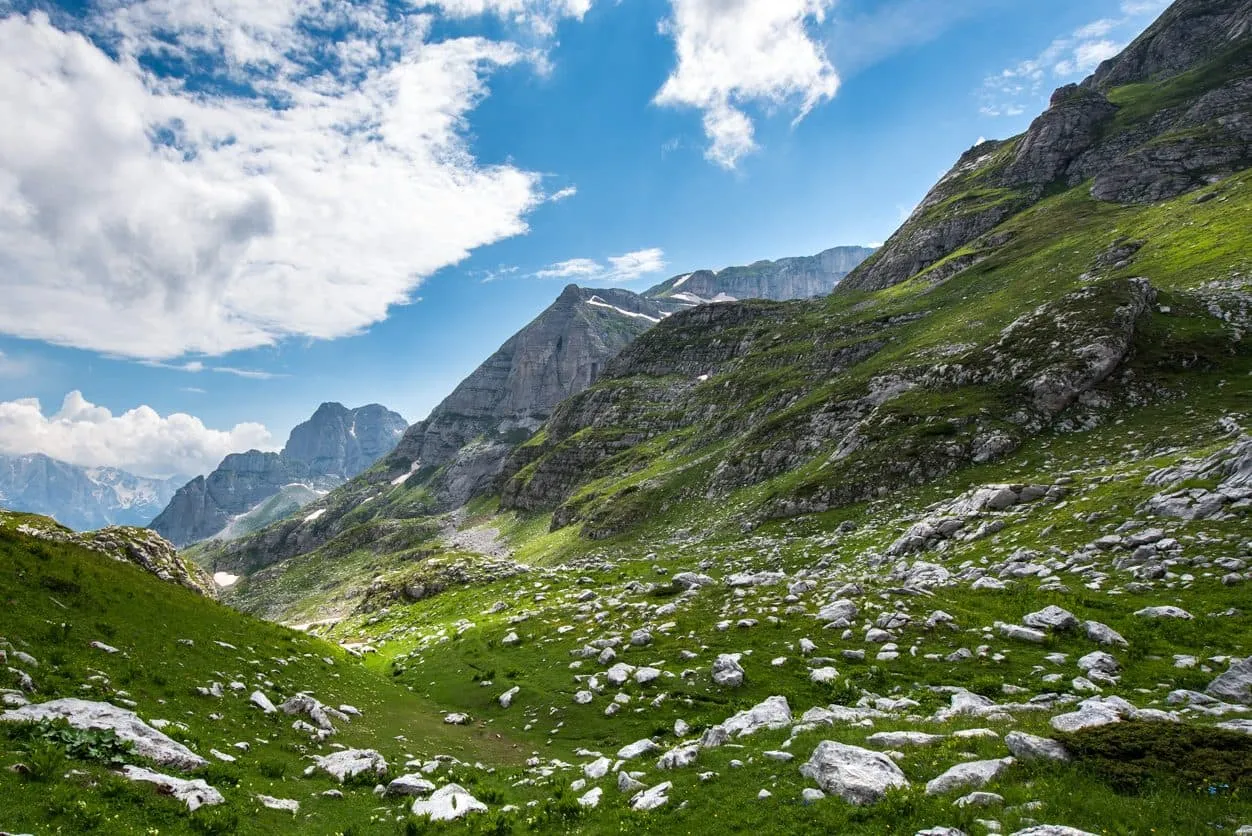
Today you will hike to Maja e Berizhdolit (1977m) in the Albanian Alps, also known as the Accursed Mountains. This is a beautiful hike that passes water springs and offers rewarding views from the top. The spectacular rock formation is covered with snow on one side and is almost devoid of vegetation on the other. The walk takes a maximum of 6 hours, including breaks in the heart of these mountains. After enjoying the spectacular views, you will return to Lëpushë. Overnight stay in a guesthouse in Lëpushë.

Lëpushë

Info
Lëpushë
Lëpushë
Day
3

Lëpushë – Vajusha Peak (Talijanka Peak) – Vuthaj (Montenegro)

Duration: 06:00 h
Distance: 12 km

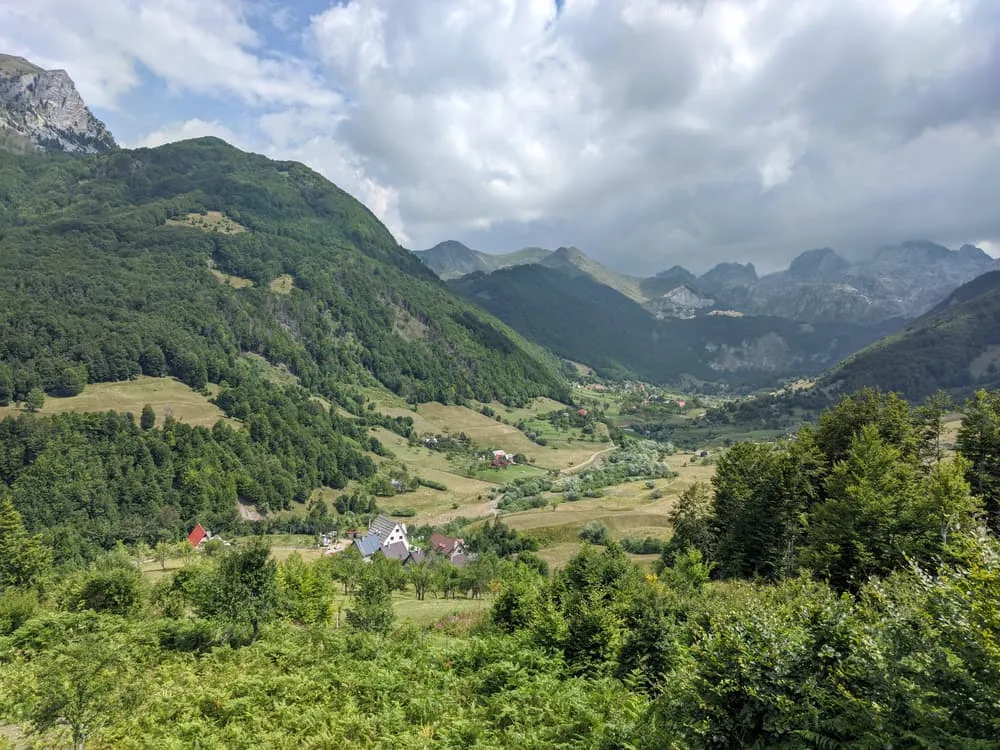
Your destination today is Vuthaj, but first, you'll hike to the Vajusha (Talijanka) Peak, where you cross the border from Albania into Montenegro. Mount Talijanka is located in the Grbaje Valley in Montenegro, a U-shaped valley surrounded by sharp, grey mountain peaks. Talijanka is considered one of the most beautiful peaks in the Balkans, and the dramatic view of grey mountains with unusual shapes is a sight that will impress even the most experienced hiker. From this peak, you can also see Lake Plav in Montenegro. For the last 40 minutes, you’ll travel by minivan to Vuthaj in Montenegro. In Vuthaj, you’ll have the chance to visit the Ali Pasha Springs, about a 40-minute walk from the guesthouse, or just relax and take in the spectacular views you’ve seen today. Overnight in a guesthouse in Vuthaj.

Vuthaj

Info
Vuthaj
Vuthaj
Day
4

Vuthaj – Peja Pass – Theth (Albania)

Duration: 08:00 h
Distance: 21 km

From Vuthaj, head towards Theth and cross the border back into Albania. During this trek, we will visit a hidden water place that is difficult to find on your own if you don't know the exact location.

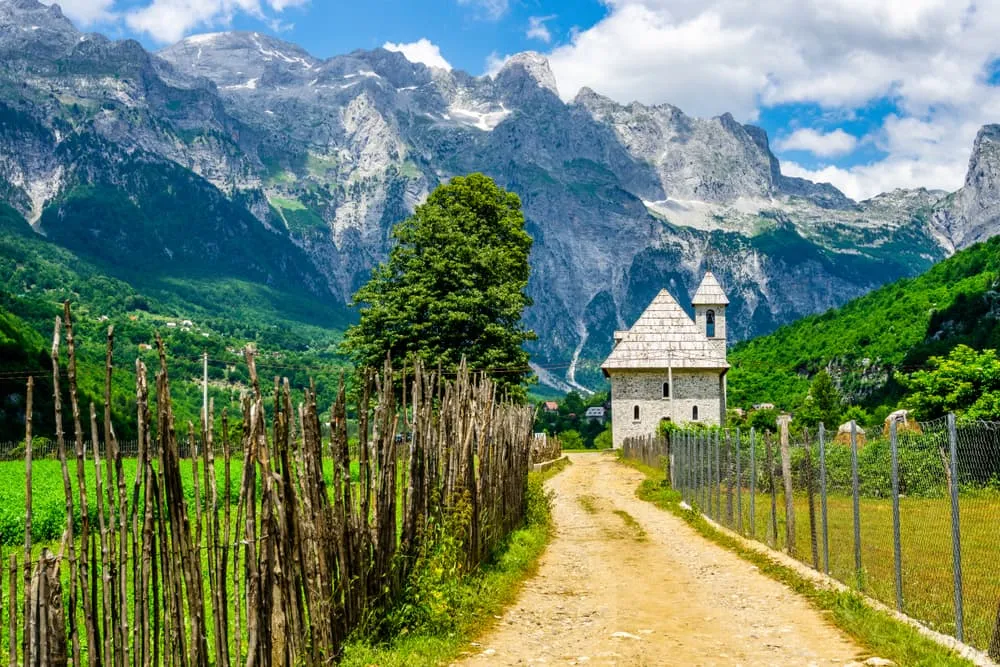
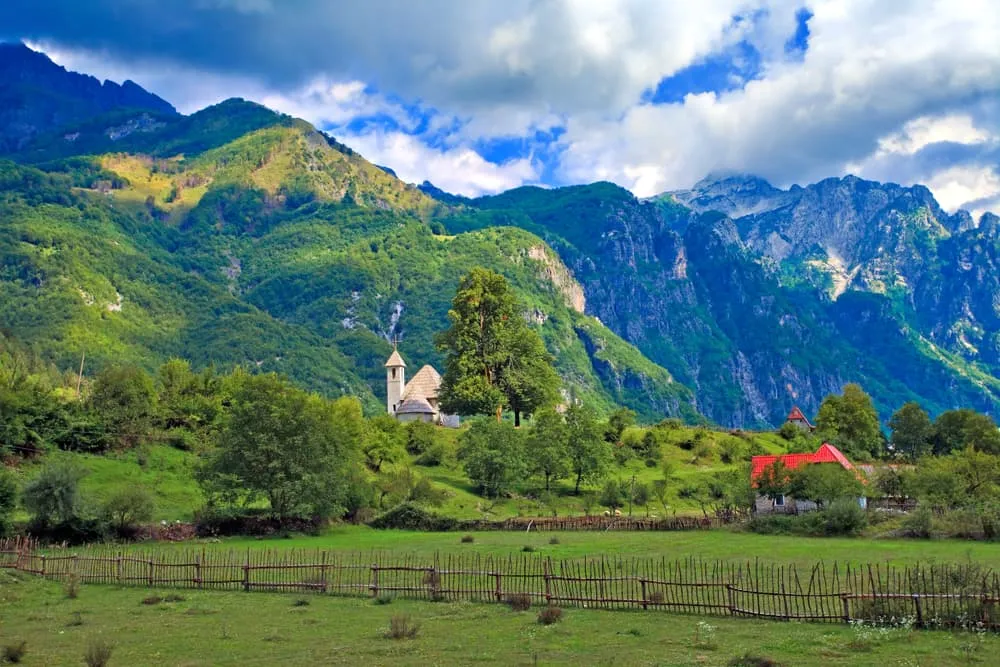
You will also pass one of the highest peaks in the Balkans, the Arapi Peak (2,217m above sea level), and Jezerca Peak (2,694m above sea level). In the Albanian Alps, you will encounter several huts that show a way of life far from civilization. In Theth, visit the old church and the "lock-in" tower (a symbol of Theth). The stories behind these buildings span centuries of history. Overnight in a guesthouse in Theth.

Theth

Info
Theth
Theth
Day
5

Theth – Blue Eye – Theth

Duration: 06:00 h
Distance: 18 km

A famous saying in Albania is "He who has seen Theth has a reason to live" (Gjergj Fishta), and today you will see another beautiful phenomenon that supports this saying. Your walk through Theth will continue to the natural wonder known as the "Blue Eye of Theth". The walk from the village takes about 3 hours one way, with a distance of 18 km both ways and a climb of about 700 m. (If you choose to book local transport from Theth village to Nderlysaj, where the trek starts, the trek takes about 1 hour each way. The cost of local transport is between 5-7 Euros per person).

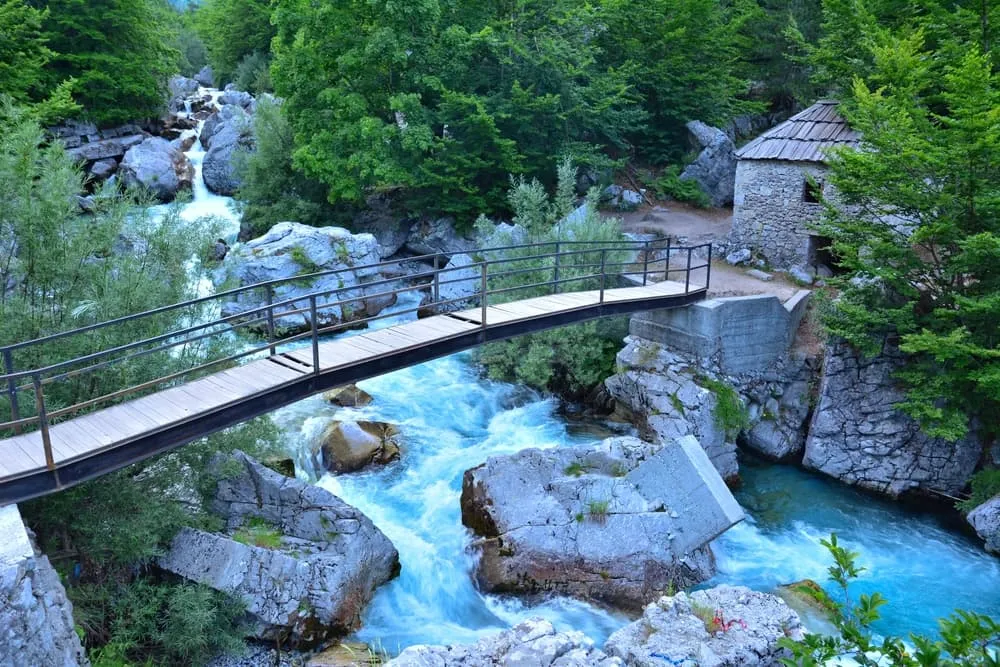
The Blue Eye is formed by the erosion of rocks by the water that comes down from the melting snow of the Albanian Alps. The pool of blue water is fed by a small waterfall, which completes the picture. You will not be able to take your eyes off the shimmering greens and blues of this natural wonder that invites you to dive in. Overnight in a guesthouse in Theth.

Theth

Info
Theth
Theth
Day
6

Theth – Valbona Pass – Valbona

Duration: 07:00 h
Distance: 14 km

Get ready for the highlight of this trip. The trek from Theth to Valbona will be an intense day, taking about 6 to 8 hours (about 1050m of ascent) in remote terrain, but undoubtedly rewarding! The Valbona Pass offers spectacular views of the Balkan peaks and the "Accursed Mountains". Reaching the top of the Valbona Pass is a real adrenaline rush. From here, you can see both sides of the valleys. This top viewpoint is perfect for a short break and the opportunity to take amazing pictures of the Albanian Alps.

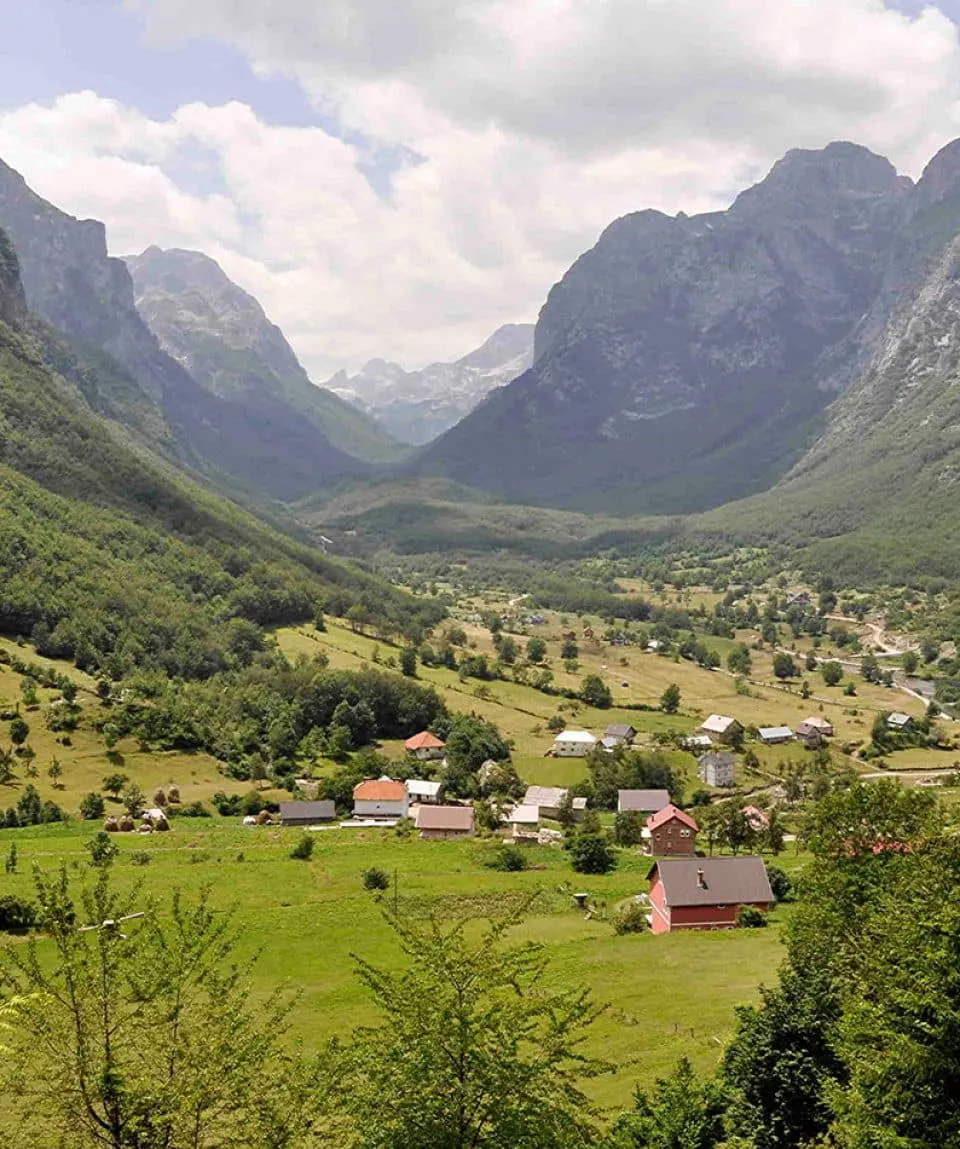
From the Valbona Pass, we descend to our next destination, the Valbona Valley, another picturesque village surrounded by high mountains. Once we reach the village, we walk to the traditional guesthouse. Overnight in Valbona.

Valbona

Info
Valbona
Valbona
Day
7

Valbona – Cerem

Duration: 07:30 h
Distance: 20 km

The next stop on your Peaks of the Balkans tour is Cerem. Your walk will take you through forests and meadows. You’ll come to an area that looks like a canyon and is the only place where there is snow even in summer. You’ll have the chance to hike to the highest peak in Montenegro, Zla Kolate, which will add another 3 hours to the walk (making it a total of 10 hours). Another magnificent sight on the way is a stone surface on the side of a mountain that resembles the face of a miserable old man. You’ll also pass a cave with an extremely cold wind, with an exit that remains unknown. All in all, there are many unusual things to see along the way, aside from the mountains themselves.

You’ll arrive at the guesthouse in Cerem, high up in the mountains at 1300m above sea level. There is no connection to civilization here, as there is no Wi-Fi or electricity. However, the delicious food and the warm hospitality of the people make up for the lack of facilities. Overnight in Cerem.

Cerem

Info
Cerem
Cerem
Day
8

Cerem - Doberdol

Duration: 06:30 h
Distance: 15 km

From Cerem, you’ll walk along a mule track towards Doberdol. On the way, you will cross the border into Montenegro for about two hours. The path takes you through pine forests where you can find all kinds of berries, such as blueberries, blackberries, and raspberries (depending on the season). You will also pass through Albania's only national reserve, home to brown bears and the last remaining population of around 40 lynxes in the Balkans. It’s a beautiful route, with the highest point at 2100 meters above sea level. Along the way, you can stop in shepherd villages to enjoy a coffee or other drink. These villages are only inhabited by shepherds in the summer.

Doberdol, your destination for today, is situated at around 1800m, where you will spend another night in a shepherd’s hut. The village is picturesque, and you can choose from a variety of meals made with local ingredients. The beds here are not hotel beds but rather mattresses, and conditions are basic. The locals are very welcoming, the food is delicious, and it’s a unique, once-in-a-lifetime experience. Overnight in a shepherd's hut in Doberdol.

Doberdol

Info
Doberdol
Doberdol
Day
9

Doberdol – Gjeravica (Kosovo) – Gropat e Erenikut – Gjakova

Duration: 06:00 h
Distance: 14 km

Today, you head back to civilization, but not before hiking to Kosovo's highest peak, Gjeravica, which is also the second highest peak of the Accursed Mountains (Albanian Alps). From the summit, you’ll enjoy views of the Accursed Mountains on one side and the Sharr Mountains on the other. During the hike, you’ll have the chance to swim in three different lakes formed by alpine and glacier water, one of which is especially striking due to its heart shape. After about 6 hours of walking, you’ll reach Gropat e Erenikut in Kosovo. From Gropat e Erenikut onward, we have organized a local transfer to drive to Gjakova. Overnight in a hotel in Gjakova.

Gjakova

Info
Gjakova
Gjakova
Day
10

Gjakova – Tirana (Albania)

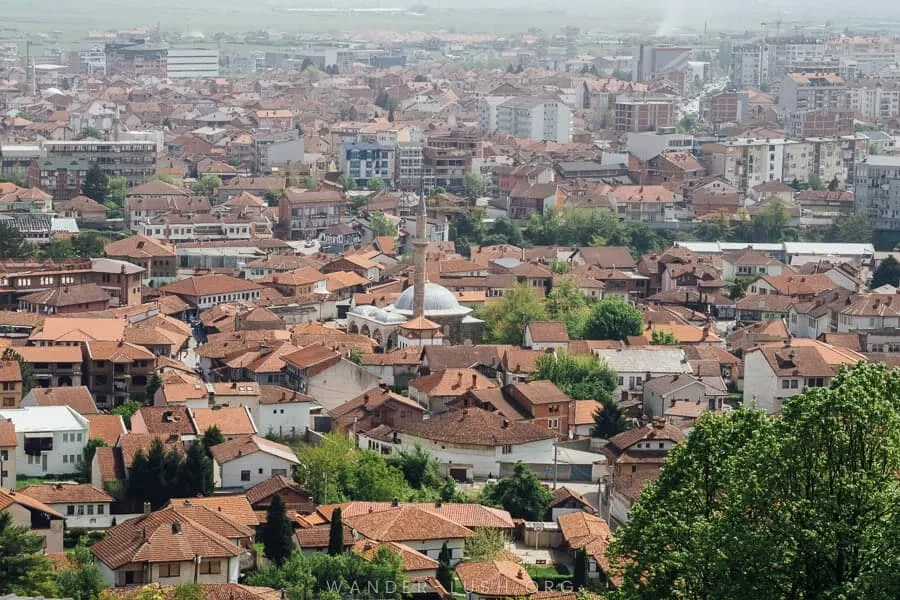
After recovering from the Peaks of the Balkans hikes, you will have some free time to explore the town of Gjakova on your own. The town has the oldest and largest bazaar in Kosovo. Although it was destroyed during the First Balkan Wars, the Second World War, and the Kosovo War, the bazaar has been restored to its former glory and is a nice place to enjoy a meal or browse the shops selling traditional clothing and items. You can also visit the Clock Tower and the Hadum Mosque. The latter was built in the 16th century and somehow managed to survive the wars. Today it shows the beginnings of Islamic architecture in the Balkans, covered with stunning arabesque decorations.

The return journey to Tirana, Albania, marks the end of this fairytale tour.

Peaks of the Balkans Highlights: Theth, the Valbona Pass and Gjeravica

The trail passes through three countries and each has its own defining moments.

Albania

Lëpushë is the first overnight stop, a small village whose name refers to the yellow flowers that cover its grasslands in spring. From here you climb to Maja e Berizhdolit (1,977 m), a peak split between bare rock on one face and snow on the other. Theth is the emotional centre of the Albanian section: the old stone church and the lock-in tower (a symbol of Theth) tell stories that span centuries. The Blue Eye of Theth, a pool of blue water formed by meltwater from the Albanian Alps, is the goal of the Day 5 walk. The crossing of the Valbona Pass (1,795 m) on Day 6 gives you a panoramic view of both valleys simultaneously from the ridge. The Valbona valley itself, and the remote guesthouses at Çerem and Doberdol higher in the mountains, represent the trail at its most isolated. At Çerem you are at 1,300 metres with no electricity and no Wi-Fi; at Doberdol, at around 1,800 metres, you are in a shepherd's village that is only inhabited in summer.

Montenegro

The Talijanka Peak (2,057 m / 6,749 ft) rises above the U-shaped Grbaja valley, a glacial landscape of sharp grey summits. From the top you can see Lake Plav below in Montenegro. Vuthaj, the first Montenegrin overnight stop, is where the Ali Pasha Springs make a worthwhile short detour from the guesthouse.

Kosovo

The Gjeravica (2,656 m / 8,714 ft) is Kosovo's highest peak and the second highest in the Accursed Mountains. The ascent on Day 9 passes three mountain lakes fed by alpine and glacier water, one of which is distinctively heart-shaped. Gjakova, the final town on the trail, holds the oldest and largest bazaar in Kosovo and the sixteenth-century Hadum Mosque, which survived multiple conflicts and now displays some of the earliest Islamic architecture in the Balkans. For further exploration of the Albanian stages and surrounding region, read our complete guide to hiking in Albania.

Packing List for the Peaks of the Balkans Trail

It doesn't matter where you are trekking or for how long: carrying the right equipment with you is paramount. For a hiking trip in the mountains, a good is backpack essential. Its size will depend on how many days you will be spending in the mountains, the season, and the clothes you will be taking with you. We have prepared a packing list with some essential clothing that you should include and some extras that you may find useful:
  • Essentials

  • Extras

What Else Should You Know About the Peaks of the Balkans? Practical Tips and FAQ

Phone coverage. Mobile signal is available in most villages along the route but not everywhere. The European emergency number 112 works throughout the trail. Inform someone at home of your itinerary before you leave.

Drinking water. There is at least one reliable water source per day on the trail. The water is not always safe to drink straight from the source: carry a water filter or purification tablets. Do not rely on being able to buy bottled water at every stop.

Money. Montenegro and Kosovo use the euro. Albania uses the Albanian lek. Card payments are possible in larger towns but often not accepted in smaller villages and guesthouses. Withdraw and carry enough cash before heading into the mountains each day.

How difficult is the Peaks of the Balkans Trail?

The Peaks of the Balkans Trail is moderately difficult and rated Intermediate for the 10-day version. It is not technically demanding, but the days are long: the average hiking day covers 15.5 kilometres and takes about 6 hours 34 minutes. The two hardest stages are Vuthaj to Theth (21 km, around 8 hours) and Theth to the Valbona Pass and down to Valbona (14 km, around 7 hours with roughly 1,050 metres of ascent). No technical climbing is involved.

How much does it cost to do the Peaks of the Balkans?

The total cost depends on whether you choose guided or self-guided, and on flights, meals and personal spending, which are not included in the package price. The package covers permits, accommodation, breakfast and transfers within the programme. For the current price, check the self-guided Peaks of the Balkans Trail product page directly.

Is Peaks of the Balkans worth it?

Yes, for hikers who value remote mountain scenery, genuine local hospitality and cultural depth over polished infrastructure. The guesthouses are simple, the villages are authentic, and the landscapes are among the least visited in Europe. If you prioritise comfortable Alpine huts and reliable mobile coverage, a well-established Alpine route will suit you better. For everything else, this is one of Europe's most rewarding long-distance hikes.

How many days do you need for the Peaks of the Balkans?

The classic Peaks of the Balkans trek takes around ten days, covering 124 kilometres across eight walking days. The 7-day intensive version is possible and covers 95 kilometres across six consecutive walking days with no rest day. The 5-day option covers the main Albanian highlights without completing the full circuit.

Can I hike the Peaks of the Balkans in 7 days?

Yes. The 7-day version of the Peaks of the Balkans Trail covers 95 kilometres across six walking days, rated Advanced. The Maja e Berizhdolit day hike and the Blue Eye day walk are not included, and there is no recovery day between stages. It suits experienced hikers comfortable with consecutive days of 11 to 21 kilometres. See the full details on the self-guided 7-day Intensive Peaks of the Balkans Trail.

Where is the best place to start the Peaks of the Balkans?

For most hikers, Albania is the best entry point because Tirana has the strongest international flight connections. You can start from Theth, Valbona, or from Tamarë as our packages do, heading first to Lëpushë. Plav in Montenegro (via Podgorica) and Rekë e Allagës in Kosovo (via Pristina) are valid alternatives, though signage is less consistent on the Kosovo approach.

Do you need a permit for the Peaks of the Balkans?

Yes. The trail crosses international borders outside official checkpoints, so a Cross Border Permit is required before you set off. Without it, you are in breach of the rules of two countries simultaneously. All Bookatrekking Peaks of the Balkans packages, guided and self-guided, include the permit: our local partner arranges it once you provide your travel details.

Are there bears on the Peaks of the Balkans Trail?

Yes. Brown bears, wolves and Balkan lynx live in the mountains along the route, protected by the Balkan Green Belt initiative. The trail passes through Albania's only national nature reserve, which is home to brown bears and around forty of the Balkans' last remaining lynx. Stay on the marked trails, keep noise to a reasonable level and do not approach or feed any wildlife you encounter.

Is it safe to hike the Peaks of the Balkans?

The Peaks of the Balkans Trail is safe for well-prepared hikers. The paths are clearly laid out, there are no extreme altitude changes and the route does not involve technical terrain. The area is remote, however, and mountain weather can change quickly. Carry the right gear, stay on marked trails, inform someone of your daily plan, and follow the safety guidance detailed further down this page.

What fitness level do you need for the Peaks of the Balkans?

You need a solid base level of fitness and prior experience of multi-day hiking. The 10-day version is rated Intermediate: you should be able to walk six to eight hours per day on consecutive days with a loaded pack. The 7-day version is rated Advanced and assumes you can sustain that effort every day without a rest. Build up to back-to-back long days in hilly terrain during your preparation.


Safety tips for the Peaks of the Balkans Trail

Although this is far from being a trek in the Himalayas, unexpected things can always happen and you might also find obstacles on the hiking trails along the way. The Peaks of the Balkans Trail is safe, the trails are quite straight forward and there is not an extreme difference in altitude. However, for your safety, every hike deserves a level of respect; respect for the terrain, the trails, wildlife and vegetation, local rules and regulations, and above all, your physical capabilities and safety. Therefore, for an unforgettable and safe hiking memory, please keep the following safety recommendations in mind:

  • Know your limits

    Always prepare each stage carefully to use your energy wisely, respect your physical and mental limitations, and avoid taking unnecessary risks. When ascending or descending, if applicable, always use the aids provided, such as handrails and ropes. Is this trek suitable for you? Well, familiarize yourself with the grading system and figure out if this trek matches your capabilities. If you still need professional advice you can always contact Bookatrekking.com experts.

  • Stay on marked trails

    The most important thing is to never leave the marked paths. For easy navigation, most of our treks come with the Bookatrekking app: it shows your route for each day and your own position on the map, and once downloaded, everything also works offline. As a backup, make sure to bring a hiking guide or a paper map with you.

  • Fully equipped

    Make sure you have the necessary gear for the conditions you'll be facing, including appropriate clothing, footwear, and any necessary equipment for the terrain you'll be hiking on. Always wear clothing adapted to the weather of Peaks of the Balkans Trail and protect yourself from cold and wetness or heat and sun. Besides, make sure you carry enough food and water for the duration of your trek. On the way, you might (or might not) be able to buy snacks.

  • Stay reachable

    If you are hiking solo or in small groups it is advisable to inform people back home about your plans, what route you are taking and when you plan to return. Even small incidents can lead to unpleasant emergencies so make sure you are available at all times. Bring a charged phone containing at least the phone numbers of immediate family members, your accommodations en route and the emergency phone numbers operating in the Peaks of the Balkans Trail.

  • Respect for nature

    Do not litter, prevent noise, stay on the marked trails, do not disturb wildlife or grazing animals, and respect protected areas.

Where Can I Book the Peaks of the Balkans Trail?

At Bookatrekking.com you can book the self-guided Peaks of the Balkans Trail and many other treks. We take care of all the details for you, including arranging accommodations, organizing luggage transportation and providing you with relevant information well in advance of your trek. Find our offers here. Our easy-to-use platform allows you to browse and compare different trekking options and find the perfect fit for your interests, abilities, and budget.

If you have any questions about a specific trek or need help choosing the right one for you, our team of trekking experts is here to assist you. Simply reach out to us and we will be happy to provide you with personalized recommendations and advice to help you plan the trekking adventure of a lifetime.

About Us

At Bookatrekking.com, you will find the trek that will make your life unforgettable. Whether you want to explore the Inca Trail or climb Kilimanjaro. Bookatrekking.com has a wide and varied range of first-class treks. No false promises are made here. Transparent prices and bookings are fixed instantly. Find, compare, book and trek!
Read more about us
About Us
About Us

Also Interesting